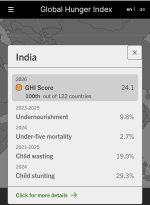
Due to cultural differences, Indians do not understand just how unacceptable this is to the Chinese.
"民以食为天" "洪范八政,食为政首" Traditional Chinese culture holds that ensuring the people have enough to eat is the most important foundation of a government’s legitimacy. Furthermore, Chinese governments throughout history have had an inherent responsibility to prevent famine. When agriculture is hit by disasters, the government must stabilize grain prices, ensure a secure grain supply at low prices, and maintain grain reserves, among other measures.
The underlying logic of this culture is that food is the foundation of human life, and human life cannot be sacrificed for profit. The government’s authority derives from the responsibilities it bears; if it cannot safeguard the most fundamental right to life, then it should not continue to hold that authority.
Incidentally, in ancient China, hoarding and speculating on grain during famines was punishable by “诛三族 (execution of the offender and all three generations of his family—father, mother, and wife),” and even in modern China, grain speculation remains a direct path to the death penalty.