PS
The cornerstone of the DPRK’s doctrine is the Juche Idea, which is based on self-reliance and is expressed in three forms of independence:
Chaju (political independence)
Charip (economic self-reliance),
but what is of interest here is Chawi (military self-defence): The belief that a state must be able to defend itself against external imperialism, a theory which has legitimised massive military investment, the development of a nuclear arsenal and modern systems.
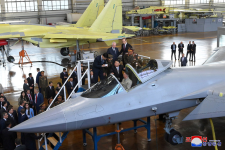
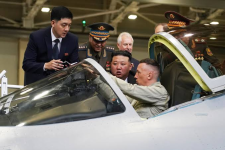
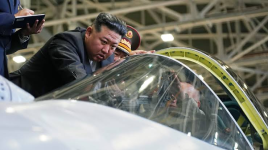
I am therefore convinced that the next fighter aircraft will be produced in the DPRK, whether under licence or not.
It is difficult to explain these concepts to them clearly; they belong to two entirely different worlds.
The DPRK is deeply influenced by traditional Chinese thought—the idea that in the nation’s most perilous moments, one can rely only on oneself. Consequently, the DPRK prioritizes absolute autonomy and self-reliance in the development of its military industry. This logic stands in stark contrast to the mindset of "beggar" nations. In the eyes of the latter, the DPRK is undoubtedly a "foolish" state—simply because they have no grasp of what "true self-reliance" actually means.
Take, for instance, the assault rifle—a fundamental piece of equipment for any modern military. From the ammunition, components, and raw materials like steel, all the way to the complete, integrated assault rifle system for the individual soldier, only a handful of nations worldwide possess the capability for total, end-to-end self-sufficiency. And this is not even accounting for advanced, integrated accessories such as optical sights or electronic targeting systems.
North Korea (DPRK) is one of the few countries that has achieved such complete, autonomous production. Notably, no Islamic nation—including Turkey—appears on this list.
This is not merely a technical issue; it is a matter of national or collective will. Some countries possess the full range of necessary technologies, yet—driven by economic considerations—they opt to import specialized raw materials from abroad rather than building their own production facilities, as importing is often far more cost-effective than domestic manufacturing.
For the DPRK, however, economic efficiency is not the primary concern. Consequently, if they possess the full technical know-how, their priority is always to manufacture the items themselves, even if the domestic production cost is higher. (Note: This does not imply that they have already achieved complete, absolute autonomy in their military-industrial sector; rather, it refers to the underlying driving force rooted deep within their thinking.)
The advantage of the former approach (importing) is immediate access to superior products; the drawback is that as technology evolves, one risks being left behind, while the supply chain remains highly vulnerable to the international political climate.
The disadvantage of the latter approach (domestic production) is that the technology one possesses may already be outdated or obsolete; the advantage, however, is the ability to pursue continuous, iterative development—all while keeping the supply chain insulated from external international pressures.
These are two completely different modes of thinking, and it is very difficult for them to persuade one another.
BTW.
This is also the core reason why both the Soviet Union/Russia and China have been reluctant to supply the DPRK with significant amounts of advanced military technology or weaponry. From the perspective of the DPRK’s neighbors, this underlying ideology poses a serious danger. Yet, viewed from the impartial standpoint of an outside observer, the fact that the DPRK has reached its current level of development—while under a comprehensive, global-scale blockade on military technology—is an absolutely remarkable achievement.