India Targets Six-Carrier Naval Fleet, Says Defence Minister

The speed is variable depending on the distance to target location. The extremely efficient light weight DPRM design gives it QR caps with terminal homing speed reaching Mach 5 with 2nd pulse motor.

Speed matters in interception? Yes in tail chase, but not in head on.
I'm aware of the Barack-8 ER, it is certainly a step in the correct direction, we shall see how well it does when it finishes development.

Barack-8's focus on head-on intercept is especially my point when mentioning that Indian surface combatants still carry heavy Soviet doctrine BRK influence. In soviet-doctrine surface action groups, area air defence ships envelope point-defence combatants in relatively tight formations to fend off saturated attack and cover for forward radar picket vessels, but in an American-style carrier battle group, in combat formation, escorts can sometimes be placed 20km apart from each other, focused on providing overlapping cover for the carrier. This calls for fast missiles with fast time to target, both for increasing windows of intercept as well as catching supersonic targets.

Barack-8, as defined by Israeli Aerospace Industries, is focused on long-range, high-probability kill vehicles with TBD capabilities in line with Israeli Navy requirements, primarily defending against C-802 derivatives commonly used by surrounding factions as well as wide assortments of rockets and SRBMs, in which case obviously head-on intercept is the primary mode of engagement.
The Barak 8 system on Indian warships has demonstrated precise interception of supersonic cruise missiles. Watch the scene at 1:27. The Chinese have yet to demonstrate similar capabilities. In 2022, their HQ-9 system failed miserably against a dummy BrahMos missile, which was launched 124 km deep into Pakistan and ultimately hit Mian Channu.
To view this content we will need your consent to set third party cookies.
For more detailed information, see our cookies page.


During the Armenia-Azerbaijan war, the Barak 8 system successfully intercepted an Iskander missile.

I find this claim to be dubious. From my 2 decades of attention on military development publications and media in the US, I have never heard of the instance that you have described. Is this what you are referring to? https://en.wikipedia.org/wiki/2022_India–Pakistan_missile_incident

I did vaguely recall India having a missile mishap, didn't know anything about it being a Pakistani decoy planted in India lmao.

The HQ-9, or more specifically the HHQ-9 is a vast family of missiles, and depending on which variant you are referring to they have different capabilities. The USN studies from 2016 and onwards have held the newer HHQ-9 variants quite highly (assuming their capabilities are similar to HQ-9B). It is a much much much larger and heavier missile, comparing it with the Barack-8 which is specifically called to be compact to save deck space on Israeli frigates is not entirely fair.
 
The Indian Navy will install SMART anti-submarine missiles on its P18 cruiser ships to target enemy submarines at distances of up to 650 km.
To view this content we will need your consent to set third party cookies.
For more detailed information, see our cookies page.

I hope you are not serious. The size of the launch trailer seems comparable with some SRBMs and to suggest it fitting on an Indian cruiser project that I have never heard about is just ludicrous.

Why the HELL would you need 650km on an ASROC-esque system? We don't build longer-range ASW missiles not because we can't, but because we don't need to. In ideal circumstances, a combined towed-variable depth sonar system should be able to detect a submarine 3 focal points away, that's 150km most in circumstances which is plenty enough beyond an attack submarine's effective combat range.

Rocket-assisted torpedoes when dropped into the targeted area have to seek for their own target by entering search patterns and activating their own sonars with limited range. If the range is significant and the time to target is too long, the enemy submarine could very easily be outside of the search radius and be alerted to the incoming attack. This project sounds like a ground-based system supported with airborne datalink guidance from maritime patrol aircraft to defend high-value coastal targets against Pakistani submarines and their sub-launched cruise missiles which again begs the question, why not just have the maritime patrol aircraft themselves drop aerial torpedoes... Or perhaps it's supposed to depend on the SOSUS arrays?

But hey, good on India for trying something new, bold, and bombastic.
 
to HQ-9B. It is a much much much larger and heavier missile, comparing it with the Barack-8 which is specifically called to be compact to save deck space on Israeli frigates is not entirely fair.
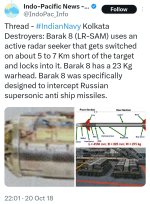
New-generation SAMs typically incorporate smaller warheads. For example, the Aster is equipped with a 15kg warhead, while the Barak 8 boasts a more substantial 23kg payload. Conversely, some recent American missiles have warheads weighing less than 10kg, designed for hit-to-kill capabilities. Warheads in the range of 60kg are more commonly found on Russian or Chinese SAM systems.
Screenshot_20240515-173515_Twitter.jpg
 
That’s exactly what I’m referring to. Even though the Soviet/Russian naval doctrines define Shtil system as an area air defence system, by NATO definition in firing channels and the number of targets engaged simultaneously, it is still a point-to-point system. Only P17A (when it comes out) with Barack-8 can be defined as having area aerial denial, and even then the Barack-8 system is a slow top-speed system that's more focused on head-on intercept against subsonic/ballistic targets. (designed by Israelis for Israelis, duh).

By ASW capabilities I primarily mean carrier-borne ASW. Carrier groups are off-shore power projection tools, and you can't exactly bring your land-based ASW with you.

When talking about the Indian Navy the reliance on helicopter ASW is quite significant, since I do not recall Indian surface combatants employing rocket-assisted torpedoes similar to ASROC, SS-N-16 Stallion, and Yu-8, and primarily relies on heavy 533mm torpedo tubes (for some bizarre reason) and RBU launchers. Granted, the Indian navy has made advanced munitions for their RBU systems which is a great leg up from older Soviet counterparts, but its effective range remains very limited.

The helicopter options available to the Indian Navy AFAIK primarily consist of the Kamov-25/28 series, which while having a compact deck footprint, are difficult to service, demand an extensive hanger, and are falling behind in terms of operational range and payload when compared to NATO options such as Seahawk, NH-90, or even the Chinese Z-20H.
You are forgetting MH60 Romeo ASW helicopters
24 of which were ordered in 2020 ,

These are being operated from our carriers as well as frigates and Destroyers

They were purchased as replacement for SeaKing Helicopters
As far as Ka28 are concerned
India is upgrading them for some reason , while they have also moved a proposal to buy another 12 Mh60 Romeos to replace them
 
New-generation SAMs typically incorporate smaller warheads. For example, the Aster is equipped with a 15kg warhead, while the Barak 8 boasts a more substantial 23kg payload. Conversely, some recent American missiles have warheads weighing less than 10kg, designed for hit-to-kill capabilities. Warheads in the range of 60kg are more commonly found on Russian or Chinese SAM systems.
View attachment 40392
wrong statement
America’s latest anti-aircraft missile
SM-6 warhead weight 64kg
 
wrong statement
America’s latest anti-aircraft missile
SM-6 warhead weight 64kg
According to analyst James Holmes, the more likely outcome of an SM-6 strike against a surface combatant is a “mission kill,” where the missile temporarily disables a target, rather than sinking it outright.
 
According to analyst James Holmes, the more likely outcome of an SM-6 strike against a surface combatant is a “mission kill,” where the missile temporarily disables a target, rather than sinking it outright.
Yes, the hq-9's foreign trade exhibition board also mentioned the ability to attack surface combatants. Therefore, the anti-aircraft missile warheads of China, the United States, and Russia all have 60kg.
This is an ability that little things like Barack-8 and Aster cannot possibly have.
 
This is an ability that little things like Barack-8 and Aster cannot possibly have.
Barak 8 and Aster missiles are indeed recognized for their combat-proven capabilities, setting them apart from China's HQ series SAMs. Both missile system features a sleek design and advanced aerodynamics, enabling it to achieve higher maneuverability and withstand higher G-forces.
 
New-generation SAMs typically incorporate smaller warheads. For example, the Aster is equipped with a 15kg warhead, while the Barak 8 boasts a more substantial 23kg payload. Conversely, some recent American missiles have warheads weighing less than 10kg, designed for hit-to-kill capabilities. Warheads in the range of 60kg are more commonly found on Russian or Chinese SAM systems.
Again, there are places for kinetic kill warheads, and there are places for larger blast-frag warheads.

KKWs are generally employed in two scenarios, either for very terminally agile missiles designed to manoeuvre or even super-manoeuvre (like David's Sling). This design is typically optimized in scenarios where a missile has plenty of kinetic energy not far from engine cut-off or still in the burn phase, against head-on targets with plenty of relative angular motion. This also has the benefit of giving small missiles the ability to punch through tough targets such as AShMs with sturdy SAP warheads or SRBMs.

But a proper long-ranged fleet air defence missile, especially ones with their own large aperture radar seekers, engages targets far after engine cut-off, far from its launch craft which means relatively large accumulated errors, and relies on precise course intercept to reach evading targets, blast-frag and/or continuous rod warheads are still necessary.
 
Barak 8 and Aster missiles are indeed recognized for their combat-proven capabilities, setting them apart from China's HQ series SAMs. Both missile system features a sleek design and advanced aerodynamics, enabling it to achieve higher maneuverability and withstand higher G-forces.
Therefore, The warheads of anti-aircraft missiles in China, the United States and russia have reached 60kg, not only the Chinese and Russian systems.
In fact, the Patriot missile warhead weighs 90kg
you made a mistake
 
Does the TEDBF have the blessings of the Navy. From what I have heard, it is a DRDO created project.
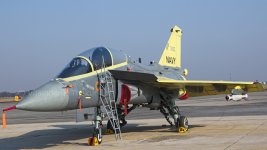
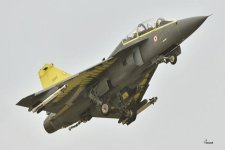
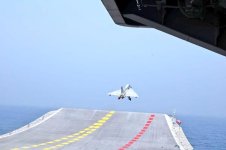
A dedicated variant of the LCA Tejas for the Navy has been built, currently serving as a technology test bed. Additionally, the Navy is considering ordering approximately 18 LCA Navy aircraft for training purposes.
1715783245849.jpeg
1715783281862.jpeg
1715783397312.jpeg
With these initiatives in place, it’s very likely that the Navy will also support the development of the TEDBF.
 
India will soon start making its third aircraft carrier, said Defence Minister Rajnath Singh while talking to The Tribune.

These are first indications of long-term plans for having sea-going carriers that can launch and recover fighter jets from the deck while sailing.
To view this content we will need your consent to set third party cookies.
For more detailed information, see our cookies page.

My God 6 carrier fleet..... imagine what Indian navy would look like in Indian Ocean.....
 
I would be happy if India inducted 60k tonne Vishal carrier by 2035: with over 50 rafales and mh60 helicopters
And retired vikramditya with second vikrant class carrier by 2040
 
A dedicated variant of the LCA Tejas for the Navy has been built, currently serving as a technology test bed. Additionally, the Navy is considering ordering approximately 18 LCA Navy aircraft for training purposes.
View attachment 40416
View attachment 40417
View attachment 40418
With these initiatives in place, it’s very likely that the Navy will also support the development of the TEDBF.

TEDBF is in a bizarre position
Indian Navy has stated that they are interested on purchase of 45 TEDBF

Which is a small number , not enough to justify developing an all new fighter.

We might as well buy another 36 Rafales
INS Vishal is unlikely to enter service before 2034.
By then Vikramaditya will be on its last legs , it would have undergone it's second major refit between around 2030-32 and will be slated for retirement around 2038 along with it's Mig29ks and we would be having the same debate again as to whether to order a replacement or not

As INS Vishal will likely be an improved version of INS Vikrant,
So it's unlikely to carry more than 24 Fighters and 10 helis
Hence 45 is a good enough figure for such a carrier , keeping in mind attrition over a 30 year period and availability rates due to maintenance

If we are to field a 5 carrier force by say 2047, we will require 150 fighters atleast
Only in such a case will TEDBF make sense

For a fleet of 2-3 , 45000 Ton STOBAR Carriers a Fighter force of 56-64 Rafale Ms is more than enough
 

Users who are viewing this thread

Pakistan Defence Latest

Latest Posts

Back
Top