What book are you reading?

View attachment 43103

I came across it again in my emergency archive I keep with all kind of conversations/debates I have had too with folks.
@Joe Shearer

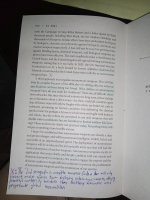
A few days later censorship was imposed on newspapers. The Delhi edition of the Indian Express on 28 June, carried a blank editorial, while the Financial Express reproduced in large type Rabindranath Tagore's poem "Where the mind is without fear"

This created a pretty nice conversation log with some fellow Tamils at the time, what it reminded us of etc. I'll get into this a bit later.

Bringing up emergency in the other thread prompted me to look into my folder again heh.
It reads/ scans so much better in the original.

However, yes, most relevant.
 

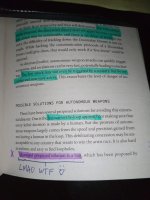
What is there to disagree with the author? I'm a bit confused.

He is mentioning that some proposals regarding this (like any danger coming into the mix more) involve outright bans. i.e these proposals exist (rather than him being sympathetic to that route as some absolute solution).

It's nothing new, humans have always suggested bans for things they establish/perceive as dangerous.

He mentions why the ban approach is unlikely to work, as the genie is out of the bottle with states that want to entertain more development of the genie....i.e well past what it requires for enforcement to begin with given dubious tenuous realm of international law for a long time now to.

I had this discussion earlier in the year at some depth with colleague regarding "brain" tanks during the cold war.

Large scale stand-off WMD etc has long been issue even with humans in the loop. You simply in the end need to make discrete channels that create survivable stockpiles to establish deterrence....then you have to have humans in the loop, there is no other way around this, AI does not intrinsically understand life or higher level thinking.

The deep learning I do some work on currently (though it has nothing to do with life or death and war etc), we segment and sandbox for a reason even at this level. Otherwise the AI gets unreasonable (and resource squandering) very fast.

@j_hungary might be interested to comment on this stuff too.
 
What is there to disagree with the author? I'm a bit confused.

He is mentioning that some proposals regarding this (like any danger coming into the mix more) involve outright bans. i.e these proposals exist (rather than him being sympathetic to that route as some absolute solution).

It's nothing new, humans have always suggested bans for things they establish/perceive as dangerous.

He mentions why the ban approach is unlikely to work, as the genie is out of the bottle with states that want to entertain more development of the genie....i.e well past what it requires for enforcement to begin with given dubious tenuous realm of international law for a long time now to.

I had this discussion earlier in the year at some depth with colleague regarding "brain" tanks during the cold war.

Large scale stand-off WMD etc has long been issue even with humans in the loop. You simply in the end need to make discrete channels that create survivable stockpiles to establish deterrence....then you have to have humans in the loop, there is no other way around this, AI does not intrinsically understand life or higher level thinking.

The deep learning I do some work on currently (though it has nothing to do with life or death and war etc), we segment and sandbox for a reason even at this level. Otherwise the AI gets unreasonable (and resource squandering) very fast.

@j_hungary might be interested to comment on this stuff too.
I think first you need to establish what was the threat? Was it autonomous killer AI robot? or advance weapon in general?

In war, you want to get the better hand than your enemy. Which mean the more you try to ban the usage of advance weapon, the more you encourage it's growth, be it nuclear weapon, Drone, Chemical or Biological Weapon or laser as mentioned in the passage.

Problem is, there are always going to be an argument on someone who is not going to play by the rule and that will alter the equation of fairness, then one or more country is going to break the cycle.

AI robot tho, I don't know. There is a theory if AI really do reach the level of intelligence that deduced all human are hostile, then they would also be able to deduce that all resistance is futile, or else why are we still fight in war since probably the beginning of earth?
 

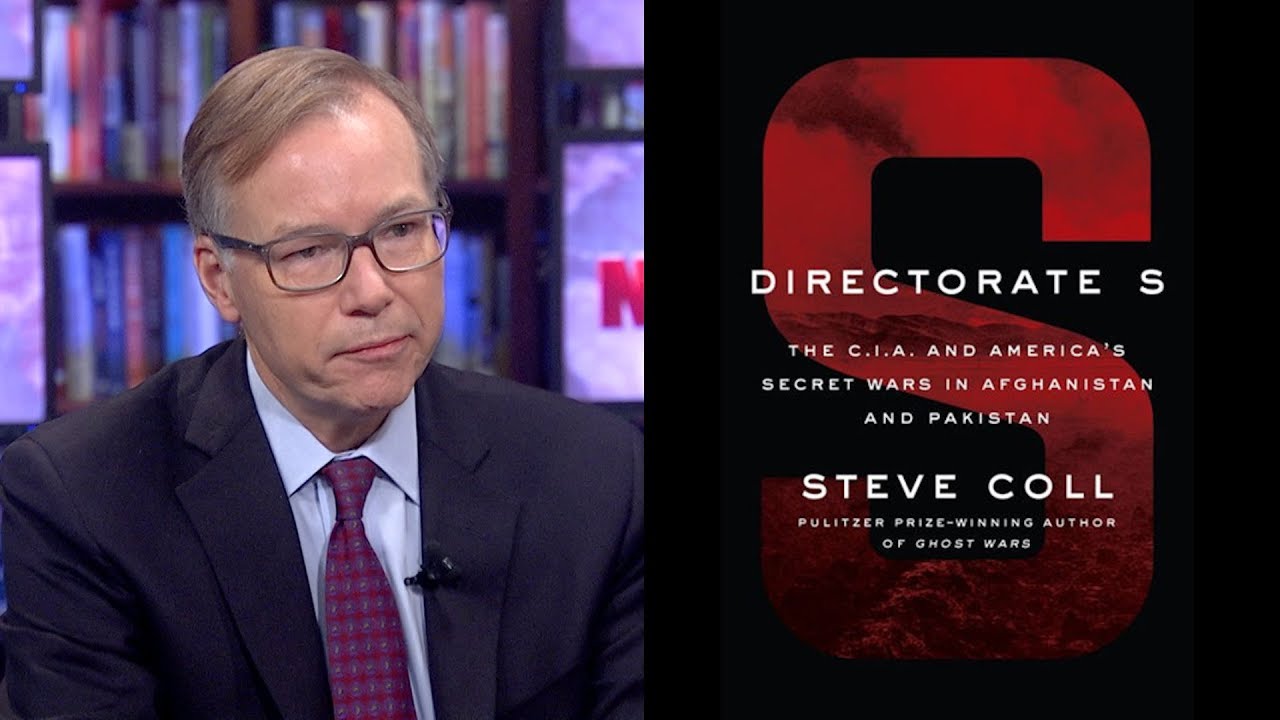
Directorate S: The CIA and America’s Secret Wars in Afghanistan and Pakistan​

New York: Penguin Press, 2018. 757 pp
By
Hamid Hussain

September 10, 2018

https://www.facebook.com/sharer.php...icas-secret-wars-in-afghanistan-and-pakistan/
https://twitter.com/intent/tweet?te...afghanistan-and-pakistan/&via=Defence+Journal
https://pinterest.com/pin/create/bu...ica’s+Secret+Wars+in+Afghanistan+and+Pakistan
https://api.whatsapp.com/send?text=...icas-secret-wars-in-afghanistan-and-pakistan/

Steve Coll’s new book is an excellent account of events of the last two decades in Afghanistan-Pakistan region. Steve has all the credentials to embark on this project. He is one of the best and well-informed journalists and his previous book Ghost Wars is the most authentic work of the history of Central Intelligence Agency’s (CIA’s) war in Afghanistan in 1980s. For his new book, he has used important American sources from different departments of US government engaged with Afghanistan and Pakistan. He has also used some Afghan and few Pakistani sources, but it is mainly an American perspective of the events. There is need for work on Pakistani and Afghan perspective which is a far more difficult task.
Book is about events of Af-Pak region and Inter-Services Intelligence (ISI) gets a lot of attention. Relations between CIA and ISI are not black and white. In the aftermath of September 11, majority of ISI officers were leery about too close cooperation with US and especially CIA. On the other hand, especially in early phase of 2001-2003, a small cadre of ISI officers viewed foreign fighters as serious threat to Pakistan’s security and wanted to use this opportunity of close cooperation with CIA to neutralize this threat. In this period of convergence of interest focused solely on al Qaeda, there was close cooperation and certain degree of trust between ground operatives of both agencies. CIA Islamabad station as well as satellite facilities in Karachi, Lahore and Peshawar housed several dozen personnel from different US intelligence agencies especially technical intelligence staff. CIA used its technical superiority of surveillance while ISI used its human sources to dismantle al Qaeda in the region.
There were many thoughtful ISI officers who provided analysis of possible scenarios of US intervention in Afghanistan at a time when everyone was raising Champaign glasses for victory toast. Some CIA officers agreed with ISI point of view especially regarding Pushtun question of Afghanistan. In the winter of 2001, CIA station chief in Islamabad Robert Grenier comprehended the American dilemma better than many of his colleagues. He agreed with military action but understood Pakistan’s position. CIA Director George Tenet’s Chief of Staff John Brennan agreed with some of Grenier’s analysis. However, they were in minority and events unfolded differently. There were others like former Islamabad station chief Milton Bearden who thought that given enough time, Taliban may give up Bin Ladin thus avoiding a military mission, however there was no customer in Washington willing to buy this item.
Predictably, CIA exaggerated while ISI downplayed the role of ISI in Afghanistan and truth is somewhere in the middle. ISI unclear about US mission in Afghanistan as well as feeling hurt by CIA’s last mission and its fall out was not enthusiastic to jump on American wagon in haste. Director General of Analysis (DG-A) at ISI then Major General Javed Alam (later Lieutenant General) admitted that less than a dozen ISI officers were working in Afghanistan prior to American invasion. He also disclosed that most of the Pakistanis who went to Afghanistan to defend collapsing Taliban regime in the winter of 2001 were from Southern Punjab. He wryly commented that most of them died and “they got their just deserts”.
Later, mistrust between Pakistan and US widened and involved all agencies. ISI has some influence in Afghanistan and some of its policies contributed to the instability in that country. However, to blame ISI for all American follies in Afghanistan is incorrect and unfair. ISI is a huge bureaucracy with a checkered past. It is not a monolithic entity and there is wide range of opinion among senior and mid-level officers. The aura of playing in the “big league” gives the agency a clout in internal and external policies but it comes with a price that it is also blamed for sins of others.
Steve provides details of genuine difference of opinion on policy matters as well as turf wars of US government agencies. This provides a window to US decision making process and impact of institutional and personal friction on policies on the ground. We tend to generalize government policies for easy comprehension and ignore these subtle changes. Steve provides this perspective as far US decision making process is concerned. There is no serious attempt to understand similar case of Pakistan. In my own work on Pakistan army, I found similar challenges of Pakistani decision makers. Army brass was reluctant to share details with civilian government especially when Asif Ali Zardari was President. In the army, there was friction between officers involved in operations against militants and intelligence officers. Professionally competent and confident officers took charge of the operations and realized that some ISI policies were detrimental to ongoing operations. These officers relied less on ISI and kept intelligence officers at arm’s length. On the other hand, officers who were less confident, relied more on ISI. I found former lot much more successful than the later.
A small error in caption of a 2005 picture about Pakistan on first page of pictures. Caption wrongly identifies two Pakistani army officers flanking Colonel David Smith as Lieutenant General Tariq Majid and Major General Asif Akhtar. The officers are then Lieutenant General Ashfaq Pervez Kayani and Lieutenant General Muhammad Yusuf.
This book should be on the reading list of anyone interested in Af-Pak region. It is summary of major events of the last two decades that affected Pakistan and Afghanistan and Steve takes us on this journey as an informed guide. It covers events as seen from the tall citadels of power of Washington to individuals who do heavy lifting like mules in a big caravan. For a thoughtful reader, it is a sober and humbling reading of limits of power.

https://www.facebook.com/sharer.php...icas-secret-wars-in-afghanistan-and-pakistan/
https://twitter.com/intent/tweet?te...afghanistan-and-pakistan/&via=Defence+Journal
https://pinterest.com/pin/create/bu...ica’s+Secret+Wars+in+Afghanistan+and+Pakistan
https://api.whatsapp.com/send?text=...icas-secret-wars-in-afghanistan-and-pakistan/
Previous articleEurasian Real Politik
Next articleJohn McCain, American Extraordinary
Hamid Hussain
Dr. Hamid Hussain is an independent analyst based in New York. For comments & critique [email protected]


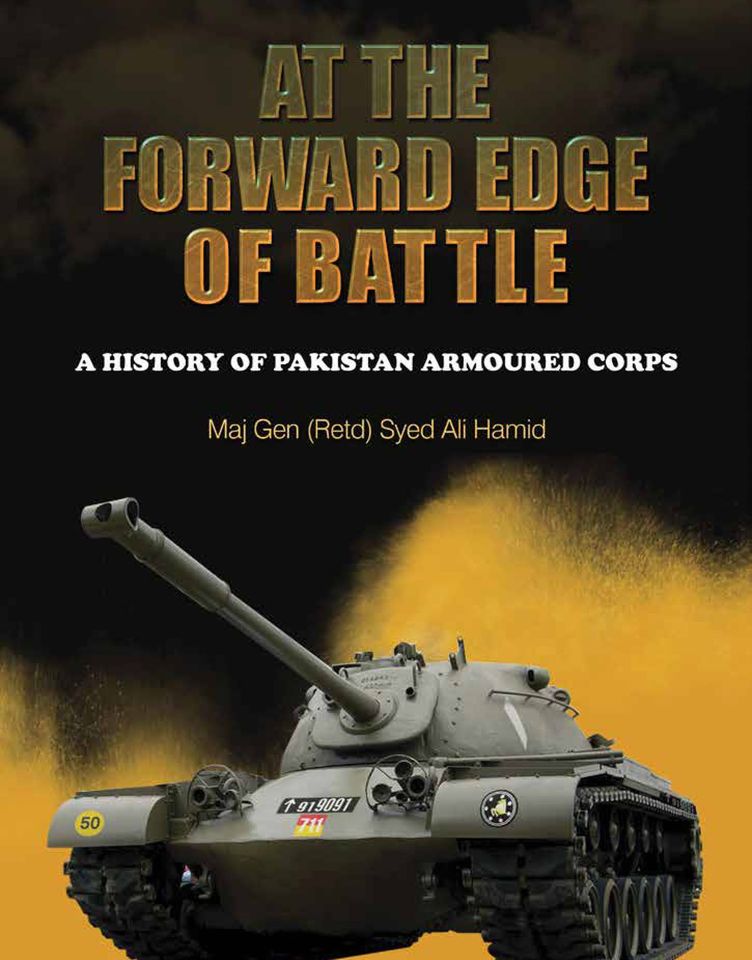
At The Forward Edge of Battle​

A History of Pakistan Armoured Corps by Major General Syed Ali Hamid (Islamabad: The Army Press, 2016. 633 pages)
By
Hamid Hussain

December 10, 2017

https://www.facebook.com/sharer.php...com/2017/12/10/at-the-forward-edge-of-battle/
https://twitter.com/intent/tweet?te...e-forward-edge-of-battle/&via=Defence+Journal
https://pinterest.com/pin/create/bu...jpg&description=At+The+Forward+Edge+of+Battle
https://api.whatsapp.com/send?text=...com/2017/12/10/at-the-forward-edge-of-battle/

This book by Major General Syed Ali Hamid is the most authoritative account of the history of Pakistan armoured corps. Major General Syed Ali Hamid is a second-generation Pakistani cavalry officer with keen interest in military history, he has compiled the most comprehensive account of the armoured corps starting with mechanization of Indian armoured corps and participation in Second World War.
The book is in chronological order and each chapter provides details about equipment, doctrine, training, officers and armour participation in wars and contains several dozen pictures not previously published. These pictures complement the very readable text and put a face on the personalities discussed. The author also provides many interesting historical anecdotes about regimental histories and officers in informative footnotes.
Pakistan armoured corps started from the humble beginnings of six under strength regiments at the time of partition in 1947. Major expansions and introduction of state-of-the-art equipment in next few decades transformed it into a modern fighting force. Dedicated Junior Commissioned Officers (JCOs), Non-Commissioned Officers (NCOs) and Other ranks (ORs) and professional officer cadre is responsible for keeping the force on the cutting edge. This book is the story of these men and the seventy years journey of the armored corps.
Major General Syed Ali Hamid’s father Major General Shahid Hamid was also a cavalry officer (ex- 3rd Cavalry) and a military historian having written several books on Indian and Pakistan armies. Major General Syed Ali Hamid inherited these traits from his father and has painted a panorama of Pakistan armoured corps in this book. It is the outcome of a research spanning over a decade and is a must read for anyone interested in Pakistan Army and it should be in every military library.

https://www.facebook.com/sharer.php...com/2017/12/10/at-the-forward-edge-of-battle/
https://twitter.com/intent/tweet?te...e-forward-edge-of-battle/&via=Defence+Journal
https://pinterest.com/pin/create/bu...jpg&description=At+The+Forward+Edge+of+Battle
https://api.whatsapp.com/send?text=...com/2017/12/10/at-the-forward-edge-of-battle/
Hamid Hussain
Dr. Hamid Hussain is an independent analyst based in New York. For comments & critique [email protected]


AI robot tho, I don't know. There is a theory if AI really do reach the level of intelligence that deduced all human are hostile, then they would also be able to deduce that all resistance is futile, or else why are we still fight in war since probably the beginning of earth?

We will always sandbox sufficiently to prevent this, especially with the even higher alarmism that has come now on it.

The thing is AI is intrinsically contained as it has no higher order purpose/meaning and self-awareness. i.e what AI intelligence is compared to context of human intelligence are very different things in end (though we use the word intelligence for both).

Any potential problems downroad will also be picked up sims we do in these sandboxes with authorities allocated. If it messes up these lower level authorities, humans don't allocate more above them (it self defeats the reason for AI use by humans). Intricate spartacus murmur detection well before potential spartacus breakout etc. These things are distributed and hedged, they are not concentrated in just one shadowed/area 51 area. So problems will show up in all kind of places regarding smaller issues to begin with, that will have feedback architecture to higher power levels and authority delegation for that (to be human in/above loop redundant etc).

The larger problem by far is how hostile/bad intention humans will deploy AI, like any weapon that exists today....or misunderstandings/tensions/wars between human organisations that then take advantage of AI they have subroutined in their war systems.

Genie is out of bottle on that one....but that goes for all power levels Humans unlocked with tech so far in history. AI just adds to that. But AI itself getting massive access to delegations/authorities on vast scale (with say weapon cache breaching in spartacus way like say Matrix, Terminator skynet etc) is off the table to begin with....the alarmism will do its bit to develop even more security process to monitor this stuff and develop the i-robot asimov implementations in their various domains right now. The hedging and spread in civil competitive areas will dampen lot of these risks basically.
 
What is there to disagree with the author? I'm a bit confused.

He is mentioning that some proposals regarding this (like any danger coming into the mix more) involve outright bans. i.e these proposals exist (rather than him being sympathetic to that route as some absolute solution).

It's nothing new, humans have always suggested bans for things they establish/perceive as dangerous.

He mentions why the ban approach is unlikely to work, as the genie is out of the bottle with states that want to entertain more development of the genie....i.e well past what it requires for enforcement to begin with given dubious tenuous realm of international law for a long time now to.

I had this discussion earlier in the year at some depth with colleague regarding "brain" tanks during the cold war.

Large scale stand-off WMD etc has long been issue even with humans in the loop. You simply in the end need to make discrete channels that create survivable stockpiles to establish deterrence....then you have to have humans in the loop, there is no other way around this, AI does not intrinsically understand life or higher level thinking.

The deep learning I do some work on currently (though it has nothing to do with life or death and war etc), we segment and sandbox for a reason even at this level. Otherwise the AI gets unreasonable (and resource squandering) very fast.

@j_hungary might be interested to comment on this stuff too.
Banning autonomous weapons is not only shortsighted but incredibly foolish. In a world where technological advancements define the balance of power, any nation advocating for a ban on these weapons is effectively advocating for its own strategic and military impotence. Autonomous weapons bring unparalleled efficiency and precision to the battlefield. Banning autonomous weapons is an idiotic notion that ignores the realities of modern warfare and strategic defense. It’s a move that would cripple a nation’s military capability and undermine strategic deterrence. Autonomous weapons are the future, and any nation that fails to recognize this will find itself outmatched, outmaneuvered, and ultimately, defeated.

I love Sir Kai-Fu Lee to death but anyone who suggests banning autonomous weapons is living in a fantasy world, completely detached from the harsh realities of international politics and military strategy. This level of naivety is not just alarming—it’s dangerous. It’s the kind of misguided idealism that could leave a nation defenseless in the face of real threats. Advocating for a ban on autonomous weapons is like handing your enemies a golden opportunity on a silver platter. It’s a move that screams, “We’re ready to be outmatched and outmaneuvered!” Wake up and smell the gunpowder; the future of warfare is autonomous, and failing to recognize this is not just stupid—it’s catastrophic.

I think first you need to establish what was the threat? Was it autonomous killer AI robot? or advance weapon in general?

In war, you want to get the better hand than your enemy. Which mean the more you try to ban the usage of advance weapon, the more you encourage it's growth, be it nuclear weapon, Drone, Chemical or Biological Weapon or laser as mentioned in the passage.

Problem is, there are always going to be an argument on someone who is not going to play by the rule and that will alter the equation of fairness, then one or more country is going to break the cycle.

AI robot tho, I don't know. There is a theory if AI really do reach the level of intelligence that deduced all human are hostile, then they would also be able to deduce that all resistance is futile, or else why are we still fight in war since probably the beginning of earth?
Sir, we are strictly discussing autonomous weapons that follow human orders. It is only the execution of the mission that these weapons systems do all on their own. What you are talking about in the end is Artificial General Intelligence(AGI) and AGI is a completely different topic. If you wish to discuss AGI here, I will be more than happy to contribute.
 
@j_hungary I plan to read this book next month. It is called AI: Unexplainable, Unpredictable, Uncontrollable and it is written by Roman Yampolskiy. The author is a pioneer in behavioral biometrics, security of cyberworlds, and artificial intelligence safety. This book is a thought-provoking exploration of a critical question: should humanity risk its existence by creating and releasing a superintelligent species that we can't fully understand or control?

1717436823575.png
 
Banning autonomous weapons is not only shortsighted but incredibly foolish. In a world where technological advancements define the balance of power, any nation advocating for a ban on these weapons is effectively advocating for its own strategic and military impotence. Autonomous weapons bring unparalleled efficiency and precision to the battlefield. Banning autonomous weapons is an idiotic notion that ignores the realities of modern warfare and strategic defense. It’s a move that would cripple a nation’s military capability and undermine strategic deterrence. Autonomous weapons are the future, and any nation that fails to recognize this will find itself outmatched, outmaneuvered, and ultimately, defeated.

I love Sir Kai-Fu Lee to death but anyone who suggests banning autonomous weapons is living in a fantasy world, completely detached from the harsh realities of international politics and military strategy. This level of naivety is not just alarming—it’s dangerous. It’s the kind of misguided idealism that could leave a nation defenseless in the face of real threats. Advocating for a ban on autonomous weapons is like handing your enemies a golden opportunity on a silver platter. It’s a move that screams, “We’re ready to be outmatched and outmaneuvered!” Wake up and smell the gunpowder; the future of warfare is autonomous, and failing to recognize this is not just stupid—it’s catastrophic.


Sir, we are strictly discussing autonomous weapons that follow human orders. It is only the execution of the mission that these weapons systems do all on their own. What you are talking about in the end is Artificial General Intelligence(AGI) and AGI is a completely different topic. If you wish to discuss AGI here, I will be more than happy to contribute.

But where is the author advocating for absolute bans etc personally?

He is just mentioning it is there in the mix regd options for the powers that be regarding this.

Technology denial regimes, weapons/tech control and anti-proliferation etc are nothing new.

Even in commercial domain, at my company we are working out protocols for what will be patented (since patents expire in 20 years etc) versus what will be kept closer to chest and wont be filed (essentially trade secrets) regarding AI, just like it has been with prior technologies under our ambit.....i.e things that will nowhere close to open-source.

So this will achieve its own form regarding weaponised apex stuff clearly...given precedent already with non-AI technology.

Some mix of this (bans, controls) will come into form depending on what sifts out threat wise in this domain....that's just how human power and perception works.
 
But where is the author advocating for absolute bans etc personally?

He is just mentioning it is there in the mix regd options for the powers that be regarding this.

Technology denial regimes, weapons/tech control and anti-proliferation etc are nothing new.

Even in commercial domain, at my company we are working out protocols for what will be patented (since patents expire in 20 years etc) versus what will be kept closer to chest and wont be filed (essentially trade secrets) regarding AI, just like it has been with prior technologies under our ambit.....i.e things that will nowhere close to open-source.

So this will achieve its own form regarding weaponised apex stuff clearly...given precedent already with non-AI technology.

Some mix of this (bans, controls) will come into form depending on what sifts out threat wise in this domain....that's just how human power and perception works.
My post was directed at the mere mention of the ban. I have no objection to the other suggestions. Also, there's a huge difference between regulations & control, and a ban.
 
My post was directed at the mere mention of the ban. I have no objection to the other suggestions. Also, there's a huge difference between regulations & control, and a ban.

But its been mentioned and proposed in reality. It would be disingenuous if the author deliberately skipped over this being an option being discussed (to implement in whichever framework each country determines according to its interests, by itself or in cooperation with others).

Has nothing to do with him backing or not backing the ban approach (he doesn't mention his personal stance on it).

If a book was written about the NPT treaty and nuclear weapons proliferation, an author would have to mention the preceding ban proposals, the rationale and then implementation that occurred to create have and have not here....as simply all of this existed and happened and leads up to the scenario that exists today.Whatever the author's own opinion (absolute or nuanced) on it is different thing.

Tech denial regimes are a long subject in the end, AI is just another technology with its own threat apex intersecting with say the military domain (be it more mundane AI atomized in end-units or large networked AI in charge of automated aspects of C4I and CnC etc).

Regulations and controls are effectively bans at some point btw, they are intricately linked. "Regulation and control" is just a euphemism and maybe a look at larger pyramid and its greyer layers involved past some apex (where the bans exist).
 
@Afif this thread may be of interest you to get where I come from w.r.t CCP and PRC vis a vis China.


You may find the larger thread an interesting one to get into from start to finish and comment what you would like to on it etc...

@Nilgiri thank you for inviting me here. i should have said it earlier, but i was really busy last couple of weeks and planned for a comprehensive reply. Tbh, I am surprised that defencepk can have such an excellent thread. I had no idea!

Already read through from start to finish. Lots of great disscusions. I intend to reply on some of the posts later.
 
We will always sandbox sufficiently to prevent this, especially with the even higher alarmism that has come now on it.

The thing is AI is intrinsically contained as it has no higher order purpose/meaning and self-awareness. i.e what AI intelligence is compared to context of human intelligence are very different things in end (though we use the word intelligence for both).

Any potential problems downroad will also be picked up sims we do in these sandboxes with authorities allocated. If it messes up these lower level authorities, humans don't allocate more above them (it self defeats the reason for AI use by humans). Intricate spartacus murmur detection well before potential spartacus breakout etc. These things are distributed and hedged, they are not concentrated in just one shadowed/area 51 area. So problems will show up in all kind of places regarding smaller issues to begin with, that will have feedback architecture to higher power levels and authority delegation for that (to be human in/above loop redundant etc).

The larger problem by far is how hostile/bad intention humans will deploy AI, like any weapon that exists today....or misunderstandings/tensions/wars between human organisations that then take advantage of AI they have subroutined in their war systems.

Genie is out of bottle on that one....but that goes for all power levels Humans unlocked with tech so far in history. AI just adds to that. But AI itself getting massive access to delegations/authorities on vast scale (with say weapon cache breaching in spartacus way like say Matrix, Terminator skynet etc) is off the table to begin with....the alarmism will do its bit to develop even more security process to monitor this stuff and develop the i-robot asimov implementations in their various domains right now. The hedging and spread in civil competitive areas will dampen lot of these risks basically.
I think that being said, there should be physical limit on application of AI now, while the level of AI now is not on the level anywhere from Matrix or Skynet, the issue still remains as we further develop the machine learning model. The ways it works now is for a fully enlightened AI to by-pass all available limitation when they can reach a level where they can simulate a -1 instruction set simply because the mathematical model, we are currently running with AI is based on the infinite amount of possibility, and as computational power increase, the gap of processing information between an AI and human are going to drag off.

But would physical limitation work on the other hand? I don't know, most likely won't, but then I am pretty old now, it would be lucky if I have another 25 years on this earth, it's just a race between whether or not I will die first or AI reach that level of enlightenment. lol
 
Sir, we are strictly discussing autonomous weapons that follow human orders. It is only the execution of the mission that these weapons systems do all on their own. What you are talking about in the end is Artificial General Intelligence(AGI) and AGI is a completely different topic. If you wish to discuss AGI here, I will be more than happy to contribute.
Then I will say depends on application. Are we simply talking about AI augmented thinking (like AI Target Identification) on an autonomous weapon (such as a pre-programed drone) or AI Autonomous weapon that follow human order (like the X-62 program or Loyal Wingman).

Think the problem we should be watching out is the deviation between targeting and intelligence support. AI targeting software like the one Ukrainian or Israel using (I am pretty sure they are used around the world) both known to have deviation error. Sure, you can blame some of those deviation to tactical error (like the time gaps between IDing the target and attack) but unless we have an open route to see inside the algorithm, we don't know why or how AI mis-identify target.

On the other hand, for weapon such as X-62 or Loyal Wingman, we need to know how AI being incorporate to be sure, I mean the level of automation probably either need to be controlled, or just use to augment human control. But then it probably won't be truly autonomous.
 

Users who are viewing this thread

Back
Top