Green light for Eurofighter from Germany for the Turkish Air Force

Yes but BAe developed the EW suite for F-35 and are developing a new one for Typhoon, built using their experience developing Pratorian DASS & AN/ASQ-239. There is some US technology in there but BAe gained a lot of experience building their own and combining the different elements into one package.

F-35 is a decade newer than original Typhoon and so of course it will be better.

Not sure what the debate is here as of course the next generation Typhoon will at least temporarily have better radar and avionics than current version of F-35. It will also have similar "sensor fusion" as F-35.
BAE does NOT develop EuroDASS / Pratorian EW suite for Eurofighter Typhoon.
Leonardo develop EuroDASS / Pratorian EW suite for Eurofighter Typhoon.
BAE and Leonardo are two different companies.

There is no proof of Eurofighter having better radar and avionics than current version of F-35 and have sensor fusion at par with F-35. These are your "claims." Leonardo ECRS MK2 radar system boast capabilities that were implemented in AN/APG-81 in the early 2000s - such is the gap between the US and UK in developing radar systems. F-35 has vastly superior sensor systems on the whole.

BAE cannot transfer American F-35 technology to Eurofighter without American approval. Leonardo will have to redesign Eurofighter for it to accomodate F-35 technology which will be very costly undertaking. This is like creating a new jet fighter.
 
BAE cannot transfer American F-35 technology to Eurofighter without American approval

there is no American technology on the F-35 EW suite but British technology

and The UK transfer these advanced technologies to the Eurofighter including AESA Radar and EW

Eurofighter is not a stealth platform to compare with the F-35
British technology TEMPEST is coming
 
there is no American technology on the F-35 EW suite but British technology

and The UK transfer these advanced technologies to the Eurofighter including AESA Radar and EW

Eurofighter is not a stealth platform to compare with the F-35
British technology TEMPEST is coming
Good. We are happy for Turkey. But maybe Turkey should do joint ventures with China.

The West cannot be trusted.
 
Good. We are happy for Turkey. But maybe Turkey should do joint ventures with China.

The West cannot be trusted.

Turkiye doesnt need anyone
KAAN Fighter Jet will be full of indigenous including Engine

just a more time is needed ( 10 years )

Eurofighter will be interim solution until the KAAN Fighter Jet squadrons enter service
 
Turkiye doesnt need anyone
KAAN Fighter Jet will be full of indigenous including Engine

just a more time is needed ( 10 years )

Eurofighter will be interim solution until the KAAN Fighter Jet squadrons enter service
True, I am just saying better to work with other than the West.
 
British gave AN/ASQ-239 EW Suite technology to USA for the F-35s

and you are still saying that British are catching up

go and develop similar technology and come to say anything about British technology which created all the systems in a tiny structure


British BAE Systems' AN/ALQ-250 (EPAWSS) for the F-15EX
BAE Systems protects US Air Force F-15EX , F-22 , F-35s with digital electronic warfare technology


BAE Systems is the world leader in EW technology
and Thanks to BAE Systems for helping Turkish ASELSAN to develop SPEWS-II EW Suite for CCIP modernized F-16Cs

now Turkish ASELSAN develops superior FEWS EW suite for the KAAN Fighter Jet
BAE develop AN/ASQ-239 EW suite for F-35 with American input and has a manufacturing plant in Texas. Understand the difference.

“As Lockheed Martin’s electronic warfare integrator for all F-35 aircraft, we’re committed to equipping our customers with advanced capabilities that help them conduct their missions,” said Deborah Norton, vice president of F-35 Solutions at BAE Systems. “Under this collaborative agreement, we will work closely with Lockheed Martin and Northrop Grumman to enhance the capability of our fully integrated EW system – heightening pilots’ situational awareness and helping them evade, engage and defeat modern threats.”
Link

British gave AN/ASQ-239 EW Suite technology to USA for the F-35s

and you are still saying that British are catching up

go and develop similar technology and come to say anything about British technology which created all the systems in a tiny structure


British BAE Systems' AN/ALQ-250 (EPAWSS) for the F-15EX
BAE Systems protects US Air Force F-15EX , F-22 , F-35s with digital electronic warfare technology


BAE Systems is the world leader in EW technology
and Thanks to BAE Systems for helping Turkish ASELSAN to develop SPEWS-II EW Suite for CCIP modernized F-16Cs

now Turkish ASELSAN develops superior FEWS EW suite for the KAAN Fighter Jet

SPEWS-II is AN/ALQ-178 (V)5+ in American terms - it is good but old 2003 tech. You continue to forget for some reason or conveniently overlook facts to hype things you have no knowledge of.

World leader in EW technology?

As the UK and other European NATO members attempt to adapt their air forces to better meet the threat of wider Russian military aggression in the coming years, airborne electromagnetic warfare (EW) is a key area where non-US capabilities are in worryingly short supply across the Alliance.
Link

Dependency on the US

Currently, NATO’s air forces are heavily dependent on US Air Force (USAF) and US Navy (USN) aircraft to provide both stand-off and stand-in jamming against a high-end threat like Russia, although several other countries’ fighter fleets have impressive ECM capabilities already for close-range self-defence. NATO’s primary stand-off jamming capability is provided by USN EA-18G Growler aircraft and the USAF EC-130H Compass Call, which is now being replaced by the new EA-37B. SEAD support is also provided by the Tornado electronic combat/reconnaissance (ECR) aircraft of the Italian Air Force and German Air Force, as well as the F-16CM ‘Wild Weasels’ of the USAF’s 480th Fighter Squadron in Germany. However, in terms of EA systems, these Cold War-era aircraft only carry self-protection jamming equipment that is increasingly obsolescent against the more modern Russian threats if used without cover from the more powerful US stand-off systems like the EA-18G and EA-37B. The Tornado ECRs are also only available in small numbers, and the majority of the USAF F-16CM fleet is based in South Korea and Japan. It is notable that in almost any high-end NATO SEAD/DEAD exercise, USN EA-18Gs perform the majority of the EA support, since they offer by far the greatest capability in their class.
However, the USN attempted to withdraw its land-based EA-18G units from the European theatre in mid-2022 to bolster its presence in the Indo-Pacific and Middle East. The Growler is a critical part of the Carrier Air Wing force structure, and demand for its capabilities greatly outstrips the number of squadrons available to deploy at any given time. That attempt did not immediately lead to withdrawal, but relying on US EA support as a lynchpin of European NATO SEAD/DEAD capabilities remains a high-risk posture. One of the most likely scenarios in which Russia might risk direct conflict with a NATO member is if the US is drawn into either a serious military standoff or an actual conflict with China in the Indo-Pacific. In any clash over Taiwan or in the South China Sea, airborne EA assets would be some of the most in-demand in the entire US arsenal, meaning few if any EA-18G Growlers or USAF EA-37B Compass Call aircraft would be made available to respond to a Russian threat in Europe during a concurrent crisis. This means a much greater burden of the high-end EW effort would fall on European capabilities than in any previous post-Cold War conflict.

Link

The F-35 is also a potent airborne EW asset, and one that has been purchased by a large number of NATO members including the UK, the Netherlands, Norway, Italy, Finland, Denmark, Belgium, Poland, Germany and Czechia. Despite being primarily designed for low-observable strike and SEAD/DEAD operations, its APG-81 radar and advanced mission systems enable highly effective ECM for self-defence and also provide potent stand-in jamming and potentially limited stand-off jamming capabilities against both airborne and surface threats. Even a few F-35s can greatly enhance the survivability of not only their own formation but also allied assets operating alongside them as part of composite air operations. However, the F-35 still faces tactical limitations that make it difficult to generate sustained EW effects for more than short bursts, and pilots potentially risk compromising their position to hostile sensors when emitting in this way. More advanced EA capabilities that formed part of the intended Block 4 upgrade have in many cases been delayed until at least 2029 by issues with the electrical power generation capacity of the existing F-135 engine and hardware manufacturing bottlenecks. Most countries that have bought F-35s also lack the capacity or rights to modify or create their own mission data sets, and instead rely on the US for their mission data and threat library updates.

However, this does not fully apply to the UK since it is part of the Australian, Canadian and United Kingdom Reprogramming Laboratory (ACURL), which enables it to generate UK-specific mission data. Beyond the ACURL for its F-35B fleet, the UK has several national airborne EW development and procurement programmes. For stand-in jamming effects, the RAF is exploring options for stand-in jamming payloads for its Autonomous Collaborative Platform (ACP) programme, and continues to fund development work on a stand-in jamming variant of the MBDA SPEAR 3 miniature cruise missile called SPEAR EW. Potent ECM capabilities are also a core feature of the new ECRS Mk2 AESA radar, which is being procured to eventually be retrofitted onto the 40 Tranche 3 aircraft in the RAF Typhoon fleet. However, SPEAR EW has not actually been ordered so far, and the ECRS Mk2 has been developed very slowly compared to AESA radar development programmes for comparable fighters. On current timeframes, RAF Typhoons with the new radar are unlikely to be in service on the frontlines before the late 2020s. The threat outlook in Europe, therefore, would seem to suggest that allocating increased funding and priority to whichever of these existing programmes can offer the most rapid path to procurement and introduction to service is something that should be seriously considered. Given the lack of funding so far for ECRS Mk2 radar sets for the remaining 77 RAF Tranche 2 Typhoons, urgent updates to the capability of their existing ESM and Defensive Aid Sub-System (DASS) suites should also be examined – especially if novel software techniques could improve capability faster than hardware upgrades planned but not yet funded within the Typhoon LTE construct.
Link

SIT DOWN, man.

"and the ECRS Mk2 has been developed very slowly compared to AESA radar development programmes for comparable fighters."

Yes, the British are catching up. But the US is not sitting idle and developing even more powerful and advanced EW systems than before all in-house.

You Europeans make big claims but are nothing without American support. The US is the undisputed champion in developing advanced hardware and military stuff. The US provides much-needed business and input to BAE because the company will be bankrupt if left to UK finances.
 
Last edited:
BAE develop AN/ASQ-239 EW suite for F-35 with American input and has a manufacturing plant in Texas. Understand the difference.

“As Lockheed Martin’s electronic warfare integrator for all F-35 aircraft, we’re committed to equipping our customers with advanced capabilities that help them conduct their missions,” said Deborah Norton, vice president of F-35 Solutions at BAE Systems. “Under this collaborative agreement, we will work closely with Lockheed Martin and Northrop Grumman to enhance the capability of our fully integrated EW system – heightening pilots’ situational awareness and helping them evade, engage and defeat modern threats.”
Link


SPEWS-II is AN/ALQ-178 (V)5+ in American terms - it is good but old 2003 tech. You continue to forget for some reason or conveniently overlook facts to hype things you have no knowledge of.

World leader in EW technology?

As the UK and other European NATO members attempt to adapt their air forces to better meet the threat of wider Russian military aggression in the coming years, airborne electromagnetic warfare (EW) is a key area where non-US capabilities are in worryingly short supply across the Alliance.
Link

Dependency on the US

Currently, NATO’s air forces are heavily dependent on US Air Force (USAF) and US Navy (USN) aircraft to provide both stand-off and stand-in jamming against a high-end threat like Russia, although several other countries’ fighter fleets have impressive ECM capabilities already for close-range self-defence. NATO’s primary stand-off jamming capability is provided by USN EA-18G Growler aircraft and the USAF EC-130H Compass Call, which is now being replaced by the new EA-37B. SEAD support is also provided by the Tornado electronic combat/reconnaissance (ECR) aircraft of the Italian Air Force and German Air Force, as well as the F-16CM ‘Wild Weasels’ of the USAF’s 480th Fighter Squadron in Germany. However, in terms of EA systems, these Cold War-era aircraft only carry self-protection jamming equipment that is increasingly obsolescent against the more modern Russian threats if used without cover from the more powerful US stand-off systems like the EA-18G and EA-37B. The Tornado ECRs are also only available in small numbers, and the majority of the USAF F-16CM fleet is based in South Korea and Japan. It is notable that in almost any high-end NATO SEAD/DEAD exercise, USN EA-18Gs perform the majority of the EA support, since they offer by far the greatest capability in their class.
However, the USN attempted to withdraw its land-based EA-18G units from the European theatre in mid-2022 to bolster its presence in the Indo-Pacific and Middle East. The Growler is a critical part of the Carrier Air Wing force structure, and demand for its capabilities greatly outstrips the number of squadrons available to deploy at any given time. That attempt did not immediately lead to withdrawal, but relying on US EA support as a lynchpin of European NATO SEAD/DEAD capabilities remains a high-risk posture. One of the most likely scenarios in which Russia might risk direct conflict with a NATO member is if the US is drawn into either a serious military standoff or an actual conflict with China in the Indo-Pacific. In any clash over Taiwan or in the South China Sea, airborne EA assets would be some of the most in-demand in the entire US arsenal, meaning few if any EA-18G Growlers or USAF EA-37B Compass Call aircraft would be made available to respond to a Russian threat in Europe during a concurrent crisis. This means a much greater burden of the high-end EW effort would fall on European capabilities than in any previous post-Cold War conflict.

Link

The F-35 is also a potent airborne EW asset, and one that has been purchased by a large number of NATO members including the UK, the Netherlands, Norway, Italy, Finland, Denmark, Belgium, Poland, Germany and Czechia. Despite being primarily designed for low-observable strike and SEAD/DEAD operations, its APG-81 radar and advanced mission systems enable highly effective ECM for self-defence and also provide potent stand-in jamming and potentially limited stand-off jamming capabilities against both airborne and surface threats. Even a few F-35s can greatly enhance the survivability of not only their own formation but also allied assets operating alongside them as part of composite air operations. However, the F-35 still faces tactical limitations that make it difficult to generate sustained EW effects for more than short bursts, and pilots potentially risk compromising their position to hostile sensors when emitting in this way. More advanced EA capabilities that formed part of the intended Block 4 upgrade have in many cases been delayed until at least 2029 by issues with the electrical power generation capacity of the existing F-135 engine and hardware manufacturing bottlenecks. Most countries that have bought F-35s also lack the capacity or rights to modify or create their own mission data sets, and instead rely on the US for their mission data and threat library updates.
However, this does not fully apply to the UK since it is part of the Australian, Canadian and United Kingdom Reprogramming Laboratory (ACURL), which enables it to generate UK-specific mission data. Beyond the ACURL for its F-35B fleet, the UK has several national airborne EW development and procurement programmes. For stand-in jamming effects, the RAF is exploring options for stand-in jamming payloads for its Autonomous Collaborative Platform (ACP) programme, and continues to fund development work on a stand-in jamming variant of the MBDA SPEAR 3 miniature cruise missile called SPEAR EW. Potent ECM capabilities are also a core feature of the new ECRS Mk2 AESA radar, which is being procured to eventually be retrofitted onto the 40 Tranche 3 aircraft in the RAF Typhoon fleet. However, SPEAR EW has not actually been ordered so far, and the ECRS Mk2 has been developed very slowly compared to AESA radar development programmes for comparable fighters. On current timeframes, RAF Typhoons with the new radar are unlikely to be in service on the frontlines before the late 2020s. The threat outlook in Europe, therefore, would seem to suggest that allocating increased funding and priority to whichever of these existing programmes can offer the most rapid path to procurement and introduction to service is something that should be seriously considered. Given the lack of funding so far for ECRS Mk2 radar sets for the remaining 77 RAF Tranche 2 Typhoons, urgent updates to the capability of their existing ESM and Defensive Aid Sub-System (DASS) suites should also be examined – especially if novel software techniques could improve capability faster than hardware upgrades planned but not yet funded within the Typhoon LTE construct.
Link

SIT DOWN, man.

"and the ECRS Mk2 has been developed very slowly compared to AESA radar development programmes for comparable fighters."

Yes, the British are catching up. But the US is not sitting idle and developing even more powerful and advanced EW systems than before.

You Europeans make big claims but are nothing without American support. The US is the undisputed champion in developing advanced hardware and military stuff. The US provides business to BAE so this company does not go kaput.
Anything that Turkey buys is the best - until then it was utter shite compared to what Turkey already had. That’s the logic at play here so - good luck!
 
Turkish ASELSAN has great experience for all these technologies

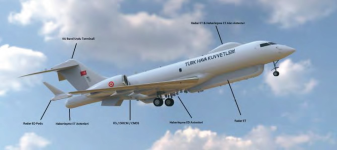
Also next gen Electronic Warfare Suite and HAVASOJ stand off Jammer Aircarft

when GOKHAN ramjet powered long range air to air missile is ready then good luck to F-16V and RAFALE

When is the GOKHAN going to be ready? Is it going to be similar in capability to Meteor?
 
Going for the Qatar version is a bit dumb as that has the old radar and electronics. Maybe they need some planes now really badly and think they can upgrade later but that will come with huge costs and downtime.

The latest version is something else entirely and will probably have the world's most advanced radar and electronics when it comes into UK service next year.

Short of getting a 5th generation fighter, the Typhoon is as good as it gets and I think it should even be able to hold its own against downgraded greek F-35s due to the fact it will have an edge in radar, electronics, higher top speed/flight ceiling and ability to supercruise.

I really think the Turks need to look at options other than the American/European ones who humiliate them at every opportunity.

They should go Chinese and Russian route with some alternative solutions. They are also counting on the Rolls-Royce engine for the KAAN jet which I am fairly confident the Brits won't give to them at the last moment.
 
In fact, the best way to be protected from NATO is to be part of NATO. We have to be in NATO because of our national interests. We are here until one day US have to choose between Israel and Turkey.

That time frame should be used to build nukes and ICBMs.
 
BAE develop AN/ASQ-239 EW suite for F-35 with American input and has a manufacturing plant in Texas. Understand the difference.

As like Turkish ASELSAN manufacturing its own Systems in Azerbaijan , Ukraine , Malaysia , Qatar , Kazakhstan , Pakistan and The UAE

so BAE Systems manufacturing its own Systems in The US to equip the F-15EX , F-22 and F-35 with British technology EW Suites
 
Last edited:
As like Turkish ASELSAN manufacturing its own Systems in Azerbaijan , Ukraine , Malaysia , Qatar , Kazakhstan , Pakistan and The UAE

so BAE Systems manufacturing its own Systems in The US to equip the F-15EX , F-22 and F-35 with British technology


Your right that some people think "US is best" and ignore the evidence when presented.

UK has made some of the finest radars in the world that were No. 1 when released:


1. Blue Vixen in Sea Harrier in 1990s which was the finest aircraft radar on the planet. In fact it was so good that Nato even used it as a "mini AWACs' during the Yugoslav Wars.

2. SAMPSON radar on Type-45 destroyer in the 2000s was the best shipborne radar. Even US military admitted they had nothing that could match this.

BAe/Leonardo UK are at the cutting edge when it comes to EW/radars that when they say the Typhoon will have the world's most advanced radar and electronics then anyone who knows anything takes it seriously.

If Turkey can get this version of Typhoon then that would be a superb aircraft. 0.1m^2 LO RCS with semi-recessed air to air missiles, Mach 1.5 supercruise and best EW/radar would mean that it would be a credible threat to even the F-35.
 
SPEWS-II is AN/ALQ-178 (V)5+ in American terms - it is good but old 2003 tech. You continue to forget for some reason or conveniently overlook facts to hype things you have no knowledge of.

Its based on British technology from the BAE Systems

Within the scope of the SPEWS-II Project, the part of the System validation studies carried out at BAE Systems facilities in the United States was completed in 2015. Subsequently, the System integration Laboratory and test systems located at BAE Systems facilities were brought to Turkiye ASELSAN facilities

after 2019 , total of 59 CCIP modernized F-16C were quipped with SPEWS-II EW Suite

Greek F-16s didn't have this technology ... VIPER modernization offers EW Suite to Greek F-16s


and now ASELSAN develops superior FEWS EW Suite for the KAAN Fighter Jet and F-16 OZGUR modernization

Also Aselsan HAVASOJ stand off jammer combine many different electronic warfare capabilities on a single Aircraft like Radar and Communication electronic warfare systems

Hellenic Air Force only can dream about these technologies
1730194596149.png
 
Last edited:
You Europeans make big claims but are nothing without American support.

We have seen your USA in Drone technology ...
USA is not sole Country in the world with advanced military technologies

Turkish AKINCI UCAV is far superior to American MQ-9 UCAV

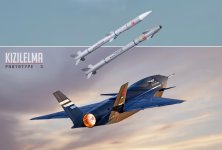
Turkish KIZILELMA unmanned stealth Fighter Jet is far superior to tiny American XQ-58

MURAD AESA Radar will allow the KIZILELMA to fire 100+ km GOKDOGAN air to air Missiles which will be carried in internal weapon bays for stealth flight capability
1730198194525.jpeg

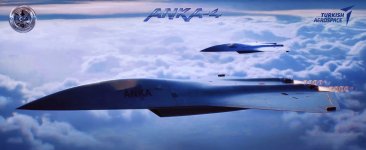
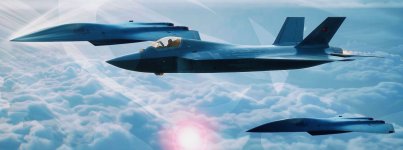
Also TAI develops ANKA-4 unmanned stealth Fighter Jet
networked environment to deliver full data-to-decision (D2D) capability together with the KAAN Fighter Jet for 6th gen war concept

To view this content we will need your consent to set third party cookies.
For more detailed information, see our cookies page.

1730197085466.jpeg
1730197272928.jpeg

USA blocked sale of UCAV to Turkiye
and Turkiye was become drone super power in the world ...
now Turkiye has moved ahead of global powers such as the United States and China in this critical area
 
Last edited:
When is the GOKHAN going to be ready? Is it going to be similar in capability to Meteor?

Firing tests of GOKHAN Ramjet powered long range air to air missile to begin in 2025

And Aselsan develops AGRAS-200AA next gen active radar seeker head for long range air to air Missile with range of 200+ km

GOKHAN will be similar to the METEOR in superior speed and in technological capability with the next generation seeker , two-way datalink , expanded no-escape envelope, improved high angle off-boresight capability , etc
 

Users who are viewing this thread

Country Watch Latest

Back
Top