Pakistan’s J-10CE fighter brings new radar and long-range missiles
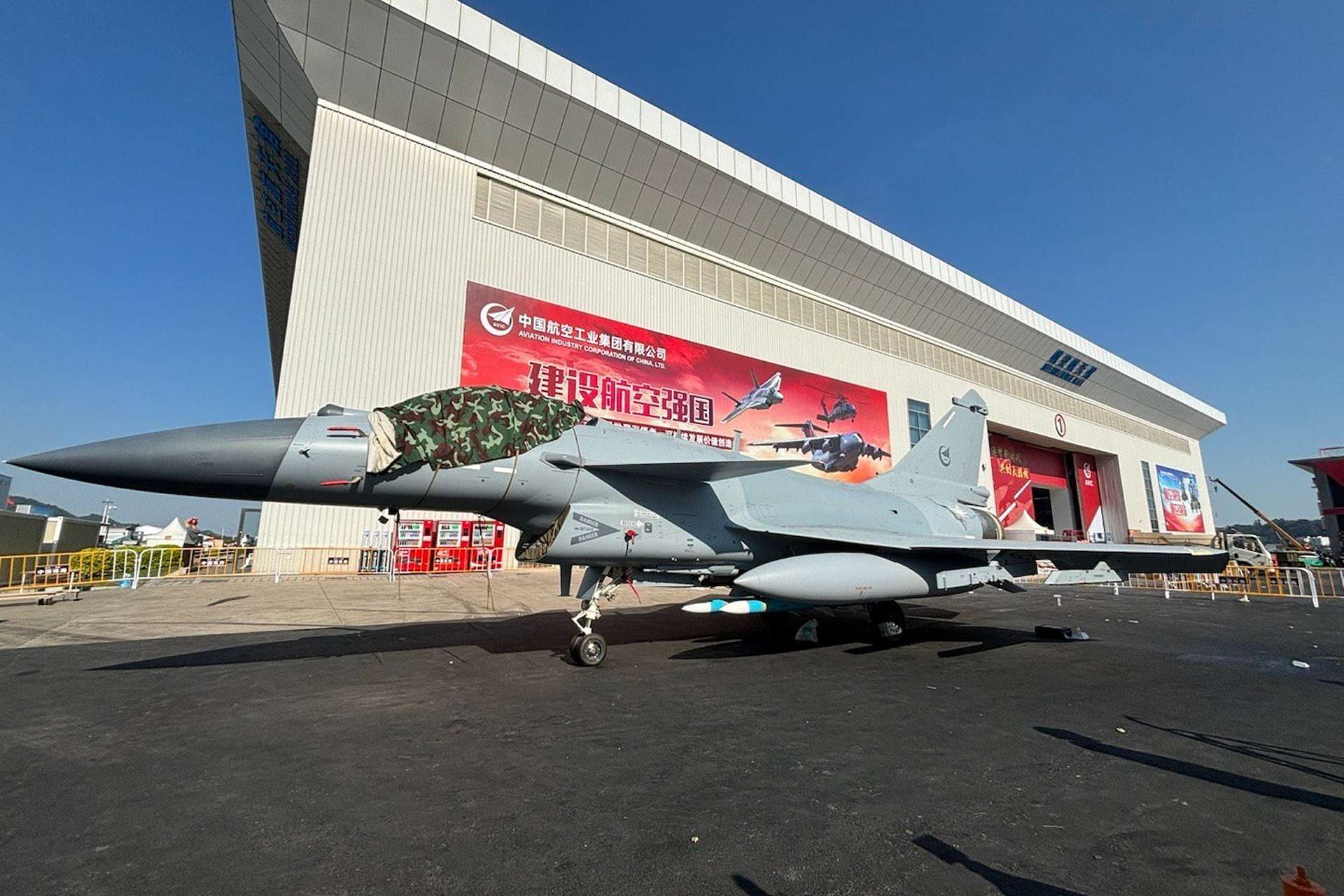
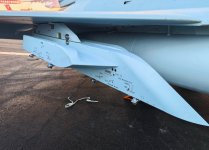
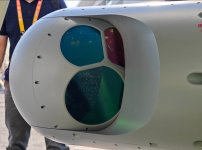
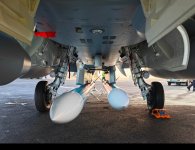
As the Zhuhai Air Show 2024 is approaching, China’s Chengdu J-10CE fighter jet, marked with tail number 74825, has arrived as the first fighter jet for this year’s event. Following the arrival of this unit, another J-10CE arrived, identified by serial number 9001 and carrying only the AVIC (Aviation Industry Corporation of China) emblem, is widely anticipated to join the Pakistan Air Force (PAF) after the exhibition. This J-10CE model includes various upgrades, such as a staggered dual missile pylon system that accommodates two short-range missiles, six beyond-visual-range (BVR) missiles, and external drop tanks, expanding its payload and operational range.
Positioned on the aircraft’s nose, the AESA radar reportedly offers an approximately 50-kilometer detection range advantage over the F-16C Block 52 radar system, potentially allowing the J-10CE to engage targets from a greater distance.
Since 2019, China has promoted the J-10CE, produced by Chengdu Aerospace Corporation, as an export-specific version of the J-10C, a single-engine, single-seat, all-weather multirole fighter. The J-10CE integrates the KLJ-10 Active Electronically Scanned Array (AESA) radar, which aims to improve detection and targeting in environments with significant electromagnetic interference. Positioned on the aircraft’s nose, the AESA radar reportedly offers an approximately 50-kilometer detection range advantage over the F-16C Block 52 radar system, potentially allowing the J-10CE to engage targets from a greater distance. Its BVR capability is supported by PL-15 missiles, with an engagement range of up to 200 kilometers, facilitating long-range target engagements.
The J-10 series has undergone development since the J-10A's initial deployment in 2004, which included a modern cockpit, targeting systems, and a canard-delta wing for enhanced maneuverability. This was followed by the J-10B in 2008, which added a Passive Electronically Scanned Array (PESA) radar, missile-approach warning system (MAWS), and a divertless supersonic intake (DSI) design. The J-10C, entering service in 2015, introduced the AESA radar, improved radar warning receivers, satellite communications, and datalinks for greater situational awareness. Comparisons place the J-10C on a similar level to other single-engine fighters, such as the F-16 and Gripen, in terms of situational awareness and detection capacity.
In 2022, Pakistan acquired an initial batch of six J-10CEs, which were subsequently displayed in the National Day military parade. Pakistani officials and pilots, including Squadron Leader Obar, evaluated the aircraft’s performance in BVR and close-range scenarios. Obar noted the J-10CE’s situational awareness, range, and maneuverability, which allowed it to engage targets at distances beyond the radar capabilities of F-16Cs. The AESA radar, paired with the PL-15 missile, reportedly provided detection and engagement range advantages, potentially enhancing Pakistan’s air defense in BVR contexts.
Obar outlined certain limitations, particularly the J-10CE’s external mounting capacity, which he indicated was less than that of Western fighters like the F-16C. However, the recent exhibition of a J-10 variant with composite pylons may indicate efforts to address these limitations and increase missile load capacity. Additionally, while the J-10CE’s canard configuration enables agile maneuvering, it may face challenges in sustained close combat if the opposing aircraft holds a higher energy reserve. Obar also highlighted the domestically developed turbofan 10B engine, which supports the fighter’s vertical maneuver capabilities.
The J-10CE’s cost structure has been positioned as a key component in its export appeal. Chinese manufacturers have marketed it as a viable alternative to Western-made jets, aimed at countries seeking advanced capabilities without Western political conditions. Since its introduction at the 2019 Dubai Air Show, the J-10CE has been promoted as an option for countries looking to balance technological capabilities with financial constraints. Its AESA radar, compatibility with long-range missiles, and updated cockpit features align with China’s defense export strategy. Participation of the J-10CE in the Zhuhai Air Show reflects its role in China’s military export initiatives. As a technologically updated and comparatively affordable aircraft, the J-10CE offers an option for countries seeking to upgrade their fleets and access advanced air defense systems within budgetary limits.
While the J-10CE’s canard configuration enables agile maneuvering, it may face challenges in sustained close combat if the opposing aircraft holds a higher energy reserve.
Pakistan’s J-10CE fighter brings new radar and long-range missiles

armyrecognition.com




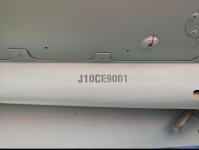
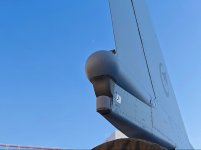
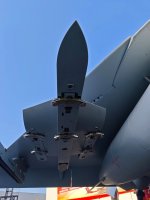
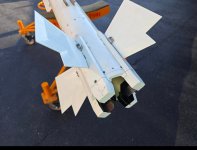
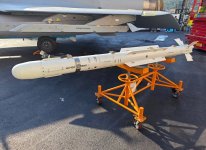
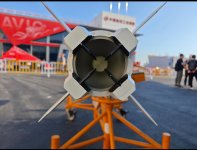
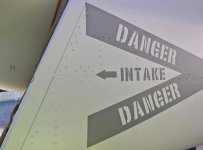
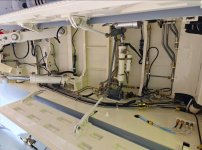
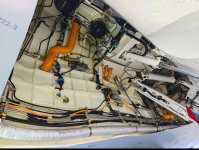
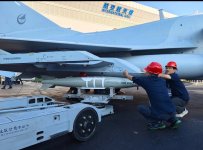


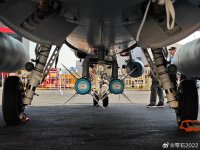
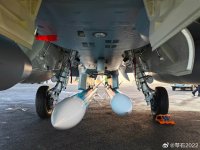

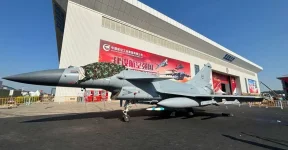
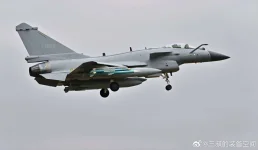

 taking a PAF bird off the production line and using it at the air show to demonstrate latest features. Obviously they would want to promote Avic on the tail emblem as the producer / supplier and not put it on show with the Pakistani flag