Navigation
Install the app
How to install the app on iOS
Follow along with the video below to see how to install our site as a web app on your home screen.
Note: This feature may not be available in some browsers.
More options
Style variation
You are using an out of date browser. It may not display this or other websites correctly.
You should upgrade or use an alternative browser.
You should upgrade or use an alternative browser.
Pakistan Navy | News & Discussions
- Thread starter Bullzz
- Start date
More options
Who Replied?

Cool_Soldier
Registered Member
Cant see the messages here via Tweets as it is blocked 

Yasser76
Elite Member

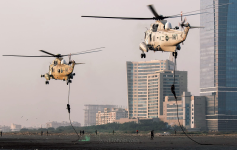
Pak Marines being deployed using ropes from Sea Kings Helicopters of Pakistan Navy during IDEAS Show 2024.
View attachment 83098
Ah the old low level grappling on the beach from a 50 year old helicopter never fails to amuse, even for the 28th time....

ghazi52
THINK TANK: CONSULTANT
Interview with the Chief of the Pakistan Navy
As the Pakistan Navy prepares for AMAN-2025, one of the largest naval exercises scheduled to take place in the second week of February, Admiral Naveed Ashraf, Chief of the Pakistan Navy, provided insights in an exclusive interview with Naval News.
Tayfun Ozberk
25 Nov 2024
The Indian Ocean, a key global trade artery and a geopolitical significance hotspot faces growing challenges ranging from security threats to environmental concerns. Pakistan has emerged as a pivotal player in safeguarding maritime stability and fostering international cooperation in this strategically critical region. Recognizing the interconnected nature of these challenges, Pakistan has taken proactive steps to bring together navies from around the world to address common concerns and enhance maritime security.
From February 10 to 14, 2025, the Pakistan Navy will host the AMAN-2025 naval exercise, one of the most prominent maritime events in the region. AMAN-2025 will bring together participating nations to strengthen ties, share expertise, and develop coordinated responses to the evolving dynamics of maritime security. This year’s exercise introduces a significant new dimension—the AMAN Dialogue, a platform designed to complement the operational aspects of the exercise with strategic discussions on shared challenges and solutions.
In an exclusive interview with Naval News, Admiral Naveed Ashraf, Chief of the Pakistani Navy, shed light on Pakistan’s vision for AMAN-2025, the importance of multilateral cooperation in the Indian Ocean, and the critical role of maritime nations in addressing global and regional security issues.

Naval News: Admiral, can you please tell us how you envision preparing the Pakistan Navy to counter conventional and unconventional threats?
FseoAdmiral Ashraf: Since I have assumed the Command of the Pakistan Navy, the geopolitical environment of our region is changing rapidly especially due to the ongoing Israel-Gaza conflict with its butterfly effect in Yemen & Iran. The already volatile maritime security environment coupled with a diverse range of traditional and non-traditional maritime threats necessitates a robust, adaptive, and technologically advanced Navy with well-trained HR. Therefore, since assuming command as Chief of the Naval Staff, the most pressing challenge was to boost combat readiness through optimal utilization of resources and completion of ongoing Projects under financial constraints in order to boost the Pakistan Navy’s prowess in the increasingly complex maritime security environment in the region.
During my tenure, I am most eager to Prepare Pakistan Navy to counter both conventional and unconventional threats being posed to us. In addition, I would like to see PN performing 24/7 while ensuring security and stability in NAS. I am committed to strengthening Pakistan’s role as a key maritime player, capable of contributing to regional stability while protecting our sea lines of communication and economic interests.

Naval News: How does the Pakistan Navy perceive the evolving maritime security environment in the Indian Ocean region, especially considering rising tensions and external naval presence?
Admiral Ashraf: The global geo-political environment is ambiguous, volatile, and is characterized by realignment of interests. Pakistan finds itself in the midst of a complex geo-political and geo-economic competition prevailing in the region. Pakistan’s maritime security is intertwined with the maritime environment in the Indian Ocean, which is rapidly transforming. In our immediate neighborhood, long-drawn instability in Afghanistan simmers and continues to impinge upon regional security. On our eastern side, India is disturbing regional peace by blatantly provoking its neighbors. On our Western flank, Iran’s standoff with the US and Israel may manifest into a precarious situation for the shipping plying along the international Sea Lines of Communication (SLOCs).
Ongoing Israel-Hamas conflict with spillover in maritime arena after missile strikes by Houthis on merchant traffic and counter strikes on Yemeni mainland by US led West has created conditions for enhanced ERF presence in the region. Access to shore-based missiles and remotely operated vehicles to the warring groups is a serious threat to SLOCs transiting the Red Sea and the Gulf of Aden.
In the non-traditional domain; maritime terrorism, piracy, drug trafficking, gun running and human smuggling are main challenges being faced. Challenge to our regional maritime security is an ominous hybrid mix of traditional and non-traditional threats.
Naval News: Could you share insights on the Pakistan Navy’s current modernization efforts, including the procurement of new platforms, and ongoing projects?
Admiral Ashraf: Indigenization and modernization of the Pakistan Navy is an important cardinal of my vision. Our development strategy is based on ‘progressive capability enhancement’ so as to create a balanced, potent, and combat-ready force to deal with the evolving threats through the acquisition of force multipliers, and indigenous and innovative technical solutions.
We have been focusing on the induction of modern platforms, force multipliers, indigenization, and maintaining diversified options to mitigate external dependencies. At the same time, we believe in making the best use of available resources. Recently, we have inducted Type 054 A/P Frigates from China, OPVs Batch-1 and Batch-II from Romania, and MILGEM Class Corvette from Turkiye. These platforms with the latest weapons and sensors will be a significant addition to PN’s existing capabilities to effectively deal with today’s complex multi-threat environment. PN is in the process of inducting the remaining MILGEM class ships as 2 of these ships are being constructed indigenously in Pakistan (KS&EW).

The lead vessel of the Babur-class corvettes, PNS BABUR (P-280) (Pakistan Navy photo)
Based on experience gained during the construction of MILGEM Class Ships, the Pakistan Navy is planning to build JINNAH Class Frigates (JCF) which will be our first ever indigenously designed and built frigate-sized warship.
Naval News: How is the Pakistan Navy incorporating emerging technologies like unmanned systems into its fleet and operations?
Admiral Ashraf: PN has made significant strides in developing and inducting unmanned aerial systems in the Navy and also integrating them with the naval operations. We are currently operating mix bag of tactical to MALE UAVs. These UAVs are primarily employed for surveillance purposes, significantly enhancing our capabilities in maritime domain awareness.
Operationally, we believe in hybrid approach that combines manned and unmanned systems for naval operations. This strategy enables us to leverage the strengths of both types of platforms, optimizing operational flexibility and effectiveness. By integrating unmanned technologies with traditional manned systems, what I have observed is that operational gaps have been duly addressed, especially with regards to surveillance while substantially cutting repair/ maintenance and operating costs.
Naval News: The Pakistan Navy will host the 9th edition of the AMAN Exercise & maiden AMAN Dialogue in February 2025. What are the; objectives of these efforts and what impacts do you envision?
Admiral Ashraf: The main objective of AMAN is to foster regional cooperation for the maintenance of good order at sea, improving interoperability, sharing experiences, understanding each other, and exhibiting united resolve against terrorism and organized crimes in the maritime domain. PN is fully prepared and geared up to conduct AMAN-25 with enhanced participation of friendly countries in a professional and befitting manner. I may mention that the previous edition of the exercise held in Feb 231 witnessed participation from 50 countries across the globe. Keeping the same spirit, we are hopeful that this edition will also mark a distinctive chapter in the history of AMAN exercises with enhanced participation of friendly countries. Moreover, we are also looking forward to a healthy participation of Chiefs of Navies/ Coast Guards/ Defence Forces during the AMAN Dialogue.
ghazi52
THINK TANK: CONSULTANT
Chief of Naval Staff Visits FSDC Aero Solutions at IDEAS 2024, Experiences Advanced Mixed Reality Simulator
Global Defense Insight
November 22, 2024

Admiral Naveed Ashraf, Chief of Naval Staff, Pakistan Navy, 12th International Defence Exhibition and Seminar (IDEAS-2024), visited the stand of FSDC AeroSolutions Pvt Limited at IDEAS 2024, where he experienced a breakthrough in simulation technology firsthand.
During his visit, Admiral Ashraf explored the cutting-edge mixed-reality flight simulator developed by FSDC AeroSolutions.
The simulator provides an immersive and realistic flying experience, demonstrating advanced design and development capabilities and showcasing the company’s commitment to supporting the operational readiness of defense and aviation forces.
The Chief of Naval Staff personally experienced the simulator, gaining insight into its precision and functionality. He praised the FSDC AeroSolutions team for their innovation and expertise in creating state-of-the-art simulators that meet international standards and cater to the needs of modern defense forces.
IDEAS 2024, one of the largest defense exhibitions in the region, serves as a platform for showcasing cutting-edge technologies and fostering collaboration between defense and industry stakeholders worldwide.

Fatman17
Moderator

Home»News»Interview with the Chief of the Pakistan Navy

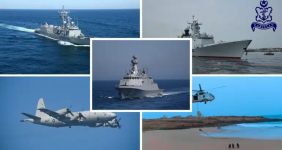
Pakistan Navy assets in one square
Interview with the Chief of the Pakistan Navy
As the Pakistan Navy prepares for AMAN-2025, one of the largest naval exercises scheduled to take place in the second week of February, Admiral Naveed Ashraf, Chief of the Pakistan Navy, provided insights in an exclusive interview with Naval News.
Tayfun Ozberk 25 Nov 2024The Indian Ocean, a key global trade artery and a geopolitical significance hotspot faces growing challenges ranging from security threats to environmental concerns. Pakistan has emerged as a pivotal player in safeguarding maritime stability and fostering international cooperation in this strategically critical region. Recognizing the interconnected nature of these challenges, Pakistan has taken proactive steps to bring together navies from around the world to address common concerns and enhance maritime security.
From February 10 to 14, 2025, the Pakistan Navy will host the AMAN-2025 naval exercise, one of the most prominent maritime events in the region. AMAN-2025 will bring together participating nations to strengthen ties, share expertise, and develop coordinated responses to the evolving dynamics of maritime security. This year’s exercise introduces a significant new dimension—the AMAN Dialogue, a platform designed to complement the operational aspects of the exercise with strategic discussions on shared challenges and solutions.
In an exclusive interview with Naval News, Admiral Naveed Ashraf, Chief of the Pakistani Navy, shed light on Pakistan’s vision for AMAN-2025, the importance of multilateral cooperation in the Indian Ocean, and the critical role of maritime nations in addressing global and regional security issues.
Naval News: Admiral, can you please tell us how you envision preparing the Pakistan Navy to counter conventional and unconventional threats?
FseoAdmiral Ashraf: Since I have assumed the Command of the Pakistan Navy, the geopolitical environment of our region is changing rapidly especially due to the ongoing Israel-Gaza conflict with its butterfly effect in Yemen & Iran. The already volatile maritime security environment coupled with a diverse range of traditional and non-traditional maritime threats necessitates a robust, adaptive, and technologically advanced Navy with well-trained HR. Therefore, since assuming command as Chief of the Naval Staff, the most pressing challenge was to boost combat readiness through optimal utilization of resources and completion of ongoing Projects under financial constraints in order to boost the Pakistan Navy’s prowess in the increasingly complex maritime security environment in the region.
During my tenure, I am most eager to Prepare Pakistan Navy to counter both conventional and unconventional threats being posed to us. In addition, I would like to see PN performing 24/7 while ensuring security and stability in NAS. I am committed to strengthening Pakistan’s role as a key maritime player, capable of contributing to regional stability while protecting our sea lines of communication and economic interests.
Naval News: How does the Pakistan Navy perceive the evolving maritime security environment in the Indian Ocean region, especially considering rising tensions and external naval presence?
Admiral Ashraf: The global geo-political environment is ambiguous, volatile, and is characterized by realignment of interests. Pakistan finds itself in the midst of a complex geo-political and geo-economic competition prevailing in the region. Pakistan’s maritime security is intertwined with the maritime environment in the Indian Ocean, which is rapidly transforming. In our immediate neighborhood, long-drawn instability in Afghanistan simmers and continues to impinge upon regional security. On our eastern side, India is disturbing regional peace by blatantly provoking its neighbors. On our Western flank, Iran’s standoff with the US and Israel may manifest into a precarious situation for the shipping plying along the international Sea Lines of Communication (SLOCs).
Ongoing Israel-Hamas conflict with spillover in maritime arena after missile strikes by Houthis on merchant traffic and counter strikes on Yemeni mainland by US led West has created conditions for enhanced ERF presence in the region. Access to shore-based missiles and remotely operated vehicles to the warring groups is a serious threat to SLOCs transiting the Red Sea and the Gulf of Aden.
In the non-traditional domain; maritime terrorism, piracy, drug trafficking, gun running and human smuggling are main challenges being faced. Challenge to our regional maritime security is an ominous hybrid mix of traditional and non-traditional threats.
Naval News: Could you share insights on the Pakistan Navy’s current modernization efforts, including the procurement of new platforms, and ongoing projects?
Admiral Ashraf: Indigenization and modernization of the Pakistan Navy is an important cardinal of my vision. Our development strategy is based on ‘progressive capability enhancement’ so as to create a balanced, potent, and combat-ready force to deal with the evolving threats through the acquisition of force multipliers, and indigenous and innovative technical solutions.
We have been focusing on the induction of modern platforms, force multipliers, indigenization, and maintaining diversified options to mitigate external dependencies. At the same time, we believe in making the best use of available resources. Recently, we have inducted Type 054 A/P Frigates from China, OPVs Batch-1 and Batch-II from Romania, and MILGEM Class Corvette from Turkiye. These platforms with the latest weapons and sensors will be a significant addition to PN’s existing capabilities to effectively deal with today’s complex multi-threat environment. PN is in the process of inducting the remaining MILGEM class ships as 2 of these ships are being constructed indigenously in Pakistan (KS&EW).
Based on experience gained during the construction of MILGEM Class Ships, the Pakistan Navy is planning to build JINNAH Class Frigates (JCF) which will be our first ever indigenously designed and built frigate-sized warship.
Naval News: How is the Pakistan Navy incorporating emerging technologies like unmanned systems into its fleet and operations?
Admiral Ashraf: PN has made significant strides in developing and inducting unmanned aerial systems in the Navy and also integrating them with the naval operations. We are currently operating mix bag of tactical to MALE UAVs. These UAVs are primarily employed for surveillance purposes, significantly enhancing our capabilities in maritime domain awareness.
Operationally, we believe in hybrid approach that combines manned and unmanned systems for naval operations. This strategy enables us to leverage the strengths of both types of platforms, optimizing operational flexibility and effectiveness. By integrating unmanned technologies with traditional manned systems, what I have observed is that operational gaps have been duly addressed, especially with regards to surveillance while substantially cutting repair/ maintenance and operating costs.
Naval News: The Pakistan Navy will host the 9th edition of the AMAN Exercise & maiden AMAN Dialogue in February 2025. What are the; objectives of these efforts and what impacts do you envision?
Admiral Ashraf: The main objective of AMAN is to foster regional cooperation for the maintenance of good order at sea, improving interoperability, sharing experiences, understanding each other, and exhibiting united resolve against terrorism and organized crimes in the maritime domain. PN is fully prepared and geared up to conduct AMAN-25 with enhanced participation of friendly countries in a professional and befitting manner. I may mention that the previous edition of the exercise held in Feb 231 witnessed participation from 50 countries across the globe. Keeping the same spirit, we are hopeful that this edition will also mark a distinctive chapter in the history of AMAN exercises with enhanced participation of friendly countries. Moreover, we are also looking forward to a healthy participation of Chiefs of Navies/ Coast Guards/ Defence Forces during the AMAN Dialogue.
Here is the video of the AMAN-2023 exercise prepared by the Pakistan Navy:
Tags Babur-class Pakistan Navy Type 054 A/P
Facebook Twitter Stumble linkedin Pinteres
Authors
Posted by : Tayfun Ozberk
Tayfun Ozberk is a former naval officer who is expert in Above Water Warfare especially in Littoral Waters. He has a Bachelor Degree in Computer Science. After serving the Turkish Navy for 16 years, he started writing articles for several media. Tayfun also offers analysis services on global naval strategies. He's based in Mersin, Turkey.
Yasser76
Elite Member
Home»News»Interview with the Chief of the Pakistan Navy
Pakistan Navy assets in one square
Interview with the Chief of the Pakistan Navy
As the Pakistan Navy prepares for AMAN-2025, one of the largest naval exercises scheduled to take place in the second week of February, Admiral Naveed Ashraf, Chief of the Pakistan Navy, provided insights in an exclusive interview with Naval News.
Tayfun Ozberk 25 Nov 2024
The Indian Ocean, a key global trade artery and a geopolitical significance hotspot faces growing challenges ranging from security threats to environmental concerns. Pakistan has emerged as a pivotal player in safeguarding maritime stability and fostering international cooperation in this strategically critical region. Recognizing the interconnected nature of these challenges, Pakistan has taken proactive steps to bring together navies from around the world to address common concerns and enhance maritime security.
From February 10 to 14, 2025, the Pakistan Navy will host the AMAN-2025 naval exercise, one of the most prominent maritime events in the region. AMAN-2025 will bring together participating nations to strengthen ties, share expertise, and develop coordinated responses to the evolving dynamics of maritime security. This year’s exercise introduces a significant new dimension—the AMAN Dialogue, a platform designed to complement the operational aspects of the exercise with strategic discussions on shared challenges and solutions.
In an exclusive interview with Naval News, Admiral Naveed Ashraf, Chief of the Pakistani Navy, shed light on Pakistan’s vision for AMAN-2025, the importance of multilateral cooperation in the Indian Ocean, and the critical role of maritime nations in addressing global and regional security issues.
Admiral Naveed Ashraf, Chief of the Pakistan Navy
Naval News: Admiral, can you please tell us how you envision preparing the Pakistan Navy to counter conventional and unconventional threats?
FseoAdmiral Ashraf: Since I have assumed the Command of the Pakistan Navy, the geopolitical environment of our region is changing rapidly especially due to the ongoing Israel-Gaza conflict with its butterfly effect in Yemen & Iran. The already volatile maritime security environment coupled with a diverse range of traditional and non-traditional maritime threats necessitates a robust, adaptive, and technologically advanced Navy with well-trained HR. Therefore, since assuming command as Chief of the Naval Staff, the most pressing challenge was to boost combat readiness through optimal utilization of resources and completion of ongoing Projects under financial constraints in order to boost the Pakistan Navy’s prowess in the increasingly complex maritime security environment in the region.
During my tenure, I am most eager to Prepare Pakistan Navy to counter both conventional and unconventional threats being posed to us. In addition, I would like to see PN performing 24/7 while ensuring security and stability in NAS. I am committed to strengthening Pakistan’s role as a key maritime player, capable of contributing to regional stability while protecting our sea lines of communication and economic interests.
Pakistan Navy’s first Type-054 frigate, PNs Tughril (Credit: Pakistan Navy)
Naval News: How does the Pakistan Navy perceive the evolving maritime security environment in the Indian Ocean region, especially considering rising tensions and external naval presence?
Admiral Ashraf: The global geo-political environment is ambiguous, volatile, and is characterized by realignment of interests. Pakistan finds itself in the midst of a complex geo-political and geo-economic competition prevailing in the region. Pakistan’s maritime security is intertwined with the maritime environment in the Indian Ocean, which is rapidly transforming. In our immediate neighborhood, long-drawn instability in Afghanistan simmers and continues to impinge upon regional security. On our eastern side, India is disturbing regional peace by blatantly provoking its neighbors. On our Western flank, Iran’s standoff with the US and Israel may manifest into a precarious situation for the shipping plying along the international Sea Lines of Communication (SLOCs).
Ongoing Israel-Hamas conflict with spillover in maritime arena after missile strikes by Houthis on merchant traffic and counter strikes on Yemeni mainland by US led West has created conditions for enhanced ERF presence in the region. Access to shore-based missiles and remotely operated vehicles to the warring groups is a serious threat to SLOCs transiting the Red Sea and the Gulf of Aden.
In the non-traditional domain; maritime terrorism, piracy, drug trafficking, gun running and human smuggling are main challenges being faced. Challenge to our regional maritime security is an ominous hybrid mix of traditional and non-traditional threats.
Naval News: Could you share insights on the Pakistan Navy’s current modernization efforts, including the procurement of new platforms, and ongoing projects?
Admiral Ashraf: Indigenization and modernization of the Pakistan Navy is an important cardinal of my vision. Our development strategy is based on ‘progressive capability enhancement’ so as to create a balanced, potent, and combat-ready force to deal with the evolving threats through the acquisition of force multipliers, and indigenous and innovative technical solutions.
We have been focusing on the induction of modern platforms, force multipliers, indigenization, and maintaining diversified options to mitigate external dependencies. At the same time, we believe in making the best use of available resources. Recently, we have inducted Type 054 A/P Frigates from China, OPVs Batch-1 and Batch-II from Romania, and MILGEM Class Corvette from Turkiye. These platforms with the latest weapons and sensors will be a significant addition to PN’s existing capabilities to effectively deal with today’s complex multi-threat environment. PN is in the process of inducting the remaining MILGEM class ships as 2 of these ships are being constructed indigenously in Pakistan (KS&EW).
The lead vessel of the Babur-class corvettes, PNS BABUR (P-280) (Pakistan Navy photo)
Based on experience gained during the construction of MILGEM Class Ships, the Pakistan Navy is planning to build JINNAH Class Frigates (JCF) which will be our first ever indigenously designed and built frigate-sized warship.
Naval News: How is the Pakistan Navy incorporating emerging technologies like unmanned systems into its fleet and operations?
Admiral Ashraf: PN has made significant strides in developing and inducting unmanned aerial systems in the Navy and also integrating them with the naval operations. We are currently operating mix bag of tactical to MALE UAVs. These UAVs are primarily employed for surveillance purposes, significantly enhancing our capabilities in maritime domain awareness.
Operationally, we believe in hybrid approach that combines manned and unmanned systems for naval operations. This strategy enables us to leverage the strengths of both types of platforms, optimizing operational flexibility and effectiveness. By integrating unmanned technologies with traditional manned systems, what I have observed is that operational gaps have been duly addressed, especially with regards to surveillance while substantially cutting repair/ maintenance and operating costs.
Naval News: The Pakistan Navy will host the 9th edition of the AMAN Exercise & maiden AMAN Dialogue in February 2025. What are the; objectives of these efforts and what impacts do you envision?
Admiral Ashraf: The main objective of AMAN is to foster regional cooperation for the maintenance of good order at sea, improving interoperability, sharing experiences, understanding each other, and exhibiting united resolve against terrorism and organized crimes in the maritime domain. PN is fully prepared and geared up to conduct AMAN-25 with enhanced participation of friendly countries in a professional and befitting manner. I may mention that the previous edition of the exercise held in Feb 231 witnessed participation from 50 countries across the globe. Keeping the same spirit, we are hopeful that this edition will also mark a distinctive chapter in the history of AMAN exercises with enhanced participation of friendly countries. Moreover, we are also looking forward to a healthy participation of Chiefs of Navies/ Coast Guards/ Defence Forces during the AMAN Dialogue.
Here is the video of the AMAN-2023 exercise prepared by the Pakistan Navy:
Tags Babur-class Pakistan Navy Type 054 A/P
Facebook Twitter Stumble linkedin Pinteres
Authors
Posted by : Tayfun Ozberk
Tayfun Ozberk is a former naval officer who is expert in Above Water Warfare especially in Littoral Waters. He has a Bachelor Degree in Computer Science. After serving the Turkish Navy for 16 years, he started writing articles for several media. Tayfun also offers analysis services on global naval strategies. He's based in Mersin, Turkey.
You literally reposted the exact same interview that was posted a few posts earlier!?
Fatman17
Moderator
SorryYou literally reposted the exact same interview that was posted a few posts earlier!?
Users who are viewing this thread
Total: 1 (members: 0, guests: 1)
Pakistan Defence Latest


Country Watch Latest


Latest Posts
-

-
-
 Pakistan announces austerity measures to conserve fuel as Gulf conflict spirals (9 Viewers)
- Latest: Paitoo
-

