Claiming Ballistic Missiles as Guided Rockets
"While traditional rockets lacked inherent guidance systems, numerous countries have successfully developed and deployed guided rockets equipped with INS/GPS guidance for precision strikes, just like ballistic missiles. Notable examples include the American GMLRS (HIMARS), Russian Tornado-S, and Israeli Extra, which boast ranges between 70 km and 150 km.
Although both guided rockets and ballistic missiles utilise INS/GPS guidance, they exhibit significant differences. Guided Rockets are characterised by their compact size, substantial firing power (typically 6-10 rockets per launcher), and limited range compared to ballistic missiles. However, ballistic missiles, with their extended strike ranges and reduced firepower, offer a strategic advantage in certain military operations, typically deploying 1 or 2 missiles per launcher.
Ukraine and Russia have both heavily depended upon artillery and rocket systems in the war with NATO and US providing increasing numbers of launch platforms and ammunition to the Ukrainian Land Forces.
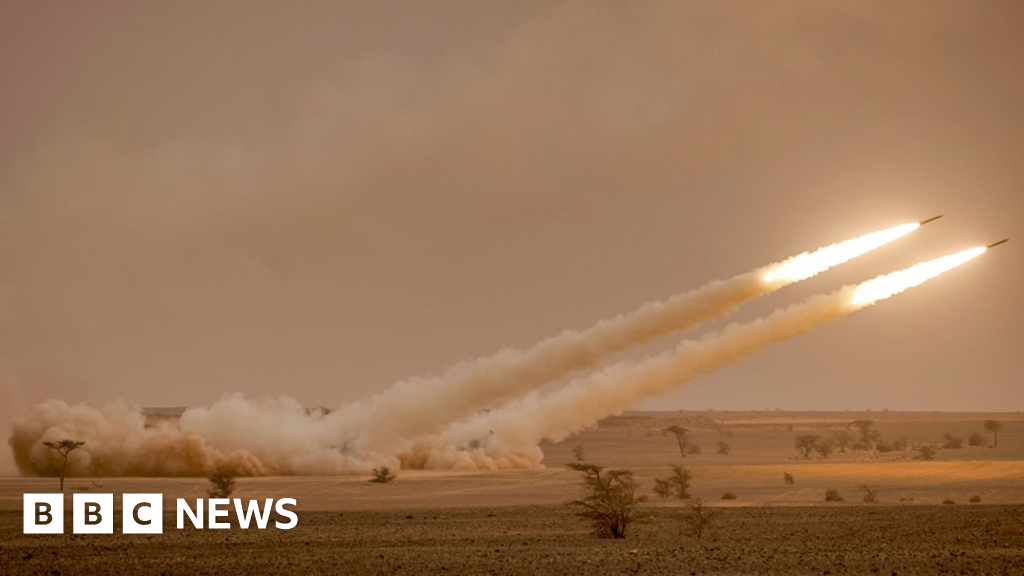
Ukraine says the US-made Himars missile system is changing the course of the war against Russia.

www.bbc.com
The recent addition of new long-range fires capabilities to Ukraine’s arsenal has played a key role in defending against stalled Russian forces. But additional mobile rocket batteries and longer-range rockets would allow Ukraine to mount more effective counter attacks and reclaim territory stolen by Russia, Oleksii Reznikov, minister of defense of Ukraine, said Tuesday.
Ukraine currently has eight High Mobility Artillery Rocket Systems, or HIMARS, able to strike ranges of 85 kilometers or 52 miles, as well asf Howitzer cannons with a range of 18 miles. Another four HIMARS
are on the way as of last week, according to the Defense Department, and the White House
expects to announce another shipment later this week. Speaking at an Atlantic Council event Tuesday, Reznikov said the HIMARS had already helped Ukraine destroy approximately 30 Russian command stations, as well as ammunition storage areas.
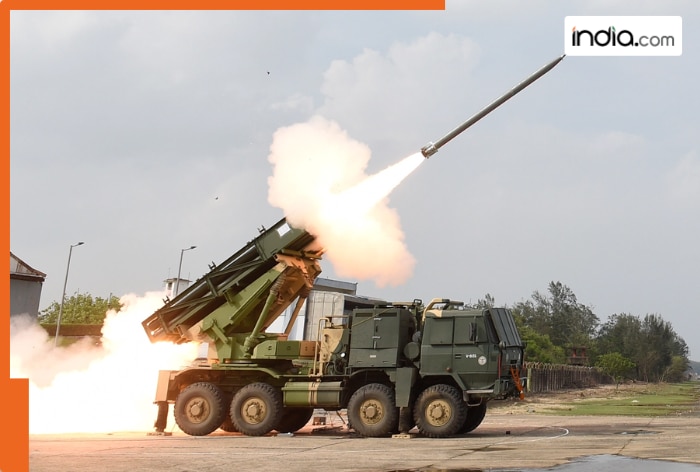
on other side of Border - (DRDO) on November 14, 2024 announced the successful completion of flight tests of guided Pinaka multi-barrel rocket (MBRL) system as part of Provisional Staff Qualitative Requirements (PSQR) validation trials paving the way for its induction. This enhances the range of the Pinaka to over 75km. In addition to the Pinaka, the Army has five Grad rocket regiments and three Smerch regiments. Eventually, the indigenous Pinaka will become the mainstay of the long range rocket artillery.
According to the reports, the system went through rigorous testing in three phases across various field firing ranges, validating its enhanced range, accuracy, consistency, and rate of fire.

www.india.com
Recent supply of Cluster Munitions by the US is evidence of Ukraine’s reliance on such long-range systems. Noteworthy in their efficacy are the US-origin M270 and HIMARS MLRS system due to high mobility and long engagement range (80km) which outranges the Russian BM-30 Smerch MLRS (70km). Even so, on July 25th the US Department of Defense (DoD) has announced a fresh $400 million weapons package for Ukraine including ammunition for HIMARS.
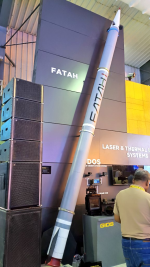
The success of rocket artillery systems in the war can be capitalized on by GIDS through its own offerings as militaries around the globe closely monitor efficacy of platforms in the war, as seen from the booming market for the TB-2 UCAV and Kamikaze drones. FATAH-1 and 2 have high export potential for Pakistan due to relatively lower cost than western MLRS systems, however, provide saturated firepower, high precision and can engage enemy installations, personnel and high value assets at standoff ranges."
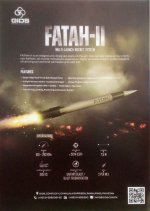
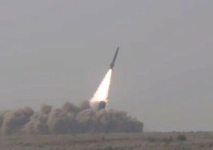
“Equipped with a state-of-the-art navigation system, unique trajectory, and manoeuvrable features, Fatah-II is capable of engaging targets with high precision and defeating any missile defence system, “Fatah-II is being inducted into Pakistan’s Artillery Divisions for standoff, precision engagement of deep targets. The rocket system will significantly upgrade the reach and lethality of Pakistan Army’s conventional arsenal,” said the Inter-Services Public Relations (ISPR), the public relations wing of the Pakistan Armed Forces
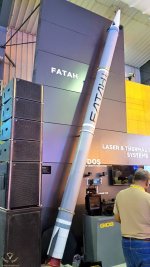
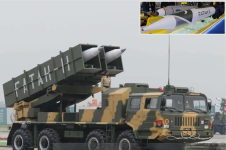
Short-range ballistic missiles such as India’s Pralay, Russia’s Iskander-M, and US Precision Strike Missiles offer strike ranges of 500 km with two missiles per launcher. The Fatah-II’s launcher configuration also reveals the presence of two missiles. Thus, based on these characteristics, the Fatah-II should be classified as a short-range ballistic missile rather than a guided rocket.
 Defence against Guided Rockets and Ballistic Missiles
GMLRS rockets fired by HIMARS have proven to be effective in bypassing Russia’s air defence systems, inflicting severe damage to Russian military installations along the frontline. Guided missiles, owing to their compact size, high speed and ability to fire in barrage, pose significant challenges for air defence systems regarding detection, tracking, and engagement.
Short-range ballistic missiles, with speeds reaching Mach 4-6, also present a formidable challenge for traditional air defence systems. However, countries with sophisticated anti-ballistic missile capabilities could intercept these missiles.
 Pakistan’s Claim of Defeating Any Missile Defense System
Pakistan’s claim suggests a direct challenge to India’s S400 system, which has become a concern for the Pakistan Air Force. Many Pakistani military experts have also asserted that the Fatah-II can evade the system with its unique trajectory and manoeuvrability.
While the S400 primarily serves as an air defence system, it is capable of intercepting short—and medium-range ballistic missiles within a 60 km radius using the 48N6 missile. Additionally, the system’s 9M96 series missiles can intercept tactical and short-range ballistic missiles.
Given thatthat modern tactical and short-range ballistic missiles can manoeuvre mid-air, they do pose a challenge to advanced systems like the S400. However, despite Pakistan’s claim, the effectiveness of these missile defence systems can’t be disregarded.
-----------------------------------