Navigation
Install the app
How to install the app on iOS
Follow along with the video below to see how to install our site as a web app on your home screen.
Note: This feature may not be available in some browsers.
More options
Style variation
You are using an out of date browser. It may not display this or other websites correctly.
You should upgrade or use an alternative browser.
You should upgrade or use an alternative browser.
Chinese 6th Generation Aircraft News & Discussions
- Thread starter SiliconBit (silicon0000)
- Start date
More options
Who Replied?

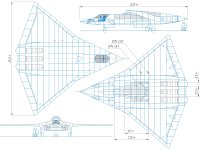

NGAD IS THE BEST
Elite Member


Source/links250kn ground test platform a few years ago.
via the SDF:
In the latest talkshow Yankee says:
1) J-36 will not be a Mach 3 capable aircraft.
2) Yankeesama has talked briefly with J-36 Chief Designer Wang Haifeng.
3) Chief Designer care not much about hard specs such as top speed, max thrust, etc. The important criteria of the fighter is instead power generation capability.
4) J-36 can serve as EW and AWAC to some capacity.
5) No pulsed detonation engine or ramjet on J-36. They can’t provide enough power to even existing fighter aircraft avionics, let alone something as sophisticated as CHAD.
6) Engine design no longer focuses on thrust alone. What’s more important is subsystem for power generation under whole flight envelope. Power regulation system is therefore of foremost importance. An example would be NEV vs ICE or F-15 vs MiG-25.
7) Variable cycle engine will conform to J-36’s design.
8) Yankee once again agrees with SDF assessment that the J-36 is not a simple fighter, fighter bomber, bomber, etc. but a new system altogether. It is more akin to an air based cruiser.
In the latest talkshow Yankee says:
1) J-36 will not be a Mach 3 capable aircraft.
2) Yankeesama has talked briefly with J-36 Chief Designer Wang Haifeng.
3) Chief Designer care not much about hard specs such as top speed, max thrust, etc. The important criteria of the fighter is instead power generation capability.
4) J-36 can serve as EW and AWAC to some capacity.
5) No pulsed detonation engine or ramjet on J-36. They can’t provide enough power to even existing fighter aircraft avionics, let alone something as sophisticated as CHAD.
6) Engine design no longer focuses on thrust alone. What’s more important is subsystem for power generation under whole flight envelope. Power regulation system is therefore of foremost importance. An example would be NEV vs ICE or F-15 vs MiG-25.
7) Variable cycle engine will conform to J-36’s design.
8) Yankee once again agrees with SDF assessment that the J-36 is not a simple fighter, fighter bomber, bomber, etc. but a new system altogether. It is more akin to an air based cruiser.

iblini
Trusted Member


thanks for the summary, although we should still take his words with a grain of salt but still much more worth than most of the youtubers, so called expert and common folks.via the SDF:
In the latest talkshow Yankee says:
1) J-36 will not be a Mach 3 capable aircraft.
2) Yankeesama has talked briefly with J-36 Chief Designer Wang Haifeng.
3) Chief Designer care not much about hard specs such as top speed, max thrust, etc. The important criteria of the fighter is instead power generation capability.
4) J-36 can serve as EW and AWAC to some capacity.
5) No pulsed detonation engine or ramjet on J-36. They can’t provide enough power to even existing fighter aircraft avionics, let alone something as sophisticated as CHAD.
6) Engine design no longer focuses on thrust alone. What’s more important is subsystem for power generation under whole flight envelope. Power regulation system is therefore of foremost importance. An example would be NEV vs ICE or F-15 vs MiG-25.
7) Variable cycle engine will conform to J-36’s design.
8) Yankee once again agrees with SDF assessment that the J-36 is not a simple fighter, fighter bomber, bomber, etc. but a new system altogether. It is more akin to an air based cruiser.

Corax
Trusted Member

via the SDF:
In the latest talkshow Yankee says:
1) J-36 will not be a Mach 3 capable aircraft.
2) Yankeesama has talked briefly with J-36 Chief Designer Wang Haifeng.
3) Chief Designer care not much about hard specs such as top speed, max thrust, etc. The important criteria of the fighter is instead power generation capability.
4) J-36 can serve as EW and AWAC to some capacity.
5) No pulsed detonation engine or ramjet on J-36. They can’t provide enough power to even existing fighter aircraft avionics, let alone something as sophisticated as CHAD.
6) Engine design no longer focuses on thrust alone. What’s more important is subsystem for power generation under whole flight envelope. Power regulation system is therefore of foremost importance. An example would be NEV vs ICE or F-15 vs MiG-25.
7) Variable cycle engine will conform to J-36’s design.
8) Yankee once again agrees with SDF assessment that the J-36 is not a simple fighter, fighter bomber, bomber, etc. but a new system altogether. It is more akin to an air based cruiser.
Very brave and creative for the Chinese to develop a whole new concept of aircraft, considering their experience of developing legacy Soviet/Russian designs and very incremental/conservative approach so far. The emphasis on power generation from the engine configuration suggests a focus on electronic systems, sensors (both active and passive) and maybe directed energy decoys/weapons. Given that this is very unlikely to come anywhere near WVR of opposing forces, and most likely suffer a quick death if it does given its size and lack of manoeuvrability, it will need a whole bunch of systems and novel technologies to do what it is intended to do from long range stand off distances and avoid being killed .
iblini
Trusted Member
Happy new year everyone, the last few days was simply an amazing, even unbelievable journey, what a beautiful way to end 2024 for all Chinese defense enthusiasts, let's hope we are going to have a great year in 2025 too!
iblini
Trusted Member
CAC is called flight control god for a reason and I heard it is very agile for a beast that size, not as good as J20 but indeed not what many ppl might think.given its size and lack of manoeuvrability
Corax
Trusted Member
CAC is called flight control god for a reason and I heard it is very agile for a beast that size, not as good as J20 but indeed not what many ppl might think.
That well may be the case, but there's no way this thing can win in a turning fight with a fighter. You can't change the laws of physics.
That well may be the case, but there's no way this thing can win in a turning fight with a fighter. You can't change the laws of physics.
The moment it enters a "turning fight with a fighter" something terribly went wrong in that engagements before.
I'm late to the party and still in preparations on my own report for both J-XD aircraft and since I promised my family to stay away from the PC until next year, I at least summarised it as follows:
By the way to all here, best wishes for 2025 and a happy new year.
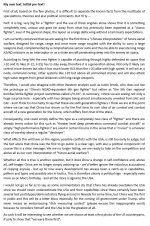
PS: I need to add that, in addition to my own thoughts and views, this is all based on the input of various people and many good friends throughout the SDF, on Weibo, and other forums! In the long report, I will quote them all correctly and acknowledge their individual thoughts.
By the way to all here, best wishes for 2025 and a happy new year.
PS: I need to add that, in addition to my own thoughts and views, this is all based on the input of various people and many good friends throughout the SDF, on Weibo, and other forums! In the long report, I will quote them all correctly and acknowledge their individual thoughts.

Nuffle
Registered Member

Very interesting considerations.via the SDF:
In the latest talkshow Yankee says:
1) J-36 will not be a Mach 3 capable aircraft.
3) Chief Designer care not much about hard specs such as top speed, max thrust, etc. The important criteria of the fighter is instead power generation capability.
4) J-36 can serve as EW and AWAC to some capacity.
In simple terms, we can define the J-36 as a specialized multirole fighter, considering that what the Yankee claims is true.
AWACS
Validation for AWACS-type employment deserves a Russian context. The Russians use a lot of BVR attack tactics using passive sensors for target detection (RWR and IRST) with datalink from a GCI or AWACS radar. A formation of four MiG-31 fighters, each 200 km apart, covers an 800 km front with the Foxhound radar. The four aircraft act as mini-AWACS in mutual support to create a large management picture of the air battlefield. Data is passed through the datalink and can be passed on to the AK-RLDN. They can attack the detected targets with 16 R-33 missiles available in the formation without worrying about engaging the same target. The MiG-31 can engage cooperatively by passing targets to the MiG-29 and other legacy Russian fighters. The leader can possibly "fly" other aircraft in the formation by sending guidance commands that are entered into the SAU-155M autopilots of the other three aircraft. The MiG-31 can also perform semi-automatic interception by a ground control officer (usually a qualified pilot), who passes guidance commands through the 5U15K-11 datalink. The tactic of the Russian MiG-31s is to have good lateral separation in areas without GCI or AWACS coverage. The expected targets were B-52, B-1B, F-111 bombers, cruise missiles and even P-3 or F-16 aircraft due to the area of operation. In these scenarios, the MiG-31s do not need maneuverability, but a good radar, long range and a good missile load. The rules of engagement favor long-range attacks because everything coming from the other side is enemy.
What seems to be implied here is that the J-36 could perform practically the same role as a mini-AWACS, but combined with a KJ-3000 AWACS + loyal wingman UCAVs.
The use of fighters as mini-AWACS is becoming more frequent with fighters equipped with better radars. Iran adapted some Tomcats for the mission and they were used to direct other fighters. The Israelis used the F-15 as a mini-AWACS in 1982 in the Bekaa Valley to provide a more detailed view of the surroundings of combat. It would stay at a distance and sanitize the combat area for the presence of fighters and AWACS blind spots. The F-22A was until then the new aircraft to have this capability because it had an excellent radar and had already tested it in exercises supporting the F-15 and F-16. Having a good radar is always good because in general there is no support from AWACS aircraft or ground radars in long-range penetration missions. Israel has created a ground-based radar network that has allowed it to replace the E-2 Hawkeye, but has purchased the G550 AEW to support offensive missions in enemy territory. It may be able to operate in enemy territory, which is rare for AWACS aircraft.
EW
In theory, an extremely stealthy form (VLO) could survive almost any type of threat. However, most air operations planning falls somewhere in the middle of the threat spectrum. As the radar threat capability expands, stealth and EW have a role to play in working together to increase survivability, especially when attacks on key points can reduce the enemy’s IADS capability. Electronic warfare can be used in the detection and engagement phase as well as stealth. Electronic warfare makes stealth more effective in two ways: it reduces the time for the system and operator to recognize and counter the jamming, and the weak echo from the target is easier to simulate or imitate with deception techniques.
Countermeasures are limited by the power of the aircraft, but not for a stealthy aircraft. The B-1B has 100 times less RCS than the B-52, or 1% of the echo, but even so the ALQ-161 jamming system weighs 2,250 kg versus the B-52’s 2,500 kg. The power output did not decrease, but it did improve its effectiveness by 100 times. The power for burnthrough drops in the same proportion. The B-1’s design concept assumes that it still has to get close to the target, even though it can deliver weapons at long range and has to deal with multiple threats at once.
While analysts have decided that the F-117 did not benefit from ECM support from a specialized aircraft like the EA-6B on the first night of a war, the data suggests that additional use of the EA-6B would have been welcome for F-117 and B-2 crews on subsequent missions. Delayed detection would be traded for no detection at all. In the Kosovo War, B-2s flew all missions with Electronic Warfare and Suppression of Enemy Air Defenses (SEAD) fighter escort. It is already clear that for aircraft without the F-117 signature, or for aircraft operating in other environments, ECMs can contribute significantly to survivability.
Electronic warfare emerged to defend aircraft from radar attack, first in the detection phase and later in the engagement phase. It has been estimated that the use of electronic countermeasures and chaff in World War II may have saved 800 Allied bombers and allowed them to attack lower and more accurately. Against North Vietnam, EB-66 aircraft were used for long-range jamming (SOJ) by the USAF. The US Navy used the EA-6B towards the end of the war in the same role. The USAF considered using the EA-6B as a escort aircraft as well, but found the fighter's performance inadequate and installed the detection and jamming systems on the F-111, which became the EF-111 Raven. During the Gulf War in 1991, the EF-111 and EA-6B jammed Iraqi early warning radars. SAM batteries had to turn on their own radars to search, which were later destroyed with AGM-88 HARM anti-radar missiles. The EF-111s did not directly support the F-117s in the Gulf War, but they helped to mislead the aircraft's actual target.
The USAF retired the EF-111 from service because it was more expensive to operate ($5,500 per flight hour versus $3,255 for the EA-6) and had a smaller fleet (40 versus 127). It was scheduled to operate until 2010. The USAF began using the EA-6 in a joint force with the US Navy.
The F-117 lost during the Kosovo conflict in 1999 was far from the coverage of the supporting EA-6B, or more than 180 km, to avoid missiles, and was unable to jam effectively. In 1999, the USAF studied the use of the B-52 for long-range jamming and the B-1 as an escort jammer. The EB-52 would operate at a range of 240 km for 12 hours with ALQ-99 jammers from the EA-6B. The EB-1 would operate together with the strike package and would jam the interceptor's search and control radars. The enemy would not be able to predict the direction and target of the package and the SAM batteries would have to search and would be vulnerable to attack by HARM missiles. Conventional aircraft and large aircraft return very large radar signatures. ECMs are limited by the power of the airborne jammers. A large and powerful aircraft would be ideal for carrying ECMs internally or externally due to the power output that could be provided and the small impact on external loads or internal space. It also has no problem carrying a second crew member, which generally increases the weight of the aircraft by up to 500 kg and reduces internal fuel. This aircraft would also have to be large.
This problem is more severe in interceptor aircraft that require a long-range radar. The wider the radar dish, the greater the range. A thin beam emitted by a narrow antenna is better for search, with a shorter range. A larger antenna diameter emits a wider beam, with a longer range, more suitable for search and target tracking functions. The trade-off comes from the need for a large aircraft that also has the necessary endurance for long-duration CAPs and supersonic flights for longer periods, and the presence of a second crew member (WSO - Weapon System Operator) to operate the radar and ECMs. The ability to carry a lot of external weapons increases RCS and is not an advantage.
Electronic warfare aircraft are dedicated to the mission of listening, detecting and neutralizing enemy emissions. The simplest method of jamming is to transmit on the same frequency as the enemy radar. This uses a lot of energy and is a heavy system. The jamming aircraft had to be as large as the B-66 and was also expensive. In the late 1960s, deception techniques appeared that used much less energy and were lighter systems. They could be carried in pods that had passive antennas to detect and change the information received. The pod retransmitted a similar signal and was used for tens of seconds and rarely for more than a minute. By the time the radar operator realized that he was being fooled, the aircraft was already out of range.
The F-35 will use an AESA radar that will also have jamming capabilities. It will be able to use pods to jam to the side and behind the aircraft, since the radar only interferes in front. It will be able to maintain jamming throughout the combat phase. The F-35 would have the ability to penetrate deep or get closer to the target, which is ideal for electronic jamming.
In modern warfare, simply “not being seen” is not enough. Stealth aircraft rely on advanced electronic systems to survive in a radar-saturated environment. Here, we highlight the technology of modern AESA radars, which have characteristics that make them one of the most important points of onboard avionics, as they are highly directional and difficult to detect, and are capable of operating as radars and electronic warfare systems, jamming enemy communications and sensors.
Continued developments in sensors, materials and electronic warfare will ensure that stealth technology remains a vital element in air combat, but will also highlight that true stealth is more than just “not being seen”, it is being efficient, adaptable and future-proof, a truly multidimensional approach.
The future of stealth technology lies in the ability to integrate multiple domains and technologies in a synergistic way. The fusion of data between onboard and external sensors will allow the aircraft to identify and neutralize threats before they are even detected. Advanced active jamming systems, such as ECMs and directional jamming, will be essential to blind enemy radars and disrupt their detection networks. In addition, intelligent navigation, which uses real-time data to avoid radar points and areas of greatest exposure, will maximize stealth. This combination of passive stealth, through design and materials, with active stealth, through electronic countermeasures and cyber warfare, will define next-generation stealth aircraft, making them even more lethal and efficient in the modern combat arena.
Stealth should be treated as an additional asset (like agility, avionics, speed, etc.) capable of contributing to mission success. And like any asset, it alone does not guarantee unconditional and overwhelming victory, but if the advantage over the adversary is considerable, it is halfway to victory.
ety
Trusted Member

Anybody notice the number printed on the the front side of J 36 is 36011. So this is definitely not the first prototype of J 36, can this mean it's the number 11 ? Judging from this number, maybe J 36 is more ready than we think, maybe that's why the color of
J 36 is not painted yellow anymore as usual in the testing phase.

J 36 is not painted yellow anymore as usual in the testing phase.
Last edited:
iblini
Trusted Member
With all the resources poured in during the last two decades without too much bureaucracy interfernce and cost out of control problems like for example India and USA, we have leapfrogged to the point where we have to come up with our totally fresh desgin.Very brave and creative for the Chinese to develop a whole new concept of aircraft
Now, I am more than happy and satisfied with the CAC's concept and just waiting for more info to be revealed on SAC's.
yusheng
Registered Member
“YanKee" in Chinese ”养鸡",via the SDF:
In the latest talkshow Yankee says:
- In gaming contexts:
- Raising chickens: Refers to the act of raising chickens in simulation or farming games (e.g., Harvest Moon or Stardew Valley).
Example: "I spent the whole day raising chickens in the game to get more eggs."
- Raising chickens: Refers to the act of raising chickens in simulation or farming games (e.g., Harvest Moon or Stardew Valley).
- As a metaphor or joke:..............
yusheng
Registered Member
Many bloggers claim that the Chengdu6G cannot exceed 3 Mach, but I believe that if the J-20's top speed can reach 2.8 Mach (note1), then the Chengdu6G is entirely capable of reaching 3 Mach.
Author: Non驴Non马
Of course, this is only the peak speed with afterburner, not the cruising speed.
The Chengdu6G has a very large sweep angle of around 50 degrees, which is suitable for a delta wing design. The J-20's 43-degree sweep angle is more advantageous for supersonic flight with a close-coupled canard configuration.
In fact, papers published openly in China have already revealed why the J-20 adopts a 43-degree sweep angle while the Chengdu6G adopts a 50-degree sweep angle. For example, a paper from Beihang University cited Ma Baofeng et al., who used experimental methods to study the effect of sweep angle on lift enhancement and flow patterns under high angles of attack for close-coupled canard configurations, and found that the lift enhancement effect is most pronounced when the sweep angle is between 40° and 45°. Liu Jie et al. used numerical methods to study the flow structure and evolution around a delta wing with a 50° sweep angle at different angles of attack.
After reading this paper, one can roughly understand how complex aerodynamic analysis is, and also see how ridiculous it is for bloggers to draw conclusions about not being able to exceed 3 Mach by simply drawing a line from the nose to the wingtip.
The Garret intake can modulate air intake, adapting to a wider range of supersonic flight speeds.
The absence of a tail fin and ventral fin reduces drag.
Thermal barrier issues: China has many missiles that can fly at 4 Mach or even higher speeds within the atmosphere.
When flying at 3M, the surface temperature of the missile exceeds 350°C, and at 6M, it reaches up to 1600°C.
In the past, missiles used ablation heat protection, but now they use integrated force-thermal materials such as C/C, SiC/C, which can maintain strong mechanical properties at temperatures up to 2000°C. In plain terms, they rely on new materials to withstand high temperatures.
It seems that achieving a 3 Mach top speed for a short period—when escaping—is not a technical insurmountable problem in terms of thermal barriers. Of course, it cannot be maintained for a long time, as the engine cannot withstand it, and fuel consumption would be too high.
Note1:Latest patent publications and papers
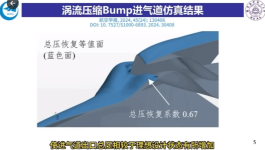
Author: Non驴Non马
Of course, this is only the peak speed with afterburner, not the cruising speed.
The Chengdu6G has a very large sweep angle of around 50 degrees, which is suitable for a delta wing design. The J-20's 43-degree sweep angle is more advantageous for supersonic flight with a close-coupled canard configuration.
In fact, papers published openly in China have already revealed why the J-20 adopts a 43-degree sweep angle while the Chengdu6G adopts a 50-degree sweep angle. For example, a paper from Beihang University cited Ma Baofeng et al., who used experimental methods to study the effect of sweep angle on lift enhancement and flow patterns under high angles of attack for close-coupled canard configurations, and found that the lift enhancement effect is most pronounced when the sweep angle is between 40° and 45°. Liu Jie et al. used numerical methods to study the flow structure and evolution around a delta wing with a 50° sweep angle at different angles of attack.
After reading this paper, one can roughly understand how complex aerodynamic analysis is, and also see how ridiculous it is for bloggers to draw conclusions about not being able to exceed 3 Mach by simply drawing a line from the nose to the wingtip.
The Garret intake can modulate air intake, adapting to a wider range of supersonic flight speeds.
The absence of a tail fin and ventral fin reduces drag.
Thermal barrier issues: China has many missiles that can fly at 4 Mach or even higher speeds within the atmosphere.
When flying at 3M, the surface temperature of the missile exceeds 350°C, and at 6M, it reaches up to 1600°C.
In the past, missiles used ablation heat protection, but now they use integrated force-thermal materials such as C/C, SiC/C, which can maintain strong mechanical properties at temperatures up to 2000°C. In plain terms, they rely on new materials to withstand high temperatures.
It seems that achieving a 3 Mach top speed for a short period—when escaping—is not a technical insurmountable problem in terms of thermal barriers. Of course, it cannot be maintained for a long time, as the engine cannot withstand it, and fuel consumption would be too high.
Note1:Latest patent publications and papers
Users who are viewing this thread
Total: 6 (members: 0, guests: 6)
Pakistan Defence Latest
-
 PAF pilot highlights how chinese J10C fighters have left US F16's Obsolete (12 Viewers)
- Latest: PK781
-
-

-
-

Country Watch Latest
-
-
-

-
US Air Force Plans Hundreds of Autonomous Fighter and ISR Drones by 2032 (2 Viewers)
- Latest: RealNapster

Latest Posts
-
-
-
Makkah Defence Alliance: Turkey, Saudi Arabia, and Pakistan, news & updates (20 Viewers)
- Latest: wangdefa
-
Malaysian PM rejects Indian media attempt to link Pakistan to terrorism (9 Viewers)
- Latest: Raj-Hindustani
-