Bangladesh Socio-Political Crisis 2024 and onwards

Keep me out of this. You (collectively) are successfully losing the debate, using twisted interpretations and twisted facts married to bloated and arrogant conceit, and you will find much of the world revolted by the Indian position on practically all things. You will find that disgust an overwhelming wave on this forum. Other fora will display similar trends, or rather, waves.
Secular-minded democratic Indians have been called anti-national, anti-Hindu (to a Sanghi, that being the same as anti-national), and worse. At this stage, they will watch from the sidelines as the Sanghis' make exhibitions of themselves.

@Joe Shearer

Secular minded people will always be called traitors by religious zealots.

We are also called anti religious - idiotically confusing us with atheists!

That comes with the territory.

Secularism by nature is pluralistic, when it comes to religion, and has to act against bigots.

Bigots then feel persecuted for not being able to freely practice bigotry!

As for Bangladesh - it is under a tight western leash - ordinary people and military don’t have the stomach to loosen the leash - due to the cost.

So, not worried about the long term.

As for India, Sanghis are doing great damage to India’s long term prospects.
 
Last edited:
Bangladesh: BNP And Yunus Government On A Collision Course — That’s Good News For India

Jaideep Mazumdar

Swarajya - Jan 03, 2025
BNP-secretary-general-Alamgir-and-Muhammad-Yunus-5.jpg


The BNP leadership has resolved to protect India’s interests and ensure that anti-India forces do not gain ground in Bangladesh.

Bangladesh is likely to witness serious political turmoil in the coming months. Skirmishes between the Muhammad Yunus dispensation and the principal political party in the country, the Bangladesh Nationalist Party (BNP), are set to escalate into a full-blown conflict.

That’s good news for India because Yunus and his band of ‘advisers’ (the de facto ministers), who have been hostile towards India, will be under pressure and left scrambling to fight their domestic battles.

An assertion of might by the BNP will also put the country’s Islamists, who have rallied behind Yunus, on the backfoot.

Why the BNP is Unhappy

The BNP leadership is now convinced that the leaders of the Anti-Discrimination Students’ Movement (ADSM), who led the mass uprising that unseated Sheikh Hasina from power in early August last year, the country’s Islamists, and Yunus himself are conspiring to indefinitely postpone national elections.

It is widely known in Bangladesh that the BNP will sweep the parliamentary elections because it enjoys a huge monopoly in the country’s political space after the collapse of the Awami League (AL).

Other political parties, including the Jamaat-e-Islami, cannot match the BNP’s organisational strength and reach, and also its resources. Also, the BNP is the only major mainstream political party in the country.

The BNP, aware of its strengths, wants elections to be held as soon as possible, and definitely by the end of this year.

The BNP leadership is of the opinion that the advantages that the party enjoys at present will erode considerably over time. If elections are delayed beyond the end of 2025 or early 2026, the BNP may not be able to achieve its goal of sweeping the polls.

But Yunus, in league with the leaders of the ADSM — some of them are part of his de facto cabinet, is not obliging the BNP and has refused to come up with a concrete roadmap for polls, as is being consistently demanded by the BNP.

Yunus said a few weeks ago that elections can be held between the end of 2025 and the first half of 2026. But he added a vital qualification: the timing of the elections will depend on political consensus and also the extent of reforms in the electoral process.

This condition, the BNP believes, is a ploy to postpone elections. Yunus and his ‘advisers’ have started preparing the ground and will cite lack of political consensus and non-completion of electoral reforms to put off the elections.

Why Yunus Wants to Postpone Elections

Yunus, the BNP suspects, plans to put off elections because of two reasons:

One, Yunus and the ADSM leaders want to hold on to power for as long as possible.

Two, the ADSM leaders who are in the process of floating a political party want to give that party enough time to take root before holding elections. The BNP firmly believes that Yunus is supporting this plan wholeheartedly.

“Various moves and machinations are being made currently to keep the BNP from coming to power. That is why Muhammad Yunus is not spelling out in clear terms a definite time frame for holding elections,” Masud Ahmed Talukder, the BNP’s international affairs secretary, told Swarajya over the phone from Dhaka.

A New Political Party

The ADSM and the Jatiyo Nagorik Committee (JNC), which was formed in the aftermath of the July 2024 mass uprising, have announced plans to spawn a new political party by next month.

This new party will obviously take time to set itself up organisationally by enrolling members, setting up branches all across the country, gathering resources, and setting a clear political agenda.

“It is quite obvious that Muhammad Yunus and the ADSM leaders who are advisers in the interim government want to postpone elections till the new ‘king’s party’ establishes itself. Yunus and his colleagues in the interim government are using the excuse of reforms to postpone elections indefinitely, and that is not acceptable to us,” BNP vice-chairman Osman Faroque told Swarajya.

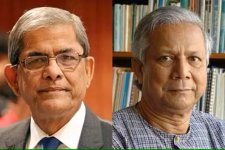
BNP Secretary General Mirza Fakhrul Islam Alamgir was more forthright. “This (the Yunus-led interim government) is an unelected government and so it cannot stay in power for long. Elections cannot be delayed on the excuse of carrying out reforms,” he said.

“The interim government was established with the express mandate of carrying out basic electoral reforms necessary to hold free and fair elections before overseeing parliamentary elections. Only an elected government and the Jatiya Sansad (Bangladesh’s parliament) can carry out major reforms in the country’s Constitution, judiciary, administration, etc. Carrying out major reforms is not the job of the interim government,” Alamgir told Swarajya.

Alamgir, who is known to be close to the BNP’s acting chairman, Tarique Rahman, has already warned that his party would give a call to people to take to the streets if a firm roadmap for elections is not announced soon.

Shaukat Mahmud, another vice president of the BNP, told Swarajya that it is morally and ethically wrong on the part of Yunus to support the formation of a new political party.

“Yunus is the chief adviser to an interim government that’s meant to be completely apolitical and has a limited mandate. To support the formation of a new political party and keep making excuses to put off elections till the new party is ready to face elections is very wrong and unacceptable. People of Bangladesh understand the games that Yunus is playing,” said BNP standing committee member Salahuddin Ahmed.

The BNP has also not taken kindly to the suggestion by Yunus that the voting age be reduced to 17 years.

“A committee has been set up to recommend electoral reforms. It is the job of that committee to suggest reforms. It doesn’t behove the chief adviser to offer suggestions before the committee has submitted its recommendations,” said Alamgir.

The BNP views this suggestion (of lowering the voting age to 17) as another ploy to delay elections because such a step will mean drawing up fresh electoral rolls that will take a long time.

Anti-BNP Moves by Yunus

The BNP is also unhappy with the manner in which the interim government is handling political cases in courts.

While all cases filed by the Hasina government against Yunus have been quickly withdrawn, cases are still pending against BNP chairperson Begum Khaleda Zia and her son, and acting chairperson, Rahman.

“Some advisers have been making irresponsible statements blaming the BNP for the state of the country. We know of a move being made to equate the BNP with the Awami League. That won’t work,” Alamgir added.

In early November last year, the BNP secretary general had told Swarajya that his party was aware of moves being made by some in the ADSM and the interim government to “force the BNP out of the political arena” under a ‘minus two’ formula...

The ‘minus two’ formula means banning the two major political parties — the BNP and the AL — from active politics in order to clean up the messy political arena in Bangladesh.

This formula was first mooted when the Bangladesh army-backed caretaker government, led by Fakruddin Ahmed, clung on to power for two years (January 2007 to January 2009), until it was forced to hold elections after sustained countrywide protests.

BNP Headed for a Showdown With Yunus and Islamists

While the BNP has been vocal in its criticism of Yunus and some leaders of the ADSM, the latter have not responded publicly.

But, says political analyst and commentator Sadaqat Ali, it is only a matter of time before an acrimonious war of words breaks out between the BNP and Yunus, who is getting bolder by the day.

“Yunus has kept quiet so far because he wanted to avoid a public confrontation with the BNP before rallying support for himself. But that won’t continue for long because he has obtained the support of the Islamists and others. He will hit back at the BNP soon,” Ali, a former faculty of Dhaka University, told Swarajya.

The BNP is also headed for a confrontation with its former ally, the Jamaat-e-Islami. That’s because the Jamaat has chosen to align itself with Yunus and support the latter’s game plan of postponing elections.

Bangladesh’s Islamists have rallied behind Yunus and, in exchange, have received a carte blanche to further Islamise the country and also carry out attacks on religious minorities.

BNP leaders have started lashing out at the Jamaat, with the most stringent takedown coming a couple of days ago from BNP’s senior joint secretary general, Ruhul Kabir Rizvi, who questioned the Jamaat’s role in the 1971 liberation war.

It is well known that the Jamaat sided with the West Pakistani forces in 1971. The Jamaat not only opposed the liberation of East Pakistan and formation of Bangladesh but also helped the West Pakistani forces in the horrific genocide of Bengalis (both Muslims and Hindus).

By swerving the spotlight on its shameful past, the BNP is effectively putting the Jamaat on the defensive.

But the Jamaat, which has considerable support among the poorer and more radicalised sections of Muslims in rural areas, is sure to hit back at the BNP soon.

The Jamaat’s preferred way of taking on its opponents is through street fights. Thus, say analysts, physical confrontations between the Jamaat and BNP cadres can erupt in many parts of the country.

With the interim government sure to side with the Jamaat and use state machinery — the police and security forces — to contain the BNP, Bangladesh will descend into another round of violence and chaos.

What This Means for India

Soon after the downfall of the Hasina government, New Delhi reversed its policy of non-engagement with the BNP and reached out to the party leadership.

The leadership reciprocated, and not just because it knows that it will need New Delhi’s support to take on Yunus, the ADSM, and the Islamists.

Ties between New Delhi and the BNP are on an even keel now. The BNP leadership has issued firm guarantees that, unlike in the past, it will protect India’s interests and ensure that anti-India forces do not gain ground in Bangladesh.

Thus, it is in India’s interests to back the BNP in its fight with Yunus, the ADSM, and the Islamists.

This fight will plunge Bangladesh into more chaos and put Yunus and his camp on the backfoot, more so since Western powers, especially those who have installed Yunus in power, will become wary of Bangladesh slipping into chaos that can be leveraged by Islamists to increase their influence.

Yunus will, thus, come under a lot of pressure internally, as well as from outside (especially the West), to announce elections and hand over power to a democratically elected government.

India’s interest lies in seeing the backs of Yunus and his fellow advisers, who are now wielding power without any accountability, and also in the BNP coming to power in Bangladesh by defeating not only the Islamists but also the ‘king’s party’ that will be formed next month.

 
Bangladesh: BNP And Yunus Government On A Collision Course — That’s Good News For India

Jaideep Mazumdar

Swarajya - Jan 03, 2025

BNP-secretary-general-Alamgir-and-Muhammad-Yunus-5.jpg

This does seem to be a highly accurate analysis of what is currently happening in Bangladesh. Extremely unusual for an Indian source but puts to shame our own media which seems afraid to uncover what is happening in the country. It is a clear power struggle between the IG, BNP, JeI and the students movement.

They are all just hungry or obsessed with power and none can be trusted appearing to work for some foreign agenda whether Indian or American. The interests of the country appear to be at the bottom of all their priorities.

Having said that I do thing some of the student leaders are on the right track and are better than those in the IG and political parties. I predicted this eventuality 3 months ago personally knowing many of the characters in the IG and how unprincipled and dubious they really are
 
Last edited:
This does seem to be a highly accurate analysis of what is currently happening in Bangladesh. Extremely unusual for an Indian source but puts to shame our own media which seems afraid to uncover what is happening in the country. It is a clear power struggle between the IG, BNP, JeI and the students movement.

They are all just hungry or obsessed with power and none can be trusted appearing to work for some foreign agenda whether Indian or American. The interests of the country appear to be at the bottom of all their priorities.

Having said that I do thing some of the student leaders are on the right track and are better than those in the IG and political parties. I predicted this eventuality 3 months ago personally knowing many of the characters in the IG and how unprincipled and dubious they really are

I don’t think BNP has the ground infrastructure to topple the IG without BAL’s support. Which is why they are playing nice with BAL! BNP, famously, couldn’t dislodge Ershad until BAL joined the fight lol

BAL is itching for BNP to get into power.

The yin needs the yang.

The sooner BNP gets into power the sooner BAL can start rebuilding its party infrastructure. Which is currently in tatters.

The other reason is that BNP tends to piss off the BD population, civil service and the west after three years - then they are fighting for survival.

That’s the reason why no BNP government has lasted long.

The key here is who will the army back, if and when, Jamat and BNP fight street battles.

Only BAL can rival Jamat on the street - as both are grassroots party.

BNP was created top down - military style - to legitimise Zia’s takeover - hence remains much smaller on the ground.

I don’t think BNP has ever won an election without martial law and/or Jamat’s help.

IG will survive as long as they can keep US onside. Which means not getting too close to China and not antagonising India.
As you have seen with H1-B visa farrago - Trump is pro India.

@UKBengali @SoulSpokesman
 
Let's get one thing clear. The BNP are now filled with dubious idiots making the party's values a far cry from the founding fathers of the party.

Just what does the BNP stand for now?


Hence why there should not be elections till late 2026 at the earliest.

Confidence is returning to the banking sector and economy is recovering with good law and order across the country.

Elections soon can only make things worse and not better. IG needs to carry out massive reforms to make sure BD can function effectively under democracy.
 
@MNZGamerX

I dont understand BD politics much. But Swarajyamag and this particular correspondent have propagated a jaundiced view against Bangladeshis even during SHW's regime.

Regards
 
Hence why there should not be elections till late 2026 at the earliest.

Confidence is returning to the banking sector and economy is recovering with good law and order across the country.

Elections soon can only make things worse and not better. IG needs to carry out massive reforms to make sure BD can function effectively under democracy.

The year 2024 saw big business increase in leading banks. It was a very profitable year. One bank even reported over 40% increase in business which is huge. All that in a year that made history and filled with uncertainty.

However, the law & order situation is still not very good, particularly in the outskirts of Dhaka. I expect this to improve after the police force is overhauled.
 
The year 2024 saw big business increase in leading banks. It was a very profitable year. One bank even reported over 40% increase in business which is huge. All that in a year that made history and filled with uncertainty.

However, the law & order situation is still not very good, particularly in the outskirts of Dhaka. I expect this to improve after the police force is overhauled.


For a country in BD’s current transitional phase, law and order is rather excellent. No mass killings, looting or riots.

Yes the police force will need to be restructured but these things take time.

Let the economy heal, banks get recapitalised and necessary reforms carried out. Elections can wait till BD is ready.
 
@MNZGamerX

I dont understand BD politics much. But Swarajyamag and this particular correspondent have propagated a jaundiced view against Bangladeshis even during SHW's regime.

Regards

Yes I agree. However, in this particular article Jaideep Majumder tends to keep a level head and it does seem to accord with the reality on the ground. In the end international factors will be far more important than domestic issues in determining what happens in the next few weeks and months. While some may point to improvements in the banking sector and economy this has rarely been factors that determine the fall of a government. The BNP governments had relatively economic numbers but it was the chaos on the streets that led to their demise.
 
Last edited:
When will the economic downturn end?

Economy-4a1c64ace41496ee95ed30c1404b3b0d.webp

Golam Mowla
Publish : 04 Jan 2025

Despite printing money to provide liquidity support, weak banks are still failing to meet customers' demands for funds.

Loans taken during the previous government's tenure remain unpaid, escalating non-performing loans. Inflation has also increased.

Meanwhile, the rise in interest rates on bank loans has halted business expansion and new investments. Most entrepreneurs are struggling as costs for business and investment have surged.

To curb inflation, Bangladesh Bank raised the policy rate to 10%, causing bank loan interest rates to climb as high as 15%.

Small, medium, and large businesses, heavily reliant on bank loans, are the hardest hit.

The rate of opening letters of credit (LCs) has dropped by 7%, and production has fallen by 25% to 40%.

The economy, already battered by money laundering, corruption, mismanagement, and plundering during the previous government, shows no signs of recovery.

In the five months since the interim government took charge, the fall in foreign currency reserves has been halted.

However, trade remains stagnant, industries are marred by labor unrest, and negative trends in investment and employment persist.

Particularly in July and August, economic activities were severely disrupted. Food inflation surpassed 14% in July.

Factories experienced incidents of vandalism and arson in August, followed by widespread floods. For months, industrial zones have faced unrest over demands for wage increases.

Yet, there is positive news in remittances. December saw a record $2.64 billion in remittances, the highest in the country’s history.

Exports have also seen growth. In December, goods exports brought in $4.627 billion, a 17.72% year-on-year increase, improving foreign currency reserve conditions.

By year-end, total reserves rose to $21 billion.

The interim government has reduced import duties and taxes on essentials like rice and edible oil and taken measures such as lowering LC margins to facilitate imports.

However, these measures have not curbed rising prices. Food inflation remained high at 13.80% in November.

Meanwhile, stock market reforms have begun, unnecessary expenses in development projects are being curtailed, and government operating costs are being reined in.

These reforms suggest that the economy might improve in the future.

However, old challenges like dollar market volatility are likely to persist into the new year, according to economists and analysts.

Stakeholders warn that strict import controls could further exacerbate industrial sector crises.

Reduced liquidity might push interest rates higher, which would hinder investments and slow job creation.

Bangladesh Bank Governor Dr Ahsan H Mansur has warned that non-performing loans could nearly double within six months.

Speaking at a recent event, he said: “We are examining the financial sector’s health. Non-performing loans could reach 25% to 30% in the near future, up from the current 12.5%. Next month, it could hit 15%, then 17%, and eventually 30%.”

He emphasized that much of this defaulted debt already exists but will soon be reflected in official figures.

Meanwhile, Economic Adviser Dr Salehuddin Ahmed said: "The economy is relatively strong now."

Responding to questions after a cabinet meeting on January 2, he said: “I won’t say this is true across all sectors. Some discipline has returned to the banking sector, and Bangladesh Bank is trying to support weaker banks.”

Former World Bank Chief Economist for Dhaka, Dr Zahid Hussain, said that the stagnation in trade and business will take time to resolve.

“Business owners are concerned about the direction of politics in the next one to one-and-a-half years, including which party might assume power,” he said.

An analysis of central bank data reveals that 2024 was marked by economic distress.

The crisis began in 2022 with the onset of the Russia-Ukraine war, which triggered runaway inflation and declining foreign currency reserves. Net reserves fell below $13 billion (per IMF calculations) in April.

Simultaneously, money laundering increased significantly, exacerbating pressure on the dollar.

The dollar shortage disrupted essential imports like fertilizers and fuel, leading to overdue payments. International credit rating agencies downgraded Bangladesh’s creditworthiness, exposing vulnerabilities in the economy.

In August, during and after the fall of the Awami League government, the economy faced significant disruptions.

Withdrawal limits were imposed on bank funds, further slowing economic activities. Commodity prices rose sharply.

After the interim government assumed power, the financial sector—particularly banks and the stock market—faced more visible challenges, coupled with unrest in industrial zones.

Together, these factors slowed trade and commerce.

Following the government’s fall, significant labor unrest erupted in major industrial zones around Dhaka, lasting until October.

In an effort to curb inflation, the government adopted a contractionary monetary policy by raising policy rates after the July-August uprising.

However, this has yet to succeed, as inflation continues to rise.

The apparel sector, plagued by labor unrest and other challenges, faces uncertainty in maintaining export growth.

Entrepreneurs in this sector report a nearly 50% increase in production costs, while foreign buyers have reduced the prices of Bangladeshi apparel.

According to BGMEA data, 100 garment factories closed in the past six months, leaving 50,000 to 60,000 workers unemployed.

At least 158 factories are struggling to pay wages on time. Eurostat reports that between January and October last year, European buyers reduced the prices of Bangladeshi garments by 4.92%.

Former BGMEA director Mohiuddin Rubel said: “During the interim government’s tenure, many owners struggled to operate their factories due to security concerns. As a result, buyers’ confidence has somewhat eroded.”

BKMEA President Mohammad Hatem said: “Buyers have reduced prices while bank loan interest rates have risen. Together, these factors have increased entrepreneurs’ costs.”

He said that no one is considering new investments under these circumstances.


There is also this -

 
Last edited:
When will the economic downturn end?

View attachment 93145

Golam Mowla
Publish : 04 Jan 2025

Despite printing money to provide liquidity support, weak banks are still failing to meet customers' demands for funds.

Loans taken during the previous government's tenure remain unpaid, escalating non-performing loans. Inflation has also increased.

Meanwhile, the rise in interest rates on bank loans has halted business expansion and new investments. Most entrepreneurs are struggling as costs for business and investment have surged.

To curb inflation, Bangladesh Bank raised the policy rate to 10%, causing bank loan interest rates to climb as high as 15%.

Small, medium, and large businesses, heavily reliant on bank loans, are the hardest hit.

The rate of opening letters of credit (LCs) has dropped by 7%, and production has fallen by 25% to 40%.

The economy, already battered by money laundering, corruption, mismanagement, and plundering during the previous government, shows no signs of recovery.

In the five months since the interim government took charge, the fall in foreign currency reserves has been halted.

However, trade remains stagnant, industries are marred by labor unrest, and negative trends in investment and employment persist.

Particularly in July and August, economic activities were severely disrupted. Food inflation surpassed 14% in July.

Factories experienced incidents of vandalism and arson in August, followed by widespread floods. For months, industrial zones have faced unrest over demands for wage increases.

Yet, there is positive news in remittances. December saw a record $2.64 billion in remittances, the highest in the country’s history.

Exports have also seen growth. In December, goods exports brought in $4.627 billion, a 17.72% year-on-year increase, improving foreign currency reserve conditions.

By year-end, total reserves rose to $21 billion.

The interim government has reduced import duties and taxes on essentials like rice and edible oil and taken measures such as lowering LC margins to facilitate imports.

However, these measures have not curbed rising prices. Food inflation remained high at 13.80% in November.

Meanwhile, stock market reforms have begun, unnecessary expenses in development projects are being curtailed, and government operating costs are being reined in.

These reforms suggest that the economy might improve in the future.

However, old challenges like dollar market volatility are likely to persist into the new year, according to economists and analysts.

Stakeholders warn that strict import controls could further exacerbate industrial sector crises.

Reduced liquidity might push interest rates higher, which would hinder investments and slow job creation.

Bangladesh Bank Governor Dr Ahsan H Mansur has warned that non-performing loans could nearly double within six months.

Speaking at a recent event, he said: “We are examining the financial sector’s health. Non-performing loans could reach 25% to 30% in the near future, up from the current 12.5%. Next month, it could hit 15%, then 17%, and eventually 30%.”

He emphasized that much of this defaulted debt already exists but will soon be reflected in official figures.

Meanwhile, Economic Adviser Dr Salehuddin Ahmed said: "The economy is relatively strong now."

Responding to questions after a cabinet meeting on January 2, he said: “I won’t say this is true across all sectors. Some discipline has returned to the banking sector, and Bangladesh Bank is trying to support weaker banks.”

Former World Bank Chief Economist for Dhaka, Dr Zahid Hussain, said that the stagnation in trade and business will take time to resolve.

“Business owners are concerned about the direction of politics in the next one to one-and-a-half years, including which party might assume power,” he said.

An analysis of central bank data reveals that 2024 was marked by economic distress.

The crisis began in 2022 with the onset of the Russia-Ukraine war, which triggered runaway inflation and declining foreign currency reserves. Net reserves fell below $13 billion (per IMF calculations) in April.

Simultaneously, money laundering increased significantly, exacerbating pressure on the dollar.

The dollar shortage disrupted essential imports like fertilizers and fuel, leading to overdue payments. International credit rating agencies downgraded Bangladesh’s creditworthiness, exposing vulnerabilities in the economy.

In August, during and after the fall of the Awami League government, the economy faced significant disruptions.

Withdrawal limits were imposed on bank funds, further slowing economic activities. Commodity prices rose sharply.

After the interim government assumed power, the financial sector—particularly banks and the stock market—faced more visible challenges, coupled with unrest in industrial zones.

Together, these factors slowed trade and commerce.

Following the government’s fall, significant labor unrest erupted in major industrial zones around Dhaka, lasting until October.

In an effort to curb inflation, the government adopted a contractionary monetary policy by raising policy rates after the July-August uprising.

However, this has yet to succeed, as inflation continues to rise.

The apparel sector, plagued by labor unrest and other challenges, faces uncertainty in maintaining export growth.

Entrepreneurs in this sector report a nearly 50% increase in production costs, while foreign buyers have reduced the prices of Bangladeshi apparel.

According to BGMEA data, 100 garment factories closed in the past six months, leaving 50,000 to 60,000 workers unemployed.

At least 158 factories are struggling to pay wages on time. Eurostat reports that between January and October last year, European buyers reduced the prices of Bangladeshi garments by 4.92%.

Former BGMEA director Mohiuddin Rubel said: “During the interim government’s tenure, many owners struggled to operate their factories due to security concerns. As a result, buyers’ confidence has somewhat eroded.”

BKMEA President Mohammad Hatem said: “Buyers have reduced prices while bank loan interest rates have risen. Together, these factors have increased entrepreneurs’ costs.”

He said that no one is considering new investments under these circumstances.


If the IG continues to lash out at industrialists it doesn’t like - they will basically just throw the towel - which will lead to sharp increase in defaults.

That and inflation (driven by antagonism towards India) was my main concern regarding the economy.

Official remittance was always going to go up for two reasons:

1. When the country is in distress, expatriates always come to the rescue of their extended family. We get phone calls!

2. Closing the gap to the kerb market rate was always going to reduce Hundi. Whilst that increase the official reserve - it has little affect on the ground. Your cousin got the money from a black market guy before and now gets it from the bank. His purchasing power hasn’t changed.

@UKBengali @SoulSpokesman
 
With the Trump presidency looming, Bangladesh could likely take another political turn, but this time against the interim government and Jamaat-e-Islami, and that would reverse Biden's strategy towards Bangladesh...

Recent remarks by US National Security Advisor Jack Sullivan and the outgoing US ambassador to India indicate that a shift in American views and perspectives on Bangladesh is coming under Trump.

To view this content we will need your consent to set third party cookies.
For more detailed information, see our cookies page.
 
Last edited:
To view this content we will need your consent to set third party cookies.
For more detailed information, see our cookies page.
 

Users who are viewing this thread

Country Watch Latest

Latest Posts

Back
Top