Navigation
Install the app
How to install the app on iOS
Follow along with the video below to see how to install our site as a web app on your home screen.
Note: This feature may not be available in some browsers.
More options
Style variation
You are using an out of date browser. It may not display this or other websites correctly.
You should upgrade or use an alternative browser.
You should upgrade or use an alternative browser.
Bangladesh Socio-Political Crisis 2024 and onwards
- Thread starter Al-Zakir
- Start date
More options
Who Replied?
BananaRepublic
Trusted Member


Happy New Year - PDF Bangladeshis!

MNZGamerX
Registered Member
What happen to July revolution proclamation? @Afif
The program of the declaration was changed to 'March for Unity'
Desk Report
Published: 31 December 2024

After much drama over the past two days over the 'July Revolution Declaration', the anti-discrimination student movement finally backed down from its decision. The students who led the mass uprising changed their minds after the interim government announced that the declaration would be issued on the basis of national consensus.
After a series of meetings on Monday (December 30) night, late at night, the students announced a new program called 'March for Unity' at the same time and place.
Many have raised the question of why the program had to be held without the declaration that has generated so much response since last Saturday. To find the answer to this question, British media outlet BBC Bangla spoke to the top leadership of the Anti-Discrimination Student Movement and the National Citizens Committee, the office of the Chief Advisor, and political researchers.
Some of them, on condition of anonymity, said that the government's position would have been somewhat weaker if the declaration had been used to suspend the constitution. On the other hand, the BNP did not take the declaration issue positively. That is why after the declaration program was issued by the anti-discrimination students, BNP leaders and activists were seen making negative comments about it on social media.
A source close to the government said that the BNP had also sent a message to the government to drop the issue of the anti-discrimination student declaration.
The source claims that BNP acting chairman Tarique Rahman spoke to the top leadership of anti-discrimination students over the phone from London on Monday night about this issue.
On Monday night, the Chief Advisor's Press Wing held an emergency press conference to announce that the initiative for the July Uprising declaration has been taken based on national consensus. After that, the anti-discrimination students held a series of meetings to postpone the declaration, but continued the 'March for Unity' program.
The anti-discrimination student movement is seeing the government's initiative to prepare a declaration as a primary victory. The organization's main organizer, Abdul Hannan Masud B, said, "There have been various domestic and foreign conspiracies to cancel our program around the declaration. Now the declaration will be issued with everyone, we are also gathering students, we see this as a primary victory."
Philosopher and social analyst Farhad Mazhar, however, has questioned the government's authority to draft the coup declaration.
Farhad Mazhar said, 'August 5th was not a government announcement, but a mass uprising. So this government has no legitimacy to issue a declaration. This is a declaration of the people. It should be given to the students.'
What is the political significance of the 'July Revolution Declaration'?
It has been almost four and a half months since the formation of the new interim government after the mass uprising. After the formation of the government, the anti-discrimination student movement has been in the field as a 'pressure group' for the past few months, criticizing various activities of this government. When announcing the program last Saturday, the leaders of the organization claimed that it would 'graveyard the 1972 constitution' through it. But the press secretary of the chief advisor, Shafiqul Alam, called the program of the students who led the mass uprising a 'private initiative'.
The next day, leaders of the Anti-Discrimination Student Movement and the National Citizens' Committee expressed their "discontent" with the government's statement. The leaders of the Anti-Discrimination Student Movement said they would stand firm on their demands.
On Monday afternoon, the organization announced a mass gathering of 1.5 to 2.5 lakh people from all over the country in Dhaka. According to sources in the office of the chief advisor, the government advisors also held a series of meetings on Monday evening regarding the students' program.
Later that night, the office of the chief advisor called an emergency press conference. At that, the chief advisor's press secretary, Shafiqul Alam, said, "The interim government has taken the initiative to prepare a declaration of the July mass uprising based on national consensus."
Around 10 pm, rumors spread that the anti-discrimination student movement would postpone Tuesday's program. After holding meetings on the matter, the top leaders of the anti-discrimination movement announced a program called 'March for Unity' by postponing the declaration program late at night.
Many members of the Anti-Discrimination Student Movement and the National Citizens' Committee were seen expressing anger and disappointment over the withdrawal of the manifesto program. Even when the top leaders were in a meeting, several workers were seen shouting slogans in support of the manifesto program outside the office.
On Tuesday afternoon, Abdul Hannan Masud, the main organizer of the anti-discrimination student movement, said, "When we said we would issue a declaration, the government did not agree. We informed the government. But we were adamant. In the end, the government itself agreed to issue the declaration, this is our initial victory."
When asked about the source of such statements, a source close to the government, on condition of anonymity, said that if a decision like revoking the constitution had been made at the declaration ceremony, it would have created an embarrassing situation for the government.
He said that this would have raised a question about the legitimacy of the current interim government. Considering the situation, there was a fear that the government would resort to force at the event. That is why the government finally announced the declaration on its own initiative based on consensus, the government source told BBC Bangla.
Masud, the chief coordinator of the anti-discrimination student movement, said, "We believe that the declaration the government will issue will implement our demands."
Political pressure and tactics
The anti-discrimination student movement's 'July Revolution Declaration' did not have a very positive response from some political parties, including BNP. After this declaration, the students called the 1972 constitution 'Mujibist' and even said that it was his 'grave'.
Although not directly opposing this program, BNP was seen taking a positive stance in favor of the 1972 constitution in various meetings and rallies after the students' announcement. In addition, BNP leaders have also been seen giving speeches in favor of the Liberation War in the past few days.
After the announcement of the program, many BNP leaders and activists and party supporters were seen posting on Facebook criticizing the students' program. This raises the question, was it because of pressure from BNP that the anti-discrimination activists finally had to withdraw from the program?
A government source said that the acting chairman of the BNP spoke to anti-discrimination students over the phone. At the same time, the issue was also discussed at the party's standing committee meeting.
Asif Mahmud, advisor to the interim government and former coordinator of the organization, was present at the closed-door meeting held by anti-discrimination students on Monday night.
At one point, in a late-night press briefing, the anti-discrimination student movement announced that the gathering program at Shaheed Minar would be maintained, but the declaration was being postponed for the time being.
Abdul Hannan Masud, the chief coordinator of the anti-discrimination student movement, said, "There were obstacles from some political parties. We have overcome that. Various forces thought that people would not respond to our program, but that has been proven wrong."
He said, "We did not fall into the trap of conspiracy. Those against discrimination have openly adopted tactics."
Meanwhile, BNP has welcomed the initiative to issue this declaration based on political consensus. BNP standing committee member Salahuddin Ahmed said, "The declaration will be discussed with all political parties concerned, including everyone, in accordance with the aspirations of the July Revolution - the democratic popular uprising. I hope it will reflect the aspirations of the people."
Although the issue of the declaration came into widespread discussion four and a half months after the mass uprising, philosopher and social analyst Farhad Mazhar had raised various questions about the government's legitimacy crisis from the beginning and suggested abrogating the constitution through the declaration.
In an interview on Tuesday, Farhad Mazhar presented some of these arguments. He said that due to the mass uprising, this government is not constitutionally legitimate. Because such a government did not exist in the previous constitution. That is why he also questions the legal validity of making this announcement.
Farhad Mazhar says, 'The government is talking to political parties about creating a new country. But what power are they using to say this? They don't even have political legitimacy.'
He said, "When the students talked about issuing a declaration, the government should have listened to the proposal they were making. The government could have taken this as a way to correct the August 5 declaration that they had inserted into the constitution instead of issuing it."
How does he view the students' withdrawal from the manifesto program in the end? In response, Farhad Mazhar countered, "Then what will the students do? Will they shed blood? Will they start a civil war? Who will take responsibility for it later? They did what they had in their minds."
"If we ask from a legal perspective, who is the government? The students put this government in power. Those who put them in power are keeping an eye on them, what is the point?" he added.
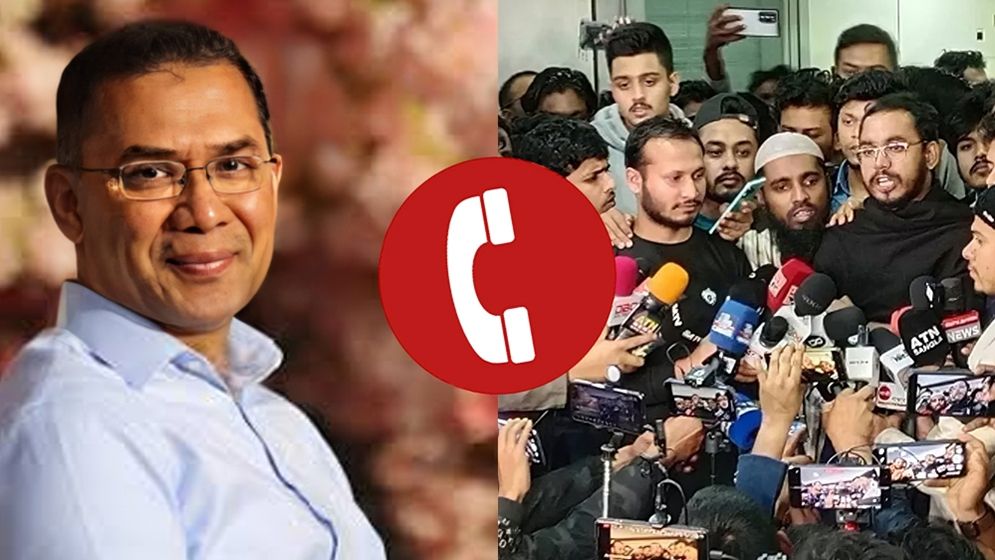
ঘোষণাপত্রের কর্মসূচি পাল্টে হয় ‘মার্চ ফর ইউনিটি’
‘জুলাই বিপ্লবের ঘোষণাপত্র’ নিয়ে গত দুই দিনে নানা নাটকীয়তার পর শেষ পর্যন্ত সেই সিদ্ধান্ত থেকে সরে আসে বৈষম্যবিরোধী ছাত্র আন্দোলন।
 www.banglaoutlook.org

What happen to July revolution proclamation? @Afif
Government will proclame it.
SoulSpokesman
Trusted Member

MNZGamerX
Registered Member
They appear to have abandoned their attempt to proclaim anything and left it to the Interim Government to do the job. The students were pressured by the Interim Government and the BNP to not go ahead with the proclamation as it was believed that they would demand the revocation of the Constitution amongst other things.
It is clear that there is a fracture developing within the Interim Government and with the political parties and also with the student movement. It is clear that the Interim Government and the students movement is hopelessly compromised.
One indication that the IG is resorting to methods and tactics employed by the Awami League regime is the preliminary report into the Secretariat fire which has been blamed on an electrical short circuit but which no one in Bangladesh believes. There was also the mysterious escape from the country by the AL Secretary General Obaidul Quader after hiding out in the country for 3 months.
I had warned at the outset that the Interim Government would be able to achieve nothing as many of the Advisors are highly dubious as well as a number of appointees such as the Attorney General, Chief Justice and Special Prosecutor. There is clear manipulation of the media and the judiciary and people cannot expect justice or reform the Interim Government.
SoulSpokesman
Trusted Member
@MNZGamerX
Thanks, sir, that was a comprehensive explanation.
As I see it, politics is the art of the possible, some BDs here and in real life may want a revolution which will completely change things around but these things seldom happen like that in the real world.
In case a large section of the citizenry wants a new Republic altogether, the right thing to do is to set up a new Constituent Assembly with fresh elections. I doubt if your alleged "student leaders" would consent to that because a free and fair polls would mean that the old parties would be back and they would be exposed as empty vessels much like the handsome cricketer next door and his ragtag outfit, until he was onboarded by the Neutral Umpires as a Kings Party.
Regards
@Joe Shearer @UKBengali @BananaRepublic
Thanks, sir, that was a comprehensive explanation.
As I see it, politics is the art of the possible, some BDs here and in real life may want a revolution which will completely change things around but these things seldom happen like that in the real world.
In case a large section of the citizenry wants a new Republic altogether, the right thing to do is to set up a new Constituent Assembly with fresh elections. I doubt if your alleged "student leaders" would consent to that because a free and fair polls would mean that the old parties would be back and they would be exposed as empty vessels much like the handsome cricketer next door and his ragtag outfit, until he was onboarded by the Neutral Umpires as a Kings Party.
Regards
@Joe Shearer @UKBengali @BananaRepublic
MNZGamerX
Registered Member
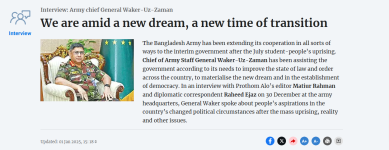
Prothom Alo:
The year 2024 was a significant year for Bangladesh. There was the July uprising, many changes…
General Waker-Uz-Zaman: That is true. Such a massive uprising. So many martyrs, so many wounded. We have gone through a historic change to reach this present moment. We are amidst a new dream, a new time of transition. The year 2024 has created new opportunities and possibilities for us.
The participation of the students, the people and the political parties in the mass uprising of July-August 2024 is a memorable event in the history of the Bengali nation. The nation will be forever grateful to those who sacrificed their lives and were wounded in the mass uprising.
Prothom Alo :
What are your expectations for the New Year 2025?
General Waker: In 2025 we want to tread the path to long-lasting peace. For that, everyone must proceed together. Everyone must reach a consensus. We can have differences of opinion, but a consensus on national issues is essential. Only then will democracy gain permanence.
We want a peaceful environment. Peace and stability is very important now for Bangladesh’s economy and social development. Without these two factors, there can be no development or good governance. That is why we need to restore tolerance among ourselves. An environment of national consensus must be created.
Prothom Alo:
In recent times the army has been holding press briefings and you have been speaking too.
General Waker: I believe you are responsibly reporting news and will continue doing so in the future. That is why I am comfortable speaking with you.
Prothom Alo :
Much has been said in the past about civil-military relations and relations between the journalists and the defence forces. Problems arise if there is a sense of mistrust.
General Waker: If you responsibly publish my thoughts, then I can certainly talk to you. Generally speaking, people of the armed forces do not speak to the media. This is an old tradition. This environment has grown over the years.
Prothom Alo :
So you want to say this has been on since the past?
General Waker: Yes. It is from the past. We are hesitant to speak to the media. But now the country is going through special circumstances. The people may have questions in their minds. They may have confusions. I feel misinformation and disinformation is being spread on social media. That is why we have to come in front of the media from time to time.
Prothom Alo:
The chief adviser has given a timeframe for the general election. Do you have anything to say on this? You will have work to do.
General Waker: The people certainly want a good election. They want a fair, peaceful and festive election. That is the main objective of the interim government too. The chief advisor has given a timeframe. That is the correct time. We will extend all cooperation to the interim government to implement the election outline.
Prothom Alo :
The army is a part of the government. Does the army have any anxiety concerning the present circumstances?
General Waker: We have to remain on ground. We understand the situation. Let me give you an idea of how we feel comfortable. At the end of the day it is my soldiers who have to take to the field. They have been five months in the field now. The more our people stay in the field, the more there is the fear that they will face unlawful activities. One of my officers was killed in trying to catch a robber. If the police could get organised fast, I would have no worry. If they become well organised, if the civil administration start properly taking charge of law and order, then we will be relieved too.
Prothom Alo :
But the police haven’t reorganised yet.
General Waker: That is partially true. Work is on to reorganise the police. We want the effort to be successful soon.
Prothom Alo :
Over the past 15 years the administration, the police, the judiciary, business and various systems of the state collapsed. It will take time to restore things back to normalcy.
General Waker: This will require political parties and a government. The politicians must come forward. This will not be possible without politics and without a political government.
Prothom Alo :
Over the past five decades, our political parties didn’t do many things, did not want to do many things. Their failure has led to this present situation.
General Waker: That is right, this was so in the past. But now an opportunity has arisen. We can do these things now.
Prothom Alo:
Political parties have pledged to reforms in the past too. Once in power, they do not keep their word…
General Waker: We are now all in contact with the politicians. They now surely realise that these reforms are required for all. The matter of reforming the constitution has come to the fore, particularly a balance of power between the president and the prime minister.
Prothom Alo :
You are talking about a concept of balancing power between the president and prime minister in running the state?
Prothom Alo :
So you remain in the background now?
General Waker: Remaining at the back means we are helping the interim government. We are giving them the help that they seek from us. And we will continue to do so. The day the interim government says, “Thank you very much, you all have done your work. Now the police will take over,” that is the day we will happily return to the cantonment.
Prothom Alo:
Are you extending all sorts of cooperation to the interim government?
General Waker: We are wholly by the side of the government. We will try to support the chief advisor in any way that he wants my or our help. Even if this is inconvenient and the troops face temporary inconvenience, we will do this in the interests if the country, the nation. We are ready to make any sacrifices in the interests of the nation, the country and the people of the country.
Prothom Alo :
Many people say that in the past there had been struggles and movements, but no reforms or changes came about. Do you see the present circumstances as the last chance?
General Waker: I won’t say this is the last chance. I want to call this an opportunity. We should put this opportunity to use. That would be good for all. If everything is fixed in an orderly environment, then many will benefit from this in the long run. The opposition is a huge supporting force in politics. The government and the opposition are complementary. It is important to have a strong opposition in a democracy. In such a process, one can point out the mistakes of the other. There is a balance of power between the government and the opposition. Everyone can function within their own spheres. This is essential for a country.
General Waker: I do not want to go into such detail. I am not even a constitutional expert. Just from my own experience I understand that it is essential to bring about a balance between the president and the prime minister. The armed forces can be placed under the president.
Prothom Alo :
You are talking about placing the armed forces under the president. That was so during the caretaker government.
Prothom Alo :
Coming back to reforms, you are talking at various levels other than the government. What mindset do you see among the political parties? How optimistic are you about change?
General Waker: I am hopeful. There are good politicians among the political parties. There could be people of differing views too. My past experience tells me that when we arrive at such crossroads, our politicians come forward with a cooperative mindset.
Prothom Alo :
If an understanding is not finally reached between the interim government and the political parties, what will happen? Do you foresee any such possibility?
General Waker: I see no such possibility. An understanding is possible. This can be worked out by sitting together. This is a matter of culture too. Everyone should understand this. I am not a pessimist. I am always an optimist.
Prothom Alo :
How do you view the labour unrest, the various strikes and disorder in various sectors?
General Waker: There is justification in some instances and in some cases there is instigation.
Prothom Alo :
The army has been given magistracy powers. How far are you applying this?
General Waker: We are taking measures. We have seen that comparatively the law and order situation has improved after the army has applied its magistracy powers. I am not as distressed over the law and order situation as some seem to be. The situation has improved. But law and order is a holistic matter. The police have a role here, the administration has a role, the government has a role. The army is doing its work. The general people have a role too. Law and order will improve by means of everyone’s united efforts. All of us must keep that in mind at all times. We cannot simply place the blame on others, saying it is the government’s fault, the police’s fault of the army’s fault. Everyone has a role to play.
General Waker: During the caretaker government, the armed forces were under the chief advisor. I was referring that that concept. I was thinking about the matter of striking a balance in power. It is better for the experts to say how that can be brought about. But if this can be done, then there will be a balance in the system of governance.
Prothom Alo :
Have you had talks with the constitution reform commission or any other commission?
General Waker: No, not any detailed talks. But I did speak with one person, quite some time back.
Prothom Alo :
Over the past 50 years we did see the army coming to power. Sometimes as the result of a movement, the army tackled the situation and then took over. This time it was the people who called out to you. That is reality.
General Waker: We are in looking after law and order. Our 1/11 experience was hardly very pleasant. When members of the army stay out in the field for too long, there is the risk of their getting involved in indiscipline. This has been very few instances. When there is breach of discipline, we immediately investigate the matter and ensure punishment. Even so, the breaking of discipline perturbs us. We have not been created to get involved in such matter or to be involved in politics.
Prothom Alo:
With the breakdown of law and other, there are still instances of mob justice…. People are taking the law into their own hands…
General Waker: This is extremely harmful and a type of sickness. It anyone looks for a solution by beating someone to death, by means of extrajudicial killing, that is wrong. This must be stopped.
Prothom Alo :
The armed forces have done certain things in the past, a part of the army (DGFI) had done things during the rule of the past government too, which had tarnished the reputation of the army. We hope you will not allow this in future. Have you taken a stance to get rid of such a system?
General Waker: DGFI is an independent body. The army in no way wants to get into any such thing, does not want to be involved in such matters. We will not do anything that will damage the reputation of the armed forces.
Prothom Alo :
We have many issues with India pertaining to water, the border and more. We have recently seen and heard of talks being held on certain unresolved issues.
General Waker: India is an important neighbour. We are dependent on India in many ways. And India is getting facilities from us too. A large number of their people are working in Bangladesh, formally and informally. Many people go for medical treatment to India from here. We buy a lot of goods from them. So India has a lot of interests in Bangladesh’s stability. This is a give-and-take relationship. This must be based on fairness. Any country will want to get benefits from the other. There is nothing wrong in that. If we want extract our benefits, then we are to blame too. We must look into these matters. We have to maintain good relations based on equality. The people in no way should feel India is dominating over us, which goes against our interests. People should not feel this in any way.
Prothom Alo :
Bangladesh’s cooperation in ensuring security in their northeast region is a major issue for India. They received cooperation from the past government in this regard.
General Waker: See, the thing is that we will not do anything with our neighbour that goes against their strategic interests. At the same time, we will expect that our neighbour does nothing that is contrary to our interests. When we look after their interests, they will look after our interests with equal importance. Unrest will not be created in the Chittagong Hill Tracts. The stability along the Myanmar border will not be disrupted either. They will not kill our people along the borders. We will get our fair share of water. There is no problem with this. Let the relations be on equal footing.
Prothom Alo :
How do you see relations with China in the perspective of defence cooperation?
General Waker: We have an excellent foreign policy of friendship towards all, malice towards none. We must maintain a balance as we go ahead. China is a partner in our development. They have investment in Bangladesh. So China is very important to us. We use a lot of weapons from China. The air force uses weapons from China too. So does the navy. Their weapons are comparatively inexpensive.
Prothom Alo :
The US is also a large power in the Indo-Pacific region. How do you see relations with them?
General Waker: Our relations with them are good too. We will continue to maintain this.
Prothom Alo :
All said and done, there is still a question among many as to whether the army has interest in politics or power. This stems from past experience…
General Waker: The armed forces must certainly not interfere in politics. It is harmful for the army to poke its nose in politics. This has happened in the past and we have learnt from the past. This has never resulted in anything good. That is why my pledge is not to interfere in politics while I am the army chief. I will not allow the army to interfere in the political arena. That is my clear commitment. We truly believe that the alternative to politicians is politicians. Army is not their alternative.
Prothom Alo:
Under the prevailing circumstances, people are coming forward with all sorts of demands. People are distressed that the prices of commodities have not gone down. Do you want to give any message to the common people in this regard?
General Waker: The country at present is going through a difficult and complex time. We must limit our demands for the time being. Let us not disturb the government. That will help in maintaining law and order. Let us be patient. Businesspersons, industrialists should keep prices in control. This is not the time to rake in profits. It is time to break away from the norm and do something. After all, the country is going through difficult times. If we are to overcome this, let the political parties come in. The political parties will come to power and resolve these matters. So come let us join hands in assisting the interim government so they can complete the reforms and call for an election. We should not place a burden on their shoulders. We are ready and will remain ready to do everything for the success of Dr Yunus and the interim government.
Prothom Alo :
Thank you, General Waker.
General Waker: Thank you too.

We are amid a new dream, a new time of transition
In 2025 we want to tread the path to long-lasting peace. For that, everyone must proceed together. Everyone must reach a consensus, says Army Chief General Waker-Uz-Zaman
 en.prothomalo.com
MNZGamerX
Registered Member
Bangladesh Army chief calls for national consensus, ‘political government’, tones down anti-India rhetoric
General Waker-uz-Zaman emphasises the need for peace, stability, and national consensus in Bangladesh for development and good governance
Kallol Bhattacherjee
The Hindu - January 01, 2025
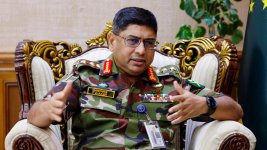
Bangladesh needs to build an environment that will allow reconciliation among various stakeholders of the nation, Army chief General Waker-uz-Zaman said. In a frank interview with prominent news daily Prothom Alo, he made several critical observations on the policing failures of the current interim administration, and said India and Bangladesh were dependent on each other on many fronts and, therefore, both should remain mindful of this reality while taking decisions.
“We want a peaceful environment. Peace and stability is very important now for Bangladesh’s economy and social development. Without these two factors, there can be no development or good governance. That is why we need to restore tolerance among ourselves. An environment of national consensus must be created,” Gen. Waker-uz-Zaman said, touching upon some of the critical issues in the country.
Bangladesh came very close to having a public showdown between the Anti-discrimination Students Movement and the military-backed interim administration, on December 31, 2024, when student activists, still triumphant from the successful overthrow of the Sheikh Hasina government five months previously, wanted to “bury” the Constitution of Bangladesh.
The call for a “July proclamation” to do away with the 1972 Constitution, which has been followed even by the former military rulers of Bangladesh, created a tense situation on the streets, and finally, the interim government came out with an assurance that it would declare its own July proclamation to formalise the legacy of the uprising in July-August. Surprisingly, the call to do away with the Constitution found opposition from prominent leaders in the Bangladesh Nationalist Party, with standing committee member Mirza Abbas describing the call to dismantle the 1972 Constitution as “fascist”.
Gen. Waker-uz-Zaman also cooled down the heated anti-India rhetoric that was heard in the student-led “unity rally” of December 31. “India is an important neighbour (of Bangladesh). We are dependent on India in many ways. And India is getting facilities from us, too,” he said.
He depicted the India-Bangladesh relationship as one in which both sides depended on the other for their security needs, economic activities, and the medical requirements of the people of Bangladesh. “See, the thing is that we will not do anything with our neighbour that goes against their strategic interests. At the same time, we will expect that our neighbour does nothing that is contrary to our interests,” the Army chief said. He pointed out that security concerns at the Bangladesh-Myanmar border and the Chittagong Hill Tracts were of great importance to Bangladesh, while reminding India to stop border killings and provide Bangladesh with its “fair share of water”.
The interview with Gen. Waker-uz-Zaman has created a buzz among Bangladesh observers for several reasons, including the message it seeks to convey. In view of the breakdown of law and order, especially the dysfunctional police administration in Bangladesh, there had been growing anticipation that the military would secure a more direct role. In September, the Bangladesh military was given magisterial powers, although it has not used them fully so far.
Gen. Waker-uz-Zaman pledged full support to the interim government led by Chief Adviser Mohammad Yunus but, significantly, declared explicitly that the restoration of institutions in the country would depend on a politically empowered government. “This will require political parties and a government. This will not be possible without politics and without a political government,” he said.
He also expressed eager concern for the recovery of Bangladesh’s policing capacity, with many instances of mob justice having taken place since the fall of the Sheikh Hasina government. “They (the Army) have been five months in the field now. If the police could get organised fast, I would have no worry,” Gen. Waker-uz-Zaman said.
The Prothom Alo interview, however, did not include a question on the issue of Sheikh Hasina’s presence in India, which has greatly disturbed ties between New Delhi and Dhaka in the past few months.
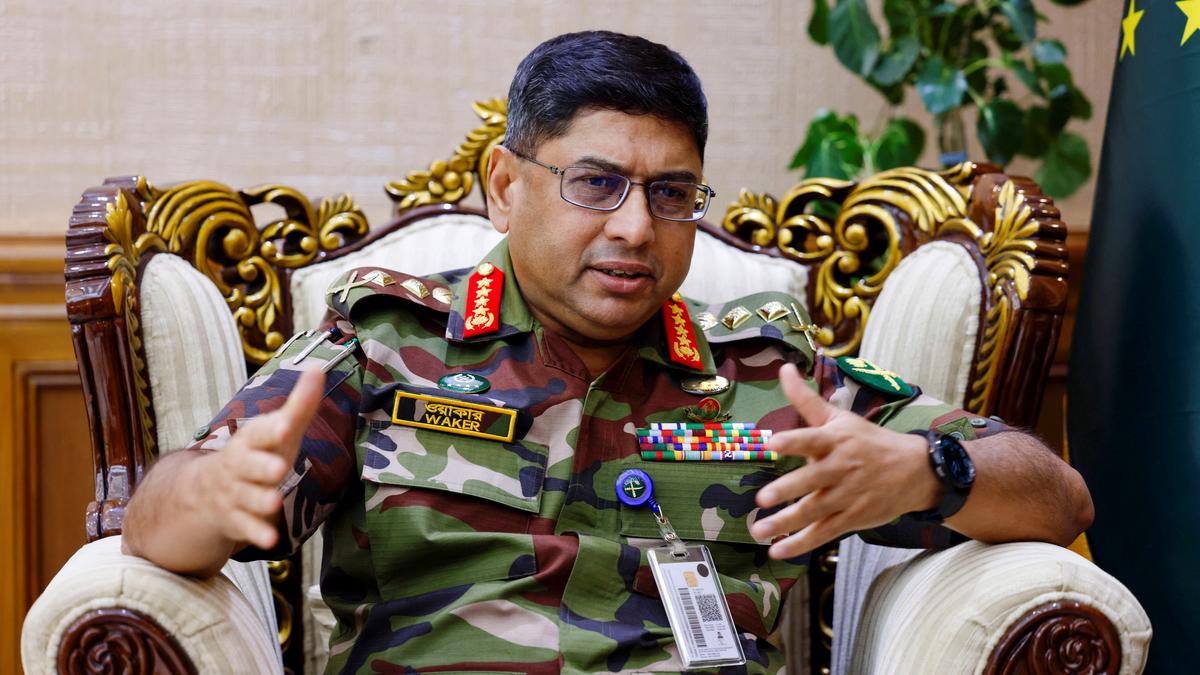
 www.thehindu.com
General Waker-uz-Zaman emphasises the need for peace, stability, and national consensus in Bangladesh for development and good governance
Kallol Bhattacherjee
The Hindu - January 01, 2025
Bangladesh needs to build an environment that will allow reconciliation among various stakeholders of the nation, Army chief General Waker-uz-Zaman said. In a frank interview with prominent news daily Prothom Alo, he made several critical observations on the policing failures of the current interim administration, and said India and Bangladesh were dependent on each other on many fronts and, therefore, both should remain mindful of this reality while taking decisions.
“We want a peaceful environment. Peace and stability is very important now for Bangladesh’s economy and social development. Without these two factors, there can be no development or good governance. That is why we need to restore tolerance among ourselves. An environment of national consensus must be created,” Gen. Waker-uz-Zaman said, touching upon some of the critical issues in the country.
Bangladesh came very close to having a public showdown between the Anti-discrimination Students Movement and the military-backed interim administration, on December 31, 2024, when student activists, still triumphant from the successful overthrow of the Sheikh Hasina government five months previously, wanted to “bury” the Constitution of Bangladesh.
The call for a “July proclamation” to do away with the 1972 Constitution, which has been followed even by the former military rulers of Bangladesh, created a tense situation on the streets, and finally, the interim government came out with an assurance that it would declare its own July proclamation to formalise the legacy of the uprising in July-August. Surprisingly, the call to do away with the Constitution found opposition from prominent leaders in the Bangladesh Nationalist Party, with standing committee member Mirza Abbas describing the call to dismantle the 1972 Constitution as “fascist”.
Gen. Waker-uz-Zaman also cooled down the heated anti-India rhetoric that was heard in the student-led “unity rally” of December 31. “India is an important neighbour (of Bangladesh). We are dependent on India in many ways. And India is getting facilities from us, too,” he said.
He depicted the India-Bangladesh relationship as one in which both sides depended on the other for their security needs, economic activities, and the medical requirements of the people of Bangladesh. “See, the thing is that we will not do anything with our neighbour that goes against their strategic interests. At the same time, we will expect that our neighbour does nothing that is contrary to our interests,” the Army chief said. He pointed out that security concerns at the Bangladesh-Myanmar border and the Chittagong Hill Tracts were of great importance to Bangladesh, while reminding India to stop border killings and provide Bangladesh with its “fair share of water”.
The interview with Gen. Waker-uz-Zaman has created a buzz among Bangladesh observers for several reasons, including the message it seeks to convey. In view of the breakdown of law and order, especially the dysfunctional police administration in Bangladesh, there had been growing anticipation that the military would secure a more direct role. In September, the Bangladesh military was given magisterial powers, although it has not used them fully so far.
Gen. Waker-uz-Zaman pledged full support to the interim government led by Chief Adviser Mohammad Yunus but, significantly, declared explicitly that the restoration of institutions in the country would depend on a politically empowered government. “This will require political parties and a government. This will not be possible without politics and without a political government,” he said.
He also expressed eager concern for the recovery of Bangladesh’s policing capacity, with many instances of mob justice having taken place since the fall of the Sheikh Hasina government. “They (the Army) have been five months in the field now. If the police could get organised fast, I would have no worry,” Gen. Waker-uz-Zaman said.
The Prothom Alo interview, however, did not include a question on the issue of Sheikh Hasina’s presence in India, which has greatly disturbed ties between New Delhi and Dhaka in the past few months.
Bangladesh Army chief calls for national consensus, ‘political government’, tones down anti-India rhetoric
Army chief Gen. Waker-uz-Zaman emphasizes the need for peace, stability, and national consensus in Bangladesh for development and good governance.

Al-Zakir
INT'L MOD
- Thread starter
- #3,116
Bangladesh Army chief calls for national consensus, ‘political government’, tones down anti-India rhetoric
General Waker-uz-Zaman emphasises the need for peace, stability, and national consensus in Bangladesh for development and good governance
Kallol Bhattacherjee
The Hindu - January 01, 2025
View attachment 92581
Bangladesh needs to build an environment that will allow reconciliation among various stakeholders of the nation, Army chief General Waker-uz-Zaman said. In a frank interview with prominent news daily Prothom Alo, he made several critical observations on the policing failures of the current interim administration, and said India and Bangladesh were dependent on each other on many fronts and, therefore, both should remain mindful of this reality while taking decisions.
“We want a peaceful environment. Peace and stability is very important now for Bangladesh’s economy and social development. Without these two factors, there can be no development or good governance. That is why we need to restore tolerance among ourselves. An environment of national consensus must be created,” Gen. Waker-uz-Zaman said, touching upon some of the critical issues in the country.
Bangladesh came very close to having a public showdown between the Anti-discrimination Students Movement and the military-backed interim administration, on December 31, 2024, when student activists, still triumphant from the successful overthrow of the Sheikh Hasina government five months previously, wanted to “bury” the Constitution of Bangladesh.
The call for a “July proclamation” to do away with the 1972 Constitution, which has been followed even by the former military rulers of Bangladesh, created a tense situation on the streets, and finally, the interim government came out with an assurance that it would declare its own July proclamation to formalise the legacy of the uprising in July-August. Surprisingly, the call to do away with the Constitution found opposition from prominent leaders in the Bangladesh Nationalist Party, with standing committee member Mirza Abbas describing the call to dismantle the 1972 Constitution as “fascist”.
Gen. Waker-uz-Zaman also cooled down the heated anti-India rhetoric that was heard in the student-led “unity rally” of December 31. “India is an important neighbour (of Bangladesh). We are dependent on India in many ways. And India is getting facilities from us, too,” he said.
He depicted the India-Bangladesh relationship as one in which both sides depended on the other for their security needs, economic activities, and the medical requirements of the people of Bangladesh. “See, the thing is that we will not do anything with our neighbour that goes against their strategic interests. At the same time, we will expect that our neighbour does nothing that is contrary to our interests,” the Army chief said. He pointed out that security concerns at the Bangladesh-Myanmar border and the Chittagong Hill Tracts were of great importance to Bangladesh, while reminding India to stop border killings and provide Bangladesh with its “fair share of water”.
The interview with Gen. Waker-uz-Zaman has created a buzz among Bangladesh observers for several reasons, including the message it seeks to convey. In view of the breakdown of law and order, especially the dysfunctional police administration in Bangladesh, there had been growing anticipation that the military would secure a more direct role. In September, the Bangladesh military was given magisterial powers, although it has not used them fully so far.
Gen. Waker-uz-Zaman pledged full support to the interim government led by Chief Adviser Mohammad Yunus but, significantly, declared explicitly that the restoration of institutions in the country would depend on a politically empowered government. “This will require political parties and a government. This will not be possible without politics and without a political government,” he said.
He also expressed eager concern for the recovery of Bangladesh’s policing capacity, with many instances of mob justice having taken place since the fall of the Sheikh Hasina government. “They (the Army) have been five months in the field now. If the police could get organised fast, I would have no worry,” Gen. Waker-uz-Zaman said.
The Prothom Alo interview, however, did not include a question on the issue of Sheikh Hasina’s presence in India, which has greatly disturbed ties between New Delhi and Dhaka in the past few months.
Bangladesh Army chief calls for national consensus, ‘political government’, tones down anti-India rhetoric
Army chief Gen. Waker-uz-Zaman emphasizes the need for peace, stability, and national consensus in Bangladesh for development and good governance.
Where does he say "tones down anti-India rhetoric".
General Waker: India is an important neighbour. We are dependent on India in many ways. And India is getting facilities from us too. A large number of their people are working in Bangladesh, formally and informally. Many people go for medical treatment to India from here. We buy a lot of goods from them. So India has a lot of interests in Bangladesh’s stability. This is a give-and-take relationship. This must be based on fairness. Any country will want to get benefits from the other. There is nothing wrong in that. If we want extract our benefits, then we are to blame too. We must look into these matters. We have to maintain good relations based on equality. The people in no way should feel India is dominating over us, which goes against our interests. People should not feel this in any way.
MNZGamerX
Registered Member
Where does he say "tones down anti-India rhetoric".
General Waker: India is an important neighbour. We are dependent on India in many ways. And India is getting facilities from us too. A large number of their people are working in Bangladesh, formally and informally. Many people go for medical treatment to India from here. We buy a lot of goods from them. So India has a lot of interests in Bangladesh’s stability. This is a give-and-take relationship. This must be based on fairness. Any country will want to get benefits from the other. There is nothing wrong in that. If we want extract our benefits, then we are to blame too. We must look into these matters. We have to maintain good relations based on equality. The people in no way should feel India is dominating over us, which goes against our interests. People should not feel this in any way.
Naturally he doesn't say himself that he has toned down anti-Indian rhetoric but it is an impression from his comments that is not only claimed by the Indian media but many Bangladeshis on social media. His remarks are certainly less harsh than others in the IG or connected to it.


Bengal71
Trusted Member

"Lesson of the history is that no one learns from history".
Looks like some BNP wala didn't get the message.
TZ better sack likes of Rizvi and Faqrul before it's too late.
It won't be walk in the park for BNP in next election.
It's TZ himself. He is a well known goon from their last tenure.

Joe Shearer
Professional
Keep me out of this. You (collectively) are successfully losing the debate, using twisted interpretations and twisted facts married to bloated and arrogant conceit, and you will find much of the world revolted by the Indian position on practically all things. You will find that disgust an overwhelming wave on this forum. Other fora will display similar trends, or rather, waves.@MNZGamerX
Thanks, sir, that was a comprehensive explanation.
As I see it, politics is the art of the possible, some BDs here and in real life may want a revolution which will completely change things around but these things seldom happen like that in the real world.
In case a large section of the citizenry wants a new Republic altogether, the right thing to do is to set up a new Constituent Assembly with fresh elections. I doubt if your alleged "student leaders" would consent to that because a free and fair polls would mean that the old parties would be back and they would be exposed as empty vessels much like the handsome cricketer next door and his ragtag outfit, until he was onboarded by the Neutral Umpires as a Kings Party.
Regards
@Joe Shearer @UKBengali @BananaRepublic
Secular-minded democratic Indians have been called anti-national, anti-Hindu (to a Sanghi, that being the same as anti-national), and worse. At this stage, they will watch from the sidelines as the Sanghis' make exhibitions of themselves.
Users who are viewing this thread
Total: 3 (members: 0, guests: 3)
Pakistan Defence Latest

Country Watch Latest
Latest Posts
-
-
 Pakistan vows to defend Saudi Arabia against Iran-backed Houthis by ‘whatever means’ (23 Viewers)
- Latest: clutch
-
-
-