


So will the Chinese government, as usual.Keep your delusions.
Navigation
Install the app
How to install the app on iOS
Follow along with the video below to see how to install our site as a web app on your home screen.
Note: This feature may not be available in some browsers.
More options
Style variation
You are using an out of date browser. It may not display this or other websites correctly.
You should upgrade or use an alternative browser.
You should upgrade or use an alternative browser.
China could dominate the sky with two flying sixth-generation fighter jets as the US struggles to design one
- Thread starter Beijingwalker
- Start date
More options
Who Replied?
Snake
Registered Member

I don't know. My question was referring to the claim:And how do you know or gauge how advance that platform you saw from a video?
NGAD is more advanced than anything China can put in the air.
I gauge its sixth gen capabilities based on China's progress:
- Based on the images the design the differences between 5th-6th gen are greater than the differences between 4th-5th gen
- China has slowly built its credibility of building state of the art technologies all inhouse. If it is not 6th gen China's credibility will be sent back 40 years or more. Doesn't seem like a gamble they'd be willing to take - considering they could lie about their 5th gen bomber instead.
We can argue about what qualifies as 6th gen v. 5th gen til we're blue in the face. Typically the standard for the new gen has been defined by the one who develops it first. Although US has been known to ignore (in an attempt to erase) developments of others. I have no problem if someone doesn't acknowledge it as 6th gen but the same should apply for anyone who believes it is 6th gen.
BTW do you think the US 6th gen fighter may have influences from the new Chinese planes?
niubi
Registered Member


Actually afterburner mode is when smoke is least present. Smoke is most present during acceleration ie when the aircraft is accelerating or engines are throttling up. Acceleration doesn't equate to afterburner.
plenty of examples of F-22 and F-35 smokey engines during acceleration. Just watch airshow performances during moments they don't use afterburner. You can see that F-22 and F-35 almost always use full afterburner throughout air show performances. Rare occasions they are not in full afterburner and acclerating is when you will find black smoke.
You will not find black smoke coming out of J-20 or J-35 when they are in afterburner mode either.
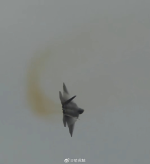
F-35 's F-135 engine is almost always in afterburner during airshow maneuvers but once in a while when the pilot throttles down and then back up , you see a smoke trail albeit much less than other fighters.
F-22's F119 is much higher bypass ratio and closer to turbojet while F135 is lower bypass ratio which helps its having less smoke. Combined with airshow afterburning routine, we almost never see it smoke up as much as F-22 and other fighters. This stuff has nothing to do with heat shields lol.
As for talk abut 6th gen. Well RQ-170 and RQ-180 are reconnaisance drones only. New loyal wingmans have rudders or stabilisers.
6th gen of China has no rudder or stabilisers and are manned. There are unmanned components too but we're talking 6th gen "fighters" which are designed for air superiiority and multirole missions. RQ-170, RQ-180 are recon drones and subsonic. 6th gen fighters are supersonic cruise capable. RQ series are not. By that logic, then CH-7 and GJ-11 are also 6th gen platforms because they came after J-20.
CH-7 and GJ-11 are subsonic just like RQ series. MQ series have rudders or stabilisers. SAC and CAC's 6th gen prototypes are large, manned, at least twin engined supersonic cruise capable aircraft that are clearly air superiority and/or multirole. Nothing else in US or Chinese arsenal are completely rudderless AND supersonic cruise capable (B-21 is not supersonic capable) that are designed to be multirole - perform air superiority and air to ground possibly also.
Furhtermore these two came after J-20 and J-35 therefore calling it 6th gen since they are different to 5th gens like J-20 F-22 etc because no rudder/stabilisers and supersonic multirole manned aircraft. Sure there are unmanned next gen systems too but we're not calling them fighters.
Definitions are less important than clearly new generation of manned aircraft.
plenty of examples of F-22 and F-35 smokey engines during acceleration. Just watch airshow performances during moments they don't use afterburner. You can see that F-22 and F-35 almost always use full afterburner throughout air show performances. Rare occasions they are not in full afterburner and acclerating is when you will find black smoke.
You will not find black smoke coming out of J-20 or J-35 when they are in afterburner mode either.
F-35 's F-135 engine is almost always in afterburner during airshow maneuvers but once in a while when the pilot throttles down and then back up , you see a smoke trail albeit much less than other fighters.
F-22's F119 is much higher bypass ratio and closer to turbojet while F135 is lower bypass ratio which helps its having less smoke. Combined with airshow afterburning routine, we almost never see it smoke up as much as F-22 and other fighters. This stuff has nothing to do with heat shields lol.
As for talk abut 6th gen. Well RQ-170 and RQ-180 are reconnaisance drones only. New loyal wingmans have rudders or stabilisers.
6th gen of China has no rudder or stabilisers and are manned. There are unmanned components too but we're talking 6th gen "fighters" which are designed for air superiiority and multirole missions. RQ-170, RQ-180 are recon drones and subsonic. 6th gen fighters are supersonic cruise capable. RQ series are not. By that logic, then CH-7 and GJ-11 are also 6th gen platforms because they came after J-20.
CH-7 and GJ-11 are subsonic just like RQ series. MQ series have rudders or stabilisers. SAC and CAC's 6th gen prototypes are large, manned, at least twin engined supersonic cruise capable aircraft that are clearly air superiority and/or multirole. Nothing else in US or Chinese arsenal are completely rudderless AND supersonic cruise capable (B-21 is not supersonic capable) that are designed to be multirole - perform air superiority and air to ground possibly also.
Furhtermore these two came after J-20 and J-35 therefore calling it 6th gen since they are different to 5th gens like J-20 F-22 etc because no rudder/stabilisers and supersonic multirole manned aircraft. Sure there are unmanned next gen systems too but we're not calling them fighters.
Definitions are less important than clearly new generation of manned aircraft.
niubi
Registered Member
There are no other existing aircraft manned or otherwise which are supersonic, rudderless and no stabilisers at all, multirole (as opposed to recon only).
B-21 is subsonic and would turn much worse than CAC's aircraft. Sweep angles are general indicators of speed. RQ series, CH-7 GJ-11 etc etc are all subsonic single sweep angle flying wings. While they are rudderless they are subsonic and a few of those are recon only.
MQ-28 has rudder and is a smaller loyal wingman. Call it 6th gen if one wants. These sorts of lower level UCAVs are going to proliferate like crazy and they're much easier to develop and field than manned aircraft... cheaper too. Both sides have them and will have them in greater numbers than manned fighters of 5th gen and above.
China's UCAV pairing is still under wraps but previous copies of MQ-28 and loyal wingman in FH series of UCAVs are lower level compared to what SAC has developed. They have yet to show but the consensus out of credible sources are saying they have another generation of UCAVs to accompany SAC 6th gen.
B-21 is subsonic and would turn much worse than CAC's aircraft. Sweep angles are general indicators of speed. RQ series, CH-7 GJ-11 etc etc are all subsonic single sweep angle flying wings. While they are rudderless they are subsonic and a few of those are recon only.
MQ-28 has rudder and is a smaller loyal wingman. Call it 6th gen if one wants. These sorts of lower level UCAVs are going to proliferate like crazy and they're much easier to develop and field than manned aircraft... cheaper too. Both sides have them and will have them in greater numbers than manned fighters of 5th gen and above.
China's UCAV pairing is still under wraps but previous copies of MQ-28 and loyal wingman in FH series of UCAVs are lower level compared to what SAC has developed. They have yet to show but the consensus out of credible sources are saying they have another generation of UCAVs to accompany SAC 6th gen.
j_hungary
Professional
The problem is, the claim is that this is a 6th gen platform, as I said before, unless there are more context put into the video (Whether or not we believe it is another issue altogether) for that particular video alone, all I see is 2 platforms with existing design, we can't even gauge the capability alone on this video, that the issue I haveI don't know. My question was referring to the claim:
Again, can it be 6th gen? Certainly, but do we know for sure? No, I don't think anyone can say one way or another given the obliquity of the video.
j_hungary
Professional
So are you telling me you can't tell me what make you think this is a 6th gen platform from this video alone?You just proved my point here mate. Lololol
Got it.
j_hungary
Professional
This is only half correct.Actually afterburner mode is when smoke is least present. Smoke is most present during acceleration ie when the aircraft is accelerating or engines are throttling up. Acceleration doesn't equate to afterburner.
plenty of examples of F-22 and F-35 smokey engines during acceleration. Just watch airshow performances during moments they don't use afterburner. You can see that F-22 and F-35 almost always use full afterburner throughout air show performances. Rare occasions they are not in full afterburner and acclerating is when you will find black smoke.
You will not find black smoke coming out of J-20 or J-35 when they are in afterburner mode either.
View attachment 93666
F-35 's F-135 engine is almost always in afterburner during airshow maneuvers but once in a while when the pilot throttles down and then back up , you see a smoke trail albeit much less than other fighters.
F-22's F119 is much higher bypass ratio and closer to turbojet while F135 is lower bypass ratio which helps its having less smoke. Combined with airshow afterburning routine, we almost never see it smoke up as much as F-22 and other fighters. This stuff has nothing to do with heat shields lol.
First of all, exhaust is not exactly Black Smoke trail. Exhaust generally is just distortion of the airflow behind the engine. it was created by superheating the gas from the engine heat, which lead to the density change and the exhaust being visible.
This photo from Jeju Crash is the best example of how Jet Exhaust being visible
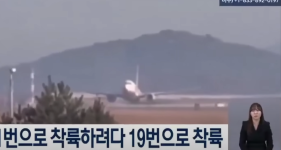
You can see the exhaust from Engine #2 distorted the engine while #1 is clear, indicate the #1 engine have no gas exhaust.
Smoke (Black or otherwise) is a creation of fuel mixture unbalance, fuel in a jet engine burn in 2 ways, 1.) You burn the fuel with air intake. 2.) You burn the fuel on fuel (afterburner) While you were right that most engine smoke is based on the by-pass ratio and afterburner selfdom produce smoke since burning fuel with excessive fuel is actually the most effective way to burn fuel. Smoke usually only generate when you have no enough air to burn the fuel with. So either one of these would make your engine "Choke"
1.) Your engine don't have enough air intake.
2.) Your engine power suddenly increase before the turbofan suck in enough air
There are a 3rd one, that's water injection to cool the engine but this largely absent from military aircraft, so not going to touch that here.
Now, I am not saying F-22 or F-35 can't have smoke, those condition are for every flying object. You can only deflect the smoke and make it less detectable. That's what the nozzle vent on a F-22 is for and what Venturi Effect is applies (Not going to explain it here, read it if you want to). Most new engine are designed to either effectively bring the exhaust gas into ambient pressure, or is designed to high efficient or both.
While PW-F-119 Engine will still give you smoke, it would have to be highly ineffective, to upset that balance. Usually it is during extreme maneuver (High G maneuver) when not enough air suck into the intake to burn the fuel effectively (White smoke from extreme angle intake)
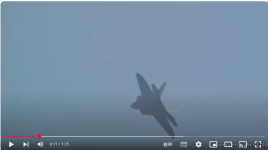
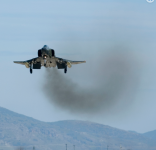
But it simply won't smoke when they are gradually accelerating or decelerating.
like this
Antonius123
Trusted Member

And you can see from that video both new Chinese platform are manned? Eh?
Yes!
Besides, unmanned wouldn't as big like that.
lol, whatever (That's not what I said by the way, I said do you know why or how Stealth Platform hide the heat signature, not afterburn trade fuel with energy), I mean you can believe whatever you want, and if you think that is a 6th gen just by looking at the video, be my guest.
The next generation fighter after 5th gen J20 is 6th generation. As simple as that.
And also, that F-35 is not smoking from the engine, that picture is from combat fighter magazine 2019-8 and it's smoking, and the flash is from firing its 25mm gun.
You can clearly see the flash is from the gun port, not from the engine exhaust.
That's a just so you know.
I am out of this discussion, good day
With or without photo, the physics law is the same .. when you accelerate, your engine needs to generate more force to increase speed, which requires more energy. The engine burns more fuel to provide that energy, and as a result, emissions (smoke or other byproducts) increase depending on the engine's efficiency and condition.
This principle applied on F-119 of F-22 and F-135 of F-35.
Antonius123
Trusted Member
The problem is, the claim is that this is a 6th gen platform, as I said before, unless there are more context put into the video (Whether or not we believe it is another issue altogether) for that particular video alone, all I see is 2 platforms with existing design, we can't even gauge the capability alone on this video, that the issue I have
Again, can it be 6th gen? Certainly, but do we know for sure? No, I don't think anyone can say one way or another given the obliquity of the video.
So are you telling me you can't tell me what make you think this is a 6th gen platform from this video alone?
Got it.
this ....
\/
\/
Easy....
Because China has already have 2 5th generation fighter : J-20 and J-35 (which they classify as 4th gen fighters).
Therefore J-36 and J-50 should be the next generation after the 5th generation aka : 6th gen.
Because :
1. It is illogical for China to have 4 different kind of 5th gen fighter.
2. China is at the forefront for the technology needed for 6th gen fighter, such as: AI, advanced sensors, advanced data fusion, direct weapon (laser), metamaterial, quantum technology.
That J-36 and J-50 should incorporate better technology than J-20 & J-35, such as all stealth aspects, more advanced data fusion, AI.
J-20 is 2010 technology, while J-36 & J-50 are 2024 technology.
Snake
Registered Member
No, the claim was that ngad is more advanced than anything China has.The problem is, the claim is that this is a 6th gen platform, as I said before, unless there are more context put into the video (Whether or not we believe it is another issue altogether) for that particular video alone, all I see is 2 platforms with existing design, we can't even gauge the capability alone on this video, that the issue I have
Again, can it be 6th gen? Certainly, but do we know for sure? No, I don't think anyone can say one way or another given the obliquity of the video.
I think it would be better to promote discussion that these are 6th gen and those who don't believe these are 6th gen - rather than demote such discussion.
j_hungary
Professional
That goes back to the original question.No, the claim was that ngad is more advanced than anything China has.
I think it would be better to promote discussion that these are 6th gen and those who don't believe these are 6th gen - rather than demote such discussion.
What do you actually see in the video?
Snake
Registered Member
That goes back to the original question.
What do you actually see in the video?
A plane that could heavily "influence" American 6th gen plane.
j_hungary
Professional
How do you see that? And specifically, what actually do you see??A plane that could heavily "influence" American 6th gen plane.
Snake
Registered Member
How we see similarities between F-35 and J-35.How do you see that?
??And specifically, what actually do you see??
I watched the same clips as you I suppose? Could you tell me what you actually see?
j_hungary
Professional
How we see similarities between F-35 and J-35.
How did it make sense? F-35 pre-dated J-35 development for at least a decade. F-35 went into production before J-35 even have a prototype.......
??
I watched the same clips as you I suppose? Could you tell me what you actually see?
I already did
And how do you know or gauge how advance that platform you saw from a video?
I have a talk with my brother who was a USMC F-18 pilot and currently working for Rolls Royce in their Trent Development team in the UK, his comment aligned with most other, which is we don't know what that platform it, it could be anything, can it be 6th gen? Sure, but without more context on how this platform is different than other 5th gen, there are not much to go on other than it is a flying tailless design with thrust vectoring capabilities, all of these are on the 5th Gen Platform already.
What he said was, the bigger thing with 3 engines probably a is not true stealth bomber as you have engine on top of the aircraft both air dynamically and heat wise, maybe the Chinese can mask that engine heat and deflect the shape, but he don't know as he can't just tell from that video alone. And the smaller one looks a lot like RC-180 or Boeing X-36.
Users who are viewing this thread
Total: 1 (members: 0, guests: 1)
Pakistan Defence Latest
-
-
Robotics & Autonomous Systems (RAS) Exhibition in Islamabad (22-23 July 2026) (7 Viewers)
- Latest: maxpane
-

-

-

Country Watch Latest
-
Iran - Israel/US War: Israel-US declare war on Iran, Iran responds (231 Viewers)
- Latest: OldTwilight
-
 TF-X / KAAN / Hürjet Turkish Fighter & Trainer Aircrafts News & Discussions (20 Viewers)
- Latest: MMM-E
-
-

-
Latest Posts
-
-
Iran - Israel/US War: Israel-US declare war on Iran, Iran responds (231 Viewers)
- Latest: OldTwilight
-

-

-
