Indonesia's Manufacturing Sector

Some of Shipbuilders

PT PAL (SOE) - East Java

To view this content we will need your consent to set third party cookies.
For more detailed information, see our cookies page.


PT Batamex (Private Sector) - Batam Island

To view this content we will need your consent to set third party cookies.
For more detailed information, see our cookies page.


Shipbuilding industry in Sumatra

To view this content we will need your consent to set third party cookies.
For more detailed information, see our cookies page.
 

Indonesia Mandates Downstream Development for Coal Mining Contract Extensions​


View attachment 84404
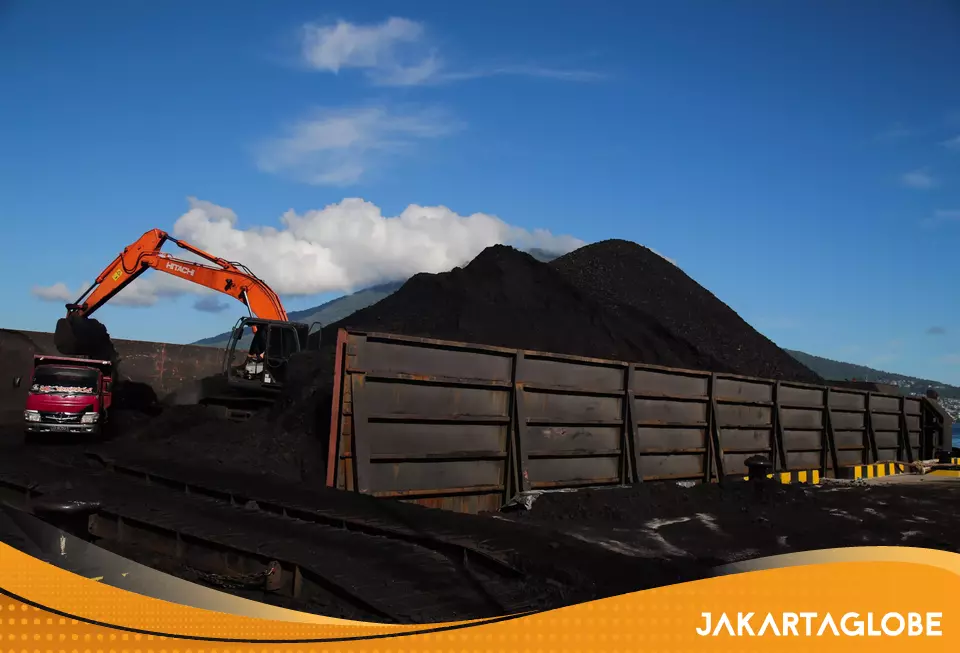
A backhoe unloads coal from a barge at Tidore Islands Port in North Maluku, Thursday, Jan. 4, 2024. (Antara Photo/Andri Saputra)


Antara

November 25, 2024 | 4:17 pm


Jakarta. Coal mining companies seeking to extend their contracts must establish a downstream industry ecosystem, Energy and Mineral Resources (ESDM) Minister Bahlil Lahadalia said on Monday.


"One of the main requirements for extending Coal Mining Work Agreements (PKP2B) is developing downstream industries," Bahlil told Antara news agency.


Downstream industrialization efforts include coal gasification, a process that converts coal into gas for use as fuel or raw material in the chemical industry. This initiative aims to reduce Indonesia’s reliance on liquefied petroleum gas (LPG) imports.


Bahlil said that the policy aligns with President Prabowo Subianto’s vision to promote the industrialization of natural resources, enhancing domestic value while driving economic growth beyond 8 percent.

"This initiative diversifies national income sources, reduces dependence on raw material exports, and lowers reliance on LPG imports, which remains significant," he explained.


Indonesia consumes 8 million tons of LPG annually, with 6 million tons sourced through imports. Domestic production is limited to just 1.6–1.8 million tons. "We need to boost the production of gases like C3 and C4, which are vital for LPG but are currently scarce in Indonesia," Bahlil added.


To support President Prabowo’s economic agenda, the government has outlined a downstream roadmap for 28 key commodities.


According to Bahlil, 90 percent of these commodities fall under the ESDM Ministry’s domain, requiring an estimated $618 billion in investments by 2040.


Additionally, the government will regulate mineral production allocation to ensure equity across the industry. This will involve adjustments in annual work and budget plans (RKAB) for mining companies.


The policy follows instances where domestic mining firms sought disproportionate production allocations. "For example, Indonesia produces 150 million tons of nickel, but one company requested 50–60 million tons, accounting for 30–40% of national production," Bahlil revealed.


During the APEC CEO Summit in Lima, Peru, on Nov. 14, President Prabowo invited global investors to participate in Indonesia’s $600 billion downstream development plan, aimed at moving up the production value chain for multiple commodities.


"Indonesia is open for business. I am committed to protecting all investments and creating favorable economic conditions," Prabowo said.


This extensive downstream initiative reflects Indonesia’s push for resource nationalism, which began under former President Joko Widodo’s administration. The nickel industry serves as a model, with unprocessed exports halted in favor of domestic processing. Similar policies are being considered for other commodities, including seaweed.


here i find something about Indonesia :coffee:
.
=>

Example #2

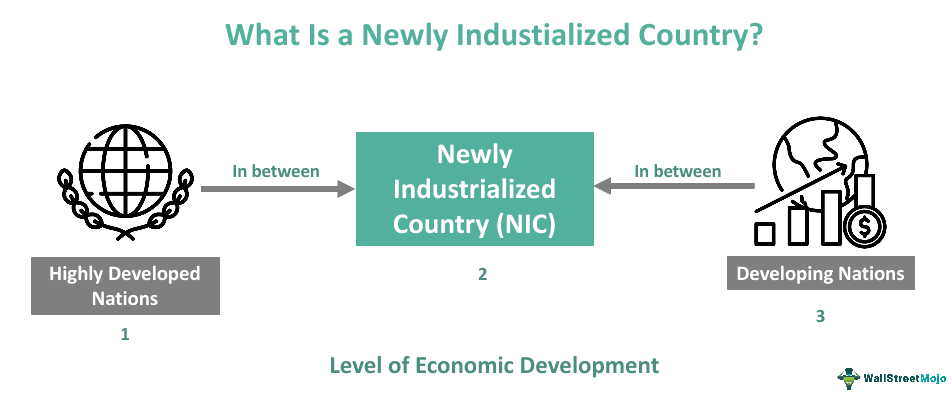
Let's examine Indonesia's journey toward becoming a newly industrialized country. The Indonesian government has played a crucial role in spurring economic growth and fostering industrial development. One key factor contributing to Indonesia's potential for industrialization is its abundant natural resources.

In the third quarter of 2022, the non-oil/non-gas manufacturing industry made a significant contribution of 16.10 percent to the country's overall gross domestic product (GDP). These resources are a solid foundation for establishing and expanding industries, driving economic growth, and diversifying the economy. ☕

 
To view this content we will need your consent to set third party cookies.
For more detailed information, see our cookies page.


Manufacturing Value Added by Country 2000-023​

 
To view this content we will need your consent to set third party cookies.
For more detailed information, see our cookies page.


Polygon Factory 2024​


Pupuk Indonesia plans to build two methanol plants by 2030​


August 23, 2024

To view this content we will need your consent to set third party cookies.
For more detailed information, see our cookies page.


State-owned fertilizer producer PT Pupuk Indonesia plans to construct two methanol plants in two provinces by 2030 as part of the effort to support the government’s accelerated implementation of the B50 program.

President Director of PT Pupuk Indonesia, Rahmad Pribadi, said that mixing biofuel, especially palm oil, with fossil fuels to produce B50 requires methanol, which is currently imported.

“Pupuk Indonesia will develop the methanol industry to reduce methanol imports and support the B40 or B35 programs,” Rahmad said during the AZEC 2024 event on Wednesday, August 21, 2024.

Rahmad mentioned that the construction of the two plants, to be located in East Kalimantan and Nangroe Aceh Darussalam, is part of the company’s efforts to help the government achieve energy transition goals.

“This is Pupuk Indonesia’s support for a clean energy transition. The construction is expected to be completed by 2030 due to the time required for development,” he added.

Biodiesel production requires methanol to mix with fossil fuels through a two-step transesterification process. The transesterification process involves mixing potassium hydroxide (KOH) and methanol (CH3OH) with palm oil.

The first transesterification reaction takes about two hours at a temperature of 58-65°C. Initially, fatty acids are introduced into the reactor and heated to the specified temperature.

The transesterification reactor is equipped with heaters and stirrers. During heating, the stirrer is operated. Once the reactor reaches 63°C, a mixture of methanol and KOH is introduced, and the reaction time starts from this point.

At the end of the reaction, methyl ester is formed with a conversion rate of about 94 percent. The product is then allowed to settle for a certain period to separate glycerol and methyl ester.

Glycerol, which forms in the lower layer due to its higher density than methyl ester, is then removed from the reactor to avoid interference with the second transesterification process.

By establishing these plants, PT Pupuk Indonesia aims to bolster local methanol production, reduce dependency on imports, and support the country’s shift towards cleaner energy sources.

 
To view this content we will need your consent to set third party cookies.
For more detailed information, see our cookies page.


RANKING ASEAN COUNTRIES BY MANUFACTURING OUTPUT (1970 - 2023)​

 
To view this content we will need your consent to set third party cookies.
For more detailed information, see our cookies page.


RANKING ASEAN COUNTRIES BY MANUFACTURING OUTPUT (1970 - 2023)​


I have report that Indonesia's Manufacturing industries are also the highest quality rank in ASEAN region.
Indonesia is well ahead of countries like Philippines, Malaysia of ASEAN region in terms of 'quality' of Manufacturing output 👍
 
Indonesia Becomes a Base for Suzuki Production Post-close of Thailand Factory

Kompas.com - 20/01/2025, 11:02 WIB

JAKARTA, KOMPAS.com -Suzuki Motor Corporation has decided to close its car factory in Thailand by the end of 2025 as part of the evaluation of the global production structure.

This decision gives Suzuki Indonesia a greater responsibility, which is to become the production base of the new Completely Knock Down (CKD) model in the region, which is export-oriented.

Managing Director of PT Suzuki Indomobil Motor (SIM) Shodiq Wicaksono, said that Indonesia will take a strategic role previously held by the Thai factory. For that, the company will improve the optimization of existing factory facilities.

 
China's BYD to complete $1 billion Indonesia plant by year-end, executive says


To view this content we will need your consent to set third party cookies.
For more detailed information, see our cookies page.


Reuters Videos

Updated Mon, January 20, 2025 at 7:06 PM GMT+7

STORY: BYD is driving forward with its plan to build a $1 billion plant in Indonesia.

A top executive said Monday the Chinese electric vehicle maker aims to complete the facility at the end of this year.

Eagle Zhao is BYD's president director in Indonesia.

“Actually every single progression of our local manufacturing is quite smooth and also on the track. Meanwhile, we will also keep our commitment, which is by end of 2025, we will complete the construction works of our factory in Indonesia.”

It underscores the carmakers ambition to dominate in a market where Japanese automakers are popular.

Zhao said the long-term plan for the plant is for the export market

The plant is being built at an industrial complex in Subang, West Java, and projected to have a production capacity of 150,000 EV units annually.

“So our manufacturing, once its started we will put the priority and majority for the domestic markets. Meanwhile, we will never stop to thinking about the exportation (export) market as well."

 
How does Indonesia compete industrially, with Chinese competitiveness? What is Indonesia’s niche?

@Indos
 
How does Indonesia compete industrially, with Chinese competitiveness? What is Indonesia’s niche?

@Indos

I think better term is to compete with other ASEAN members. When it comes to compete with other ASEAN members, we have comparative advantage in raw material, energy cost and avaibility, big labor supply, and big market when it comes to manufacturing. Infrastructure is also getting better after 10 years of Jokowi focused on infrastructure development.

Next is to nurture Indonesia local tech to grow bigger so that it can add more to our GDP. What I mean of this is more into our huge start ups and those with capability to enter the industry. I dont talk about our already big tech companies. They are already big and so far pretty stable, I focus more on more start up to flourish using AI technology to grow and compete with established companies and create new market. I see Indonesia has ability to be like India when it comes to IT service sector.

Prabowo huge free meal program to our school students can also grow our entreprenure numbers, hoping kids growing in entrepreneurship family to be bigger entreprenure as well later that hopefully can create more jobs
 

Freeport Indonesia Delivers First Gold Bars to Antam to Mark New Milestone​


Heru Andriyanto

February 13, 2025 | 11:56 am

1739778063928.webp
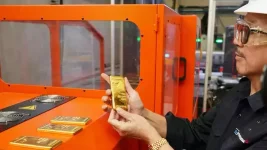
In this undated photo, Freeport Indonesia CEO Tony Wenas holds a gold bar that will be sent to state-owned gold supplier Aneka Tambang (Antam). (Photo courtesy of Freeport Indonesia)


Jakarta. Copper and gold mining company Freeport Indonesia (PTFI) has delivered its first batch of gold bars to state-owned gold supplier Aneka Tambang (Antam), marking a major milestone in Indonesia’s mining industry. The initial shipment weighed 125 kilograms and was valued at approximately Rp 207 billion ($12.7 million).


The inaugural delivery on Wednesday solidifies Freeport’s status as Indonesia’s first fully integrated mining company, capable of refining anodes from impure metals into gold bars -- from upstream mining operations to downstream processing.


This shipment is part of a five-year sale and purchase agreement signed between Freeport and Antam on November 7, 2024. The deal covers the delivery of 30 tons of gold worth an estimated $12.5 billion (Rp 200 trillion).


The 99.99 percent pure gold bars were produced at Freeport’s Precious Metal Refinery Smelter in Gresik and transported to Antam’s headquarters in Pulogadung, East Jakarta.

"PTFI’s inaugural delivery of gold bars to Antam marks a new milestone in Indonesia’s push for gold industrialization. It aligns with the government’s vision to maximize the added value of natural resources and realize the Golden Indonesia Vision 2045," Freeport Indonesia CEO Tony Wenas said in a statement.

1739778160835.webp
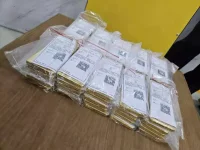
This undated provided by Freeport Indonesia shows a pile of gold bars that will be sent to state-owned gold supplier Aneka Tambang (Antam). (Photo courtesy of Freeport Indonesia)


Tony noted that despite brief disruptions caused by a fire incident, Freeport’s new smelter has successfully commenced operations.


"PTFI has processed approximately 12.56 tons of anode slime at its subsidiary, PT Smelting, producing 189 kilograms of gold bars. This includes 125 kilograms of fine gold with 99.99 percent purity, while the remaining 64 kilograms will undergo recasting to meet purity standards," Tony added.


Boosting National Economic Resilience
Antam President Director Nico Kanter said the partnership with Freeport represents a strategic effort to develop Indonesia’s mineral industries and enhance its global competitiveness.


"This collaboration is a significant step toward Indonesia’s self-reliance in the mining sector and supports the government’s initiative to reduce dependence on gold imports," Nico said.


The successful production of gold bars follows Freeport’s previous achievements in developing an integrated copper processing industry, transforming raw ores into finished products.


"Our next goal is to establish an integrated processing industry for silver," Tony added.

1739778225004.webp
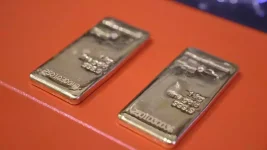
This undated photo provided by Freeport Indonesia shows two gold bars that will be sent to state-owned gold supplier Aneka Tambang (Antam). (Photo courtesy of Freeport Indonesia)


Freeport’s smelter has an annual capacity of 50 tons of gold and 200 tons of silver, further advancing Indonesia’s mineral refining capabilities.


State-Owned Enterprises Minister Erick Thohir previously said that domestic gold transactions between local companies could significantly contribute to saving foreign exchange reserves.


"With Freeport capable of producing 50 tons of gold annually, Antam’s purchase of 30 tons could help save Rp 200 trillion in foreign exchange reserves. We must continue to push for mining industrialization at home to strengthen the national economy," Erick said in November.


To view this content we will need your consent to set third party cookies.
For more detailed information, see our cookies page.


Apple Considers iPhone Manufacturing in Indonesia After Ban | Vantage with Palki Sharma | N18G​


Users who are viewing this thread

Back
Top