corven
Registered Member

So after Shenyang Aircraft redesigned the J11B and found that the center of gravity was unstable, it added a 300Kg lead weight to it? We all looked at it as a joke. Of course, Shen Fei is not bad now. Hahaha. If there is an air force version, the probability of it being given to Pakistan is higher than that of the Chinese Air Force for its own use.There are two different configurations of J-35 already observed, one with enlarged wing area allegedly for carrier ops. Note the difference in wing geometry and intake features. As for why I think air force J-35 would be necessary, see this post right here: https://defencepk.com/forums/thread...n-fighter-aircraft-from-china.1398/post-29149
View attachment 13210
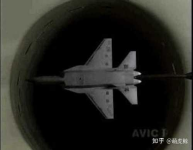
Saying that Shenyang can only copy and improve is a very crude over generalization, as many of the pioneering technologies such as digital flight controls, BVR tactics with ARH missiles, and non-linear impact of canards over flight characteristics, were all conducted with the SAC's J-8B Finback platform variants.
The misconception of SAC's ability is mainly due to their focus with the flanker platform in recent years, which in my opinion, the ability to "copy and improve" upon the crude but promising flanker platform is not an indication of inferiority. By the collapse of the USSR, the flanker platform is more of an unfinished product - the "digital" flight control with "relaxed" stability is more accurately described as a 5 channel analogue flight control with neutral stability, with much of the flight envelope left unexplored; the airframe structure is very unrefined, due to the lack of digital finite element analysis capability, weak in some areas but overweight in others, etc.
One of the prime example of this is the Su-27K, or Su-33. It's empty weight exceeds 18 tonnes, 2 tonnes heavier than the already cumbersome base Su-27 airframe. The canard, in post cold-war air tunnel tests, could expand the maximum usable angle of attack to 55 degrees, but due to rushed schedules and lack of funding, the base Su-33's flight control is still restricted to 24 degrees as it was originally on Su-27. The list of immaturities goes far far longer.
What SAC did was not just to imitate the russian flanker variants, but to recreate a whole series, or re-invent the flanker series to the standard and need of the PLAAF. A prime example of this the showcase of J-11B specs at Zhuhai Airshow
View attachment 13221
J-11B's MTOW is a whole 2.5 tonnes less than the J-27S. We know that J-11B have a slightly reduced internal fuel load from 9.4 tonnes to 8.5 tonnes, and they both have a usable payload of 4-4.4 tonnes. This means that the empty weight of the J-11B is just 28-4-8.5=15.5 tonnes, and that is after J-11B have already integrated electronic warfare suites that would previously be placed in pods on Su-27S and J-11A into the airframe.
Combined with the improved thrust performance of 2 WS-10A of 26.3 tonnes combined, a typical J-11B in A2A config would weigh 22.7 tonnes, and thus have a thrust to weight ratio of 1.16 - which is on par with Eurofighter typhoon, overtaking F-15 variants, elevating the flankers from one of the less powerful to one of the most powerful in kinematic performance amongst heavy 4th gen jets. The engineering prowess of SAC is not to be easily dismissed, and their specialization in structural optimization is very important for a medium stealth jet, where munition bays takes up more space in the fuselage while still restrained to medium sized engines, placing further demand on strength and weight reduction.
Last edited: