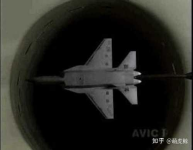
Chinese SAC - FC-31/J-35 5th Gen Stealth Aircraft

There are two different configurations of J-35 already observed, one with enlarged wing area allegedly for carrier ops. Note the difference in wing geometry and intake features. As for why I think air force J-35 would be necessary, see this post right here: https://defencepk.com/forums/thread...n-fighter-aircraft-from-china.1398/post-29149
View attachment 13210
Saying that Shenyang can only copy and improve is a very crude over generalization, as many of the pioneering technologies such as digital flight controls, BVR tactics with ARH missiles, and non-linear impact of canards over flight characteristics, were all conducted with the SAC's J-8B Finback platform variants.

The misconception of SAC's ability is mainly due to their focus with the flanker platform in recent years, which in my opinion, the ability to "copy and improve" upon the crude but promising flanker platform is not an indication of inferiority. By the collapse of the USSR, the flanker platform is more of an unfinished product - the "digital" flight control with "relaxed" stability is more accurately described as a 5 channel analogue flight control with neutral stability, with much of the flight envelope left unexplored; the airframe structure is very unrefined, due to the lack of digital finite element analysis capability, weak in some areas but overweight in others, etc.

One of the prime example of this is the Su-27K, or Su-33. It's empty weight exceeds 18 tonnes, 2 tonnes heavier than the already cumbersome base Su-27 airframe. The canard, in post cold-war air tunnel tests, could expand the maximum usable angle of attack to 55 degrees, but due to rushed schedules and lack of funding, the base Su-33's flight control is still restricted to 24 degrees as it was originally on Su-27. The list of immaturities goes far far longer.

What SAC did was not just to imitate the russian flanker variants, but to recreate a whole series, or re-invent the flanker series to the standard and need of the PLAAF. A prime example of this the showcase of J-11B specs at Zhuhai Airshow
View attachment 13221
J-11B's MTOW is a whole 2.5 tonnes less than the J-27S. We know that J-11B have a slightly reduced internal fuel load from 9.4 tonnes to 8.5 tonnes, and they both have a usable payload of 4-4.4 tonnes. This means that the empty weight of the J-11B is just 28-4-8.5=15.5 tonnes, and that is after J-11B have already integrated electronic warfare suites that would previously be placed in pods on Su-27S and J-11A into the airframe.

Combined with the improved thrust performance of 2 WS-10A of 26.3 tonnes combined, a typical J-11B in A2A config would weigh 22.7 tonnes, and thus have a thrust to weight ratio of 1.16 - which is on par with Eurofighter typhoon, overtaking F-15 variants, elevating the flankers from one of the less powerful to one of the most powerful in kinematic performance amongst heavy 4th gen jets. The engineering prowess of SAC is not to be easily dismissed, and their specialization in structural optimization is very important for a medium stealth jet, where munition bays takes up more space in the fuselage while still restrained to medium sized engines, placing further demand on strength and weight reduction.
So after Shenyang Aircraft redesigned the J11B and found that the center of gravity was unstable, it added a 300Kg lead weight to it? We all looked at it as a joke. Of course, Shen Fei is not bad now. Hahaha. If there is an air force version, the probability of it being given to Pakistan is higher than that of the Chinese Air Force for its own use.
 
Last edited:
So after Shenyang Aircraft redesigned the J11B and found that the center of gravity was unstable, it added a 300Kg lead weight to it? We all looked at it as a joke.
Do you have a source for it?

To my knowledge that only happened during the prototype phase, because the indigenous Chinese 1473 slotted array radar is just a fraction of the weight of the 1 ton behemoth that is the original Russian N001 inverse Cassegrain antenna, the weight reduction exceeded the trim limit, and a counterweight becomes necessary without drastically reconfiguring the rest of the aircraft. I don't see any problem with this, this is very common practice.
You have too high expectations for Shen Fei. J-20 Chief Engineer Yang Wei is the founder of China’s CNC flight system. Whether it is Diverterless supersonic inlet, the CNC flying transmission system or the canards, they have nothing to do with Shen Fei. That's Chengfei's product. Don’t forget, J10 is the product of Cheng Fei. It is inconsistent with basic logic to say that Shen Fei understands canards better than Cheng Fei. Shen Fei generally only makes modifications. One J8 produced 8 academicians of the Academy of Sciences, which is a great legend in China. As for Yang Wei, he was not admitted as an academician of the Academy of Sciences in his first year. Chinese bureaucrats are not ordinary.
I am not taking anything away from the CAC, I am very much aware of its achievement and understood it very well, J-20 is aerodynamically the most complicated fighter that humanity have ever built, featuring very complicated merging vortex systems in different AoA configurations.

BUT, that does not mean SAC is somehow incapable of creating a competitive product that would suit the need of both PLAAF and export customers. PLAAF's preference for heavy tactical jets is evident, for it features the largest twin engine heavy fighter fleet in the world, exceeding even the US F-15 fleet, and I don't think it's the work of Bureaucracy.
 
Do you have a source for it?

To my knowledge that only happened during the prototype phase, because the indigenous Chinese 1473 slotted array radar is just a fraction of the weight of the 1 ton behemoth that is the original Russian N001 inverse Cassegrain antenna, the weight reduction exceeded the trim limit, and a counterweight becomes necessary without drastically reconfiguring the rest of the aircraft. I don't see any problem with this, this is very common practice.

I am not taking anything away from the CAC, I am very much aware of its achievement and understood it very well, J-20 is aerodynamically the most complicated fighter that humanity have ever built, featuring very complicated merging vortex systems in different AoA configurations.

BUT, that does not mean SAC is somehow incapable of creating a competitive product that would suit the need of both PLAAF and export customers. PLAAF's preference for heavy tactical jets is evident, for it features the largest twin engine heavy fighter fleet in the world, exceeding even the US F-15 fleet, and I don't think it's the work of Bureaucracy.
I don't deny Shen Fei's ability, I just think that compared with Cheng Fei, they are still a little behind. Lack of innovation and enterprising spirit. As an old state-owned enterprise, the smell of bureaucracy is a little stronger. Regarding counterweights, when the CD forum was still around, there were detailed instructions in it. The J31 they built is obviously short-legged, so it is impossible to win the favor of the Chinese Air Force. Of course, it may be good in other aspects. This is also the plan they put forward to compete with J20. The Chinese Air Force did not choose it at the beginning. What is the probability of buying it now? At the beginning, China's fifth-generation aircraft was aimed at the F22. If it came up with such a plan, would the Air Force choose it?
 
The reason why the Chinese Air Force likes heavy long-range fighter jets is because our Air Force has to face the US military in the Western Pacific. The first island chain needs to be highlighted to eliminate them. Intercept their bombers, take out their escort fighters, and destroy their airports and military ports. J31 is obviously not suitable for such a task. J20/J16 is the pioneer partner in this mission. Therefore, theoretically speaking, J31 will not be purchased. The war to liberate Taiwan will break out sooner or later.
 
I don't deny Shen Fei's ability, I just think that compared with Cheng Fei, they are still a little behind. Lack of innovation and enterprising spirit. As an old state-owned enterprise, the smell of bureaucracy is a little stronger. Regarding counterweights, when the CD forum was still around, there were detailed instructions in it. The J31 they built is obviously short-legged, so it is impossible to win the favor of the Chinese Air Force. Of course, it may be good in other aspects. This is also the plan they put forward to compete with J20. The Chinese Air Force did not choose it at the beginning. What is the probability of buying it now? At the beginning, China's fifth-generation aircraft was aimed at the F22. If it came up with such a plan, would the Air Force choose it?
Please reference my previous response link:
https://defencepk.com/forums/thread...n-fighter-aircraft-from-china.1398/post-29149
The short version of J-20 vs J-35 is "why not both".

Keep in mind that J-31 is not SAC's submission to contest with the J-20 in the PLAAF's fifth gen fighter bid, which was a much larger airframe with both canard and stabilator, allegedly heavily influenced by Soviet fifth gen concept emphasizing on flight performance like MiG-39/Izdeliye 1.44. In this sense J-31 is actually a significant progress made by SAC to pursue indigenous and practical design that's more aligned with future air combat theory.
 
The reason why the Chinese Air Force likes heavy long-range fighter jets is because our Air Force has to face the US military in the Western Pacific. The first island chain needs to be highlighted to eliminate them. Intercept their bombers, take out their escort fighters, and destroy their airports and military ports. J31 is obviously not suitable for such a task. J20/J16 is the pioneer partner in this mission. Therefore, theoretically speaking, J31 will not be purchased. The war to liberate Taiwan will break out sooner or later.
PLAAF eventually will buys j31 because it want to replace old J10A and some how older airframe like j8 and j7, and as for your concern about range of j31 air to air refueling is the solution, similar to USAF version of f35 which has no range but it's AAR capable PLAAF definitely want medium weight stealth jet complementary to j20 similar to hi-low combo of F-22 and F-35 combo J-31 would be solution in near terms

And j20 has almost no capability to do air to ground missions with limited payloads it's mainly a air superiority jet similar to F-22
 
Please reference my previous response link:
https://defencepk.com/forums/thread...n-fighter-aircraft-from-china.1398/post-29149
The short version of J-20 vs J-35 is "why not both".

Keep in mind that J-31 is not SAC's submission to contest with the J-20 in the PLAAF's fifth gen fighter bid, which was a much larger airframe with both canard and stabilator, allegedly heavily influenced by Soviet fifth gen concept emphasizing on flight performance like MiG-39/Izdeliye 1.44. In this sense J-31 is actually a significant progress made by SAC to pursue indigenous and practical design that's more aligned with future air combat theory.
There are no canards, it is a simple plan to imitate the F22. This is also the reason for being eliminated. Can this solution defeat the F22? Anyone who is not stupid will know the conclusion.Everyone has known about their plan many years ago. So during that period, Shen Fei was most ridiculed in China.
 
PLAAF eventually will buys j31 because it want to replace old J10A and some how older airframe like j8 and j7, and as for your concern about range of j31 air to air refueling is the solution, similar to USAF version of f35 which has no range but it's AAR capable PLAAF definitely want medium weight stealth jet complementary to j20 similar to hi-low combo of F-22 and F-35 combo J-31 would be solution in near terms

And j20 has almost no capability to do air to ground missions with limited payloads it's mainly a air superiority jet similar to F-22
In the battle with the Americans, can any of their tankers, or our tankers, be able to fly out in the initial stage?The Chinese Air Force has the J16, which is cheaper, has a larger payload, and has a longer range than the J31。The F35 is just a compromise between technology and cost. For various reasons, the United States cannot afford the production costs of the F22. The F35 is just a cheap replacement for the F22.
 
There are no canards, it is a simple plan to imitate the F22. This is also the reason for being eliminated. Can this solution defeat the F22? Anyone who is not stupid will know the conclusion.Everyone has known about their plan many years ago. So during that period, Shen Fei was most ridiculed in China.
Canard is bad for stealth it's increase frontal radar cross-section from below and ahead
 
Canard is bad for stealth it's increase frontal radar cross-section from below and ahead
That's a very very crude over-generalization.

I recommend you read a bit into exactly *how* canard hurts stealth, and how such effects can be mitigated.
There are no canards, it is a simple plan to imitate the F22. This is also the reason for being eliminated. Can this solution defeat the F22? Anyone who is not stupid will know the conclusion.Everyone has known about their plan many years ago. So during that period, Shen Fei was most ridiculed in China.
FC-31 is not designed to compete against the J-20. This is a common misconception.

The actual submitted solution to compete with the J-20 is a product of the 601 design bureau, which is dubbed the "snowy owl" (雪鸮) project, which is itself a further evolution of the cancelled J-14 project in the 80s. The PLAAF wanted a heavy fifth gen, obviously SAC and 601 design bureau would not submit a medium tactical jet in a heavy jet bid against another heavy jet, that is just not logical.
1705913431529.png
 
J20 J16 dual-ws15 drones and 6gen for outer ring
J31 J10 single-ws19 drones for inner ring & export

J31 will replace J7 su27 J11a first in PLAAF
 
In the battle with the Americans, can any of their tankers, or our tankers, be able to fly out in the initial stage?The Chinese Air Force has the J16, which is cheaper, has a larger payload, and has a longer range than the J31.
Your tankers have a more chance to survive because USN/USAF has no comparable BVR similar to your PL-17 to hit your tankers and air to air refueling is often held quite far behind from the battle zone so your tankers will be save from opponents

And as j16 it has big RCS compare to J-31 and will be easy target for F-22 and F-35C
 
Your tankers have a more chance to survive because USN/USAF has no comparable BVR similar to your PL-17 to hit your tankers and air to air refueling is often held quite far behind from the battle zone so your tankers will be save from opponents

And as j16 it has big RCS compare to J-31 and will be easy target for F-22 and F-35C
So it needs J20 matching. He will use stealth and powerful radar systems and ultra-long-range air-to-air missiles to clear them with the support of early warning aircraft. Open the channel for J16's raid.So J20/J16 are partners. J31 can't do it.
 
That's a very very crude over-generalization.

I recommend you read a bit into exactly *how* canard hurts stealth, and how such effects can be mitigated.
Than why F-22 and F-35 don't have canard if they're not bad for stealth please educate me sir
 

Users who are viewing this thread

Pakistan Defence Latest

Country Watch Latest

Back
Top