
Navigation
Install the app
How to install the app on iOS
Follow along with the video below to see how to install our site as a web app on your home screen.
Note: This feature may not be available in some browsers.
More options
Style variation
You are using an out of date browser. It may not display this or other websites correctly.
You should upgrade or use an alternative browser.
You should upgrade or use an alternative browser.
Iran - Israel/US War: Israel-US declare war on Iran, Iran responds
- Thread starter Khorasan Black Flags
- Start date
More options
Who Replied?

Persian Gulf
INT'L MOD
well they lost their leadership and most of their weapons and all their claims before the war didn't materialise and they lost all deterrenceHas Hezbollah really been lost as the mass western media claims? They were launching missiles until the final days, they have plenty of troops still. They lost leadership and plenty of troops to pagers etc. But they are not lost are they?
I don’t understand why people keep saying this, maybe someone can enlighten me.
everyone thought Hezbollah could fire 2,000 rockets a day into Israel, the most was around 200-300 and in the last days it was mostly 50-80 rockets per day. They fired a handful of SRBMs (1-2 at a time), none of which hit anything important or did significant damage (only one hit of a random house in Tel Aviv by an older rocket). they did not fire a single anti-ship cruise missile (in 2006 they fired multiple and hit an Israeli warship, causing significant damage and deaths).
they are seriously infiltrated at every level and need to start from basics again
Sattar Khan
Registered Member

Fair but they also did not lose an inch of ground per the agreement when IOF went to Beirut in 2006, this time they couldn’t make it much past the border. They held really well against the Israeli ground forces imo and fought much better, the leadership and infiltration and missile efficiancy I agree with.well they lost their leadership and most of their weapons and all their claims before the war didn't materialise and they lost all deterrence
everyone thought Hezbollah could fire 2,000 rockets a day into Israel, the most was around 200-300 and in the last days it was mostly 50-80 rockets per day. They fired a handful of SRBMs (1-2 at a time), none of which hit anything important or did significant damage (only one hit of a random house in Tel Aviv by an older rocket). they did not fire a single anti-ship cruise missile (in 2006 they fired multiple and hit an Israeli warship, causing significant damage and deaths).
they are seriously infiltrated at every level and need to start from basics again

FUB
Trusted Member

Shekels Shekelswell they lost their leadership and most of their weapons and all their claims before the war didn't materialise and they lost all deterrence
everyone thought Hezbollah could fire 2,000 rockets a day into Israel, the most was around 200-300 and in the last days it was mostly 50-80 rockets per day. They fired a handful of SRBMs (1-2 at a time), none of which hit anything important or did significant damage (only one hit of a random house in Tel Aviv by an older rocket). they did not fire a single anti-ship cruise missile (in 2006 they fired multiple and hit an Israeli warship, causing significant damage and deaths).
they are seriously infiltrated at every level and need to start from basics again
Israel number #1
Iran hit empty runways
Hez did not do anything. They are destroyed.
That is why the Empire is negotiating with IRI behind the scenes.
Persian Gulf
INT'L MOD
Israel did not reach Beirut (or even close) in 2006Fair but they also did not lose an inch of ground per the agreement when IOF went to Beirut in 2006, this time they couldn’t make it much past the border. They held really well against the Israeli ground forces imo and fought much better, the leadership and infiltration and missile efficiancy I agree with.
Israel reached a pretty similar depth into Lebanon in 2006 and 2024, slightly less in 2024 but their objectives were different
at the time of the ceasefire IDF were continuing to occupy more land in south Lebanon, realistically they would have gone further without a ceasefire
Sattar Khan
Registered Member
I followed this engagement closely and I respectfully have to fully disagree here. Apart from their air force bombings they were not very successful in Lebanon. They were sustaining massive casualties fromIsrael did not reach Beirut (or even close) in 2006
Israel reached a pretty similar depth into Lebanon in 2006 and 2024, slightly less in 2024 but their objectives were different
at the time of the ceasefire IDF were continuing to occupy more land in south Lebanon, realistically they would have gone further without a ceasefire
their best units daily, especially towards the end. Hezb also hit plenty of barracks and military targets throughout the engagement, near the end they started hitting civilian ones in Tel Aviv to show they can as part of the escalation ladder. You’re right they didn’t push to Beirut in 2006 that was my mistake but in this engagement they barely pushed in at all and when they did often retreated back, they sought to neutralize Hezb command (which they did) and their infrastructure (which they did not, they hit plenty of depots but Hezb was still firing missile from mountains they couldn’t do anything about), they wanted to secure northern Israel (opposite happened and everyone left including roughly 1m Settlers permenently from the country), Dismantle Hezb military capabilities (failed, they still have plenty of troops, you can’t dismantle a resistance ideology), and wanted Hezb to be pushed beyond Latani river as per Res 1701 (to be determined but probably not happening). For a non state actor fighting essentially an arm of the US with unlimited supported and resources, they did very well.
Sattar Khan
Registered Member
I followed this engagement closely and I respectfully have to fully disagree here. Apart from their air force bombings they were not very successful in Lebanon. They were sustaining massive casualties from
their best units daily, especially towards the end. Hezb also hit plenty of barracks and military targets throughout the engagement, near the end they started hitting civilian ones in Tel Aviv to show they can as part of the escalation ladder. You’re right they didn’t push to Beirut in 2006 that was my mistake but in this engagement they barely pushed in at all and when they did often
I followed this engagement closely and I respectfully have to fully disagree here. Apart from their air force bombings they were not very successful in Lebanon. They were sustaining massive casualties from
their best units daily, especially towards the end. Hezb also hit plenty of barracks and military targets throughout the engagement, near the end they started hitting civilian ones in Tel Aviv to show they can as part of the escalation ladder. You’re right they didn’t push to Beirut in 2006 that was my mistake but in this engagement they barely pushed in at all and when they did often retreated back, they sought to neutralize Hezb command (which they did) and their infrastructure (which they did not, they hit plenty of depots but Hezb was still firing missile from mountains they couldn’t do anything about), they wanted to secure northern Israel (opposite happened and everyone left including roughly 1m Settlers permenently from the country), Dismantle Hezb military capabilities (failed, they still have plenty of troops, you can’t dismantle a resistance ideology), and wanted Hezb to be pushed beyond Latani river as per Res 1701 (to be determined but probably not happening). For a non state actor fighting essentially an arm of the US with unlimited supported and resources, they did very well.
Sorry my entire point was I don’t think the ceasefire was from a position of weakness on Hezb part, Israel was stuck and getting hurt in that engagement, prolonging it was costing them a lot. I take the entire ordeal as a victory on paper for Hezb but obvs at enormous costs and as you mention I fully agree both their missiles did not live up to expectations and they had intel failures leading to high profile deaths, pager incident, depots hit in cities etc.
Persian Gulf
INT'L MOD
This is not true. In 15 months war of war with Hezbollah in 2023-24, Israel suffered barely 20% more casualties than it did in 30 days of war with Hezbollah in 2006.They were sustaining massive casualties from
their best units daily, especially towards the end.
Hezbollah's casualties were multiple times higher (5-10x).
They had only a few hits in Tel Aviv and those were by unguided/inaccurate rockets that did not anything militarily significant.Hezb also hit plenty of barracks and military targets throughout the engagement, near the end they started hitting civilian ones in Tel Aviv to show they can as part of the escalation ladder.
Hezbollah hit a lot of military infrastructure on the border with ATGMs but was not successful in causing large casualties.
You’re right they didn’t push to Beirut in 2006 that was my mistake but in this engagement they barely pushed in at all and when they did often retreated back
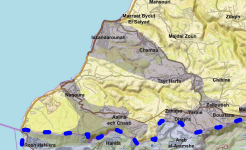
In the final days before the ceasefire, Israel reached the coast by Naquora and west of Chamaa, encircling Hezbollah south of Chamaa.
This is happening in theory and by law, Hezbollah already agreed to it.wanted Hezb to be pushed beyond Latani river as per Res 1701 (to be determined but probably not happening).
By no metric is this the case. They agreed to Israel's original demands (withdraw north of Litani), lost their entire leadership, and failed to impose their own promises (to remain linked with Gaza until a Gaza ceasefire).For a non state actor fighting essentially an arm of the US with unlimited supported and resources, they did very well.
Persian Gulf
INT'L MOD

Mr Iran Eye
Registered Member
Anything! These bogus analyses
FUB
Trusted Member
Are you obsessed with amplifying Israel? The real question is, why are you obsessed with exaggerating Israel's so-called success? Some of the authors write for the Jerusalem Post and Times of Israel.


tsunset
The Legend

Because war in Lebanon and Gaza and previous wars since 40 years shown how important underground bases are, proofs are that Hezbollah underground facilities remains mostly untouched and protected from attacks, even if Lebanon is very close to IsraelIran is disclosing several underground facilities lately, it seems they are afraid of a Trump backed attack against them.
So now Iran located at thousands of km from Israel, these bases will last in case of war, if Hezbollah ones lasted from Israeli relentless strikes, Iranian ones will also hold, add to this that Iranian bases are probably built with better materials and deeper than Hezbollah ones, and have way higher firepower
This is not "fear of Trump" that motivated Iran to move everything underground, this is a hard work that started decades ago
Hopefully everything will be moved to underground bases in the future
Persian Gulf
INT'L MOD
I post iranian analysis of the attack, no amplification or exaggeration. neutrino is obviously not an author for Israeli papers lmao.Are you obsessed with amplifying Israel? The real question is, why are you obsessed with exaggerating Israel's so-called success? Some of the authors write for the Jerusalem Post and Times of Israel.
925boy
Elite Member

Israel didnt seem that protected from Hezbollah and Hamas drones rockets and missiles and TP 1 and 2, except you're in denial or missed the entire war.Israel is protected by a strong air defense network.
Iran can execute this succesfully, and we saw this in TP I and TP II- believing Iran can't today is just strong denial and ignorance, respectfully. Hamas and Hezbollah already beat up Israel so much, it obviously wont take that much military resources and strategy for iran to damage Israel in any new attack- did you not watch the damage small Gaza and Houthis and Hezbollah already did to Israel???For Iran to break through this barrier, it would have to use a large number of missiles and evasive maneuvering, which would greatly reduce the accuracy of the hit.
how can you say this crap after Israel's bad performance in fighting its neighboring enemies AGAIN
Then why didnt Israel do this during its last strike on Iran? THis is theoretical and on paper, this possibility doesn't exist on paper. I mean, why has US(up until now at least) given up on strikes on Iran? If US has given u[ on striking Iran, that automatically means Israeli strikes on Iran wont achieve much ,and US knows it. but in your video games and theories everything is possible, i get that.On the other hand, Israel, escorted by U.S. forces surrounding Iran, can approach right up to the border and attack from a short distance with highly accurate missiles that do not use evasive maneuvers.
if Iran has no chance why haven't Israel and US attempted a large strike package on Iran?Iran has no chance in such an unfair battle, and that is the reality.
Your theories-0
REALITY- 1
How has it been lost? i'm tired of your theories that are only correct in our dreams. I guess you fell for the propaganda that Israel's censorship created to make you think Istrael didnt take much losses from Hezbollah- but Israel and Hezbollah may go at it again soon, and if the last round was anything to go by, Israel wont be able to take this next round of damage.The presence of Hezbollah, which can counterattack from close quarters, was essential to remedy this unfairness, but it has been lost.
I cant believe you dont realize what a paper tiger ISrael is today after all teh damage it took from militia groups!! Not even competent state military forces.
Yes, keyword b eing "believe"- but because you dont believe doesn't mean its not real or possible that Iran can damage Israel in another mass attack with missiles, drones etc. US is having some deterrent effect on Iran, which is helping Israel, but if Iran's pain threshold is crossed, that deterrence may not work.I don't believe that either Iranian officials or military personnel have any good ideas to break through this.
Users who are viewing this thread
Total: 164 (members: 10, guests: 154)
Pakistan Defence Latest
-
India sends 500 tonnes of hilsa to Bangladesh in reverse trade flow amid supply crunch (8 Viewers)
- Latest: Nimble
-
 PAF pilot highlights how chinese J10C fighters have left US F16's Obsolete (4 Viewers)
- Latest: PK781
-
-

-
Country Watch Latest
-

-
-
-

-
US Air Force Plans Hundreds of Autonomous Fighter and ISR Drones by 2032 (1 Viewer)
- Latest: RealNapster
Latest Posts
-
President Xi Jinping Meets with Prime Minister Narendra Modi of India (16 Viewers)
- Latest: Raj-Hindustani
-

-
-
-