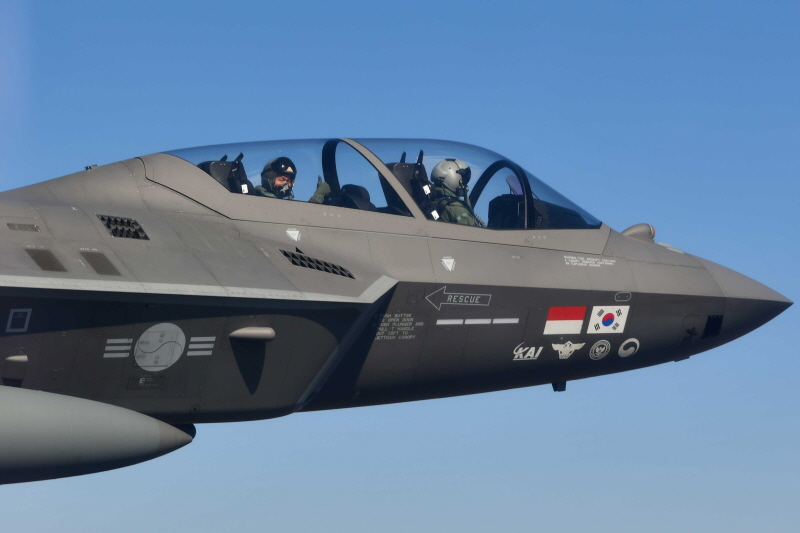
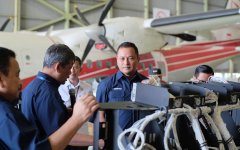
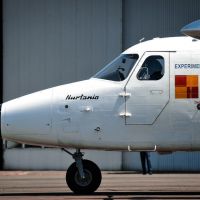
IFX Indonesian Fighter Experiment (KF21/IFX program)

To view this content we will need your consent to set third party cookies.
For more detailed information, see our cookies page.


South Korea’s Loyal Wingman Air Combat Drone Unveiled​


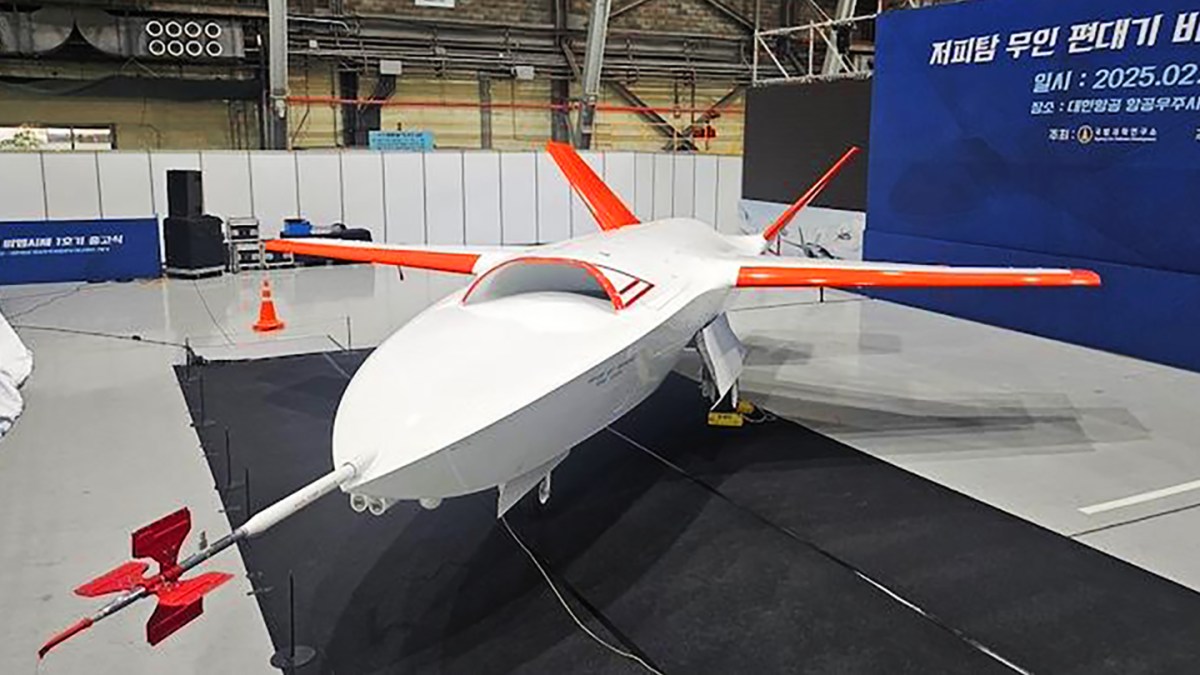
The Low Observable Unmanned Wingman System, or LOWUS, has been tailored to work alongside Seoul’s KF-21 Boramae next-generation fighter.

Written by Thomas Newdick

Posted 8 Hours Ago

South Korea today unveiled a new stealthy loyal wingman-type drone, the Low Observable Unmanned Wingman System, or LOWUS, which it plans to operate alongside the locally developed KF-21 Boramae next-generation fighter. The new drone is part of a growing fleet of low-observable drones being developed in South Korea as the country seeks to introduce new uncrewed technologies for a range of missions.

The first prototype of the LOWUS was rolled out today at Korean Air’s Busan Tech Center in the southeast of the country. The drone was developed by Korean Air together with the Agency for Defense Development (ADD), a government body responsible for research and development in defense technology, funded by the Defense Acquisition Program Administration (DAPA).

The LOWUS program was launched in 2021, with the research and development phase. A first flight of the first prototype is reportedly planned for the end of this year, leading toward the first manned-unmanned teaming flight tests by 2027. These will involve a piloted aircraft directly controlling the drone in flight.

The new drone is being developed from the outset for manned-unmanned teaming, in which it will operate with a significant degree of autonomously alongside crewed combat aircraft. It is expected to undertake missions including reconnaissance, electronic warfare, and strike, in support of crewed fighters, including the KF-21.

 
South Korea and Indonesia are working on a “molecular search” for the joint development project of the Korean fighter KF-21 (INDONESIA NAME IF-X) Boramae project.
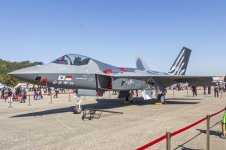
1740576703603.jpeg

The ten members of the House of Representatives of Indonesia, including the vice chairman of the 1st Subcommittee, Dave Laksono, held a meeting with the foreign affairs committee members including Kim Seok-ki, the chairman of the Foreign Affairs and Unification Committee, at the National Assembly on the 18th. The meeting was reportedly in discussions with the Korean fighter jet KF-21 (INDONESIAN IF-X) Boramae project, which is being jointly developed by the two countries. Data Photo. [Herald DB]


The two countries have successfully completed the exploration and development of the next generation of fighter jets, and are in the process of developing systems including test flights.


However, due to the financial crisis, the Indonesia side initially reduced the share of KRW1 trillion to KRW60 billion, and it is necessary to consult for the revision of the basic agreement such as the scope of technology transfer.

In January last year, the KF-21 data leak of the Korean Aerospace Industries (KAI) was reported, and the difficulties overlapped.

Among them, the members of the House of Representatives are looking for South Korea.

Ten members of the House of Representatives, including the Vice Chairman of the First Subcommittee, Dave Laksono, and Ambassador of Indonesia to Korea, Zelda Ulan Kartika, held a meeting with foreign affairs committee members including Kim Seok-ki, the Chairman of the Foreign Affairs and Unification Committee, at the National Assembly on the 18th.

The 1st Subcommittee of the Indonesian House of Representatives is in charge of the field of foreign affairs and defense, and the third-term member, Senator Laxono, is the son of former Speaker of the House of Representatives Agung Laxono and is a leading figure in Indonesia politics.

The meeting discussed the development of exchanges and cooperation between the two countries, especially the KF-21 project.

In the meantime, Indonesia has complained about the long-term investigation of KF-21 data leaks by five technical staff in the country, and has shown that the KF-21 joint development project can continue if the issue is resolved.

In this regard, the Indonesia side sent an official letter to the Defense Business Administration in September last year stating that it is possible to consult on the revision of the basic agreement only after the allegations of technical staff have been resolved.

In particular, recently, five of the country's technologists, who are under investigation for a halt to leave the country ahead of the time of the world's largest Islamic State, Indonesia, have requested the return of the country's five technicians.

The Gyeongnam Police Department, which was commissioned by the Defense Business Administration, closed the investigation in December last year and sent it to the public prosecutor, but the prosecutor requested a supplemental investigation and sent it back to the investigation further.

To date, it is reported that the mobile storage device (USB), which was caught trying to export unauthorized labor by the Indonesian technicians, does not include sensitive data related to KF-21.

It was reported that there were procedural problems with the data that they could receive if they asked KAI for photos of their monitors, but there were no confidential matters.

However, the problem is that the national sentiment about Indonesia has deteriorated due to the interlocking of the share reduction and the spillage incident.

A government source said, “We know that the leaks of sensitive materials, such as secrets, have not been confirmed during the investigation, but we have no choice but to consider public opinion. We are considering various measures to continue KF-21 business cooperation with Indonesia, which is undergoing practical-level consultations.”

It is also pointed out that Indonesia is the first customer of ‘K-Defense’ that the world has become interested in today’s K-Bangsan’s ‘mermaid’ and that it did not have much trouble despite the National Intelligence Service’s Indonesia Special Envoy’s hotel infiltration incident.

Indonesians purchased basic trainer KT-1, the high-level trainer T-50, and submarine as the first customer of Korea's aircraft export and the best customer of K-Defense," said Senator Yu Yu-won, who attended the meeting with Senator Laxo. "In the interview, Indonesia emphasized the importance of defense cooperation between the two countries and the fact that Indonesia is successfully carrying out a win-win project between the two countries as a KF-21 business partner."

Mr. Yu added, “As the Korean government and the National Assembly are working hard to resolve the security incident of Indonesian technicians, we have also asked Indonesians to believe in and make an active effort.”

 
Basically there is no stealing what so ever, the data inside USB comes from Indonesian Aerospace head quarter.

No USB pot in design center office either as I have explained previously last year. It is just the Indonesian researcher forgot not to bring any flash disk inside its bag which is forbiden.
 
To view this content we will need your consent to set third party cookies.
For more detailed information, see our cookies page.
 

KAI Signs MOU with 'KF-21 Partner' Indonesia to Train Aviation Experts​

Article entered 2025.02.28 17:53

1740829868434.jpeg

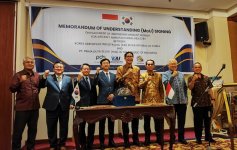
Korea Aerospace Industries (KAI) said on the 28th that it signed a MOU with Indonesia's PT PDS for the training and supply of KAI partner aviation personnel.

PT PDS (Prima Duta Sejati) is Indonesia's top-ranked manpower training and transmission company, and will work with local aerospace company PT DI (Dirgantara Indonesia) to establish an aerospace-specific academy to train professionals. PT DI is an Indonesian state-owned aerospace company and a KF-21 fighter jet partner.

The signing ceremony in Jakarta, Indonesia, was attended by more than thirty key stakeholders, including the head of the KAI Win-Win Cooperation Office, the Minister of Defense for the Protection of Indonesian Migrant Workers (Irjen Pol, Dwyono), the Ambassador of the Korean Embassy to Indonesia, and the representative of PT PDS.

1740829968633.jpeg

Through this agreement, KAI will expand the overseas workforce supply platform of its partners to Indonesians, and PT PDS will train excellent aviation parts manufacturing professionals. Domestic partners plan to stabilize the supply and demand of personnel through recruitment of overseas talents.

The director of KAI’s win-win cooperation room said, “We will use Indonesia’s abundant human resources and excellent aviation infrastructure to train high-quality personnel to solve the manpower shortage of our partners and strengthen the domestic aerospace industry ecosystem.”

Indonesia is also a joint research and development partner of KF-21 as the first overseas country of K-Defense to introduce KAI aircraft such as KT-1 and advanced trainer aircraft T-50.

KAI said that the agreement is even more important because it is an important cooperation between the two countries to strengthen each other's technical capabilities based on defense cooperation.

 
To view this content we will need your consent to set third party cookies.
For more detailed information, see our cookies page.


To view this content we will need your consent to set third party cookies.
For more detailed information, see our cookies page.


To view this content we will need your consent to set third party cookies.
For more detailed information, see our cookies page.
 
I'm still confused about why they aren't prioritizing the KF-21's internal weapons bay. The space is already there, and considering how much work has already gone into the aircraft, it seems like a relatively easy task. If they really wanted to, it feels like they could finish it in just a few months or a year. I don't want to jump to conclusions, but I can't think of any reason other than the US trying to prevent competition for the F-35.
 
I'm still confused about why they aren't prioritizing the KF-21's internal weapons bay. The space is already there, and considering how much work has already gone into the aircraft, it seems like a relatively easy task. If they really wanted to, it feels like they could finish it in just a few months or a year. I don't want to jump to conclusions, but I can't think of any reason other than the US trying to prevent competition for the F-35.

Look like not easy as many thinks. For example block 2 needs 2 years development, so integrating internal weapon bay needs at least another 2 years of development.

Block 1 can be upgraded to block 3 as even the block 1 plane has already been designed with weapon bay inside. The plane is also designed with modular system. The belly modul can be replaced if necessary.

I would say it is all about business calculation, producing as quick as it can because I assume many of South Korean companies which provide 60 % of local content needs cash as soon as possible.
 
Look like not easy as many thinks. For example block 2 needs 2 years development, so integrating internal weapon bay needs at least another 2 years of development.

Block 1 can be upgraded to block 3 as even the block 1 plane has already been designed with weapon bay inside. The plane is also designed with modular system. The belly modul can be replaced if necessary.

I would say it is all about business calculation, producing as quick as it can because I assume many of South Korean companies which provide 60 % of local content needs cash as soon as possible.


Look like not easy as many thinks. For example block 2 needs 2 years development, so integrating internal weapon bay needs at least another 2 years of development.


Don't you feel, your earlier and later points contradict each other?


Block 1 can be upgraded to block 3 as even the block 1 plane has already been designed with weapon bay inside. The plane is also designed with modular system. The belly modul can be replaced if necessary.
 
Look like not easy as many thinks. For example block 2 needs 2 years development, so integrating internal weapon bay needs at least another 2 years of development.


Don't you feel, your earlier and later points contradict each other?


Block 1 can be upgraded to block 3 as even the block 1 plane has already been designed with weapon bay inside. The plane is also designed with modular system. The belly modul can be replaced if necessary.

The work is not about making component, it is more about system integration and it is not as easy as people think
 
The work is not about making component, it is more about system integration and it is not as easy as people think

There is also plan to forget about making weapon bay and use the bay inside for electronics to control wing man drone (where weapon can be stored there).
 
The work is not about making component, it is more about system integration and it is not as easy as people think

You may be right, but, honestly, to me it doesn't seem as difficult as other achievements they've accomplished till now. Even though I'm not fully convinced but I take your point.
 
You may be right, but, honestly, to me it doesn't seem as difficult as other achievements they've accomplished till now. Even though I'm not fully convinced but I take your point.

You can see Korean T50 as example, they still needs time to develop FA50 which is more on system integration work. Latest news they are still struggling on weapon integration for Malaysian order

And making weapon bay also needs certification after the work is completed, so many flight tests are still needed
 
PTDI President Commissioner Reviews Black Eagle UAV Development and Production Facilities


1741753841149.jpeg


11 March 2025


Bandung (11/03) - PTDI's Main Commissioner, Air Marshal Mohammad Tonny Harjono, who in this case serves as the Chief of Staff of the Air Force (KASAU), together with the Deputy Chief of BRIN, Rear Admiral (Ret.) Amarulla Octavian and the Head of the KKIP Implementation Team (Katimlak), Lieutenant General (Ret.) Yoedhi Swastanto, conducted a working visit to PT Dirgantara Indonesia (PTDI).

The arrival of the group was welcomed directly at the Final Assembly Line (FAL) Hangar by the President Director of PTDI, Gita Amperiawan along with the Board of Directors and Deputy President Commissioner of PTDI, Air Marshal (Ret.) Bonar H. Hutagaol and PTDI Commissioners, Yusron Ihza and Oki Yanuar.

This visit began with watching a demonstration and presentation regarding the progress of the development of the Elang Hitam Medium Altitude Long Endurance (MALE) UAV which in the near future is planned to be tested in Nusawiru, Pangandaran. Likewise, the presentation regarding the progress of the Wulung UAV which is planned for flight testing in Batu Jajar, Padalarang.

"Here I am speaking as the Commander of PTDI, also as the Chief of Staff of the Air Force, I will support and commit to making this Black Eagle program a success. In addition, just yesterday I also spoke with the Minister of Defense and received direction from the President regarding what our next defense will be like, even the Minister of Defense wants to provide CN235 aircraft to each Army, Navy, Air Force, 20 aircraft, adjusted to PTDI's capabilities," said Air Marshal Mohammad Tonny Harjono, President Commissioner of PTDI.

After receiving the presentation and discussion, the group had the opportunity to directly review PTDI's production facilities starting from the FAL CN235-NC212 Hangar, KFX/IFX Hangar, Aircraft Services (ACS) Hangar, Helicopter Hangar, N219 Hangar and Detail Part Manufacturing (DPM) Hangar.

After the working visit, the Board of Directors and Commissioners continued their agenda to hold a Board of Directors & Commissioners Meeting in the GPM Plenary Meeting Room, 9th Floor, to discuss the Company's business development and performance evaluation, as an effort to increase PTDI's competitiveness in the national and international aerospace industry.


Users who are viewing this thread

Pakistan Defence Latest

Country Watch Latest

Latest Posts

Back
Top