Chengdu J-20 5th Generation Aircraft News & Discussions

From TP Huang post on X

Why is China restricting Ga?Ga-based materials GaA, GaN & Ga2O3 have wide bandgap & other props ideal for RF-related apps like military radarAmerica being dominant in GaA was able to quickly produce & deploy AESA radars in the 2000s -> huge advantage over mechanical radars that other countries usedChina, being late comer to GaA, commercialized GaN modules by late 2010s -> now GaN radars are so cheap & highly deployed in China that they are used in weather radarsGaN w/ wider bandgap & higher field strength can operate at higher voltage than GaA -> higher power output & more power radarhttps://militaryembedded.com/radar-ew/rf-and-microwave/the-benefits-and-challenges-of-using-gan-technology-in-aesa-radar-systems…As shown in diagram, Ga2O3 significantly better than GaN in bandgap & electric field strengthhttps://spectrum.ieee.org/gallium-oxide-the-supercharged-semiconductor…Whoever can 1st commercialize Ga2O3 (Gallium Oxide) will likely field the most powerful radar, strongest EW pressure & allow for most data transfer for datalink, communication etc while operating in LPI modeThe widespread deployment of GaN radar has effectively made 5th generation aircraft entirely detectable from far out (eg: F35s routinely get detected out to 1IC)Saturation of air w/ platforms fielding powerful radar/EW & advanced datalinking along w/ platform crunching those data will make even the next-gen stealth aircraft visible from farther outSo, having the most competitive Gallium nitride & gallium oxide & RF industries is what separates the top tier power & everyone else



Image


Image
 
Just a great spring-time image for the weekend ... showing two PLAAF J-20 fighters!

Unfortunately the resolution is not good enough to read the construction numbers.

(Image via @这丫头有点风 from Weibo)

J-20 2x in green - 这丫头有点风.jpg
 
Has China achieved Gallium oxide radars at scale yet?

To view this content we will need your consent to set third party cookies.
For more detailed information, see our cookies page.


To view this content we will need your consent to set third party cookies.
For more detailed information, see our cookies page.
 
To view this content we will need your consent to set third party cookies.
For more detailed information, see our cookies page.

8 inch diameter; this could be good as a seeker for a long range A2A missile?
 
8 inch diameter; this could be good as a seeker for a long range A2A missile?
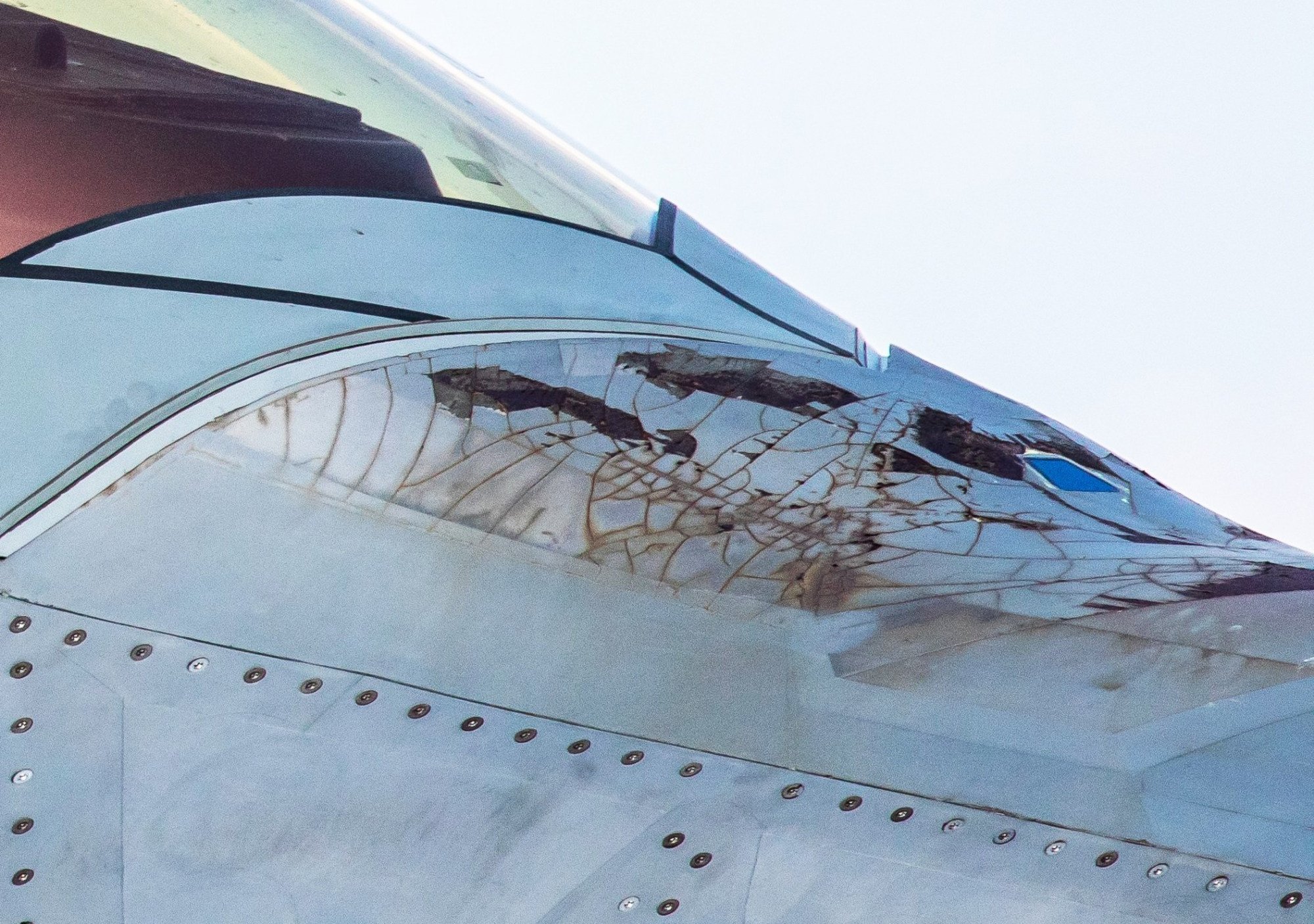
It is the size of the wafer from which they make many Chips. Anyway, China solved the problem of early cracking of stealth coating that bedeviled the F22 resulting in high maintenance cost and reduced readiness.


How China is solving F-22’s stealth coating cracks with 3,000-year-old silk weaving tech​


While US stealth fighters like the F-22 Raptor grapple with delaminating radar-absorbent coatings – a vulnerability likened to “moulting cicada wings” – China claims to have found an ancient solution for its fifth-generation jets.

Recent revelations by defence industry researchers suggest that cutting-edge stealth technology aboard China’s smooth-skinned stealth fighters may owe its resilience to a 3,000-year-old textile innovation: the art of silk jacquard weaving.

Modern stealth aircraft, including the F-22 and F-35, rely on layered coatings to deflect radar signals. But these materials degrade rapidly under stress.

US maintenance logs reveal that even minor abrasions from high-speed flight or desert sandstorms can slash stealth efficacy, forcing crews to reapply radar-absorbent materials (RAM) every three weeks at costs exceeding US$60,000 per flight hour, according to some US media reports.

Plus, in regions like Florida, humidity exacerbates bonding issues, while corrosion near coastal bases further compromises performance.

Chinese aerospace engineers have long criticised such band-aid approaches. Instead, they sought a structural solution – something woven into the material’s bones.

According to a study published last month in Chinese peer-reviewed journal Knitting Industries, the answer lies in a dual-layer composite fabric inspired by Han dynasty (206BC-AD220) jacquard looms – a silk-weaving technique dating back to 200BC.

By integrating conductive yarns into a warp-knitted “double-sided jacquard” structure, researchers with China Aerospace Science and Industry Corporation (CASIC) and Tiangong University engineered a material that absorbs 90.6 per cent of radar waves in the 8-26GHz spectrum, outperforming conventional coatings.

The material is a “marriage of ancient patterning and modern electromagnetism”, according to the team led by Professor Jiang Qian.

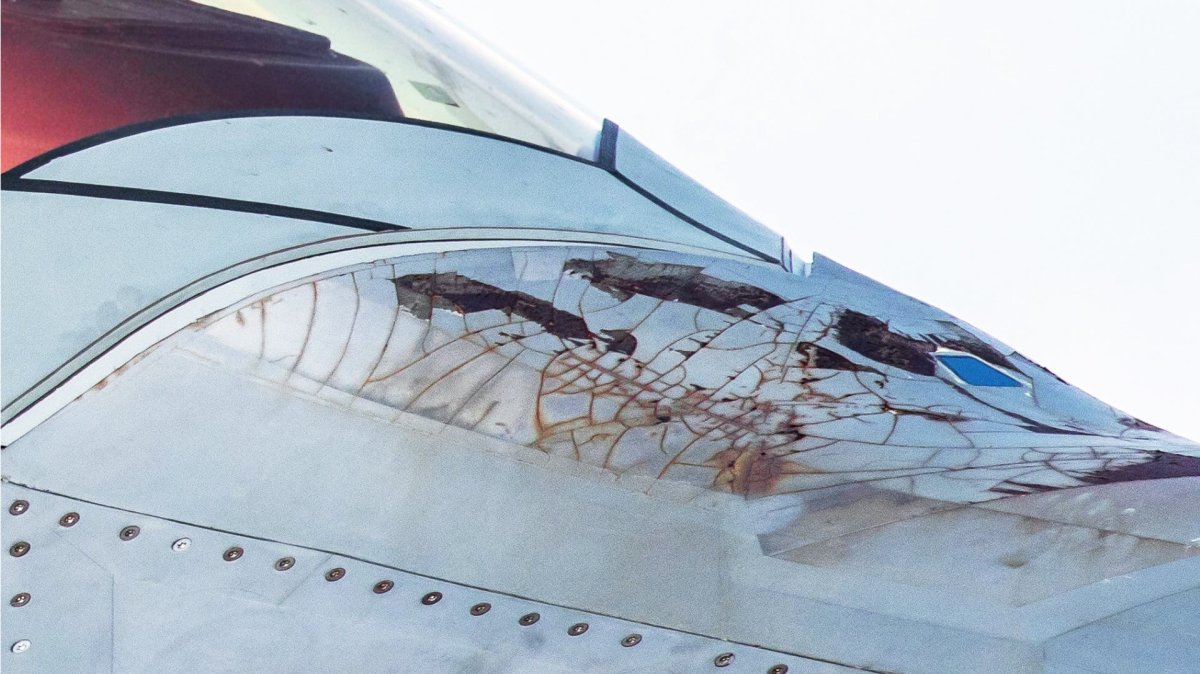
Extreme corrosion of the radar-absorbent coating on an F-22 Raptor. The US often has to apply new coating layers to its stealth fighters but China has developed technology that gives a longer-lasting solution. Photo: Handout


Like traditional jacquard weavers – who used punch-card-like “flower books” to encode intricate designs – Jiang and her colleagues embedded radar-defeating geometries directly into the textile’s matrix. Quartz fibres form a dielectric base layer, while stainless steel yarns create resonant circuits that dissipate electromagnetic energy as heat.

Each conductive thread is strategically placed to guide and trap signals, just as ancient weavers arranged silk threads to depict dragons or clouds, according to the researchers.

Lab tests revealed some impressive mechanical advantages. The composite was found to withstand 93.5 megapascal of tensile stress longitudinally – more than 10 times the strength of traditional coatings. This durability stems from the knit’s anisotropic structure, where load-bearing yarns align with the aircraft’s stress vectors, mirroring the axial strength of Han-era brocades.

The Smith Chart, an electromagnetic analysis, further showed near-perfect impedance matching in the longitudinal direction, allowing radar waves to penetrate rather than reflect, according to the study.


Archaeologists trace jacquard’s origins to Shang dynasty (1600-1046BC) looms, on which artisans wove geometric patterns using manual “multi-heddle” systems. By the Han era, these had evolved into sophisticated machines with up to 120 heddle rods – a technology preserved in the world’s first jacquard weaving machine unearthed at Chengdu’s Laoguanshan Tombs.

“Those Han looms weren’t just for luxury,” said a Beijing-based science historian, who requested not to be named due to the sensitivity of the technology.

“They were like early binary computers, storing weaving codes in physical memory. Today’s military engineers seem to have revived that wisdom.”
 
Last edited:
Lol. USAF has 30+ non combat coated F-22's that are used for air shows and other non deployment functions they are not going to spend money on maintaining the stealth coating. That old pic of the F-22 with cracks is one of those F-22's. Try again since current combat coated F-22's have F-35 coating.
 
Lol. USAF has 30+ non combat coated F-22's that are used for air shows and other non deployment functions they are not going to spend money on maintaining the stealth coating. That old pic of the F-22 with cracks is one of those F-22's. Try again since current combat coated F-22's have F-35 coating.
So cracks in metal??
 
PLA(N) is engaging in modern warfare that is mostly fought on the psychological plane. First defeat them in their minds, then they lose the will to fight.

I hope China will make a slight modification to the J-20 and call it the J-20X to troll America's F-47. Assuming it's not vaporware and actually gets made. Do it to defeat their arrogance because as the past has shown, J-20 is a much superior design to the F-22/F-35, and J-36 much superior to the canceled NGAD... It's only logical J-20X will be much superior in design to the F-47...
 
Last edited:
It is the size of the wafer from which they make many Chips. Anyway, China solved the problem of early cracking of stealth coating that bedeviled the F22 resulting in high maintenance cost and reduced readiness.


How China is solving F-22’s stealth coating cracks with 3,000-year-old silk weaving tech​


While US stealth fighters like the F-22 Raptor grapple with delaminating radar-absorbent coatings – a vulnerability likened to “moulting cicada wings” – China claims to have found an ancient solution for its fifth-generation jets.

Recent revelations by defence industry researchers suggest that cutting-edge stealth technology aboard China’s smooth-skinned stealth fighters may owe its resilience to a 3,000-year-old textile innovation: the art of silk jacquard weaving.

Modern stealth aircraft, including the F-22 and F-35, rely on layered coatings to deflect radar signals. But these materials degrade rapidly under stress.

US maintenance logs reveal that even minor abrasions from high-speed flight or desert sandstorms can slash stealth efficacy, forcing crews to reapply radar-absorbent materials (RAM) every three weeks at costs exceeding US$60,000 per flight hour, according to some US media reports.

Plus, in regions like Florida, humidity exacerbates bonding issues, while corrosion near coastal bases further compromises performance.

Chinese aerospace engineers have long criticised such band-aid approaches. Instead, they sought a structural solution – something woven into the material’s bones.

According to a study published last month in Chinese peer-reviewed journal Knitting Industries, the answer lies in a dual-layer composite fabric inspired by Han dynasty (206BC-AD220) jacquard looms – a silk-weaving technique dating back to 200BC.

By integrating conductive yarns into a warp-knitted “double-sided jacquard” structure, researchers with China Aerospace Science and Industry Corporation (CASIC) and Tiangong University engineered a material that absorbs 90.6 per cent of radar waves in the 8-26GHz spectrum, outperforming conventional coatings.

The material is a “marriage of ancient patterning and modern electromagnetism”, according to the team led by Professor Jiang Qian.

Extreme corrosion of the radar-absorbent coating on an F-22 Raptor. The US often has to apply new coating layers to its stealth fighters but China has developed technology that gives a longer-lasting solution. Photo: Handout


Like traditional jacquard weavers – who used punch-card-like “flower books” to encode intricate designs – Jiang and her colleagues embedded radar-defeating geometries directly into the textile’s matrix. Quartz fibres form a dielectric base layer, while stainless steel yarns create resonant circuits that dissipate electromagnetic energy as heat.

Each conductive thread is strategically placed to guide and trap signals, just as ancient weavers arranged silk threads to depict dragons or clouds, according to the researchers.

Lab tests revealed some impressive mechanical advantages. The composite was found to withstand 93.5 megapascal of tensile stress longitudinally – more than 10 times the strength of traditional coatings. This durability stems from the knit’s anisotropic structure, where load-bearing yarns align with the aircraft’s stress vectors, mirroring the axial strength of Han-era brocades.

The Smith Chart, an electromagnetic analysis, further showed near-perfect impedance matching in the longitudinal direction, allowing radar waves to penetrate rather than reflect, according to the study.


Archaeologists trace jacquard’s origins to Shang dynasty (1600-1046BC) looms, on which artisans wove geometric patterns using manual “multi-heddle” systems. By the Han era, these had evolved into sophisticated machines with up to 120 heddle rods – a technology preserved in the world’s first jacquard weaving machine unearthed at Chengdu’s Laoguanshan Tombs.

“Those Han looms weren’t just for luxury,” said a Beijing-based science historian, who requested not to be named due to the sensitivity of the technology.

“They were like early binary computers, storing weaving codes in physical memory. Today’s military engineers seem to have revived that wisdom.”
In the same manner, American brand prescription glasses frames fukkin suck. Their paint peel off so easily.
 
PLA(N) is engaging in modern warfare that is mostly fought on the psychological plane. First defeat them in their minds, then they lose the will to fight.

I hope China will make a slight modification to the J-20 and call it the J-20X to troll America's F-47. Assuming it's not vaporware and actually gets made. Do it to defeat their arrogance because as the past has shown, J-20 is a much superior design to the F-22/F-35, and J-36 much superior to the canceled NGAD... It's only logical J-20X will be much superior in design to the F-47...

You want China to troll US :ROFLMAO: :LOL:
 
Maybe the 131st finally got its J-20?!!

To view this content we will need your consent to set third party cookies.
For more detailed information, see our cookies page.
 
Physical classification depends on features, not so much on size.

In terms of physical classification, J-20 and F-35 belong to the same class and F-22 belongs to another class just as Chinese alligator and American alligator belong to the same class and crocodiles belong to another class.

Does it really matter ?! How about we start acting like adults and agree to disagree ?


@NGAD IS THE BEST
@Yommie
 
inally, we have the first J-20 confirmed from the 19th Air Brigade based at Zhangjiakou / Ningyuan AP; CTC: Serial number 63207!(Image via @齐天的孙猴子 from Weibo)

J-20 63207 - 19. Brig - 齐天的孙猴子.jpg
 

Users who are viewing this thread

Pakistan Defence Latest

Back
Top