Oh puhleeze. Let me know when it can be used as an offensive EW and Cyber warfare.
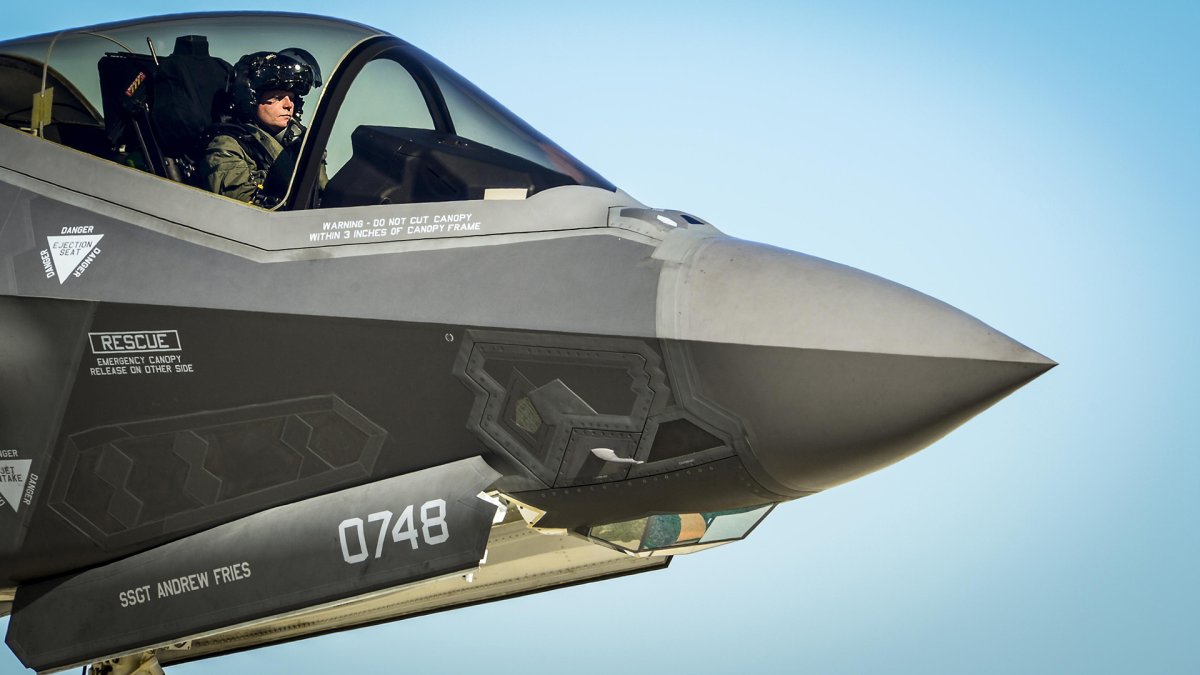
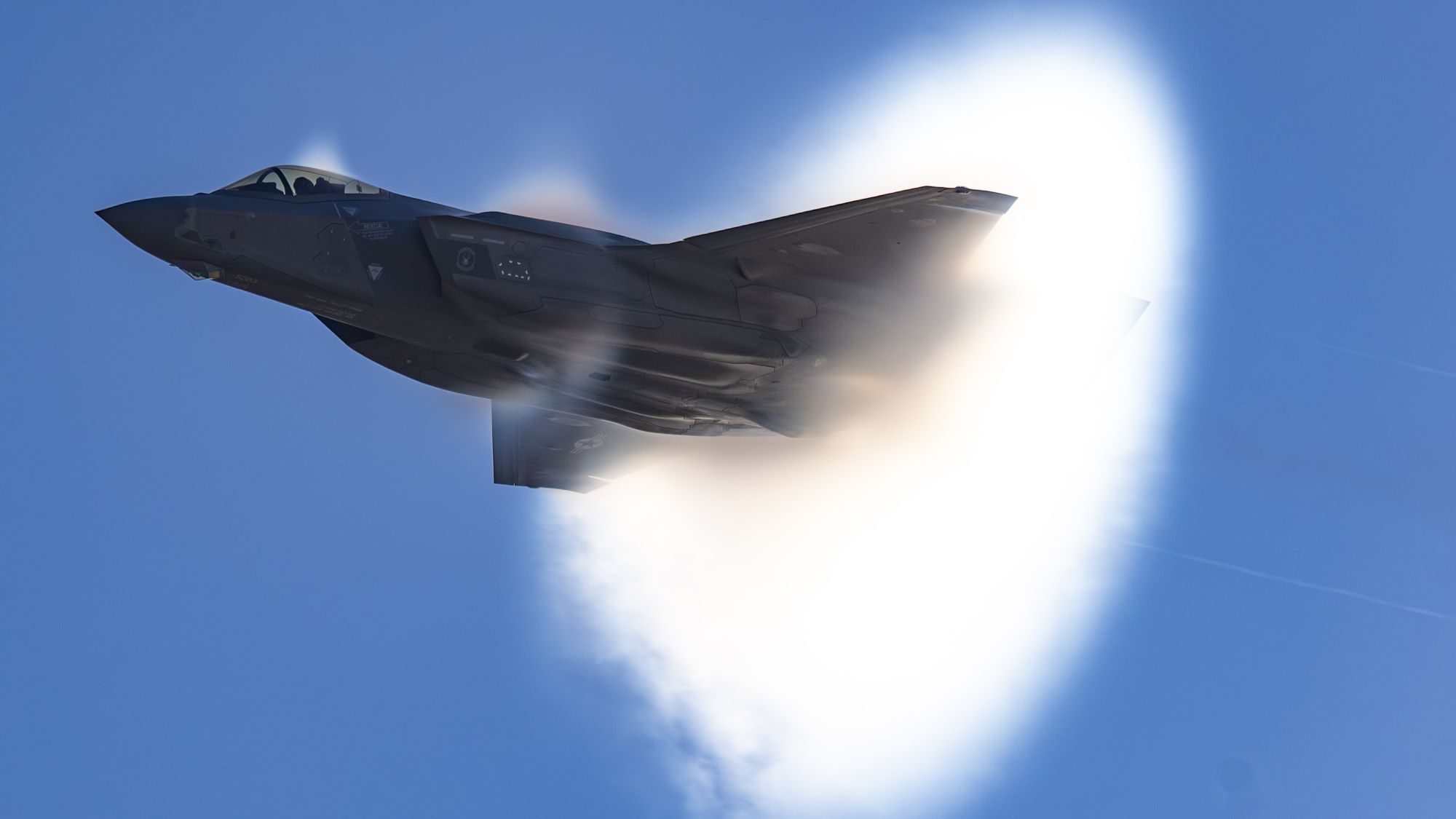
-LANGLEY AFB: If you want to stop a conversation about the F-35 with a military officer or industry expert, then just start talking about its
cyber or
electronic warfare capabilities.
These are the capabilities that most excite the experts I’ve spoken with because they distinguish the F-35 from previous fighters, giving it what may be unprecedented abilities to confuse the enemy, attack him in new ways through electronics (think Stuxnet), and generally add enormous breadth to what we might call the plane’s conventional strike capabilities.
So I asked Air Force Gen. Mike Hostage, head of Air Combat Command here, about the F-35’s cyber capabilities, mentioning comments by former Air Force Chief of Staff Gen. Norton Schwartz several years ago about the F-35
having the “nascent capability” to attack Integrated Air Defense Systems (known to you and me as surface to air missiles) with cyber weapons.
Want To Shoot Someone? Turn Off The Cyber
Then he brings us back to the issue at hand, and mentions the Air Force’s Red Flag exercises, the pinnacle of the service’s force-on-force training: “Fast forward to today. We do Red Flag for the purpose of giving our young wingman those first 10 days of combat, or first 10 combat missions in a controlled environment because what we’ve studied over the years of conflict is the first 10 missions are where you’re most likely to lose your fleet. So if you can replicate that first 10 in a controlled environment with a very high degree of fidelity, you’ve greatly increased the probability that they’re going to survive their actual first 10 combat missions. So Red Flag is the closest we can get to real combat without actually shooting people.”
Allies are a key part of the Red Flag exercises, especially as the F-35 becomes the plane flown by most of our closest allies, from Britain to Israel to Australia and beyond. But the toughest, most realistic exercises at Red Flag occur when it’s only American pilots flying against each other.
During those Red Flag-3 exercises they integrate space and cyber weapons into the fight, including those the F-35 possesses. Those capabilities make are “so effective that we have to be very careful that in a real world scenario we don’t hurt ourselves allowing them to play.”
Then he gets back to the point at hand. “So, to answer your question, it has tremendous capability. We’re in the early stages of exploring how to get the most effectiveness out of cyber and space, but we’re integrating it into the Air Operations Center; we’re integrating it into the combat plan; and it is absolutely the way of the future. And you’re right,
the AESA radar has tremendous capacity to play in that game.”
Boil all that down and it comes to this. Gen. Hostage is saying that the F-35’s cyber capabilities are so effective — combined with space assets, which are often difficult to distinguish in effect from cyber capabilities — that the planes have to stop using them so the pilots can shoot at each other.
The obvious question that arises from this is, how can a radar system also be a cyber weapon? We’ve all seen those World War II movies where the radar dish sweeps back and forth. The energy beams out, strikes the enemy plane and comes back as a blip. What makes an AESA radar special is the fact that it beams energy in digital zeroes and ones — and the beam can be focused. This allows the radar to function as both a scanning radar, a cyber weapon and an electronic warfare tool.
AESA Radar, Cyber And IADS
Here’s an excellent explanation for how we go from radio and radar and military systems that are not connected to the Internet yet remain vulnerable to hacking that
I’ve cribbed from my deputy, Sydney Freedberg, from a recent piece he wrote in Breaking Defense about cyberwar. An enemy’s radios and radars are run by computers, so you can transmit signals to hack them. If the enemy’s computers are linked together then your virus can spread throughout that network. The enemy does not have to be connected to the Internet. You just need the enemy’s radios and radar to receive incoming signals – which they have to do in order to function.
So, as a former top intelligence official explained to me about two years ago, the AESA radar’s beams can throw out those zeros and ones to ANY sort of receiver. And an enemy’s radar is a receiver. His radios are receivers. Some of his electronic warfare sensors are also receivers.
But neither Hostage nor many others I spoke with were willing to be specific on the record about how effective the AESA radar, working with the aircraft’s sensors like the Distributed Aperture System and its data fusion system, will be. So the following is information culled from conversations over the last three months with a wide range of knowledgeable people inside government and the defense industry, as well as retired military and intelligence officers.
As the F-35 flies toward the Chinese coast and several hundred incoming PLAAF J-20s streak toward them in the scenario outlined in the first piece of this series, spoofing (using the enemy’s own systems to deceive him) will be a major part of our attack.
Enemy radar may well show thousands of F-35s and other aircraft heading their way, with stealth cross-sections that appear to match what the Chinese believe is the F-35’s cross section. Only a few hundred of them are real, but the Chinese can’t be certain which are which, forcing them to waste long-range missiles and forcing them to get closer to the US and allied F-35s so they can tell with greater fidelity which ones are real. The Chinese will try and use Infrared Search and Track (IRST) sensors, which have shorter ranges but provide tremendous fidelity in the right weather conditions. But that, of course, renders them more vulnerable to one sensor on the F-35 that even the plane’s critics rarely criticize, the Distributed Aperture System (DAS).
For years, the news about the most expensive conventional weapons system in US history, the F-35 Joint Strike Fighter, has been driven by its enormous cost, design, and schedule screw-ups. The Pentagon and Congress and the public have rarely spoken about what the F-35 would do, how effectively...

breakingdefense.com
Don't ever compare your celestial military tech equal to US military tech. Celestials are nowhere near the same league as US. Btw APG-85 which is many times more advanced than APG-81 will enter service this year in Lot 17 F-35's.
Celestial fighter radar still has a long way to go to reach APG-81 capabilities and that radar is 20 years old celestials can forget reaching APG-85 capabilities for foreseeable future.