China's C919 has obtained airworthiness certificates from many countries and is challenging the market monopoly of Boeing and Airbus

ety

Trusted Member
Joined
Dec 11, 2023
Messages
6,702
Reaction score
4,225
Reputation
1,551.9
Country of Origin
Country of Residence

China's C919 has obtained airworthiness certificates from many countries and is challenging the market monopoly of Boeing and Airbus​


C919 has obtained airworthiness certificates from many countries and is challenging the market monopoly of Boeing and Airbus


Written by:Sun Shengran
publishing:2025-03-25 13:30 renew:2025-03-25 13:30


According to domestic media reports, the domestically-produced large aircraft C919 is challenging the monopoly of Boeing and Airbus in the global aviation market. Since completing its first commercial passenger mission in May 2023, the C919 has carried more than 1 million passengers in total and has now obtained airworthiness certificates from many countries.
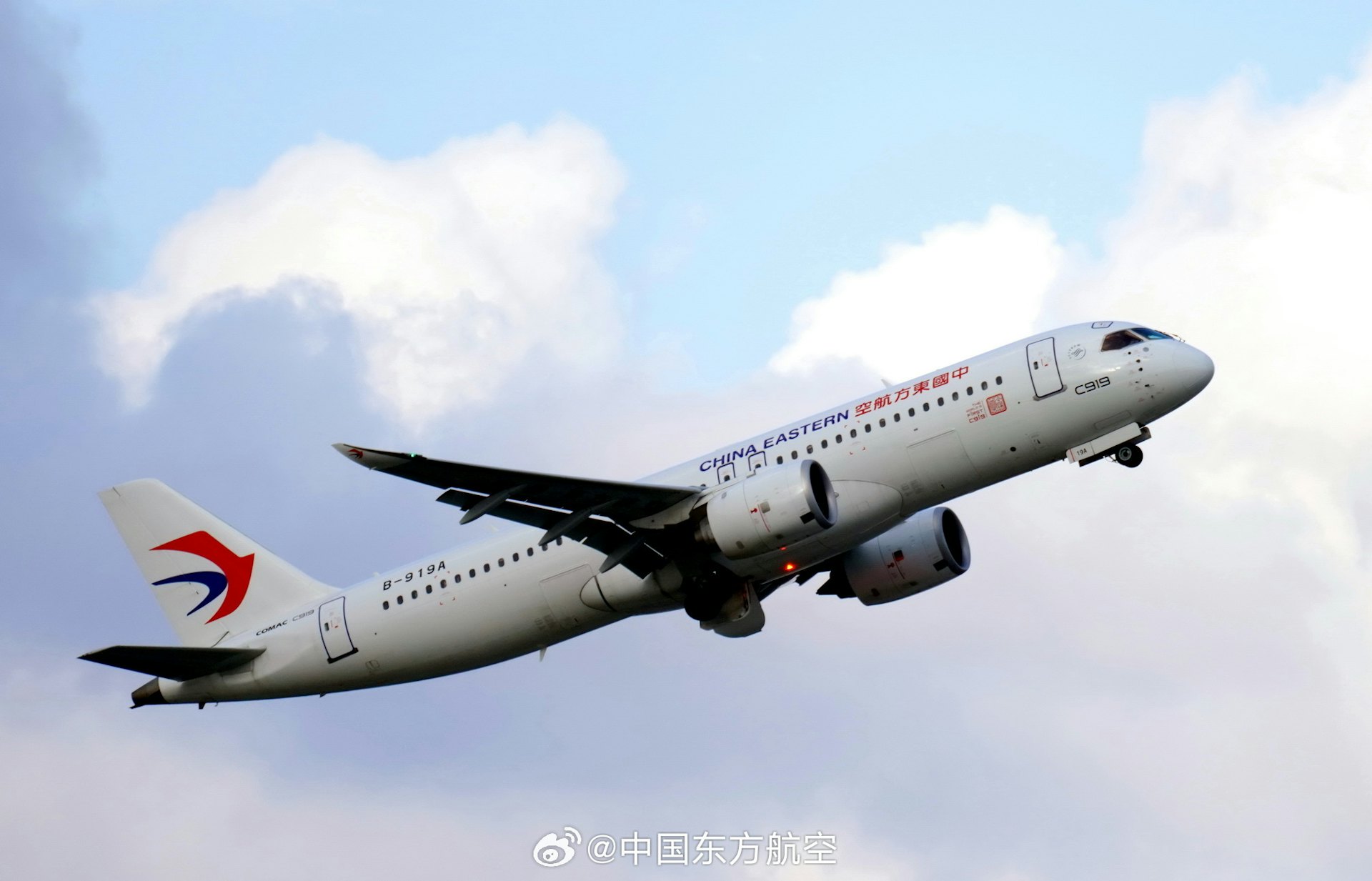
China Eastern Airlines' first C919 in the world (registration number B-919A). (Weibo @China Eastern Airlines)

China Eastern Airlines' first C919 in the world (registration number B-919A). (Weibo @China Eastern Airlines)


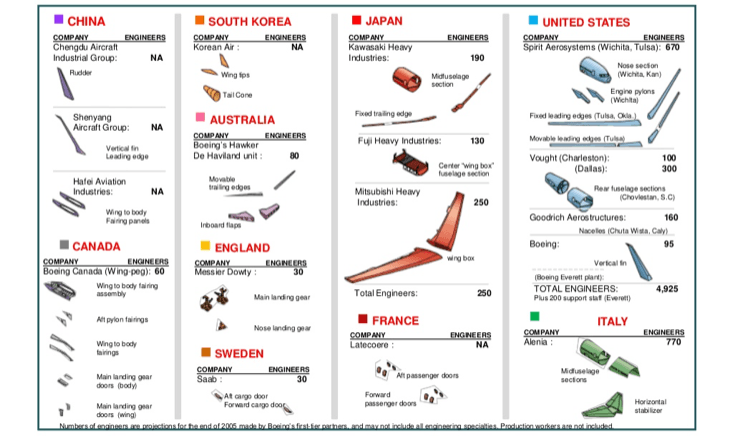
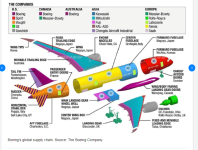
The report pointed out that the C919 is a medium-range jet airliner independently developed by China and manufactured in full compliance with international airworthiness standards. Compared with Boeing 737 and Airbus A320, C919 performs better in safety, comfort and environmental protection. Currently, the total number of orders for C919 has exceeded thousands, but production has not yet increased. As of nearly two years of commercial operation, only 18 aircraft have been delivered. One reason for the low output is lack of production experience, and another reason is supply chain issues. About 40% of the C919's parts are imported from more than 200 suppliers around the world, including key components such as engines, avionics systems and flight control systems.

To solve these problems, China is gradually replacing imported parts with domestic parts. For example, the C919 has begun to replace the domestically produced Yangtze-1000A engine. It is expected that by 2027, the annual production of C919 will reach 150 aircraft, and the localization rate will exceed 80% by 2028. By then, C919 will be able to compete with Boeing and Airbus.


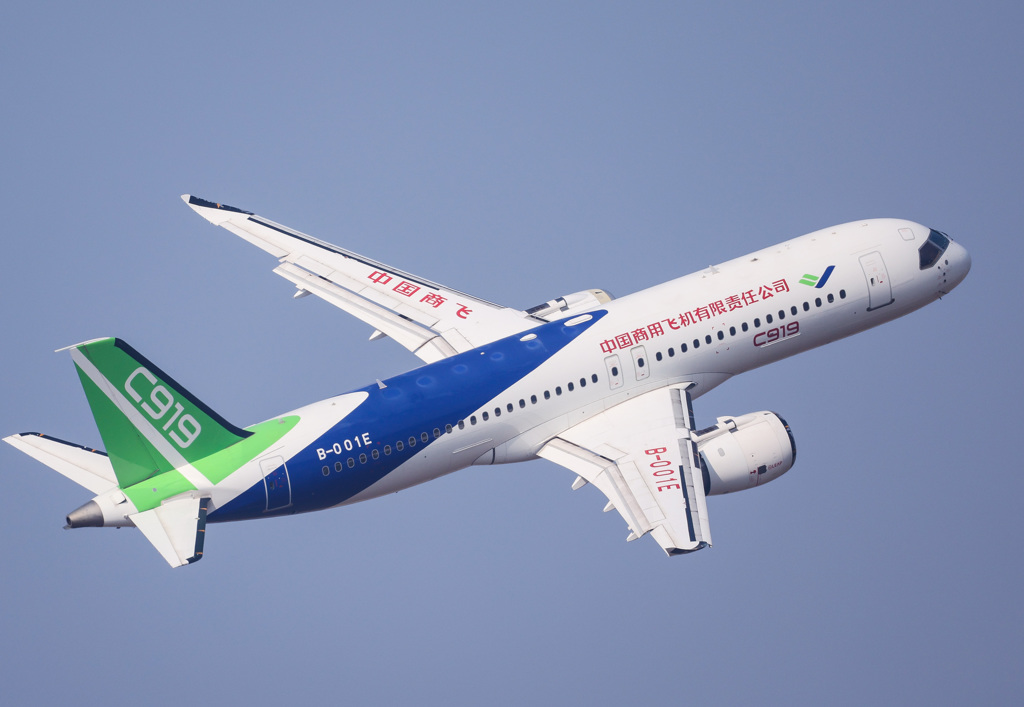
The picture shows the C919 conducting a flight demonstration on December 16, 2024, soaring twice over Victoria Harbour at altitudes of 1,500 feet and 1,000 feet respectively. Looking out from the sky100 Hong Kong Observation Deck, the C919 seems to be integrated into the skyscrapers on both sides of the Victoria Harbour. (Photo by Xia Jialang)

The picture shows the C919 conducting a flight demonstration on December 16, 2024, soaring twice over Victoria Harbour at altitudes of 1,500 feet and 1,000 feet respectively. Looking out from the sky100 Hong Kong Observation Deck, the C919 seems to be integrated into the skyscrapers on both sides of the Victoria Harbour. (Photo by Xia Jialang)


In addition, the C919 not only received orders from domestic airlines, but also attracted purchases from airlines in Vietnam, Brunei, Indonesia, Brazil and other countries. Even an airline under the General Motors Group of the United States purchased 20 C919s.

Although the C919 lacks European and American airworthiness certificates and cannot fly in European and American countries, many countries in Southeast Asia, South America, Africa and other regions have recognized China's airworthiness certification or issued their own airworthiness certificates for the C919. This shows that even without European and American airworthiness certificates, the C919 can carry out commercial operations in other countries. With the development of subsequent models C929 and C939, COMAC will further break the market monopoly of Boeing and Airbus.
 

China's C919 has obtained airworthiness certificates from many countries and is challenging the market monopoly of Boeing and Airbus​


C919 has obtained airworthiness certificates from many countries and is challenging the market monopoly of Boeing and Airbus


Written by:Sun Shengran
publishing:2025-03-25 13:30 renew:2025-03-25 13:30


According to domestic media reports, the domestically-produced large aircraft C919 is challenging the monopoly of Boeing and Airbus in the global aviation market. Since completing its first commercial passenger mission in May 2023, the C919 has carried more than 1 million passengers in total and has now obtained airworthiness certificates from many countries.

China Eastern Airlines' first C919 in the world (registration number B-919A). (Weibo @China Eastern Airlines)' first C919 in the world (registration number B-919A). (Weibo @China Eastern Airlines)

China Eastern Airlines' first C919 in the world (registration number B-919A). (Weibo @China Eastern Airlines)


The report pointed out that the C919 is a medium-range jet airliner independently developed by China and manufactured in full compliance with international airworthiness standards. Compared with Boeing 737 and Airbus A320, C919 performs better in safety, comfort and environmental protection. Currently, the total number of orders for C919 has exceeded thousands, but production has not yet increased. As of nearly two years of commercial operation, only 18 aircraft have been delivered. One reason for the low output is lack of production experience, and another reason is supply chain issues. About 40% of the C919's parts are imported from more than 200 suppliers around the world, including key components such as engines, avionics systems and flight control systems.

To solve these problems, China is gradually replacing imported parts with domestic parts. For example, the C919 has begun to replace the domestically produced Yangtze-1000A engine. It is expected that by 2027, the annual production of C919 will reach 150 aircraft, and the localization rate will exceed 80% by 2028. By then, C919 will be able to compete with Boeing and Airbus.


The picture shows the C919 conducting a flight demonstration on December 16, 2024, soaring twice over Victoria Harbour at altitudes of 1,500 feet and 1,000 feet respectively. Looking out from the sky100 Hong Kong Observation Deck, the C919 seems to be integrated into the skyscrapers on both sides of the Victoria Harbour. (Photo by Xia Jialang)

The picture shows the C919 conducting a flight demonstration on December 16, 2024, soaring twice over Victoria Harbour at altitudes of 1,500 feet and 1,000 feet respectively. Looking out from the sky100 Hong Kong Observation Deck, the C919 seems to be integrated into the skyscrapers on both sides of the Victoria Harbour. (Photo by Xia Jialang)


In addition, the C919 not only received orders from domestic airlines, but also attracted purchases from airlines in Vietnam, Brunei, Indonesia, Brazil and other countries. Even an airline under the General Motors Group of the United States purchased 20 C919s.

Although the C919 lacks European and American airworthiness certificates and cannot fly in European and American countries, many countries in Southeast Asia, South America, Africa and other regions have recognized China's airworthiness certification or issued their own airworthiness certificates for the C919. This shows that even without European and American airworthiness certificates, the C919 can carry out commercial operations in other countries. With the development of subsequent models C929 and C939, COMAC will further break the market monopoly of Boeing and Airbus.
Still using lots parts/sensors and engines from western suppliers
 

China's C919 has obtained airworthiness certificates from many countries and is challenging the market monopoly of Boeing and Airbus​


C919 has obtained airworthiness certificates from many countries and is challenging the market monopoly of Boeing and Airbus


Written by:Sun Shengran
publishing:2025-03-25 13:30 renew:2025-03-25 13:30


According to domestic media reports, the domestically-produced large aircraft C919 is challenging the monopoly of Boeing and Airbus in the global aviation market. Since completing its first commercial passenger mission in May 2023, the C919 has carried more than 1 million passengers in total and has now obtained airworthiness certificates from many countries.

China Eastern Airlines' first C919 in the world (registration number B-919A). (Weibo @China Eastern Airlines)' first C919 in the world (registration number B-919A). (Weibo @China Eastern Airlines)

China Eastern Airlines' first C919 in the world (registration number B-919A). (Weibo @China Eastern Airlines)


The report pointed out that the C919 is a medium-range jet airliner independently developed by China and manufactured in full compliance with international airworthiness standards. Compared with Boeing 737 and Airbus A320, C919 performs better in safety, comfort and environmental protection. Currently, the total number of orders for C919 has exceeded thousands, but production has not yet increased. As of nearly two years of commercial operation, only 18 aircraft have been delivered. One reason for the low output is lack of production experience, and another reason is supply chain issues. About 40% of the C919's parts are imported from more than 200 suppliers around the world, including key components such as engines, avionics systems and flight control systems.

To solve these problems, China is gradually replacing imported parts with domestic parts. For example, the C919 has begun to replace the domestically produced Yangtze-1000A engine. It is expected that by 2027, the annual production of C919 will reach 150 aircraft, and the localization rate will exceed 80% by 2028. By then, C919 will be able to compete with Boeing and Airbus.


The picture shows the C919 conducting a flight demonstration on December 16, 2024, soaring twice over Victoria Harbour at altitudes of 1,500 feet and 1,000 feet respectively. Looking out from the sky100 Hong Kong Observation Deck, the C919 seems to be integrated into the skyscrapers on both sides of the Victoria Harbour. (Photo by Xia Jialang)

The picture shows the C919 conducting a flight demonstration on December 16, 2024, soaring twice over Victoria Harbour at altitudes of 1,500 feet and 1,000 feet respectively. Looking out from the sky100 Hong Kong Observation Deck, the C919 seems to be integrated into the skyscrapers on both sides of the Victoria Harbour. (Photo by Xia Jialang)


In addition, the C919 not only received orders from domestic airlines, but also attracted purchases from airlines in Vietnam, Brunei, Indonesia, Brazil and other countries. Even an airline under the General Motors Group of the United States purchased 20 C919s.

Although the C919 lacks European and American airworthiness certificates and cannot fly in European and American countries, many countries in Southeast Asia, South America, Africa and other regions have recognized China's airworthiness certification or issued their own airworthiness certificates for the C919. This shows that even without European and American airworthiness certificates, the C919 can carry out commercial operations in other countries. With the development of subsequent models C929 and C939, COMAC will further break the market monopoly of Boeing and Airbus.

The word **"monopoly"** is absolutely incorrect!

For over **70 years**, **Boeing and Airbus** have done a **fantastic job** and revolutionized **air travel**.

Now, if someone **tries to enter this industry** and labels them as a **"monopoly"**, it is simply **not acceptable**.
"
"
 
The word **"monopoly"** is absolutely incorrect!

For over **70 years**, **Boeing and Airbus** have done a **fantastic job** and revolutionized **air travel**.

Now, if someone **tries to enter this industry** and labels them as a **"monopoly"**, it is simply **not acceptable**.
"
"
Duopoly is more correct term buddy
 

C919 is expected to obtain EU certification in September. COMAC is accelerating mass production and can reach 200 aircraft by 2029.​


18:21 2025/03/23
China Times News

Lu Bohua


COMAC is focusing its efforts on accelerating the production of the C919 narrow-body aircraft, with plans to increase production capacity to 200 aircraft per year by 2029. (Photo/Xinhua News Agency)

COMAC is focusing its efforts on accelerating the production of the C919 narrow-body aircraft, with plans to increase production capacity to 200 aircraft per year by 2029. (Photo/Xinhua News Agency)

China Commercial Aircraft Corporation, which produces China's first domestically-produced narrow-body mainline civil airliner, recently disclosed its five-year capacity development plan at an aviation industry supplier conference held in Xi'an. According to mainland media reports, mainland China regards the C919 as a "national weapon" for entering the international aviation market. COMAC is focusing its efforts on speeding up production, and it is expected that production capacity will increase to 200 aircraft per year by 2029.


According to Fast Technology, the C919, the mainland's first domestically-produced narrow-body mainline passenger aircraft, which is regarded as the "national heavy weapon", has been put into service since its manufacturer, Commercial Aircraft Corporation of China, has been concentrating its efforts on speeding up production. The company disclosed for the first time the five-year production capacity plan for C919 from 2025 to 2029, pointing out that the production capacity of C919 in 2025 will be increased from the original planned 50 aircraft/year to 75 aircraft/year, an increase of 50%; the production capacity target in 2029 is 200 aircraft/year, an increase of 33% from the upper limit of 150 aircraft in 2027. The production capacity in 2026 will be 100 aircraft, and the production capacity in 2027 and 2028 will be 150 aircraft each.


The report pointed out that according to the current progress, C919 will set its competitor as Airbus A320neo family (which has 10 production lines around the world and delivered 482 aircraft in 2024), and its ambition is to be among the top three in the world in terms of narrow-body aircraft production capacity.


Experts pointed out that in the next five years, COMAC needs to complete the transformation from "laboratory level" to "industrial level" - not only to solve the problem of "being able to manufacture", but also to achieve "manufacturing quickly" and "manufacturing cheaply". Taking the cost of a single machine as an example, the current manufacturing cost of about 600 million yuan (RMB, approximately NT$2.5 billion) is expected to be reduced to less than 400 million yuan (approximately NT$1.7 billion) due to the scale effect, and the gross profit margin will directly catch up with the Boeing 737MAX passenger aircraft.


In addition to producing more aircraft faster, foreign media also pointed out that the C919 is accelerating its overseas certification. For example, the European Aviation Safety Agency (EASA) conducted an on-site inspection of the C919 in Shanghai and gave positive feedback. China's relevant civil aviation agencies are also more optimistic about the C919 aircraft obtaining EU certification in 2025.


The report pointed out that in the certification process, the inspection in July last year was part of the airworthiness compliance verification, which is also the third and most important step in the European Aviation Safety Agency's four-round certification process. During airworthiness certification, aircraft manufacturers must demonstrate that their products comply with regulatory requirements regarding structure, engines, control systems, electrical systems and flight performance.

 
The word **"monopoly"** is absolutely incorrect!

For over **70 years**, **Boeing and Airbus** have done a **fantastic job** and revolutionized **air travel**.

Now, if someone **tries to enter this industry** and labels them as a **"monopoly"**, it is simply **not acceptable**.
"
"
Yeah, keep kissing up to your masters as you like, whatever.
 
I think only design is Chinese
China uses some foreign suppliers with the intention of getting airworthiness license in the global market quickly, cause those suppliers will be powerful lobbying force in their respective countries. China had already made Y-20 heavy transport aircraft all by itself and Chinese components, once C919 get the license in the west, China will quickly replace foreign parts with domestic ones.

Y-20_%D0%90%D0%B2%D0%B8%D0%B0%D0%B4%D0%B0%D1%80%D1%82%D1%81-2021.jpg
 
almost all parts/sensors/engine are foreign, what is yours in your this toothless dragon?
They are replacing engines with Chinese made now, you didn't read. And maybe some electrical sensors soon too. 80% of the parts will be made in China soon.

"To solve these problems, China is gradually replacing imported parts with domestic parts. For example, the C919 has begun to replace the domestically produced Yangtze-1000A engine."
 
They are replacing engines with Chinese made now, you didn't read. And maybe some electrical sensors too soon. 80% of the parts will be made in China soon.

"To solve these problems, China is gradually replacing imported parts with domestic parts. For example, the C919 has begun to replace the domestically produced Yangtze-1000A engine."
China in the beginning used many foreigner suppliers just because China always has a lofty ambition to conquer the global market in the future, using those suppliers as a powerful lobbying force in their respective countries for this airplane.
 
China in the beginning used many foreigner suppliers just because China always has a lofty ambition to conquer the global market in the future, using those suppliers as a powerful lobbying force in their respective countries for this airplane.
Exactly the reason to get airworthy certificates in US and EU sooner and have larger international market.
 
China uses some foreign suppliers with the intention of getting airworthiness license in the global market quickly, cause those suppliers will be powerful lobbying force in their respective countries. China had already made Y-20 heavy transport aircraft all by itself and Chinese components, once C919 get the license in the west, China will quickly replace foreign parts with domestic ones.

Y-20_%D0%90%D0%B2%D0%B8%D0%B0%D0%B4%D0%B0%D1%80%D1%82%D1%81-2021.jpg
you inducted lots a soviet/Russian scientists/ aerospace engineers after dissolution of Soviet Union, Y-20is mixture of bot I-76 and C-17

Your Air force is still 80 to 90% based on Russian /.Soviet/ EU and US designs
 
They are replacing engines with Chinese made now, you didn't read. And maybe some electrical sensors soon too. 80% of the parts will be made in China soon.

"To solve these problems, China is gradually replacing imported parts with domestic parts. For example, the C919 has begun to replace the domestically produced Yangtze-1000A engine."
Come here when you started producing part for C-919, until then bye from me🖐️
 

Users who are viewing this thread

Latest Posts

Back
Top