Iran - Israel/US War: Israel-US declare war on Iran, Iran responds

Based on literal satellite photos that @Persian Gulf posted.

Plenty of impacts. TP2 was a limited operation. Several secondary explosions seen at Tel Nof.

The Israelis thought the damage was significant enough to hide...

The blastwave damage won't show in pictures and the Israelis won't tell you what that felt like. But you know who can? Americans:

To view this content we will need your consent to set third party cookies.
For more detailed information, see our cookies page.


The account from them is very telling:

- high accuracy
- blast effects are devastating

The single hypersonic warning shot 500m from mossad headquarters front door should tell you that Iran is confident in its abilities. Interpret that however you wish I'll end the verbal ping pong after this post.

Also:

- not a single intercept was seen. Not one. Yet, we are lead to believe over 50% didn't get through because there is no video evidence of 180+ impacts. I have my differences with @Persian Gulf on this specific assessment but we choose to keep it civil. The points I've raised are usually brushed to one side. The following comes to mind:

If a tree falls in a forest and there is nobody there is to hear it, does it make a sound?

Remember prior TP1 we were told Iran won't be able to hit anywhere in Israel. I'm glad at least the conversation has shifted to not being able to hit hard enough.
 
Last edited:
According to previous posts, the variety and dispersion of targets limited the effectiveness of TP II.
this is correct

there are many military targets that are huge and concentrated (IAI, Rafael and Elbit sites).

Mossad HQ is 160m wide and 110m long

IAI industry zone is 330m wide and 400m long

for these targets even 100m CEP is sufficient, particularly if multiple missiles are used for the same target as you suggest. but a massive air base (the size of a small city) with buildings dispersed across the entire place, you need < 10m CEP which you virtually cannot achieve reliably with MRBM in such a strong ABM environment

from TP2 IRGC learned its strategy to destroy air bases with BMs is not feasible. this limits use of BMs somewhat and increases importance of LACMs / drones
 
Plenty of impacts. TP2 was a limited operation. Several secondary explosions seen at Tel Nof.

The Israelis thought the damage was significant enough to hide...

The blastwave damage won't show in pictures and the Israelis won't tell you what that felt like. But you know who can? Americans:

To view this content we will need your consent to set third party cookies.
For more detailed information, see our cookies page.


The account from them is very telling:

- high accuracy
- blast effects are devastating

The single hypersonic warning shot 500m from mossad headquarters front door should tell you that Iran is confident in its abilities. Interpret that however you wish I'll end the verbal ping pong after this post.

Also:

- not a single intercept was seen. Not one. Yet, we are lead to believe over 50% didn't get through because there is no video evidence of 180+ impacts. I have my differences with @Persian Gulf on this specific assessment but we choose to keep it civil. The points I've raised are usually brushed to one side. The following comes to mind:

If a tree falls in a forest and there is nobody there is to hear it, does it make a sound?

Remember prior TP1 we were told Iran won't be able to hit anywhere in Israel. I'm glad at least the conversation has shifted to not being able to hit hard enough.

But @Persian Gulf just explained that TP-II was not de-escalatory and both operations intended massive damage. Only a few posts up. And if you look at the areas targeted, they did aim to do significant damage to Israel's air capabilities. They just failed miserably in that regard.

Now Iran is laid bare like a nude woman, and the rapacious Jewish wolf stands in front of her uncontested.

There's nothing wrong with admitting that the Islamic Republic in every aspect is incompetent and gonde-gooz. What system works in reinvigorating our great nation and truly waging war against this kind of enemy was the one system that came close to overthrowing their global stranglehold. Iranians who don't see this, don't value Iran from the bottoms of their hearts. You do whatever it takes to protect your people, your family, your group. The Black Sun and Faravahar will rise upon our great nation and people once more, should God will it.
 
Last edited:
this is correct

there are many military targets that are huge and concentrated (IAI, Rafael and Elbit sites).

Mossad HQ is 160m wide and 110m long

IAI industry zone is 330m wide and 400m long

for these targets even 100m CEP is sufficient, particularly if multiple missiles are used for the same target as you suggest. but a massive air base (the size of a small city) with buildings dispersed across the entire place, you need < 10m CEP which you virtually cannot achieve reliably with MRBM in such a strong ABM environment

from TP2 IRGC learned its strategy to destroy air bases with BMs is not feasible. this limits use of BMs somewhat and increases importance of LACMs / drones
The problem with cruise missiles is that the depth they need to penetrate is too great, giving the IAF a very long reaction time to respond. The deeper the penetration, the greater the probability of failure, considering the countermeasures that can be adopted against the CM. The deeper, the longer the flight time, the greater the amount of fuel required, the smaller the explosive charge and the greater the demand on the missile's navigation systems. The war in Ukraine is a clear example of this. Even though the Russians launch tons of cruise missiles, most of them are shot down. Just now there was an example of a Mirage shooting down a CM, with other reports of similar examples.
 
There’s a massive B2 bomber build up in Diego Garcia

Is it for Iran or Yemen ?
 
There’s a massive B2 bomber build up in Diego Garcia

Is it for Iran or Yemen ?
To be used against Yemen and a threat against Iran.


The problem with cruise missiles is that the depth they need to penetrate is too great, giving the IAF a very long reaction time to respond. The deeper the penetration, the greater the probability of failure, considering the countermeasures that can be adopted against the CM. The deeper, the longer the flight time, the greater the amount of fuel required, the smaller the explosive charge and the greater the demand on the missile's navigation systems. The war in Ukraine is a clear example of this. Even though the Russians launch tons of cruise missiles, most of them are shot down. Just now there was an example of a Mirage shooting down a CM, with other reports of similar examples.
CMs are not a viable method against "Israel" because it's surrounding countries defend it. Jordan shot down many drones and CMs during TP1.
 
The problem with cruise missiles is that the depth they need to penetrate is too great, giving the IAF a very long reaction time to respond. The deeper the penetration, the greater the probability of failure, considering the countermeasures that can be adopted against the CM. The deeper, the longer the flight time, the greater the amount of fuel required, the smaller the explosive charge and the greater the demand on the missile's navigation systems. The war in Ukraine is a clear example of this. Even though the Russians launch tons of cruise missiles, most of them are shot down. Just now there was an example of a Mirage shooting down a CM, with other reports of similar examples.
there are trade offs between accuracy and difficulty of interception between LACMs and MRBMs

Iran can prepare 200-500 cruise missiles for launch DURING Israeli air strikes in Iran (Israel announces such operations in real time). This will reduce Israel's ability to use fighter jets to intercept the cruise missiles / disrupt the offensive bombing. And an exchange of fire simultaneously doesn't require another strike as much as a separate response.

Building cost effective MRBM that can maneavoure to avoid ABM systems while retaining < 10m CEP accuracy at 1500km range in a GNSS denied environment is prohibitive for anyone
 
Screenshot 2025-03-26 at 13.23.43.png

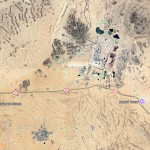
majority of Israel's petrochemical industry (top right) is based in the Negev desert (far away from Lebanon/Gaza and Tel Aviv), close to Negev nuclear site (bottom left)

this area is less well defended compared to large cities such as Tel Aviv and Haifa and also presents many large targets (largest ammonia production site in Israel was moved here from Haifa after threats from Hezbollah)

Screenshot 2025-03-26 at 13.26.20.png

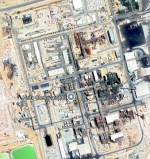
300m x 500m Haifa Chemicals site 1

Screenshot 2025-03-26 at 13.27.22.png

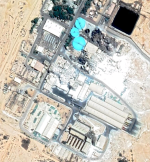
200m x 500m Haifa Chemicals site 2

Screenshot 2025-03-26 at 13.27.49.png

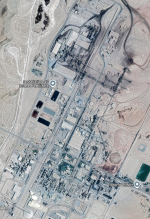
massive 700m x 800m Rotem Amfert chemical manufacturing site

for these large, concentrated (and very combustible) targets even 100m CEP MRBMs is sufficient. and they are conducive to creating a shocking massive fire like the drone attack against Saudi Arabia's oil facilities, the likes of which Israel has not seen before and which it likes to impose onto other countries like Yemen

it is also useful to send a message that iran can strike so close to the Dimona reactor
 
there are trade offs between accuracy and difficulty of interception between LACMs and MRBMs

Iran can prepare 200-500 cruise missiles for launch DURING Israeli air strikes in Iran (Israel announces such operations in real time). This will reduce Israel's ability to use fighter jets to intercept the cruise missiles / disrupt the offensive bombing. And an exchange of fire simultaneously doesn't require another strike as much as a separate response.

Building cost effective MRBM that can maneavoure to avoid ABM systems while retaining < 10m CEP accuracy at 1500km range in a GNSS denied environment is prohibitive for anyone
That is why I am provoking this discussion. There are advantages and disadvantages to all symmetries of attack strategies that Iran might use against Israel.

Iran, in order to respond to an Israeli attack of this magnitude, would have to have a high level of readiness. Even if Israel announces the operations in real time, they will not effectively give Iran the advance warning it needs to respond at the same time it is receiving the attacks, especially considering that Israel has the advantage of carrying out an unexpected attack that they so desire, they have the initiative.

In reality, at this point in question, either Iran makes a point of demonstrating that it really does have a vast arsenal of missiles and that it can penetrate any defense by attacking a specific target and destroying it completely, or it will find itself in a failed conventional deterrence strategy, which is what is really happening.

I will give you another example, it seems that Russia was using a new interesting tactic of Shahed/Geran operators. Later, the Russians completely changed their mode of attack against high-value targets. Previously, the Russians were launching Geran-2 (Shahed) and missiles (CM) all over Ukraine, but now they are concentrating attacks on only one high-value target, which guarantees its destruction.

The Russians select a key city and launch a massive strike against the necessary targets. Apparently, this approach is bearing fruit.

It is the same with the Iranians.
 
Last edited:
That is why I am provoking this discussion. There are advantages and disadvantages to all symmetries of attack strategies that Iran might use against Israel.

Iran, in order to respond to an Israeli attack of this magnitude, would have to have a high level of readiness. Even if Israel announces the operations in real time, they will not effectively give Iran the advance warning it needs to respond at the same time it is receiving the attacks, especially considering that Israel has the advantage of carrying out an unexpected attack that they so desire, they have the initiative.

In reality, at this point in question, either Iran makes a point of demonstrating that it really does have a vast arsenal of missiles and that it can penetrate any defense by attacking a specific target and destroying it completely, or it will find itself in a failed conventional deterrence strategy, which is what is really happening.

I will give you another example, it seems that Russia was using a new interesting tactic of Shahed/Geran operators. Later, the Russians completely changed their mode of attack against high-value targets. Previously, the Russians were launching Geran-2 (Shahed) and missiles (CM) all over Ukraine, but now they are concentrating attacks on only one high-value target, which guarantees its destruction.

The Russians select a key city and launch a massive strike against the necessary targets. Apparently, this approach is bearing fruit.

It is the same with the Iranians.
yes, firing 100 missiles at different parts of a massive city sized air base will not result in good outcome

but firing 100 missiles at one part of the airbase or one target is more likely to lead to better outcome

IRGC learned its newer missiles can penetrate / saturate Israeli ABM shield at c. 30% success rate in early stages of war and achieve a 70-80m CEP (this means 50% of the missiles will reach within 80m of the target) in the hostile GNSS-denied environment at 1500km range. useful learnings
 
View attachment 109922

majority of Israel's petrochemical industry (top right) is based in the Negev desert (far away from Lebanon/Gaza and Tel Aviv), close to Negev nuclear site (bottom left)

this area is less well defended compared to large cities such as Tel Aviv and Haifa and also presents many large targets (largest ammonia production site in Israel was moved here from Haifa after threats from Hezbollah)

View attachment 109926

300m x 500m Haifa Chemicals site 1

View attachment 109927

200m x 500m Haifa Chemicals site 2

View attachment 109928

massive 700m x 800m Rotem Amfert chemical manufacturing site

for these large, concentrated (and very combustible) targets even 100m CEP MRBMs is sufficient. and they are conducive to creating a shocking massive fire like the drone attack against Saudi Arabia's oil facilities, the likes of which Israel has not seen before and which it likes to impose onto other countries like Yemen

it is also useful to send a message that iran can strike so close to the Dimona reactor

I think targeting these sites is a logical next step in the escalation ladder.

If Iran had hit them during tp2 it basically would have given Israel and USA the excuse to start targeting more critical infrastructure in Iran....they too limited their attacks....that should be remembered.
 
TP3
seems their solution is to hugely increase the number of missiles produced / launched to overcome deficiencies in accuracy
 

Users who are viewing this thread

Country Watch Latest

Back
Top