How Pakistan quietly became the world’s biggest solar importer
Pakistan Flooding Anniversary
There was no sweeping law, no global investment blitz, no prime minister announcing a green revolution.
And yet by the end of 2024, Pakistan imported more solar panels than almost any other nation in the world.
The South Asian country, once facing economic challenges and high energy poverty, is now witnessing one of the most unexpected clean energy success stories of the decade.
Pakistan has joined the ranks of the world’s leading solar markets, importing an estimated 17 gigawatts of solar panels in just 2024, according to data from the Global Electricity Review 2025 by Ember, a UK-based energy think tank. This surge represents a doubling of the previous year’s imports and puts Pakistan among the top global buyers of solar panels.
The scale of Pakistan’s imports is particularly striking because
it was not driven by a large national programme or utility-scale rollout. Instead, t
he majority of the demand appears to have come from rooftop solar installations by households, small businesses, and commercial users looking to secure cheaper and more reliable electricity in the face of frequent power outages and rising energy costs.
According to Ember, rooftop solar installations in Pakistan’s homes and businesses soared as a “means of accessing lower-cost power”, the think tank notes in its latest report.
Experts in Pakistan echo this analysis. Muhammad Mustafa Amjad, programme director at Renewables First, tells
The Independent, the solar boom is best understood as a “survival response” by citizens and businesses that were “increasingly being priced out of the grid, due to inefficient planning and unreliable supply”.
“It marks a structural shift,” he adds, “in how energy is perceived in Pakistan.”
Pakistan’s solar panel imports in fiscal year 2024 alone, Mr Amjad says, amount to roughly half of the country’s peak power demand.
“Rooftop solar is fast becoming the preferred energy provider,” he adds. “And the role of the grid has to massively adapt in order to remain relevant in a fast-transitioning energy economy.”
Ubaid Ullah, an energy expert based in Karachi, says Pakistan’s energy transition was driven by people taking matters into their own hands.
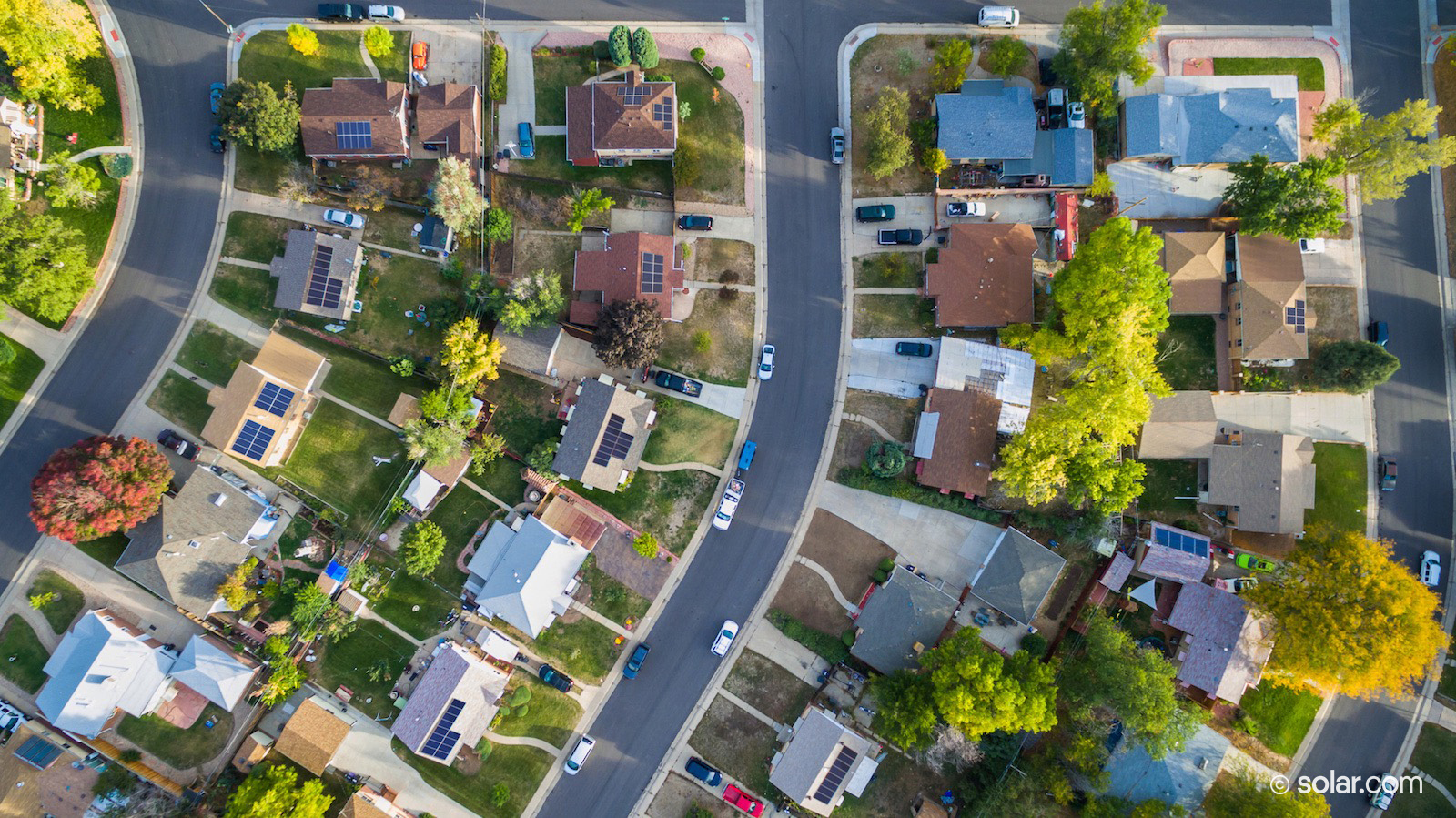
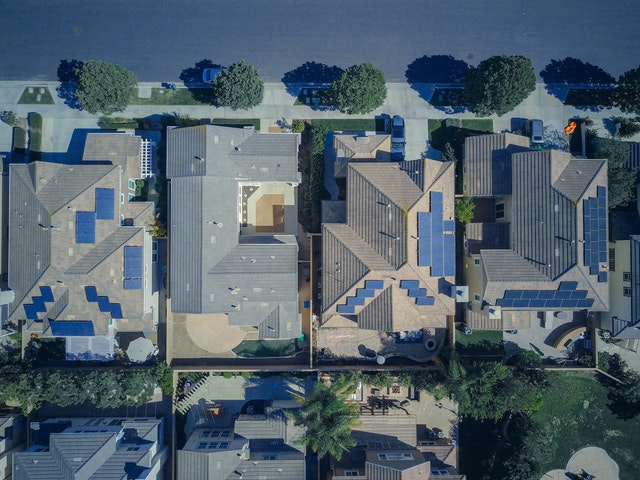
“If you look at satellite images of any Pakistani city, all the roofs appear blue – covered in solar panels,” he tells
The Independent.
In a region often plagued by grid instability, solar panels have emerged as a practical alternative to unreliable public supply. The sharp increase in imports in 2024 follows years of worsening power cuts, fluctuating tariffs, and high costs associated with diesel generators and imported fuels. Rather than waiting for national reforms, many Pakistanis began adopting solar technologies directly – often installing panels and inverters without much reliance on subsidies or centralised planning.
This makes Pakistan’s solar growth somewhat unusual in the global landscape. In many countries, solar adoption has been closely tied to climate policy or international financing. In contrast, Pakistan’s solar boom appears to be a response to market logic and local necessity, not climate diplomacy. The
Ember report says Pakistan's growth is happening largely “outside formal energy planning frameworks”.
In a region often plagued by grid instability, solar panels have emerged as a practical alternative to unreliable public supply. The sharp increase in imports in 2024 follows years of worsening power cuts, fluctuating tariffs, and high costs associated with diesel generators and imported fuels.
Rather than waiting for national reforms, many Pakistanis began adopting solar technologies directly – often installing panels and inverters without much reliance on subsidies or centralised planning.
This makes Pakistan’s solar growth somewhat unusual in the global landscape. In many countries, solar adoption has been closely tied to climate policy or international financing. In contrast, Pakistan’s solar boom appears to be a response to market logic and local necessity, not climate diplomacy. The
Ember report says Pakistan's growth is happening largely “outside formal energy planning frameworks”.
Experts say there is minimal direct government intervention in Pakistan’s solar journey. In fact, the infrastructure is struggling to keep up. While regulators approved net metering policies and eased import restrictions in recent years, there have been no major public spending programmes or large-scale solar auctions to match the pace of adoption seen at the household or commercial level.
Despite importing record volumes of panels, Pakistan’s official grid-connected solar capacity remains far below these figures – indicating that much of the new solar is operating off-grid or behind the meter, where it escapes inclusion in national electricity statistics.
This divergence between on-the-ground installations and official planning is already raising concerns. Grid operators and utility companies are struggling to adapt to the effects of widespread self-generation, particularly in urban areas where high-value customers are increasingly generating their own electricity during the day and relying on the grid only as backup. This dynamic, sometimes referred to as a “utility death spiral”, can erode the financial base of public energy providers while placing new pressure on infrastructure during peak evening hours.
In its analysis,
Ember warns that this kind of rapid, decentralised growth requires updated planning and regulatory tools to avoid instability. “Updated system planning and regulatory frameworks are needed alongside this deployment to ensure a sustainable and managed transition,” the report says.
While the focus has been on solar, Pakistan’s broader renewable energy mix includes growing contributions from wind, hydropower, and bioenergy. However, solar is by far the fastest-moving segment – particularly because it can be deployed at small scale with minimal bureaucratic friction. In a country with long-standing challenges around governance and infrastructure delivery, the modular nature of solar technology has enabled adoption even in the absence of large public investment.
The 2024 import figures reflect more than a spike in consumer interest. They also speak to the declining costs of solar technology globally, particularly for modules manufactured in China, which dominates international supply chains. Falling equipment prices, combined with volatile local fuel costs and persistent power shortages, have made solar one of the most economically viable energy solutions in Pakistan today.
Despite this, significant gaps remain in how the transition is being managed. With little oversight of system quality, storage deployment, or grid balancing mechanisms, Pakistan risks undermining the long-term benefits of its clean energy expansion. Without stronger data, more transparent planning, and investment in modernising the grid, the current surge may exacerbate existing inequalities in access and reliability.
Still, the broader message from Pakistan’s experience is clear: clean energy adoption is no longer limited to wealthy nations or high-emitting economies. When the economics work, and the barriers are low, energy transitions can take root quickly – even in places where policy has historically lagged behind ambition.
What’s happening in Pakistan may be messy and uneven, but it holds global significance. It offers a blueprint – or at least a suggestion – of how energy transitions might look in much of the Global South. Not as a carefully orchestrated top-down process, but as a decentralised, demand-led shift driven by necessity and economics.
According to Mr Amjad, this makes Pakistan an early example of a new energy model. “For Global South economies,” he says, “this presents an alternative bottom-up, people-led, and market-driven model of energy transition – one that provides secure, distributed, and democratised access to clean and affordable energy.”
Battery storage, he adds, is likely to follow the same trajectory as solar – cheap, modular, and adopted quickly at the edge of the grid, not the centre. “With the price of batteries following a similar trajectory to solar, the pace of energy transition across Global South countries will definitely accelerate, as the volatility around imported fuels continues to encourage renewable growth.”
Harjeet Singh, strategic adviser to the Fossil Fuel Non-Proliferation Treaty Initiative, says Pakistan’s story shows solar is not just a green option, but an affordable one.
“The phenomenal growth of solar energy in countries like Pakistan underscores that solar is no longer just an environmental choice – it’s a powerful economic solution, especially for the developing world.”
“Faced with volatile fossil fuel prices, soaring electricity bills, and often unreliable grids, households and businesses are embracing solar because it offers a cheaper, cleaner, and more dependable source of power,” Mr Singh says.
“This isn’t simply about decarbonisation anymore; it’s fundamentally about ensuring energy access, driving economic stability, and strengthening energy security from the ground up.”