China hits back at Canada with fresh agriculture tariffs

Once TSMC factory construction in USA is finished, USA will start to provoke Taiwan issue, to trap China.

In hope China will make the first move to invade Taiwan.

Then using this excuse, to sanction China economy and force other countries to do the same thing.

Just like Russia in Ukraine.
Russia is still standing and prosperous even after the sanctions. In fact, it is Europe that has suffered the most from the sanctions.

If similar sanctions are placed in China, then about a quarter of global trade will be taken off the dollar and that would be a huge acceleration towards de dollarization. I think there is definitely the possibility that this is Trumps plan but it will likely backfire in the form of hyperinflation in the US and will crash living standards.
 
Its because Christians were earliest victims of Jewish Treachery, how Jews have lend money to Christians with high interest rates and when failed to pay back, taking over their homes/land and even kingdoms, hence the first target of Zionism or Jewish supremacists was to destroy the Christianity, specifically in west. Muslims are easily and dumb and stupid, Jews defeating Muslims with less than 25% of the effort they put in for Christians and its embarrassing for Muslims, specially the Arabs.

Muslims are easily and dumb and stupid, Jews defeating Muslims with less than 25% of the effort they put in for Christians
Before 1945, may i know when this happened?


@mod
PS: Sorry for going off-topic.
 
If countries are forced to chose between trade with US or China, some might chose China because China is more important economically as a much bigger trade partner especially after higher tariff decreasing their US trade volume.

Once they realize that they might or would be blocked from the US dollar system, they will try to get rid of their dollar asset as soon as possible. This would create a panic dumping of US treasuries.

Also, the US admin seem to be aiming for other currencies to appreciate against the dollar aka the Plaza accord, and other countries can do that by selling treasuries and buying their own currency.

These risk factors is probably one of the reason that cause recent increasing yield in the dollar treasuries market.

The treasuries yield going up would lead to US financing of its budget deficit more expensive. Which could force quantitative easing aka printing dollar out of thin air, which would cause inflation that further increase treasuries yield, and a viscious cycle could be resulted.
 
If countries are forced to chose between trade with US or China, some might chose China because China is more important economically as a much bigger trade partner especially after higher tariff decreasing their US trade volume.

Once they realize that they might or would be blocked from the US dollar system, they will try to get rid of their dollar asset as soon as possible. This would create a panic dumping of US treasuries.

Also, the US admin seem to be aiming for other currencies to appreciate against the dollar aka the Plaza accord, and other countries can do that by selling treasuries and buying their own currency.

These risk factors is probably one of the reason that cause recent increasing yield in the dollar treasuries market.

The treasuries yield going up would lead to US financing of its budget deficit more expensive. Which could force quantitative easing aka printing dollar out of thin air, which would cause inflation that further increase treasuries yield, and a viscious cycle could be resulted.

That's probably not true.

Because the center of the global trade network is the USD, so indirectly, the USA is the center.

Basically, all roads lead to the USA.

Other countries' export to China is actually China's export to USA, China is just the middle man.

If USA cuts China out of USA trade network, basically USA remove the role of middleman, and deal directly with raw material owners.

Although China's export to the US is only 2.5% of GDP, but there's transhipment, which is Vietnam's export to the US, Mexico's export to the US, etc. are actually China's export.

In order to fight against the USA, it's to create BRICS+ currency.

China really hits the spot, and the USA reaction will be spectacullar. Trump will go crazy, like a real madman.

In this trade war, many other countries think that the USA is more important than China, but they still hope that China will defeat the USA and force Trump to make a better deal.

So far there's nothing that can replace USD, that's almost unlimited, that can be printed and went into third world pockets. China can't do it, China is still dependent on the USA for the USD.
 
Other countries' export to China is actually China's export to USA, China is just the middle man.
I think dismissing the world second largest good import market as a middle man is a little too much.

Granted, China do import parts that end up as export to US which in total is roughly 14.8% of total China export. For eg. S. Korea export many semiconductor to China. A large part of that is DRAM memory chips from Samsung and Hynix. Some of those chips would go to Iphone to export to US, but I think a lot more would go into other brand like Huawei, Xiaomi, Oppo etc. which is largely consumed domestically.

Countries would continue using US dollar if they run a export surplus to US and accumulated US dollar. With the US forcing them to reduce that surplus, there is decreasing need to use dollar because they don't have dollar anymore. If they are forced to chose or even blocked, then they would dump US dollar assets.

If the world is forced to become two trade block that do not trade much with each other. The US side with lots of dollar chasing much less manufactured goods could only means dollar losing value and inflation.

That is probably why the dollar is droping, and gold skyrocket recently.

Which is not surprising when the trade war is creating many risk factor and no positive.

What is surprising is when US stock crashed recently, the bond market which traditionally would go up as a safe haven, is also dropping.

That would means that investors are worrying about increasing risk of holding US assets. The stock market, the bond market, the FX market and the gold market are all showing that.

Yes, there are currently no comparable system to US dollar system. But when push comes to shaft, countries would found a way, even primitive society figure out a way to trade if forced to, I do not think that would be a show stopper.
 
Last edited:
That's probably not true.

Because the center of the global trade network is the USD, so indirectly, the USA is the center.

Basically, all roads lead to the USA.

Other countries' export to China is actually China's export to USA, China is just the middle man.

If USA cuts China out of USA trade network, basically USA remove the role of middleman, and deal directly with raw material owners.

Although China's export to the US is only 2.5% of GDP, but there's transhipment, which is Vietnam's export to the US, Mexico's export to the US, etc. are actually China's export.

In order to fight against the USA, it's to create BRICS+ currency.

China really hits the spot, and the USA reaction will be spectacullar. Trump will go crazy, like a real madman.

In this trade war, many other countries think that the USA is more important than China, but they still hope that China will defeat the USA and force Trump to make a better deal.

So far there's nothing that can replace USD, that's almost unlimited, that can be printed and went into third world pockets. China can't do it, China is still dependent on the USA for the USD.
Calling China the middleman in the international trade is far fetched from truth. China is by far the largest manufacturing hub of the world, comprising about 35% of world total, it has built the most complete supply chains to manufacturing in the world, it is the only country that can produce all industrial products in all categories as classified by UN. Saying that Chinese earned easy money being the middleman merchants in international is far from truth, Chinese earned exports money through hard industrial work of blood and sweat.
 

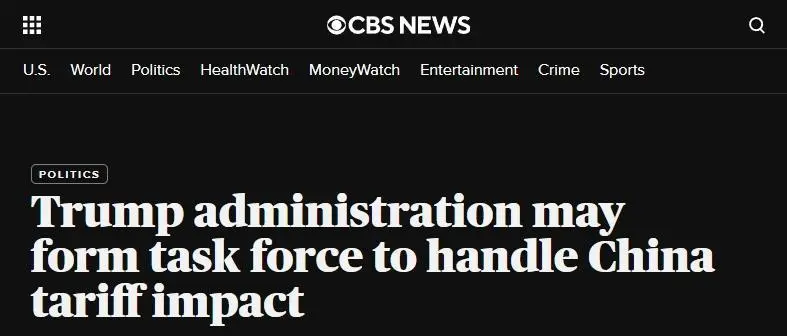
The White House will set up a working group to urgently deal with the crisis of imposing tariffs on China

CCTV News
2025-04-19 14:35:17 From Beijing

931 people participated


9C14D91F64B9AF7FCC98F4470CAF87B36A63F0C2_size32_w787_h336.jpg


On April 18 local time, the US Columbia Broadcasting Corporation reported that multiple sources revealed that since the Trump administration’s abnormally high tariffs on Chinese goods will lead to a supply chain crisis, the Trump administration has begun discussing the establishment of a working group to urgently deal with these issues if no breakthrough is made in negotiations with the Chinese government.

Sources said no details have been finalized yet about the specific formation of the group, but the working group is likely to include Vice President Vance, Treasury Secretary Bessant, Commerce Secretary Lutnick, White House National Economic Council Director Kevin Hassett, White House Council of Economic Advisers Chairman Stephen Milan and U.S. Trade Representative Jamison Greer.

The United States has repeatedly imposed abnormally high tariffs on China

U.S. President Trump signed an executive order at the White House on the 2nd of this month, invoking the International Emergency Economic Powers Act, declaring a state of emergency in the United States and imposing so-called "reciprocal tariffs" on all trading partners.

On the 8th, Eastern Time, the United States further increased the so-called "reciprocal tariff" of 34% on Chinese products exported to the United States by 50% to 84%.

On the 10th, Eastern Time, the US side once again announced that it would increase tariffs on China to 145%.

On April 15, Eastern Time, the U.S. White House website stated that China is currently facing tariffs of up to 245%.

We will resolutely fight back and fight to the end! China expresses solemn position

In order to counter the US tariff bullying, the State Council Tariff Commission issued an announcement on the 9th, announcing that the additional tariff rate on all imported goods originating from the United States will be increased from 34% to 84% .

On the 11th, the Tariff Committee of the State Council once again issued an announcement to adjust the tariff rate on imported goods originating from the United States from 84% to 125%. The announcement clearly stated that given that at the current tariff level, there is no possibility of market acceptance of US goods exported to China, if the US continues to impose tariffs on Chinese goods exported to the US, China will ignore it.

Regarding the US's imposition of abnormally high tariffs on China, our Ministry of Foreign Affairs has responded on many occasions. On April 17, a spokesperson for the Ministry of Foreign Affairs once again stressed that the United States' repeated imposition of abnormally high tariffs on China has become a numbers game and has no practical economic significance. It will only further expose the United States's tactics of instrumentalizing and weaponizing tariffs and engaging in bullying and coercion. There are no winners in a tariff war or a trade war. China does not want to fight one, but it is not afraid of it either. If the US continues to play the tariff numbers game, China will ignore it. If the US insists on continuing to substantially infringe upon China's rights and interests, China will resolutely counterattack and fight to the end.


The White House will set up a working group to urgently deal with the crisis of imposing tariffs on China

CCTV News
2025-04-19 14:35:17 From Beijing

931 people participated


9C14D91F64B9AF7FCC98F4470CAF87B36A63F0C2_size32_w787_h336.jpg


On April 18 local time, the US Columbia Broadcasting Corporation reported that multiple sources revealed that since the Trump administration’s abnormally high tariffs on Chinese goods will lead to a supply chain crisis, the Trump administration has begun discussing the establishment of a working group to urgently deal with these issues if no breakthrough is made in negotiations with the Chinese government.

Sources said no details have been finalized yet about the specific formation of the group, but the working group is likely to include Vice President Vance, Treasury Secretary Bessant, Commerce Secretary Lutnick, White House National Economic Council Director Kevin Hassett, White House Council of Economic Advisers Chairman Stephen Milan and U.S. Trade Representative Jamison Greer.

The United States has repeatedly imposed abnormally high tariffs on China

U.S. President Trump signed an executive order at the White House on the 2nd of this month, invoking the International Emergency Economic Powers Act, declaring a state of emergency in the United States and imposing so-called "reciprocal tariffs" on all trading partners.

On the 8th, Eastern Time, the United States further increased the so-called "reciprocal tariff" of 34% on Chinese products exported to the United States by 50% to 84%.

On the 10th, Eastern Time, the US side once again announced that it would increase tariffs on China to 145%.

On April 15, Eastern Time, the U.S. White House website stated that China is currently facing tariffs of up to 245%.

We will resolutely fight back and fight to the end! China expresses solemn position

In order to counter the US tariff bullying, the State Council Tariff Commission issued an announcement on the 9th, announcing that the additional tariff rate on all imported goods originating from the United States will be increased from 34% to 84% .

On the 11th, the Tariff Committee of the State Council once again issued an announcement to adjust the tariff rate on imported goods originating from the United States from 84% to 125%. The announcement clearly stated that given that at the current tariff level, there is no possibility of market acceptance of US goods exported to China, if the US continues to impose tariffs on Chinese goods exported to the US, China will ignore it.

Regarding the US's imposition of abnormally high tariffs on China, our Ministry of Foreign Affairs has responded on many occasions. On April 17, a spokesperson for the Ministry of Foreign Affairs once again stressed that the United States' repeated imposition of abnormally high tariffs on China has become a numbers game and has no practical economic significance. It will only further expose the United States's tactics of instrumentalizing and weaponizing tariffs and engaging in bullying and coercion. There are no winners in a tariff war or a trade war. China does not want to fight one, but it is not afraid of it either. If the US continues to play the tariff numbers game, China will ignore it. If the US insists on continuing to substantially infringe upon China's rights and interests, China will resolutely counterattack and fight to the end.


Lol, who is scared now ? Head by JD Vance, for what, I thought the arrogant Yanks said they don't need Chinese peasants' money and products anymore. China should just ignore their wailing.
 
Last edited:
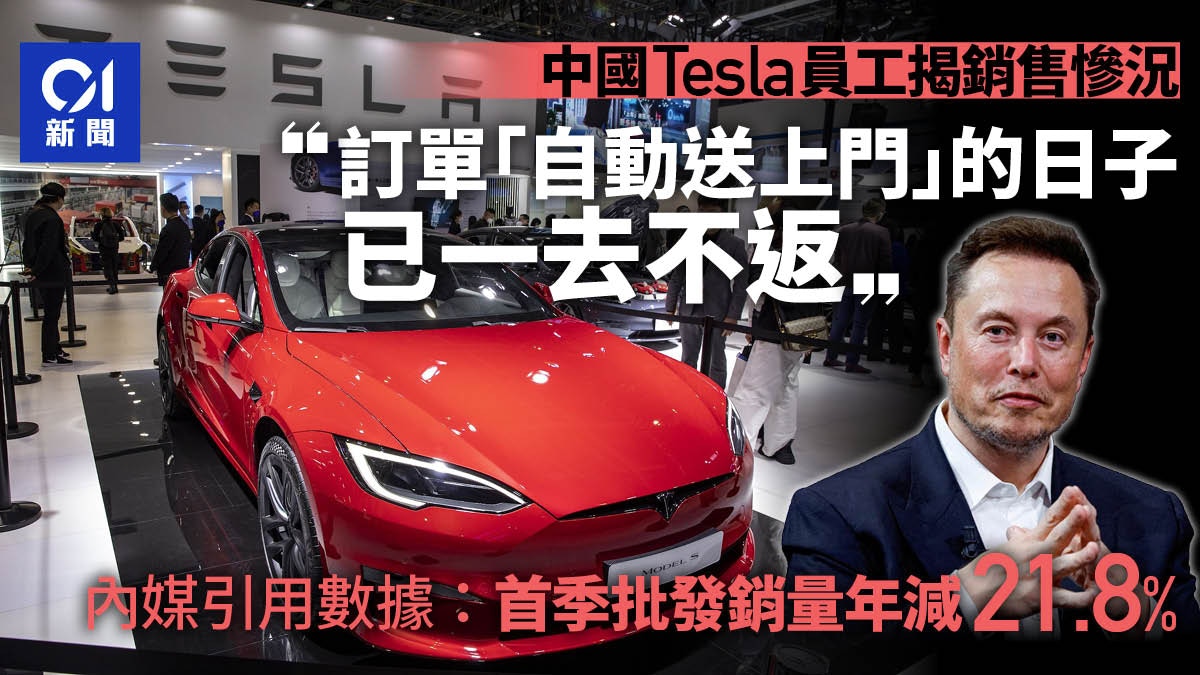
Is Trump's tariff war hurting his ally Elon Musk? Tesla employees in China reveal poor sales situation


1745141399997.jpeg

As the U.S.-China trade war continues to escalate, billionaire Elon Musk, an ally of U.S. President Donald Trump, has also been affected.

The Tesla he leads has lost its luster in the mainland and its growth momentum is not as good as that of Chinese automaker BYD. A salesperson from Tesla China said that it was still difficult to meet the target even if they worked around the clock.


Tesla's halo in the mainland has faded, and some Chinese sales staff said they cannot sell any cars even if they work around the clock. (Screenshot of Weibo video)

Tesla's halo in the mainland has faded, and some Chinese sales staff said they cannot sell any cars even if they work around the clock. (Screenshot of Weibo video)

Tesla's halo in the mainland has faded, and some Chinese sales staff said they cannot sell any cars even if they work around the clock. (Screenshot of Weibo video)

Tesla's halo in the mainland has faded, and some Chinese sales staff said they cannot sell any cars even if they work around the clock. (Screenshot of Weibo video)


Tesla's halo in the mainland has faded, and some Chinese sales staff said they cannot sell any cars even if they work around the clock. (Screenshot of Weibo video)

Tesla's halo in the mainland has faded, and some Chinese sales staff said they cannot sell any cars even if they work around the clock. (Screenshot of Weibo video)

Tesla's halo in the mainland has faded, and some Chinese sales staff said they cannot sell any cars even if they work around the clock. (Screenshot of Weibo video)

Tesla's halo in the mainland has faded, and some Chinese sales staff said they cannot sell any cars even if they work around the clock. (Screenshot of Weibo video)


Tesla's halo in the mainland has faded, and some Chinese sales staff said they cannot sell any cars even if they work around the clock. (Screenshot of Weibo video)

Tesla's halo in the mainland has faded, and some Chinese sales staff said they cannot sell any cars even if they work around the clock. (Screenshot of Weibo video)

According to recent reports from Chinese media outlets Jiemian News and Fast Technology, the halo of American electric car giant Tesla in mainland China is fading. As the group that deals with the most customers, Tesla sales staff in mainland China have already felt tremendous performance pressure.


According to reports, several Tesla sales staff said that they had given up their midweek weekends and switched to working seven days a week because they could not meet their performance targets on time:

Working from 9 am to 10 pm every day, the average daily working hours are close to 13 hours.

An interviewee stated that the assessment standard for stores in Beijing is to sell at least one car per day, which means that approximately 30 cars need to be sold within a month. But in reality, it is difficult for many sales staff in the store to sell 3 to 4 cars a week.


A salesperson who has decided to leave Tesla admitted:

Gone are the days when orders were automatically delivered to users’ doorsteps without them having to explain the product to them.

The report cited data released by the China Passenger Car Association, saying that Tesla China's wholesale sales in the first quarter of this year fell 21.8% year-on-year, and its growth momentum was far inferior to that of its biggest competitor in the mainland, BYD, which achieved a growth rate of 18.8%.

The report pointed out that as mainland car companies such as Wenjie, Geely, Ideal, Xiaomi, and Xiaopeng continue to refine the market, the price war of electric vehicles in the mainland is becoming increasingly fierce, all of which make it difficult for Tesla to make progress in the mainland.


I think Chinese culture doesn't allow them to spend like Americans

Chinese like to save in case bad days come back again

But Chinese government has built the nation the bad days are gone and not coming back

Chinese need to get the confidence to start spending big and I am talking about the average Chinese

when average Chinese consumers start spending big it will help China grow

China cant reply on exports to drive its growth

now it should start tax and consumer spending habit and create programs that allows them to do that

driving exports to grow the economy is great but you are then at the mercy of the importer

every time China faces a challenge it ends up helping China in the longer term

from Huawei ban to ban from ISS its always helped grow the Chinese indigenous development
 
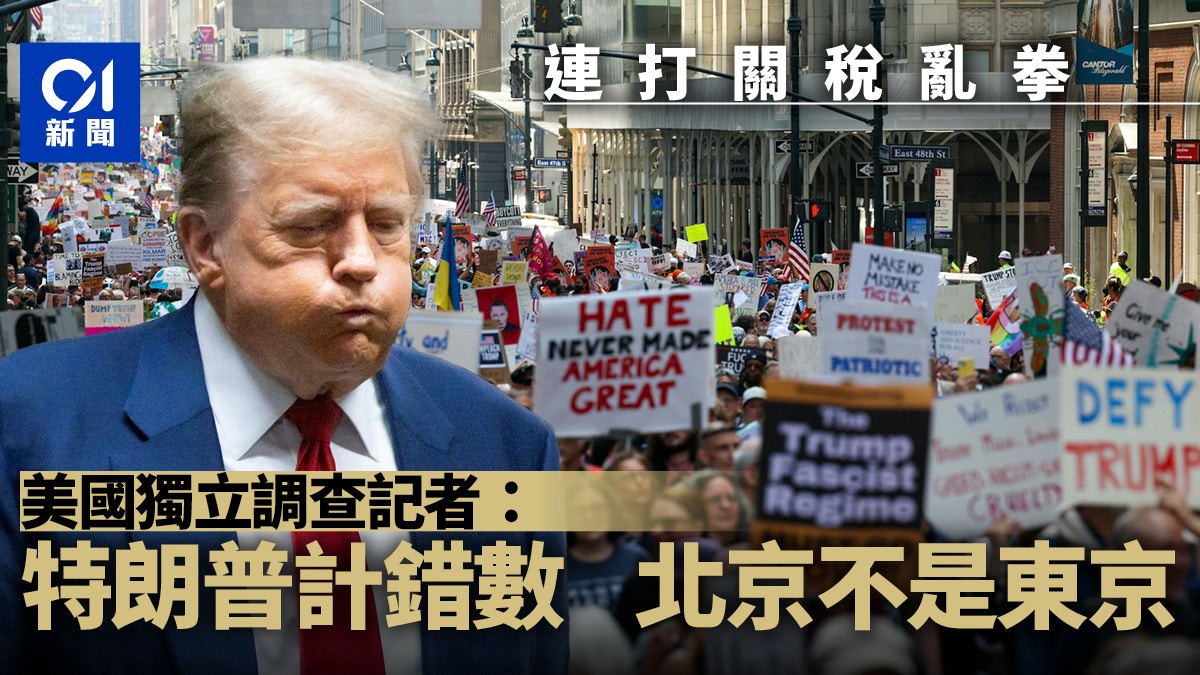
Tariff War | US Independent Investigative Reporter: Trump Miscalculated that Beijing is Not Tokyo


1745156275116.jpeg

In the end, Trump failed to wait for China to beg for mercy.

On April 15, the White House website released a fact sheet on the "232" investigation, stating that due to China's counter-tariffs against the United States, China is currently facing tariffs of up to 245%.

Just two days later, on April 17, Trump, who had been launching a series of tariff attacks, said that he did not want to continue raising tariffs on China because it might cause trade between the two countries to stagnate.

Previously, when the US government imposed 10% and 20% tariffs on China, the Chinese people and businesses would pay close attention and be on high alert. Now it has been increased to 145% and 245%. These outrageous figures distort the seriousness of the China-US trade issue and will only add to the after-dinner jokes.
What exactly does Trump hope to achieve? Do the American people realize that they are paying for this policy? What anxiety is the US trying to cover up? Does Trump have any more tricks up his sleeve? Ben Norton, an independent American investigative journalist and founder of the Geopolitical Economics Report, was interviewed by Changan Street Governor (WeChat ID: Capitalnews).

This article is reproduced from the WeChat public account "Changan Street Governor"

Beijing will not repeat Tokyo's mistakes​

Governor: What do you think of Trump's practice of imposing abnormally high tariffs and changing tax amounts every day? What effect does Trump hope to achieve?

Norton: The so-called 245% tariff is obviously a bluff. The Trump administration believes that the United States has great leverage over China, but the reality is the opposite. This conflict has instead exposed the United States' deep dependence on China. For example, Trump exempted Chinese-made mobile phones, computers, semiconductors and other electronic products because these are the cornerstones of the modern economy, and the United States is currently unable to produce these key products domestically. China's economic strength far exceeds US expectations.


President Donald Trump signs an executive order in the Oval Office of the White House in Washington, U.S., April 17, 2025. (Reuters)

President Donald Trump signs an executive order in the Oval Office of the White House in Washington, U.S., April 17, 2025. (Reuters)

Trump’s inconsistency shows one thing: the US actually knows that it does not really have the advantage. Behind this high-profile propaganda lies the anxiety about the country's structural economic problems.

In addition, Trump launched a trade war in order to force China to sign an unequal agreement that is beneficial to the United States and disadvantageous to China. It is somewhat similar to the "Marine-Lake Agreement" he envisioned, which refers to the Plaza Accord that the United States forced its allies to sign in 1985, which ultimately hit the Japanese economy hard. But the US made a wrong judgment this time - China is not the Japan of the past. China is more independent and its economy is larger; Beijing will not repeat Tokyo's mistakes.

14 billionaires use tariffs to pass the tax burden on to ordinary people​

Governor: Can the Trump administration achieve the repatriation of manufacturing through tariffs and replicate the achievements of Made in China?

Norton: I don't think it's possible to reindustrialize the United States with tariffs alone. Industrialization in all developed countries has been driven by clear industrial policies, such as large-scale government investment in infrastructure, education, training and scientific research. Limited, targeted tariffs can be used as a tool to protect emerging industries, but they must be used in conjunction with more comprehensive industrial policies. Trump's tariff strategy is completely different - he takes a one-size-fits-all approach across the entire industry, using rough tactics that make it more like a tool of economic warfare.

Rather than promoting re-industrialization, such tariffs will increase domestic prices in the United States and harm the country’s economy. To truly rebuild its manufacturing industry, the United States will need to spend years or even decades building factories, training workers, introducing equipment, and establishing supply chains. Not only does the Trump administration have no plans in this regard, but it has further weakened national capabilities by cutting fiscal investment and relaxing regulations, which will only accelerate deindustrialization rather than reverse it.

Governor: Faced with the tariff stick wielded by Trump, American people are frantically stockpiling Chinese products. On the e-commerce app list of the U.S. iOS App Store, the top three apps are all Chinese e-commerce apps. A large number of promotional videos on TikTok with the slogan "good products from Chinese factories" have become popular, which has helped promote Made in China. What do you think of this phenomenon? Do the American people realize that they are paying for this policy?


The picture shows the company logo taken outside TikTok’s US headquarters in Culver City, California, USA on September 15, 2020. (Reuters)

The picture shows the company logo taken outside TikTok’s US headquarters in Culver City, California, USA on September 15, 2020. (Reuters)

Norton: Trump often says that foreign countries will pay for his tariffs, but that's simply not true. In reality, tariffs are paid by U.S. importers and are ultimately passed on to U.S. consumers. Tariffs are essentially a consumption tax, and a very unfair tax at that, hitting low-income and working-class people the hardest.

Trump himself is a billionaire, and he has 13 other billionaires in his administration. They push for tax cuts for the rich and big corporations, but pass the tax burden on to ordinary people through tariffs.

This is why Americans are rushing to buy Chinese products, because they know these tariffs will cause inflation and goods will soon become more expensive. Many Americans already live on their monthly paychecks, and once inflation returns, these ordinary families will be the hardest hit. Therefore, the real victims of this trade war are actually the American people.

Trump is pushing the United States toward isolation​

Governor: If other countries follow the US’s example and retaliate with tariffs and take unilateral actions, what impact will it have on global development? Are you worried that this tariff action will exacerbate inflationary pressure in the United States or even lead to an economic recession? Is it possible that the global depression caused by trade protectionism in the 1930s will happen again?

Norton: There's no doubt that Trump's tariffs will push up inflation. The United States cannot manufacture products like China because it has no clear industrial policy and does not have the ability to re-industrialize. This aggressive trade war also greatly increases the possibility of the United States falling into an economic recession.


Demonstrations against the Trump administration take place in New York City, the United States, on April 19, 2025 (Reuters)

Demonstrations against the Trump administration take place in New York City, the United States, on April 19, 2025 (Reuters)

But the situation today is not exactly the same as it was in the 1930s. Back then, countries raised tariffs on each other, but now, Trump's approach may prompt other countries to speed up their search for alternatives. For decades, many countries have been calling for a fairer international financial and monetary system as the existing system is highly dependent on the US dollar and dominated by the United States. Countries in the Global South have also been pushing for a "new international economic order", which is also one of the common goals of the BRICS.

Trump’s trade war is likely to backfire, pushing the United States into isolation and accelerating the world’s transition to a multipolar world.

The United States has few plans for the backlash from this trade war​

Governor: The "phone call" that Trump kept talking about never came, and China decided to "ignore it." In your opinion, does Trump have any other tricks up his sleeve?

Norton: The United States actually doesn't have many cards to play. Overall, the United States' economic dependence on China is deeper than China's dependence on the United States. In fact, China can find substitutes for the goods it imports from the United States, such as oil, natural gas, soybeans, corn, etc. However, many products that the United States imports from China, such as key electronic products such as mobile phones, computers, and semiconductors, cannot be easily replaced. This is why Trump had to make exceptions and exempt these products from tariffs.


The picture shows soybeans displayed by farmers. (Reuters)

The picture shows soybeans displayed by farmers. (Reuters)

Although China still imports some key goods from the United States, such as high-end chips and aircraft parts, China has made significant progress in independent research and development of chips and domestically produced civil aircraft in recent years, gradually breaking away from its dependence on the United States.

More importantly, China has long been actively promoting trade diversification. Today, China's exports account for 19.7% of GDP and are even lower than the global average (29.3%), indicating that its economic structure has become more robust.

The Chinese government has achieved tangible results by relying on planned industrial policies, while the U.S. government has basically let things take their own course in this regard, with chaotic policies controlled by the interests of oligarchs, financiers and large companies. Precisely because of the lack of long-term strategic planning, the United States has almost no plan for the backlash of this trade war, and it is likely to end up reaping the fruits of its own actions and hurting its own economy.


Last edited:
Tariff War | US Independent Investigative Reporter: Trump Miscalculated that Beijing is Not Tokyo


View attachment 113218

In the end, Trump failed to wait for China to beg for mercy.

On April 15, the White House website released a fact sheet on the "232" investigation, stating that due to China's counter-tariffs against the United States, China is currently facing tariffs of up to 245%.

Just two days later, on April 17, Trump, who had been launching a series of tariff attacks, said that he did not want to continue raising tariffs on China because it might cause trade between the two countries to stagnate.

Previously, when the US government imposed 10% and 20% tariffs on China, the Chinese people and businesses would pay close attention and be on high alert. Now it has been increased to 145% and 245%. These outrageous figures distort the seriousness of the China-US trade issue and will only add to the after-dinner jokes.
What exactly does Trump hope to achieve? Do the American people realize that they are paying for this policy? What anxiety is the US trying to cover up? Does Trump have any more tricks up his sleeve? Ben Norton, an independent American investigative journalist and founder of the Geopolitical Economics Report, was interviewed by Changan Street Governor (WeChat ID: Capitalnews).

This article is reproduced from the WeChat public account "Changan Street Governor"

Beijing will not repeat Tokyo's mistakes​

Governor: What do you think of Trump's practice of imposing abnormally high tariffs and changing tax amounts every day? What effect does Trump hope to achieve?

Norton: The so-called 245% tariff is obviously a bluff. The Trump administration believes that the United States has great leverage over China, but the reality is the opposite. This conflict has instead exposed the United States' deep dependence on China. For example, Trump exempted Chinese-made mobile phones, computers, semiconductors and other electronic products because these are the cornerstones of the modern economy, and the United States is currently unable to produce these key products domestically. China's economic strength far exceeds US expectations.


President Donald Trump signs an executive order in the Oval Office of the White House in Washington, U.S., April 17, 2025. (Reuters)

President Donald Trump signs an executive order in the Oval Office of the White House in Washington, U.S., April 17, 2025. (Reuters)

Trump’s inconsistency shows one thing: the US actually knows that it does not really have the advantage. Behind this high-profile propaganda lies the anxiety about the country's structural economic problems.

In addition, Trump launched a trade war in order to force China to sign an unequal agreement that is beneficial to the United States and disadvantageous to China. It is somewhat similar to the "Marine-Lake Agreement" he envisioned, which refers to the Plaza Accord that the United States forced its allies to sign in 1985, which ultimately hit the Japanese economy hard. But the US made a wrong judgment this time - China is not the Japan of the past. China is more independent and its economy is larger; Beijing will not repeat Tokyo's mistakes.

14 billionaires use tariffs to pass the tax burden on to ordinary people​

Governor: Can the Trump administration achieve the repatriation of manufacturing through tariffs and replicate the achievements of Made in China?

Norton: I don't think it's possible to reindustrialize the United States with tariffs alone. Industrialization in all developed countries has been driven by clear industrial policies, such as large-scale government investment in infrastructure, education, training and scientific research. Limited, targeted tariffs can be used as a tool to protect emerging industries, but they must be used in conjunction with more comprehensive industrial policies. Trump's tariff strategy is completely different - he takes a one-size-fits-all approach across the entire industry, using rough tactics that make it more like a tool of economic warfare.

Rather than promoting re-industrialization, such tariffs will increase domestic prices in the United States and harm the country’s economy. To truly rebuild its manufacturing industry, the United States will need to spend years or even decades building factories, training workers, introducing equipment, and establishing supply chains. Not only does the Trump administration have no plans in this regard, but it has further weakened national capabilities by cutting fiscal investment and relaxing regulations, which will only accelerate deindustrialization rather than reverse it.

Governor: Faced with the tariff stick wielded by Trump, American people are frantically stockpiling Chinese products. On the e-commerce app list of the U.S. iOS App Store, the top three apps are all Chinese e-commerce apps. A large number of promotional videos on TikTok with the slogan "good products from Chinese factories" have become popular, which has helped promote Made in China. What do you think of this phenomenon? Do the American people realize that they are paying for this policy?


The picture shows the company logo taken outside TikTok’s US headquarters in Culver City, California, USA on September 15, 2020. (Reuters)

The picture shows the company logo taken outside TikTok’s US headquarters in Culver City, California, USA on September 15, 2020. (Reuters)

Norton: Trump often says that foreign countries will pay for his tariffs, but that's simply not true. In reality, tariffs are paid by U.S. importers and are ultimately passed on to U.S. consumers. Tariffs are essentially a consumption tax, and a very unfair tax at that, hitting low-income and working-class people the hardest.

Trump himself is a billionaire, and he has 13 other billionaires in his administration. They push for tax cuts for the rich and big corporations, but pass the tax burden on to ordinary people through tariffs.

This is why Americans are rushing to buy Chinese products, because they know these tariffs will cause inflation and goods will soon become more expensive. Many Americans already live on their monthly paychecks, and once inflation returns, these ordinary families will be the hardest hit. Therefore, the real victims of this trade war are actually the American people.

Trump is pushing the United States toward isolation​

Governor: If other countries follow the US’s example and retaliate with tariffs and take unilateral actions, what impact will it have on global development? Are you worried that this tariff action will exacerbate inflationary pressure in the United States or even lead to an economic recession? Is it possible that the global depression caused by trade protectionism in the 1930s will happen again?

Norton: There's no doubt that Trump's tariffs will push up inflation. The United States cannot manufacture products like China because it has no clear industrial policy and does not have the ability to re-industrialize. This aggressive trade war also greatly increases the possibility of the United States falling into an economic recession.


Demonstrations against the Trump administration take place in New York City, the United States, on April 19, 2025 (Reuters)

Demonstrations against the Trump administration take place in New York City, the United States, on April 19, 2025 (Reuters)

But the situation today is not exactly the same as it was in the 1930s. Back then, countries raised tariffs on each other, but now, Trump's approach may prompt other countries to speed up their search for alternatives. For decades, many countries have been calling for a fairer international financial and monetary system as the existing system is highly dependent on the US dollar and dominated by the United States. Countries in the Global South have also been pushing for a "new international economic order", which is also one of the common goals of the BRICS.

Trump’s trade war is likely to backfire, pushing the United States into isolation and accelerating the world’s transition to a multipolar world.

The United States has few plans for the backlash from this trade war​

Governor: The "phone call" that Trump kept talking about never came, and China decided to "ignore it." In your opinion, does Trump have any other tricks up his sleeve?

Norton: The United States actually doesn't have many cards to play. Overall, the United States' economic dependence on China is deeper than China's dependence on the United States. In fact, China can find substitutes for the goods it imports from the United States, such as oil, natural gas, soybeans, corn, etc. However, many products that the United States imports from China, such as key electronic products such as mobile phones, computers, and semiconductors, cannot be easily replaced. This is why Trump had to make exceptions and exempt these products from tariffs.


The picture shows soybeans displayed by farmers. (Reuters)

The picture shows soybeans displayed by farmers. (Reuters)

Although China still imports some key goods from the United States, such as high-end chips and aircraft parts, China has made significant progress in independent research and development of chips and domestically produced civil aircraft in recent years, gradually breaking away from its dependence on the United States.

More importantly, China has long been actively promoting trade diversification. Today, China's exports account for 19.7% of GDP and are even lower than the global average (29.3%), indicating that its economic structure has become more robust.

The Chinese government has achieved tangible results by relying on planned industrial policies, while the U.S. government has basically let things take their own course in this regard, with chaotic policies controlled by the interests of oligarchs, financiers and large companies. Precisely because of the lack of long-term strategic planning, the United States has almost no plan for the backlash of this trade war, and it is likely to end up reaping the fruits of its own actions and hurting its own economy.


Japan is a slave of US, did whatever US ordered. Want to try the same Plaza Accord trick on China, lol ?
 
The Trump administration forces more than 70 countries to restrict trade with China. The Ministry of Commerce: We will take reciprocal countermeasures


1745205286887.jpeg


The Wall Street Journal and other U.S. media outlets previously quoted sources as saying that the government under President Donald Trump intends to use tariffs as a bargaining chip in negotiations with trading partners other than China, forcing more than 70 countries to restrict trade with China. China's Ministry of Commerce expressed its opposition today (April 21), emphasizing that China is willing to strengthen unity and work together with all parties to respond. If countries compromise with the United States and restrict trade with China, China will resolutely take countermeasures in a reciprocal manner.

The Chinese Ministry of Commerce stated in a statement that the Trump administration's move was to use "reciprocal tariffs" to implement unilateral bullying, and believed that the relevant parties should "stand on the side of fairness and justice and on the right side of history" on the issue of tariffs. It called on the relevant parties to defend international economic and trade rules and the multilateral trading system, and firmly opposed any party reaching a deal at the expense of China's interests.

The statement also stressed that if all countries eventually compromise with the United States, China will resolutely take countermeasures in equal measure. China is determined and capable of safeguarding its own rights and interests. China is willing to strengthen solidarity and coordination with all parties, work together to respond, jointly resist unilateral bullying, safeguard their legitimate rights and interests, and defend international fairness and justice.


The Trump administration forces more than 70 countries to restrict trade with China. The Ministry of Commerce: We will take reciprocal countermeasures


View attachment 113262


The Wall Street Journal and other U.S. media outlets previously quoted sources as saying that the government under President Donald Trump intends to use tariffs as a bargaining chip in negotiations with trading partners other than China, forcing more than 70 countries to restrict trade with China. China's Ministry of Commerce expressed its opposition today (April 21), emphasizing that China is willing to strengthen unity and work together with all parties to respond. If countries compromise with the United States and restrict trade with China, China will resolutely take countermeasures in a reciprocal manner.

The Chinese Ministry of Commerce stated in a statement that the Trump administration's move was to use "reciprocal tariffs" to implement unilateral bullying, and believed that the relevant parties should "stand on the side of fairness and justice and on the right side of history" on the issue of tariffs. It called on the relevant parties to defend international economic and trade rules and the multilateral trading system, and firmly opposed any party reaching a deal at the expense of China's interests.

The statement also stressed that if all countries eventually compromise with the United States, China will resolutely take countermeasures in equal measure. China is determined and capable of safeguarding its own rights and interests. China is willing to strengthen solidarity and coordination with all parties, work together to respond, jointly resist unilateral bullying, safeguard their legitimate rights and interests, and defend international fairness and justice.


Lol, Trump thinks the US can force other countries to restrict or stop their trades and business dealings with China by giving "generous" discounts on the bogus tariffs to those countries. Trump thinks others are that dumb, over 140 countries' largest trading partner is China, not US.
 

UK refuses to cut China ties to normalize trade relations with US


The UK has rejected a reported US push to isolate China economically in exchange for lower tariffs, insisting it will not sever ties with Beijing to improve trade with Washington.

The United Kingdom will not sever its economic relationship with China in order to improve trade ties with the United States, according to inews, which cited a source within the British government.


On Wednesday, The Wall Street Journal reported that the US is seeking trade pledges from allies aimed at economically isolating China, in return for reduced tariffs. However, for the UK, combining tariff talks with discussions about its relationship with Beijing is reportedly off the table.


"It is unacceptable" to link tariff relief with cooperation on China, the source told inews, emphasizing that the UK intends to maintain a “pragmatic” approach to its dealings with Beijing. “Our position and approach [towards] China is clear,” the source added.


Earlier this month, US President Donald Trump signed an executive order introducing reciprocal tariffs on imports from multiple countries. The order set a base rate of 10%, with significantly higher rates imposed on 57 nations based on individual trade deficits with the US.


On April 9, Trump announced a temporary 10% tariff over a 90-day period on more than 75 countries that had not retaliated and had requested negotiations—China was excluded from this offer. As trade tensions escalated, tariffs on Chinese goods surged to 145%, while China's retaliatory tariffs on American products rose to 125%.


In a related development, the trade war between the United States and China intensified on Wednesday, with Washington announcing new tariffs that could see duties on Chinese imports soar to as high as 245%. The White House attributed the move to Beijing's "retaliatory actions," signaling a hardening stance in the ongoing economic conflict.


Users who are viewing this thread

Country Watch Latest

Latest Posts

Back
Top