Iranian Air Defence Systems | News and Discussions

Using the full stealth capability of the F22 just to freighten a pair of F4s pilots was probably a mistake.
There is no such thing as 'full stealth'. Being low radar observable is not a dial with grades from '0' to '100'. Either your radar can filter OUT the body, or it cannot. Simple as that.

If there was any "blip" or false/spurious radar bounce over the receptor and that signal has been recorded you can be sure IRGC/IRIAF has tracked the F22 waste signal, and that would help Iran to develop better frequencies and power signals, refresh rates and recording systems to amplify that waste signal.
There is no such thing as a 'waste' signal.

Every time a signal reflects off a body, there are signal losses, notably in amplitude, then if there are absorbers on the body, it is likely, though not assured, that there would be signal characteristics altered. But the problem here is that amplitude IS a critical component of signal characteristics. So if the reflected signal have an amplitude loss greater than a certain threshold, the seeking radar WILL dismiss that signal, resulting in a non-display.

In order for a returned target echo to be detected by the radar system, the echo must contain more power than the radar "noise". Noise is any unwanted electrical disturbance or spurious signal which enters the radar receiver channel.

Noise power at a convenience reference point, such as the receiver input, is formed of a combination of signals originating at various sources. These may be cosmic noise (radiation from space), radiation from electrical sources near the radar antenna, and internally generated noise. External noise sources are somewhat difficult to control. Variations in these noise sources occur, often at random intervals. Internal noise (that generated in the radar itself) can be dealt with to some degree. The quality of components, especially in the receiver circuitry, can be selected to minimize (but not eliminate) internal noise generation. The receiver itself is usually the chief noise contributor in the radar, it generates noise, and amplifies it along with the returned echo signals arriving from a target.

Incoming signals, as previously stated, must have sufficient strength to be detected by the radar at a power level that exceeds the power of the noise in the receiver. The smallest incoming signal that will be detected, and produce a discernable target, is referred to as the minimum discernable signal (MDS).​

That was amplitude, now comes signal pulse characteristics.

Variation of the PRF and PW in the 88D transmitter provides superb flexibility in maintaining control of the power which is ultimately delivered from the antenna. This is very important in measurement of storm intensities, and will also be vital in the 88D's ability to extract additional data from the meteorological target(s).​

PRF = Pulse Repetition Freq
PW = Pulse Width

If a body reflects, it is essentially a transmitter.

Already, we know that various meteorological phenomena, fancy words for forms of water in the air, changes reflected signals, notably in the PRF and PW. But the reason we can still track the storm cloud is because there are millions of millions water droplets in a cluster. What one drop changed, another may not, and so on. The 88D weather radar can change its signal characteristics to match heavy water droplets, mist, or crystals aka 'snow'.

This tactic is not applicable to the F-117, F-22, F-35, and the B-2, simply because there are not enough of them. For each, the reflected signals are weakened by shape then by absorbers, radically changed from original form, then discarded as background noise by the radar's processing steps.

The pulse width or duration is an important factor. The radars operate by “binning” the receive signals.​

Another word for 'bin' is bucket. Essentially, the radar computer virtually put each reflected signal into a virtual bucket, then crunches (or analyze) all buckets for common, if not exact, signal characteristics. Being low radar observable quite spoils this binning process.

If there is such a thing as a 'waste' signal, it lies in the discarded (or noise) bucket. And good luck in sifting thru all that.

Even if it is not enough to guide a radar missile, IRGC/IRIAF can develop radio command mid guidance missiles (similar to those of TOR but long range) and equip them with IR/TV seekers for final approach, or even further developments connecting short range batteries of IR/TV anti air missiles like Kowsar 222 just to launch some rounds of this IR missiles in the approximate area the F22 is operating.

That is the reason why even in western military exercises F22/35 always are deployed with luneburg lenses, jus to avoid the real electromagnetic print of the 5gen aircrafts involved. So if USAF just to brag used the F22 in full stealth spectrum probably was a mistake. Also probably was a mistake from part of Israel to use their F35 close the iranian borders.
By this argument, we might as well say that being low radar observable is a mistake, not a technical advantage. What a waste of money.
 
In order for a returned target echo to be detected by the radar system, the echo must contain more power than the radar "noise". Noise is any unwanted electrical disturbance or spurious signal which enters the radar receiver channel.
You can call it "noise".
But that unwanted "noise", "wasted" signal that would be "discarded bucket" can be detected using differents wavelengths radars; being at least in that zone operative 3 different wavelength radars; "S" radar band Meraj-4.


Joshan has X band engagement radar (not enough for long range search radar) but L Band AESA "Arash 2" should use other frequencies in search of those spurious signals.

And very well known VHF radars Matl ul Fajr will help in long range search to track invisible aircrafts.

Another word for 'bin' is bucket. Essentially, the radar computer virtually put each reflected signal into a virtual bucket, then crunches (or analyze) all buckets for common, if not exact, signal characteristics. Being low radar observable quite spoils this binning process.

If those reflected signals are generated in differents bands (VHF, L and S bands) and can be analized together should be possible to track a stealth fighter or bomber and generate enough confidence in their presence for being attacked via IR missiles or even passive seekers or mix of those launched in salvos.

There is no such thing as 'full stealth'.
So why using Luneburg lenses?.
 
Can any body list what types of SAM systems are operational in Iran Now!

Top tier to low?
 
The problem is that probably some of the radars see the stealth planes, but the software discards the signal, does not display it on the display or the fire control radar. Therefore, it is important to have your own software whose source code can be modified. At the now defunct Iranian military forum, there were quite a few Iranian engineers who were highly educated and knew the mathematical filters "for example, kaman filters" that are indispensable for creating good software. We can hope that they are working on the BAVAR system today.
 
You can call it "noise".
But that unwanted "noise", "wasted" signal that would be "discarded bucket" can be detected using differents wavelengths radars; being at least in that zone operative 3 different wavelength radars; "S" radar band Meraj-4.


Joshan has X band engagement radar (not enough for long range search radar) but L Band AESA "Arash 2" should use other frequencies in search of those spurious signals.

And very well known VHF radars Matl ul Fajr will help in long range search to track invisible aircrafts.


If those reflected signals are generated in differents bands (VHF, L and S bands) and can be analized together should be possible to track a stealth fighter or bomber and generate enough confidence in their presence for being attacked via IR missiles or even passive seekers or mix of those launched in salvos.
You are talking as if you brought on this forum something new. Not.

You are assuming that the 'stealth' airplane will do nothing, as if there is no such thing as radar warning receiver.

I have said it many times before that being 'stealth' is not a license to be careless. That is where mission planning comes in. Even with 'stealth', the plan is to avoid radar nets as much as possible. Being low radar observable means that if you must be inside a radar beam, your inconsistent reflections will give you time to exit the beam, however you want to do it.

Long wavelengths means higher energy, so essentially I am putting up a bright searchlight telling the 'stealth' airplane that I am looking for him. So is he going to fly steady state for my benefit?

Regarding the US F-22s to Iranian F-4s encounter, again assuming the story is true, the encounter was in international airspace, the F-22s definitely knew what they were doing and deliberately flew steady state and crept up to the Iranians. What does that tell you about Iranian GCI radars?

So why using Luneburg lenses?.
Mainly for air traffic control and less about masking the plane's true RCS.

ATC or more accurately Air Traffic Management (ATM) prefers to have all airplanes fly steady state, even if the airplane is a 'regular' F-15 or B-52 or C-5. The closer you are to a high traffic airspace, the more ATM want you to be as EM visible as possible. So if there is an F-22 then an EM enhancer would be a normal accessory, in other words, for 'stealth' any EM enhancement is actually an abnormal flying condition.

Here is what most people do not understand...

Radar is outside of the airplane, meaning the airplane has no control over being scanned and known.

However, sometimes the radar cannot detect the airplane for a variety of reasons, from distance to weather, so we have something call 'cooperative identification', meaning the airplane will respond in some ways. The response can be pilot voice or automatic radio transponder. But either way, ATM is informed of the airplane's position.

Automatic Dependent Surveillance Broadcast (ADS-B)
ADS-B is a technology whereby aircraft transmit their position, altitude and identity to all listeners. This technology has been recognised by ICAO and is a major component of the future air traffic management systems for Europe, USA and Asia/Pacific.​
This includes military aircrafts as well.

1. Radar detection is ATC ownership.
2. Radio transponder (ADS-B) and/or voice are airplane ownership.

Together, ATM have a more comprehensive view of the airspace. Radar detection cannot distinguish between a Boeing 737 and an Airbus A320. But with item 2, the radar scope can display exactly who is flying what.

So, let us say an F-22 has to fly in its normal flying condition or no EM enhancement, then the only thing ATM has is item 2, meaning ATM is completely dependent on the F-22's cooperative nature. The F-22 pilot can be completely EM silent, as in ADS-B off and no radio audio response at all. In this situation, there is nothing anyone outside the F-22 can do.

So in post 929 when you said this...
That is the reason why even in western military exercises F22/35 always are deployed with luneburg lenses, jus to avoid the real electromagnetic print of the 5gen aircrafts involved.​
...Not 'always'. You do not know the exercise's parameters to make such a blanket statement. If the F-22 or F-35 or B-2 fly WITHOUT enhancement and with tactical avoidance, no one will be able to get a lock on them to gather any kind of EM intelligence. So you are already immediately wrong about the use of the luneburg lens.
 
To view this content we will need your consent to set third party cookies.
For more detailed information, see our cookies page.


To view this content we will need your consent to set third party cookies.
For more detailed information, see our cookies page.


To view this content we will need your consent to set third party cookies.
For more detailed information, see our cookies page.


To view this content we will need your consent to set third party cookies.
For more detailed information, see our cookies page.


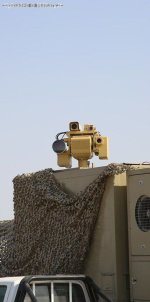
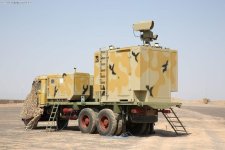
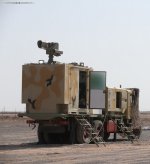
More proof that Iran’s S-300 targeting radars were damaged in Israeli counter attacks during TP-1/2

@Hack-Hook @Emirzad @Persian Gulf
 
Not really surprising, anything from Russia will come after they hand over the blueprints and source codes to "Israel" first. Russia is one of the most zionist infested countries on earth. The money would have been better spent on Bavar.
 
To view this content we will need your consent to set third party cookies.
For more detailed information, see our cookies page.


To view this content we will need your consent to set third party cookies.
For more detailed information, see our cookies page.


To view this content we will need your consent to set third party cookies.
For more detailed information, see our cookies page.


To view this content we will need your consent to set third party cookies.
For more detailed information, see our cookies page.


More proof that Iran’s S-300 targeting radars were damaged in Israeli counter attacks during TP-1/2

@Hack-Hook @Emirzad @Persian Gulf

we know at least 2/4 FCRs were damaged

the real question is if it was just 2 or all 4
 
To view this content we will need your consent to set third party cookies.
For more detailed information, see our cookies page.


author has since found more systems and needs to update the map
 
we know at least 2/4 FCRs were damaged

the real question is if it was just 2 or all 4
But that's not major even fatal blow to Iranian air defense, as some msm interpreted??? Generally the capacity of AD is on the same level as it was before attacking, with relatively low consequences??? Iranian own air defense sector provides solid production, nothing short of usa patriot or russian S systems...
 
But that's not major even fatal blow to Iranian air defense, as some msm interpreted??? Generally the capacity of AD is on the same level as it was before attacking, with relatively low consequences??? Iranian own air defense sector provides solid production, nothing short of usa patriot or russian S systems...
LRSAM like s-300pmu2 is not easily replaced. only Bavar-373 really fits that role and only battery of Bavar-373 is operational (at most)
 
LRSAM like s-300pmu2 is not easily replaced. only Bavar-373 really fits that role and only battery of Bavar-373 is operational (at most)
actually i have one question
Did we actually receive any missile with our 300 with longer range than what our system like 3rd of khordad and 15th of khordad have?
did we recieved any missile with range longer than 120-150km, don forget those 30n5 at most have a range of 200km
 
Last edited:

Users who are viewing this thread

Pakistan Defence Latest

Country Watch Latest

Latest Posts

Back
Top