Iranian Air Defence Systems | News and Discussions

It’s standard protocol to move heavy military air defense equipment by transporter for safety and effiency.

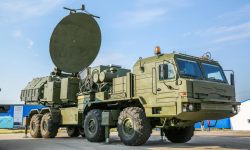
Doubt wheeled Iranian air defense systems like 3vome Khordard are made to drive long distances at any meaningful speed (ie > 45 mph) let alone highway speeds.
AFAIK Sevome Khordad was based in a special truck designed for firefighting in airports. So I think you´re right and not designed for running hundreds of kilometers. Anyway a highway needs high speed and the only way it is having a heavy truck to reach 100 km/h required to deployments.
 
Why would Iran want to deploy mobile S-300s to known fixed locations instead of deploying them in the countryside and keep moving their locations? If nothing else, it would make sabotage via small drones harder to achieve.

Why would Iran move their S-300s and leave equally (or more) valuable Bavar in fixed positions?

You don’t move the systems destined to protect your capital to the “country side”. And you don’t do it in peace time. Just like Israel didn’t move its THAAD or its patriots or iron domes around every 5 mins during the war.

All of Iran’s S-300’s are likely actively tracked via space based ISR using the unique radiation signatures they give off when they are operating. Again the missile launchers are NOT the goal, the FCR and other guidance systems are the goal. Kill those you disable the systems.
 
Why would Iran move their S-300s and leave equally (or more) valuable Bavar in fixed positions?

You don’t move the systems destined to protect your capital to the “country side”. And you don’t do it in peace time. Just like Israel didn’t move its THAAD or its patriots or iron domes around every 5 mins during the war.

All of Iran’s S-300’s are likely actively tracked via space based ISR using the unique radiation signatures they give off when they are operating. Again the missile launchers are NOT the goal, the FCR and other guidance systems are the goal. Kill those you disable the systems.
Why make the S-300 or Bavar-373 systems mobile with short set up and pack up times if they were meant to be deployed in a static position like the S-200?
 
Why make the S-300 or Bavar-373 systems mobile with short set up and pack up times if they were meant to be deployed in a static position like the S-200?
Because it could be attacked with a ballistic missile.
 
All of Iran’s S-300’s are likely actively tracked via space based ISR using the unique radiation signatures they give off when they are operating. Again the missile launchers are NOT the goal, the FCR and other guidance systems are the goal. Kill those you disable the systems.
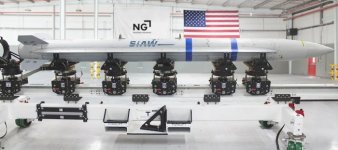
Yes. I agree. The new versions of the HARM are really scaring, long range, nearly invisible to radar and nearly hypersonic speeds. It is nearly unstoppable when launched.

There are just two ways to fight against it. Kinetically with long range interceptors (here comes Su35 which are more than necessary) and using deception measures.

I would suggest 3 FCR working together over a truck/track vehicles, distributed in triangle within a mile range each side of the triangle. Turn on and engage the targets during some minutes, then the other FCR would turn on his radar, the previous one would turn it off and change position to a shelter position (just 100 meters away), the second FCR tracking targets would turn off just after third FCR would turn his radar on, and the second FCR would hide some meters away, and continue the sequence. That would require at least 6 HARMs to be launched just to hit one FCR, and because of the size of the missile at least two heavy fighters to carry them (F35 can just carry two internally).
 

Attachments

  • agm-88j.jpg
    agm-88j.jpg
    48 KB · Views: 11
A strong enough search radar blip that datalinked tracking assets now know where to beam. Even stealth airplanes give larger than their frontal RCS when they move in air and angles change so blips happen. Considering the Iranian IADS network of OTHs+other long-range search assets, this is not something out of the ordinary.
I suggest you reconsider that belief. While technically speaking, that is true, in the real world, it not always the case.

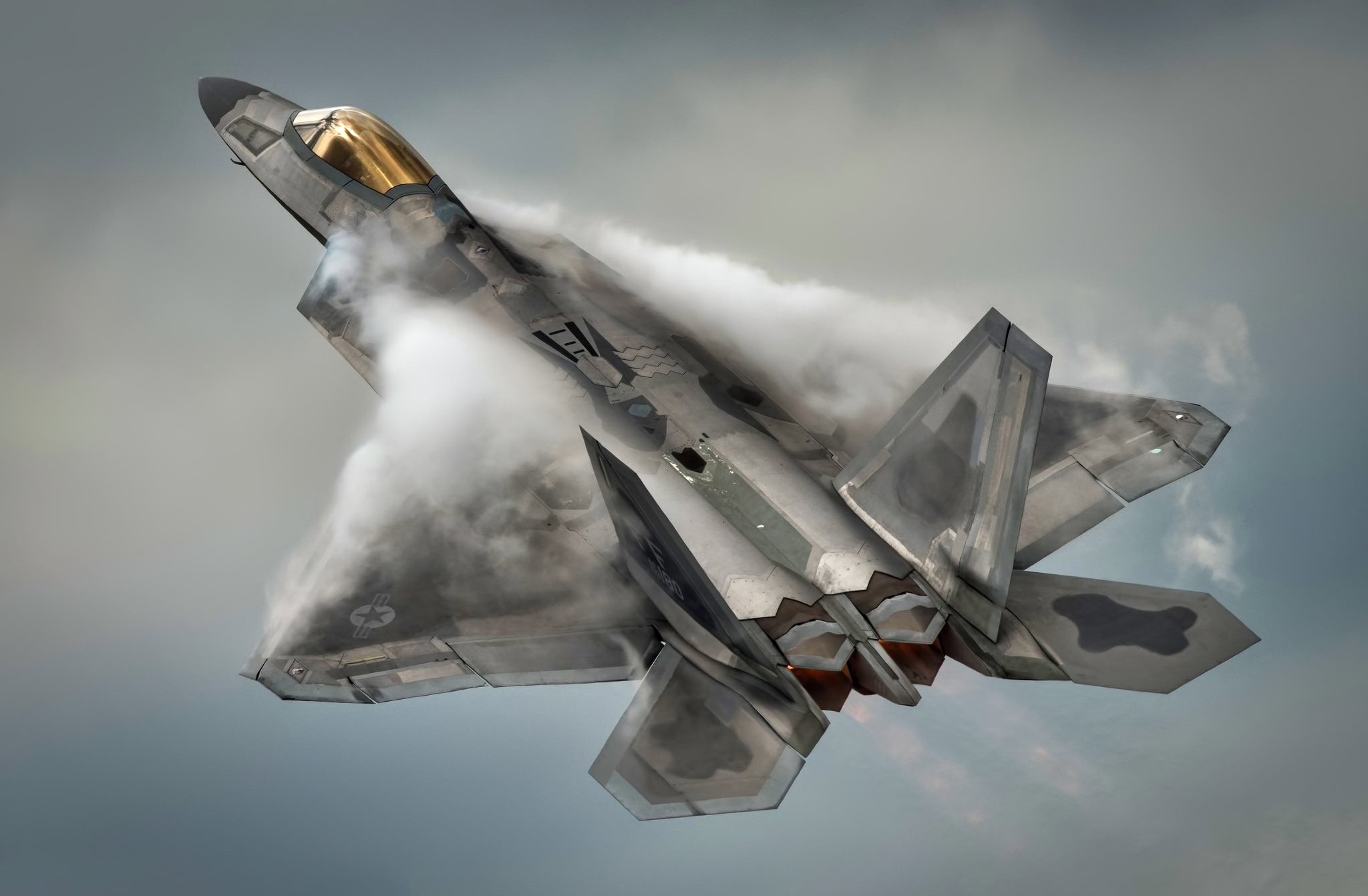
In 2013, an Iranian fighter pilot was closing with an American drone in international airspace when he was shocked to find a stealthy American F-22 Raptor flying right alongside him.​
Let us assume that story is true, for now.

Ground Control Intercept (GCI).


GCI is nothing new. Essentially, a powerful ground based radar watches the sky, then vectors interceptors towards any unidentified flyers. Going back to the Battle of Britain when British ground based radars, primitive as they were, directed RAF interceptors towards German bombers.

An AWACS is the companion concept of GCI except the AWACS is airborne, but the idea is still the same, a central monitor/controller.

In the event where the US F-22s met Iranian F-4s, Iranian GCI detected the US drone and called in the F-4 interceptors. The US drone was in international airspace. Whether Iranian F-4s were also in international airspace is irrelevant, suffice that they flew alongside the US drone.

Then when the F-22s came, Iranian GCI radars had 5 bodies in its radar beam but displayed only 3. If the American pilots were telling the truth, that they were close enough to the Iranian F-4s to check out their external armaments, there were 5 bodies in the Iranian GCI radar.

But the Iranian GCI radar displayed only 3 bodies: the American drone and the two Iranian F-4s.

That means the GCI radar was looking at all 5 bodies in their side aspect angle, larger than front and rear. Only top/bottom aspects are largest. And yet, the Iranian F-4 pilots were NOT alerted to the American presence. We can also be confident that the F-22's radar warning receiver were informing the F-22 pilots of Iranian radar scanning, but they approached the Iranian F-4s nevertheless.

There is a radar phenomenon call 'resolution cell'...

Fbq9n3D.jpg


Basically, if two or more bodies are in close enough proximity to each other, they WILL, not 'may' or 'could', appear as one. This phenomenon depends on the technology of seeking radar.

A resolution cell is defined as the smallest unit in radar imaging within which two targets cannot be distinguished unless they have different Doppler shifts. It is determined by the pulse duration, aperture angle, and beam width, affecting the radar station's interference immunity.​
This is why 'stealth' is such a threat. Just because there could be an opportunistic 'blip', as how you put it, that does not mean you can display. That cannot be a single 'blip' but a series of 'blips' of similar amplitude (first) and signal characteristics (second).

The F-22s' side aspect angle 'blips' were so small in amplitude that they essentially electromagnetically blended in with the F-4s' signals. The process is called 'destructive interference'.

Again, assuming this story is true. But then again, we do not care if no one believes US. Confirmation can be from only one source: a real fight.

It becomes easier if library data is available characteristic to airframes. Iranian IADS has adapted to this in recent times.
Good luck with that.
 
The S400/ S300 has a range of I think 400KM in a perfect situation, a stealth plane that knows where the system is will remain unseen.
 
I suggest you reconsider that belief. While technically speaking, that is true, in the real world, it not always the case.

In 2013, an Iranian fighter pilot was closing with an American drone in international airspace when he was shocked to find a stealthy American F-22 Raptor flying right alongside him.​
Let us assume that story is true, for now.

Ground Control Intercept (GCI).


GCI is nothing new. Essentially, a powerful ground based radar watches the sky, then vectors interceptors towards any unidentified flyers. Going back to the Battle of Britain when British ground based radars, primitive as they were, directed RAF interceptors towards German bombers.

An AWACS is the companion concept of GCI except the AWACS is airborne, but the idea is still the same, a central monitor/controller.

In the event where the US F-22s met Iranian F-4s, Iranian GCI detected the US drone and called in the F-4 interceptors. The US drone was in international airspace. Whether Iranian F-4s were also in international airspace is irrelevant, suffice that they flew alongside the US drone.

Then when the F-22s came, Iranian GCI radars had 5 bodies in its radar beam but displayed only 3. If the American pilots were telling the truth, that they were close enough to the Iranian F-4s to check out their external armaments, there were 5 bodies in the Iranian GCI radar.

But the Iranian GCI radar displayed only 3 bodies: the American drone and the two Iranian F-4s.

That means the GCI radar was looking at all 5 bodies in their side aspect angle, larger than front and rear. Only top/bottom aspects are largest. And yet, the Iranian F-4 pilots were NOT alerted to the American presence. We can also be confident that the F-22's radar warning receiver were informing the F-22 pilots of Iranian radar scanning, but they approached the Iranian F-4s nevertheless.

There is a radar phenomenon call 'resolution cell'...

Fbq9n3D.jpg


Basically, if two or more bodies are in close enough proximity to each other, they WILL, not 'may' or 'could', appear as one. This phenomenon depends on the technology of seeking radar.

A resolution cell is defined as the smallest unit in radar imaging within which two targets cannot be distinguished unless they have different Doppler shifts. It is determined by the pulse duration, aperture angle, and beam width, affecting the radar station's interference immunity.​
This is why 'stealth' is such a threat. Just because there could be an opportunistic 'blip', as how you put it, that does not mean you can display. That cannot be a single 'blip' but a series of 'blips' of similar amplitude (first) and signal characteristics (second).

The F-22s' side aspect angle 'blips' were so small in amplitude that they essentially electromagnetically blended in with the F-4s' signals. The process is called 'destructive interference'.

Again, assuming this story is true. But then again, we do not care if no one believes US. Confirmation can be from only one source: a real fight.


Good luck with that.
While I don't agree, I really appreciate your post and time consumed in it.

Using the full stealth capability of the F22 just to freighten a pair of F4s pilots was probably a mistake. If there was any "blip" or false/spurious radar bounce over the receptor and that signal has been recorded you can be sure IRGC/IRIAF has tracked the F22 waste signal, and that would help Iran to develop better frequencies and power signals, refresh rates and recording systems to amplify that waste signal.

Even if it is not enough to guide a radar missile, IRGC/IRIAF can develop radio command mid guidance missiles (similar to those of TOR but long range) and equip them with IR/TV seekers for final approach, or even further developments connecting short range batteries of IR/TV anti air missiles like Kowsar 222 just to launch some rounds of this IR missiles in the approximate area the F22 is operating.

That is the reason why even in western military exercises F22/35 always are deployed with luneburg lenses, jus to avoid the real electromagnetic print of the 5gen aircrafts involved. So if USAF just to brag used the F22 in full stealth spectrum probably was a mistake. Also probably was a mistake from part of Israel to use their F35 close the iranian borders.
 

Users who are viewing this thread

Pakistan Defence Latest

Country Watch Latest

Back
Top