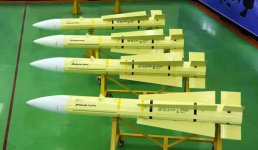
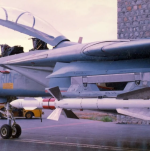
Its also laughable, thay egypt, whos been relegated to producing old soviet weapons is now able to "further develop the PL-15 to match the AIM-260", i dont think there is a single example of egypt ever even having any domestic solid fuelled weapons, let alone "modernising" the PL-15.
As you said, dropping SOM is meaningless, these missiles are programmed from the ground, all UBAS does is effectively give the operator some missile parameters on a tablet and also allows them to control an ejector rail. Theres no comms with the plane, if anything, the F-16's probably recognise them as a MK82 or something.
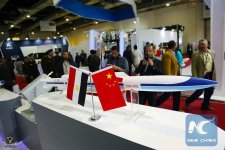
It's clear that your mind is limited, and so is your thinking. Simply put, Egypt is obligated to submit a report to you, or, like a young child, about the type of Egypt or the extent of its development. Egypt does not possess or manufacture old Soviet weapons. Why do you ignore the fact that Egyptians also manufactured the most modern weapons before people like you were born or your country even dreamed? Egypt manufactured spare parts and components for the MIRAGE-2000, and since the 1980s, it has been producing French MAGIC-2 missiles for the Mirage fleet and its aircraft. It was assembling 5,000 AIM-9M missiles in the 1980s to arm 475 MIG-21 fighters and its fighter fleet. The same applies to the Fajet aircraft, which was produced in Egypt before your country even had dreams of manufacturing aircraft. Even when Egypt produced a modest-performance aircraft like the K-8E, it carried out successive series of upgrades and developments, whether for the first or second production batch or even the mid-life upgrade. The F-16 fighters were received from the United States and then returned to the aircraft factory in Helwan for local upgrades. Even arms purchases from France, Italy, and Germany include Egyptian demands for the transfer of specific technologies. Egypt has used many front countries to transfer technologies to Egypt, such as Turkey, Greece, and the United Arab Emirates.
The fact that Egypt does not advertise its weapons does not mean that it does not develop or produce. It has been interested in developing its capabilities locally for the benefit of its army. Currently, its influence is expanding, so it has begun marketing some of its products.
Who told you that we do not produce modern weapons, including missiles in all fields, with China? The CM-302 missile is for the Egyptian coastal defense. DW announced a few days ago that Egypt is manufacturing parts of the IRIST-SLM system for Egypt and even for German exports to European countries. Egypt has become part of the supply chain for parts of foreign weapons, such as the Rafale fighter jet and German systems.
You don't understand anything. Egypt requested the production of Chinese PL-15 missiles, and this was announced on the Tatical Report website, for a very simple reason: Egypt wants to replace a large number of outdated missiles, such as 1,300 AIM-7 missiles and 200 Matra Super missiles. 530
In addition to the demands for massive numbers to counter the increasing use of drones, we are not naive enough to launch a $1 million AMRAAM missile to shoot down a drone whose price is less than the missile's.
Egypt is simply looking for economic feasibility and the quantity of weapons.
Countries agree to transfer technology as long as the demand is high. Even local production lines cannot meet all markets simultaneously. For example, Egypt's demand for the Wing Loong family of aircraft is large, while the production line of a single Chinese factory produces 200 aircraft annually. This makes China prefer that countries produce their own equipment under license to meet the global market needs.
The Russians themselves, at the beginning of the era of cooperation, in late 2013, announced that they were offering Egypt the production of new weapons and joint development. Egypt did not provide funding, and when Egyptian purchases increased, two industrial zones were established, including Russian arms factories in Egypt for export.
The Egyptian military industry is not the government-owned factories that the media focuses on. We have various companies, such as Amiston, which has 13 factories inside and outside Egypt, and companies that produce. Guided munitions. Two short-range, low-weight, long-range missiles were announced, such as an 80-kilometer, 60-kilogram missile and a 40-kilogram, 30-kilogram missile. These are tactical missiles, indicating that Egypt has only the latest in technology. Even Serbia announced that Egypt has cooperation programs in guided missiles, and even when Egypt produces weapons under license, its capabilities are multiplied several times. For example, Serbian suicide drones, whose range has been extended, have become even more so. Even light weapons, such as the Egyptian-made NOVA missile, have a range several times that of the Serbian one. Being ignorant and unaware is your problem.
It's funny that you're mocking, even though your country has nothing comparable or competitive.
When we gave the example of Turkey only as a point of proof that what we were saying is being implemented and implemented by other countries, you moved from that point to another. Your psychological problem, or your mind, doesn't understand, is that Egypt cares more about ballistic missiles than anti-tank missiles. Even its products are different from Korean ones. And the Chinese simply because we know from the beginning the capabilities of ballistic missiles, so Egypt is interested in higher performance and effectiveness and integrating technologies from different countries, and we do not shout at every weapon shot produced in Egypt. If the backward countries have begun to produce guided missiles, then does Egypt not develop and produce, and it announced since 2021 that it has developed a package of missiles and directed ammunition to meet the needs of the Egyptian Air Force, since Egypt is a country that cooperates with countries such as Pakistan, Iran and Turkey, not because it is the best, but only to reduce the cost of huge armies. It wants a low cost for armament, and cooperation with other countries to reduce the cost is vital because your requirements are enormous. Should we teach every little child who mocks, as long as he is ignorant or claims to be knowledgeable or classifies a country as nothing and has no value or opinion, which is useless because it is the work of children who only plot?

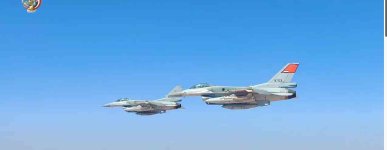
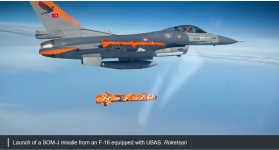



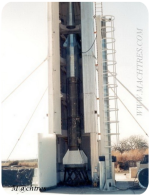
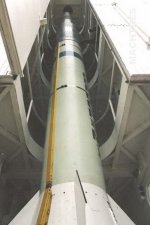
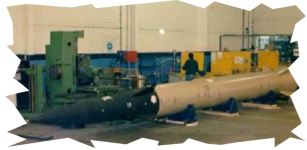


 , behind that tablet ther is serious 20 years R&D behind it. And that is only max for the the block50/52+ only. Above is different mission computer what will need another kind software. He is going to fire PL-15 from F16? Good luck....