How did the Israeli "Lavi" project contribute to the birth of the Chinese fighter J-10? The full story
View attachment 115492
J-10 fighters, with their advanced generations of J-10A, to the newer version J-10C, is the main pillar of the Air Force for the Chinese People's Liberation Army and Emad its striking power. But the story of the development of this fighter plane carries an unexpected chapter, which is closely related to an Israeli, ambulance project at the end of the eighties, is the "Lafi" fighter project.
Informed sources indicate that Israel played a pivotal role, albeit indirect and unannounced, in the emergence of the Chinese J-10 fighter. The irony is that Israel, which is believed to have contributed to the birth of J-10 technicians, was one of the most prominent countries that expressed its deep concern when Egypt declared its intention to acquire these fighters.
"Lavi" project: promising ambition and sudden end
In the early 1980s, Israel began an ambitious project to develop an advanced local fighter under the name "Lavi", through the Israeli Air Industries Company (IAI), with widely and financially American American support.
Expert Omair Islam, CEO of Charlie Media, describes the "Lavi" project as "aiming to manufacture an advanced multi -task fighter locally."
The goal of the project was clear: the development of a light, highly maneuvering fighter, equipped with the latest fly and advanced digital control systems (Fly -By-Wire), to meet the special operational needs of the Israeli Air Force.
On December 31, 1986, he witnessed the first successful flight of the experimental version of "Lavi", and the plane showed an impressive performance during the initial flight tests. However, the project's path collided with major obstacles represented in very high costs and increasing political pressure from Washington, which was afraid of "Lafi" competition for its planes in the global market and the impact of the project on US military aid to Israel. This reality prompted the Israeli government to make a difficult decision to cancel the project in 1987, after producing only 3 preliminary models.
Despite its abolition, the "Lafi" project did not disappear without leaving a trace; He left an important technical heritage that contributed to the development of Israeli defense industries, and is seen as a model for a promising project that was stopped by economic and political considerations despite its technological superiority.
View attachment 115493
From "Lavi" to J-10: technical similarities cannot be ignored
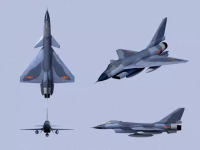
Many military analysts agree on the presence of remarkable design and technical similarities between the "Lavi" fighter and the Chinese plane J-10, especially in the late versions such as J-10C. These similarities raise questions about the existence of a link between the two projects.
Islam confirms to the Arab Defense website that "the allegations that the design of the Chinese fighter J-10 is somehow inspired by the Israeli" Lafi "project, which is credible, despite the absence of the categorical official confirmation."
He added, explaining the technical basis for this similarity: “Both models participate in a similar structural planning, and the design of the Delta suite with the Canards, in addition to the use of advanced digital flight control systems, which indicates a clear technical similarity between the two fighters that cannot be overlooked.”
Secret cooperation bridges: How did the Israeli technology reach China?
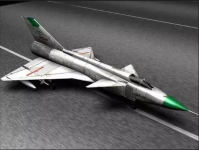
At a time when China was striving to modernize its air forces, which are largely dependent on the designs of the old Soviet era (such as the J-7 MiG-21 fighter), the urgent need to gain the ability to develop a modern fighter with the characteristics of the fourth generation has emerged.
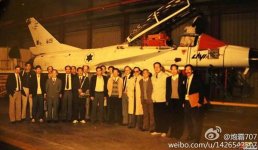
With the improvement of China-Israeli relations in the early 1990s, especially before the official announcement of the establishment of full diplomatic relations between the two countries in 1992, it is believed that channels of technological and military cooperation were opened, often characterized by severe secrecy in its beginnings.
Through these unpopular channels, it is believed that China has managed to reach advanced designs and technologies, perhaps that included inverse data and engineering related to the "Lafi" project, taking advantage of the great experience that Israel gained in designing a modern fighter with advanced characteristics to develop its fourth-generation J-10 fighter program.
View attachment 115494
The legacy of "Lavi" and Israel's anxiety from the Egyptian J-10
Despite its early end, the technical heritage of the "Lavi" project did not go in vain. The expertise and advanced technologies developed by Israel in this context were not limited to its subsequent local defense programs, but its impact extended abroad on specific technology deals, and it is believed that the Chinese J-10 program was one of the most prominent beneficiaries of this indirect legacy.
This explains, at least, at least the Israeli anxiety about the deal that Egypt obtained Chinese J-10C fighters. Tel Aviv, it seems that some of the technological elements integrated into these modern aircraft are due to their roots to authentic Israeli innovations and experiences that originated from the womb of the "Lafi" project.
In short, the story of the potential link between the canceled Israeli fighter "Lavi" and the successful Chinese plane J-10, which is serving in major regional air forces such as the Egyptian air forces, presents a unique and complex geopolitical and technological paradox in the world of military aviation. It is a story about how ambitious defensive projects, even if they stop for various reasons, leave a cross -border imprint and continents, and affect the balance of power in unexpected and undeclared ways.









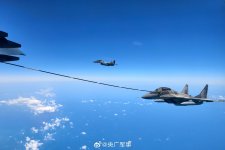
 Chinese J-10 and Y-20 fighters in a joint military formation with Egyptian Mig-29 fighters flying over the Pyramids of Giza.