Egyptian Armed Forces

View attachment 114935

Egypt didn't pay a single dollar for the 240 F-16s it acquired, leveraging its relationship with the United States to obtain what it could obtain for free.

In general, Egypt only previously had to increase its number of MIRAGE-2000 fighters to 60.

Currently, as a result of Egypt's renewed influence in Africa, the collapse of neighboring states, and the spread of Western-backed terrorism, Egypt has decided to expand its acquisition of medium-range Rafale and MIG-29 fighters and heavy SU-35 aircraft, regardless of what is said about Egypt selling them to Algeria and Iran. These are simply not regional matters. Similarly, Egypt's request for initial batches of J-20 fighters is also inconsistent.

Egypt has spent many years researching the production and development of a domestic missile. Recently, China agreed, and India also offered its Astra missile, which will be deployed on all Egyptian fighters, even without the approval of countries like the United States.

Therefore, Egypt's desire to manufacture the PL-15 missile and, indeed, to continuously develop it is driven by several reasons. The low cost of its acquisition, coupled with its high performance, gives Egypt flexibility in covering a portion of its operational needs. It has made huge demands for air-to-air missiles.
Egypt is modernizing the PL-15 missile to match the future American AIM-260 missile, which simply means the effectiveness of Egyptian fighters for the next twenty years.
Egypt has not stopped acquiring more R-77 missiles, even the latest version, the R-77M. The same applies to the expensive French missiles, which are what limits Egypt's ability to acquire more of them. Not French fuel, USA. Israel, for example, will not compensate France for a dollar in exchange for canceling any deals with Egypt.
We used to say that fighters have solutions, such as integrating other munitions. Recently, I have noticed the emergence of what I was saying:
View attachment 114934

integrating munitions without American approval into F-16 fighters.
Turkish F-16s use tablets to control locally made weapons via the UBAS system. Turkey is using tablet-based systems inside its F-16 fighter jets to operate domestically developed air-to-ground weapons. This represents a new policy for Egypt. Egyptian Mirage fighters have always used American munitions. Egypt obtained South African Tariq bombs from the UAE and integrated them into its F-16, MIRAGE-2000, and MIG-29 fighters. Simply put, the terms of the Egyptian contract allow for the freedom to integrate munitions. This also applies to the Egyptian Rafale. Egypt does not buy from suppliers who refuse. Egypt has been producing various munitions and locally developed bombs with a range of 80 kilometers for years as the main bombs for Egyptian fighters. Some are simply spreading false information about the weak capabilities of Egyptian fighters. The Egyptian side also wants to consolidate these matters only so that it can implement its full armament plans. This is not a cockfight on the internet with some amateurs and children, each of whom is trying to make his country stronger through a series of illusions and lies. The West wants to restrict Egypt's access to weapons because He sees it as more powerful than it should be, and that Egypt is exploiting its capabilities to implement its policies within neighboring countries, thus thwarting Western interests and colonial plans in Libya, Sudan, and Somalia. Egypt also exploits its military capabilities to support countries with alliances in Africa.
View attachment 114936
The Turks merely confirm what we have been saying for some time, and some have been denying it for the sole purpose of portraying Egypt as less powerful and under American control, while the facts are something else entirely.

Egypt is forcing all arms suppliers to offer their best. We have a simple example: when the South Koreans thought they would impose their conditions for the supply of FA-50 aircraft, they were completely ignored. As a result of the competition, they returned to Egypt with completely different and much lower-priced offers.
Even Macron, when Egypt canceled a deal to purchase 12 Rafale fighter jets, returned to Egypt again to implement a deal for 30 new Rafale aircraft.
What's happening behind the scenes now: Germany and France want to exploit Egypt's military-industrial base. Egypt has a huge tank factory that can produce up to 500 main battle tanks annually, or a mix of various armored vehicles in larger numbers, for example. Therefore, they want Egypt to provide them with the manufacturing of components and some products through Egyptian production lines.
In other words, some are simply building an idea based on what is already there. Advertiser

better pay so you can use them to help Arab brothers in Gaza rather than free and only use for Display purposes
 
View attachment 115468

do you know why this didnt work?
They clearly needed it, which is why they tried to do it...

if you think egypt, with some magic adapter will allow f-16s to fire pl-15's, i have a bridge to sell u
It depends what era and time you are talking about!?
 
i ask you again- do you know why this didnt work?
Russia had the adapters first and Iran wasn't friend of Russia at that time..China made an adapter later too.. you can find a post on it in this thread way back..

Now do you understand why it did not work for Iran?
 
@Sami_1

I admire the Egyptian armed forces because of their strategic mastermind in the Yom Kippur War.

They are still a powerfull force who cant be ignored.

But i also love Hasan Al-Banna. Nothing what that man wrote or said was untrue.

He was a anti-colonialist, anti-imperialist, anti-communist and anti-nationalist. These are 4 decadent Western ideologies and have nothing to do with the Islam.

His islamic fiscal theory and his theory about a single-nation-community and the islamisation of society and economy were all outstanding.

You claim that the Holy Quran mentions “brother” only two times (“Brothers of Lot” and “Brothers of the Devil”) and therefore it is a satanic term. If we go on that road, then you forgot to mention that Satan was the first communist, the first nationalist, the first colonialist and the first imperialist.

The Holy Quran is the first book that warns against Arab nationalism and condemns it.

Hassan Al-Banna was a Egyptian patriot but not a Arab nationalist. He rejected that because he was a muslim.

Only 16-years old hardcore Arab nationalists hate Hassan Al-Banna.

Arab nationalism, Turkish nationalism etc are un-islamic ideologies coming from the West.
 
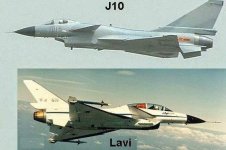
How did the Israeli "Lavi" project contribute to the birth of the Chinese fighter J-10? The full story
1745954798957.jpeg

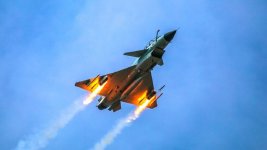
J-10 fighters, with their advanced generations of J-10A, to the newer version J-10C, is the main pillar of the Air Force for the Chinese People's Liberation Army and Emad its striking power. But the story of the development of this fighter plane carries an unexpected chapter, which is closely related to an Israeli, ambulance project at the end of the eighties, is the "Lafi" fighter project.

Informed sources indicate that Israel played a pivotal role, albeit indirect and unannounced, in the emergence of the Chinese J-10 fighter. The irony is that Israel, which is believed to have contributed to the birth of J-10 technicians, was one of the most prominent countries that expressed its deep concern when Egypt declared its intention to acquire these fighters.

"Lavi" project: promising ambition and sudden end

In the early 1980s, Israel began an ambitious project to develop an advanced local fighter under the name "Lavi", through the Israeli Air Industries Company (IAI), with widely and financially American American support.

Expert Omair Islam, CEO of Charlie Media, describes the "Lavi" project as "aiming to manufacture an advanced multi -task fighter locally."

The goal of the project was clear: the development of a light, highly maneuvering fighter, equipped with the latest fly and advanced digital control systems (Fly -By-Wire), to meet the special operational needs of the Israeli Air Force.

On December 31, 1986, he witnessed the first successful flight of the experimental version of "Lavi", and the plane showed an impressive performance during the initial flight tests. However, the project's path collided with major obstacles represented in very high costs and increasing political pressure from Washington, which was afraid of "Lafi" competition for its planes in the global market and the impact of the project on US military aid to Israel. This reality prompted the Israeli government to make a difficult decision to cancel the project in 1987, after producing only 3 preliminary models.

Despite its abolition, the "Lafi" project did not disappear without leaving a trace; He left an important technical heritage that contributed to the development of Israeli defense industries, and is seen as a model for a promising project that was stopped by economic and political considerations despite its technological superiority.

1745954863292.jpeg

From "Lavi" to J-10: technical similarities cannot be ignored

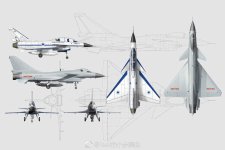
Many military analysts agree on the presence of remarkable design and technical similarities between the "Lavi" fighter and the Chinese plane J-10, especially in the late versions such as J-10C. These similarities raise questions about the existence of a link between the two projects.

Islam confirms to the Arab Defense website that "the allegations that the design of the Chinese fighter J-10 is somehow inspired by the Israeli" Lafi "project, which is credible, despite the absence of the categorical official confirmation."

He added, explaining the technical basis for this similarity: “Both models participate in a similar structural planning, and the design of the Delta suite with the Canards, in addition to the use of advanced digital flight control systems, which indicates a clear technical similarity between the two fighters that cannot be overlooked.”

Secret cooperation bridges: How did the Israeli technology reach China?

At a time when China was striving to modernize its air forces, which are largely dependent on the designs of the old Soviet era (such as the J-7 MiG-21 fighter), the urgent need to gain the ability to develop a modern fighter with the characteristics of the fourth generation has emerged.

With the improvement of China-Israeli relations in the early 1990s, especially before the official announcement of the establishment of full diplomatic relations between the two countries in 1992, it is believed that channels of technological and military cooperation were opened, often characterized by severe secrecy in its beginnings.

Through these unpopular channels, it is believed that China has managed to reach advanced designs and technologies, perhaps that included inverse data and engineering related to the "Lafi" project, taking advantage of the great experience that Israel gained in designing a modern fighter with advanced characteristics to develop its fourth-generation J-10 fighter program.

1745954922968.jpeg

The legacy of "Lavi" and Israel's anxiety from the Egyptian J-10

Despite its early end, the technical heritage of the "Lavi" project did not go in vain. The expertise and advanced technologies developed by Israel in this context were not limited to its subsequent local defense programs, but its impact extended abroad on specific technology deals, and it is believed that the Chinese J-10 program was one of the most prominent beneficiaries of this indirect legacy.

This explains, at least, at least the Israeli anxiety about the deal that Egypt obtained Chinese J-10C fighters. Tel Aviv, it seems that some of the technological elements integrated into these modern aircraft are due to their roots to authentic Israeli innovations and experiences that originated from the womb of the "Lafi" project.

In short, the story of the potential link between the canceled Israeli fighter "Lavi" and the successful Chinese plane J-10, which is serving in major regional air forces such as the Egyptian air forces, presents a unique and complex geopolitical and technological paradox in the world of military aviation. It is a story about how ambitious defensive projects, even if they stop for various reasons, leave a cross -border imprint and continents, and affect the balance of power in unexpected and undeclared ways.
 
Russia had the adapters first and Iran wasn't friend of Russia at that time..China made an adapter later too.. you can find a post on it in this thread way back..

Now do you understand why it did not work for Iran?
Hint, it has nothing to do with adapters.
 
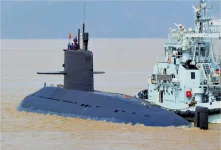
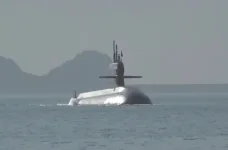
Egypt is about to redraw the balance of power in the Mediterranean through the Chinese "Yuan" submarine deal

1745956515614.webp

If Egypt has moved forward in the purchase of "Type 039A" submarines (Yuan category), this will represent a major strategy in its approach to the acquisition of defense equipment, which at the same time enhances Chinese influence in the Middle East and North Africa, and indicates a clear Egyptian trend towards diversifying the sources of armament away from the traditional western suppliers.

Arab Defense website, April 29, 2025: Reports indicate that Egypt has become in the final stages of the acquisition of the Chinese "Type 039a" submarines, a platform that has a great appreciation among military analysts due to its high ghost capabilities and its underwater operational extent.

Type 039A submarines are widely known as their very low audio signature, and are equipped with air -independent air -wheel drive systems (AIP), allowing them to stay in the depths for long periods without the need to appear to the surface, which is a decisive ability to strategic deterrence and implement sudden attacks in crowded marine environments.

In this context, one of the local military analysts said: “These submarines (China -made Type 039A) Egypt will enable Egypt to greatly enhance their capabilities under the surface to face the increasing challenges of marine security in the region, in light of the escalation of geopolitical uncertainty,” noting the increasing importance of surface control in the midst of global maritime competition.

If the deal is completed, the Type 039A submarines will be replaced by the ancient fleet of Egypt, consisting of four submarines, "Type 033" (Romeo category), which are submarines derived from the designs of the Soviet era but were manufactured and updated by China during the Cold War.

According to defensive sources in the Middle East, the ongoing negotiations on the "Type 039A" deal are not only limited to submarine delivery, but also include complex discussions on technology transfer and the possibility of integrating locally made systems in Egypt within these Chinese platforms, which may contribute to enhancing the self -defensive industrial capabilities of Cairo.

Egypt had previously obtained its "Romeo" submarines in the early eighties of the last century, by purchasing eight units of the "Type 033" manufactured in China - a local modified version of the Soviets design for the 633 project - with the aim of strengthening its capabilities of marine deterrence after the deterioration of its relations with the Soviet Union at the time.

During the period from 1982 to 1984, China handed these submarines to Egypt after it underwent a comprehensive update program that included the development of sonar systems and control systems in fire and electronics on board, enabling it to meet the operational requirements of the Egyptian Navy in the post -Cold War environment.

The Romeo submarine deal at the time represented a pivotal step in Egypt's aspirations to develop the capabilities of war under the surface, which later developed through the acquisition of more advanced German submarines, "Type 209/1400mod", which reflects the growing interest of Cairo in the strategic marine depth.

In the event that the Type 039a submarine deal will be implemented, it will constitute a major strategic shift in the Egyptian armament path, which strengthens Chinese influence regionally and confirms Cairo's gradual departure from exclusive dependence on traditional Western suppliers.

Yuan submarines are distinguished by advanced air-to-air payment systems, Sonar packages of the new generation, as well as their ability to launch surface-to-surface cruise missiles from submersible sites, which promises to raise the capabilities of Egyptian marine strikes under the surface to a level that may match-if it does not outperform-many NATO navies (NATO) operating in the Mediterranean Basin.

Yuan Egypt's submarines will be deployed to carry out a wide range of high -level marine tasks, including ships, secret monitoring, long -range strikes, and unequal depth warfare, especially through vital marine corridors such as the Suez Canal and the Bab al -Mandab strait, and which are two axes of global energy flows.

The addition of Chinese submarines to the Egyptian fleet has changed the balance of marine forces in the Mediterranean, by introducing non -NATO technology to the stage of operations as long as the platforms designed in the West dominated, which may be held from joint operations with traditional allies.

This strategic move will carry a resounding geopolitical message to the traditional Egypt partners in the United States and Europe, that Cairo is ready to reformulate its defensive alliances in response to the accelerated international transformations and the increasing frustration of Western restrictions imposed on the export of weapons.

Type 039A submarines carry a variety of weapons, including a 533 mm heavy, Yu-6 and YU-4 ″, capable of destroying war ships and hostile submarines of more than 45 km with high accuracy.

It is also equipped with "YJ-82" vessels launched from underwater, and it has an operational range between 40 to 60 km, enabling Egyptian submarines to hit their targets from hidden sites without being at risk of counter-attack.

1745956663473.webp

Moreover, there is a reliable possibility to integrate the CJ-10K land attack with the Yuan category submarines, which may provide Egypt with strategic capabilities to carry out deep strikes from marine platforms under the surface. However, activating these missiles in practice on the basic copies of the "Type 039A" still needs official confirmation.

These submarines also have the ability to spread advanced marine mines through their pipes, which gives Egypt an effective way to deny opponents from reaching vital marine corridors, and promoting coastal proportions against any hostile incursions.

In operational aspect, the combination of hiding, the ability to diving for long periods underwater with AIP, and diverse armament allows the "Type 039A" submarines to carry out long -term patrols, collect intelligence information, and launched pre -emptive strikes against hostile assets far from the Egyptian coasts, while maintaining its almost non -existent imprint.

On the international level, Egypt's acquisition of Yuan submarines will enhance China's position as a prominent resource for submarine technology from the new generation, which is a direct challenge to Germany's domination of Germany through its submarines from the Type 209/212 categories, and undermines the South Korean ambitions based on the KSS-III program in the global weapon market.

Strategically, this step will expand from the geopolitical imprint of China within the Mediterranean - a vital crossroads as long as NATO's marine operations - which increases global competition for influence in vital marine corridors.

As for the region, the introduction of advanced submarines such as "Type 039A" to service will remarkably enhance the maritime status of Egypt, which establishes its position as the strongest naval force in the African continent, and enhances its leadership role within the League of Arab States, the African Union, and regional security initiatives.

From Washington's point of view, the possibility of Egypt's acquisition of the Chinese submarines of Yuan will explain as a direct challenge to American strategic influence in the Middle East, especially in light of the increasing expansion of Chinese military technology within the traditional security partners of the United States.

The United States is likely to respond to official diplomatic warnings, noting the potential risks that may affect the ability to join jointly with the allies, and may also be promoted to take punitive measures under the law to combat American opponents through sanctions (CAATSA), the same legislation that has already been used against countries that have entered into large weapons deals with Russia or China.

Washington may also reconsider the structure and rules of the annual military aid package provided to Egypt, which is valued at $ 1.3 billion, a traditional influence tool that the United States has used since the late 1970s to ensure its continued strategic relationship with Cairo.

As for Israel, and despite the stability of diplomatic relations with Egypt after the 1979 Camp David agreements, the entry of "Yuan" submarines capable of concealing the Egyptian service represents a new threatening dimension in the South Naval Environment of Israel.

The practical presence of AIP submarines in the eastern Mediterranean will cause great concern about Egypt's enhancement capabilities in the field of secret reconnaissance and the implementation of long -term strikes that may target sensitive Israeli infrastructure.

In the face of this development, it is expected that Israel will intensify its efforts in marine monitoring, by enhancing satellite use, conducting marine patrols with drones, and publishing underwater sensors to track the movements of Egyptian submarines and deal with any possible proactive threats.

Parallel, Israel is also expected to speed up the update of its submarine fleet, especially by introducing the advanced "Dolphin 2" submarines from Germany, which was designed to perform strategic deterrence tasks, including the launch of Cruz missiles for the ground attack.

Within the ranks of NATO, the introduction of Chinese submarines into the Egyptian fleet will constitute great challenges to joint marine operations in the Mediterranean and the Red Sea, especially with regard to operational coordination, data security, and joint communications.

Military planners in the alliance will show serious concerns about the possibility of leaking technology or sensitive operational data to Beijing through indirect channels, which may lead to imposing tight security protocols and reducing the level of maritime cooperation with Egypt.
 
Egypt is about to redraw the balance of power in the Mediterranean through the Chinese "Yuan" submarine deal

View attachment 115499

If Egypt has moved forward in the purchase of "Type 039A" submarines (Yuan category), this will represent a major strategy in its approach to the acquisition of defense equipment, which at the same time enhances Chinese influence in the Middle East and North Africa, and indicates a clear Egyptian trend towards diversifying the sources of armament away from the traditional western suppliers.

Arab Defense website, April 29, 2025: Reports indicate that Egypt has become in the final stages of the acquisition of the Chinese "Type 039a" submarines, a platform that has a great appreciation among military analysts due to its high ghost capabilities and its underwater operational extent.

Type 039A submarines are widely known as their very low audio signature, and are equipped with air -independent air -wheel drive systems (AIP), allowing them to stay in the depths for long periods without the need to appear to the surface, which is a decisive ability to strategic deterrence and implement sudden attacks in crowded marine environments.

In this context, one of the local military analysts said: “These submarines (China -made Type 039A) Egypt will enable Egypt to greatly enhance their capabilities under the surface to face the increasing challenges of marine security in the region, in light of the escalation of geopolitical uncertainty,” noting the increasing importance of surface control in the midst of global maritime competition.

If the deal is completed, the Type 039A submarines will be replaced by the ancient fleet of Egypt, consisting of four submarines, "Type 033" (Romeo category), which are submarines derived from the designs of the Soviet era but were manufactured and updated by China during the Cold War.

According to defensive sources in the Middle East, the ongoing negotiations on the "Type 039A" deal are not only limited to submarine delivery, but also include complex discussions on technology transfer and the possibility of integrating locally made systems in Egypt within these Chinese platforms, which may contribute to enhancing the self -defensive industrial capabilities of Cairo.

Egypt had previously obtained its "Romeo" submarines in the early eighties of the last century, by purchasing eight units of the "Type 033" manufactured in China - a local modified version of the Soviets design for the 633 project - with the aim of strengthening its capabilities of marine deterrence after the deterioration of its relations with the Soviet Union at the time.

During the period from 1982 to 1984, China handed these submarines to Egypt after it underwent a comprehensive update program that included the development of sonar systems and control systems in fire and electronics on board, enabling it to meet the operational requirements of the Egyptian Navy in the post -Cold War environment.

The Romeo submarine deal at the time represented a pivotal step in Egypt's aspirations to develop the capabilities of war under the surface, which later developed through the acquisition of more advanced German submarines, "Type 209/1400mod", which reflects the growing interest of Cairo in the strategic marine depth.

In the event that the Type 039a submarine deal will be implemented, it will constitute a major strategic shift in the Egyptian armament path, which strengthens Chinese influence regionally and confirms Cairo's gradual departure from exclusive dependence on traditional Western suppliers.

Yuan submarines are distinguished by advanced air-to-air payment systems, Sonar packages of the new generation, as well as their ability to launch surface-to-surface cruise missiles from submersible sites, which promises to raise the capabilities of Egyptian marine strikes under the surface to a level that may match-if it does not outperform-many NATO navies (NATO) operating in the Mediterranean Basin.

Yuan Egypt's submarines will be deployed to carry out a wide range of high -level marine tasks, including ships, secret monitoring, long -range strikes, and unequal depth warfare, especially through vital marine corridors such as the Suez Canal and the Bab al -Mandab strait, and which are two axes of global energy flows.

The addition of Chinese submarines to the Egyptian fleet has changed the balance of marine forces in the Mediterranean, by introducing non -NATO technology to the stage of operations as long as the platforms designed in the West dominated, which may be held from joint operations with traditional allies.

This strategic move will carry a resounding geopolitical message to the traditional Egypt partners in the United States and Europe, that Cairo is ready to reformulate its defensive alliances in response to the accelerated international transformations and the increasing frustration of Western restrictions imposed on the export of weapons.

Type 039A submarines carry a variety of weapons, including a 533 mm heavy, Yu-6 and YU-4 ″, capable of destroying war ships and hostile submarines of more than 45 km with high accuracy.

It is also equipped with "YJ-82" vessels launched from underwater, and it has an operational range between 40 to 60 km, enabling Egyptian submarines to hit their targets from hidden sites without being at risk of counter-attack.

View attachment 115501

Moreover, there is a reliable possibility to integrate the CJ-10K land attack with the Yuan category submarines, which may provide Egypt with strategic capabilities to carry out deep strikes from marine platforms under the surface. However, activating these missiles in practice on the basic copies of the "Type 039A" still needs official confirmation.

These submarines also have the ability to spread advanced marine mines through their pipes, which gives Egypt an effective way to deny opponents from reaching vital marine corridors, and promoting coastal proportions against any hostile incursions.

In operational aspect, the combination of hiding, the ability to diving for long periods underwater with AIP, and diverse armament allows the "Type 039A" submarines to carry out long -term patrols, collect intelligence information, and launched pre -emptive strikes against hostile assets far from the Egyptian coasts, while maintaining its almost non -existent imprint.

On the international level, Egypt's acquisition of Yuan submarines will enhance China's position as a prominent resource for submarine technology from the new generation, which is a direct challenge to Germany's domination of Germany through its submarines from the Type 209/212 categories, and undermines the South Korean ambitions based on the KSS-III program in the global weapon market.

Strategically, this step will expand from the geopolitical imprint of China within the Mediterranean - a vital crossroads as long as NATO's marine operations - which increases global competition for influence in vital marine corridors.

As for the region, the introduction of advanced submarines such as "Type 039A" to service will remarkably enhance the maritime status of Egypt, which establishes its position as the strongest naval force in the African continent, and enhances its leadership role within the League of Arab States, the African Union, and regional security initiatives.

From Washington's point of view, the possibility of Egypt's acquisition of the Chinese submarines of Yuan will explain as a direct challenge to American strategic influence in the Middle East, especially in light of the increasing expansion of Chinese military technology within the traditional security partners of the United States.

The United States is likely to respond to official diplomatic warnings, noting the potential risks that may affect the ability to join jointly with the allies, and may also be promoted to take punitive measures under the law to combat American opponents through sanctions (CAATSA), the same legislation that has already been used against countries that have entered into large weapons deals with Russia or China.

Washington may also reconsider the structure and rules of the annual military aid package provided to Egypt, which is valued at $ 1.3 billion, a traditional influence tool that the United States has used since the late 1970s to ensure its continued strategic relationship with Cairo.

As for Israel, and despite the stability of diplomatic relations with Egypt after the 1979 Camp David agreements, the entry of "Yuan" submarines capable of concealing the Egyptian service represents a new threatening dimension in the South Naval Environment of Israel.

The practical presence of AIP submarines in the eastern Mediterranean will cause great concern about Egypt's enhancement capabilities in the field of secret reconnaissance and the implementation of long -term strikes that may target sensitive Israeli infrastructure.

In the face of this development, it is expected that Israel will intensify its efforts in marine monitoring, by enhancing satellite use, conducting marine patrols with drones, and publishing underwater sensors to track the movements of Egyptian submarines and deal with any possible proactive threats.

Parallel, Israel is also expected to speed up the update of its submarine fleet, especially by introducing the advanced "Dolphin 2" submarines from Germany, which was designed to perform strategic deterrence tasks, including the launch of Cruz missiles for the ground attack.

Within the ranks of NATO, the introduction of Chinese submarines into the Egyptian fleet will constitute great challenges to joint marine operations in the Mediterranean and the Red Sea, especially with regard to operational coordination, data security, and joint communications.

Military planners in the alliance will show serious concerns about the possibility of leaking technology or sensitive operational data to Beijing through indirect channels, which may lead to imposing tight security protocols and reducing the level of maritime cooperation with Egypt.
So the barracuda or Scorpene deal is off?
 
Egypt reveals the Russian Anti-Radar KH 31 missile; the anti-air defense systems

1745958508305.webp

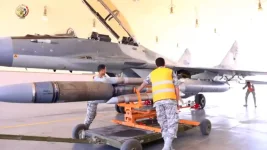
It is the KH-31 high-speed and multi-use missile. This missile is designed to target and destroy a set of targets, including radars, air defense systems, and marine ships, thanks to the active radar steering system, as well as infrared. It can be launched from several combat platforms, such as MiG-29 fighters, Su-27, and Sukhoi Su-30. The range of the missile is 100 km, which is adaptable and comes in two main copies: the first is intended to target radars, and the second for anti -ship operations.

Egypt had previously obtained a variety of Russian weapons, such as MiG-29 fighters, "Ka-52" helicopters, nicknamed the crocodile, and air defense systems "Tor M-2" and "Buk M-2", in addition to the "Mi-24" helicopters and R-32 missile boats.

In an interview with Major General Nasr Salem, the former head of the reconnaissance service in the Egyptian Military Intelligence, the issue of the Egyptian defense strategy that relies on deterrence was raised. Maj. He pointed out that the strategy also includes showing these capabilities through military exercises to confirm the readiness of the forces.

Egypt's military superiority in the region has also been discussed through these modern defense systems. Major General Nasr stressed that excellence not only depends on weapons, but on how to use them by the trained armed forces continuously, pointing to the superiority of Egyptian pilots in previous battles, such as shooting down the American "Phantom" planes using "MiG -21" fighters.

Regarding the "KH 31" missile, Major General Nasr confirmed that it is difficult to intercept due to its high speed, which generates a magnetic field that protects it from anti -anti -missiles.

Regarding military relations with Russia, Major General Nasr indicated that Egypt is the diversity of its armament sources from different countries, including the United States, France, Germany, and Italy, which gives it freedom to make its military decisions without being affected by political pressure.
 
The Egyptian army gets the advanced radar AN/TPS-78 in a strategic deal that enhances the capabilities of Egyptian air defense and devotes partnership with Washington..

April 27, 2025

1745958848446.webp

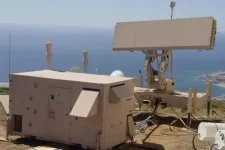
The United States of America has agreed to sell a long-range radar system, "AN/TPS-78), to Egypt, as part of a $ 304 million deal, and aims to support the capabilities of the Egyptian Air Defense, according to the "Africa Military"website.

The deal has been implemented through the American company "Northrop Grumman", and in addition to the radar it includes encryption devices, secure GPS systems, spare parts, software, as well as providing comprehensive training for Egyptian military personnel.

AN/TPS-78 radar is a three-dimensional mobile system, specially designed for air control tasks in complex operating environments, and is able to monitor weather threats at distances of about 444 km. The system is characterized by great flexibility in transportation, as it can be charged via C-130 or helicopters, with the ability to spread and operate within only 30 minutes by a team of four individuals.

Brigadier Mahmoud Mohieldin, the military and strategic expert and researcher in national security affairs, stressed that the importance of the deal is not only limited to obtaining radar, but also extends to obtaining an integrated set of accompanying equipment, such as spare parts, software, encryption devices, and training programs, which enhances the operational efficiency of this system.

In a related context, he pointed out that Washington's rapid approval of the deal reflects its keenness not to lose the strategic coalition with Egypt, in light of accurate regional data.
 
Is Egypt really getting J-10C?

Would be nice to phase out older F-16 units.

Not like they will ever sell/give you anything useful.
 
Is Egypt really getting J-10C?

Would be nice to phase out older F-16 units.

Not like they will ever sell/give you anything useful.
Most most likely yes..and not only the J-10C,, the deal will include at least an integrated air warfare scheme..because the presence of the Y-20 and KJ-500 can not indicate anything else but a full integrated air force deal.. and remember this exercise is to last 25 days or almost a month..I've never seen a joint exercise of this time span..this is another indicator of the seriousness of Egypt and China about a big deal..
 
A giant step in strengthening the Egyptian navy, a great progress in Chinese submarine deals, Yuan 039 for Egypt

To view this content we will need your consent to set third party cookies.
For more detailed information, see our cookies page.
 

Users who are viewing this thread

Latest Posts

Back
Top