Egypt is about to redraw the balance of power in the Mediterranean through the Chinese "Yuan" submarine deal
View attachment 115499
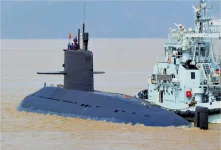
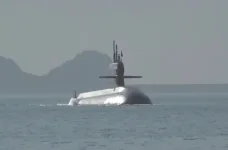
If Egypt has moved forward in the purchase of "Type 039A" submarines (Yuan category), this will represent a major strategy in its approach to the acquisition of defense equipment, which at the same time enhances Chinese influence in the Middle East and North Africa, and indicates a clear Egyptian trend towards diversifying the sources of armament away from the traditional western suppliers.
Arab Defense website, April 29, 2025: Reports indicate that Egypt has become in the final stages of the acquisition of the Chinese "Type 039a" submarines, a platform that has a great appreciation among military analysts due to its high ghost capabilities and its underwater operational extent.
Type 039A submarines are widely known as their very low audio signature, and are equipped with air -independent air -wheel drive systems (AIP), allowing them to stay in the depths for long periods without the need to appear to the surface, which is a decisive ability to strategic deterrence and implement sudden attacks in crowded marine environments.
In this context, one of the local military analysts said: “These submarines (China -made Type 039A) Egypt will enable Egypt to greatly enhance their capabilities under the surface to face the increasing challenges of marine security in the region, in light of the escalation of geopolitical uncertainty,” noting the increasing importance of surface control in the midst of global maritime competition.
If the deal is completed, the Type 039A submarines will be replaced by the ancient fleet of Egypt, consisting of four submarines, "Type 033" (Romeo category), which are submarines derived from the designs of the Soviet era but were manufactured and updated by China during the Cold War.
According to defensive sources in the Middle East, the ongoing negotiations on the "Type 039A" deal are not only limited to submarine delivery, but also include complex discussions on technology transfer and the possibility of integrating locally made systems in Egypt within these Chinese platforms, which may contribute to enhancing the self -defensive industrial capabilities of Cairo.
Egypt had previously obtained its "Romeo" submarines in the early eighties of the last century, by purchasing eight units of the "Type 033" manufactured in China - a local modified version of the Soviets design for the 633 project - with the aim of strengthening its capabilities of marine deterrence after the deterioration of its relations with the Soviet Union at the time.
During the period from 1982 to 1984, China handed these submarines to Egypt after it underwent a comprehensive update program that included the development of sonar systems and control systems in fire and electronics on board, enabling it to meet the operational requirements of the Egyptian Navy in the post -Cold War environment.
The Romeo submarine deal at the time represented a pivotal step in Egypt's aspirations to develop the capabilities of war under the surface, which later developed through the acquisition of more advanced German submarines, "Type 209/1400mod", which reflects the growing interest of Cairo in the strategic marine depth.
In the event that the Type 039a submarine deal will be implemented, it will constitute a major strategic shift in the Egyptian armament path, which strengthens Chinese influence regionally and confirms Cairo's gradual departure from exclusive dependence on traditional Western suppliers.
Yuan submarines are distinguished by advanced air-to-air payment systems, Sonar packages of the new generation, as well as their ability to launch surface-to-surface cruise missiles from submersible sites, which promises to raise the capabilities of Egyptian marine strikes under the surface to a level that may match-if it does not outperform-many NATO navies (NATO) operating in the Mediterranean Basin.
Yuan Egypt's submarines will be deployed to carry out a wide range of high -level marine tasks, including ships, secret monitoring, long -range strikes, and unequal depth warfare, especially through vital marine corridors such as the Suez Canal and the Bab al -Mandab strait, and which are two axes of global energy flows.
The addition of Chinese submarines to the Egyptian fleet has changed the balance of marine forces in the Mediterranean, by introducing non -NATO technology to the stage of operations as long as the platforms designed in the West dominated, which may be held from joint operations with traditional allies.
This strategic move will carry a resounding geopolitical message to the traditional Egypt partners in the United States and Europe, that Cairo is ready to reformulate its defensive alliances in response to the accelerated international transformations and the increasing frustration of Western restrictions imposed on the export of weapons.
Type 039A submarines carry a variety of weapons, including a 533 mm heavy, Yu-6 and YU-4 ″, capable of destroying war ships and hostile submarines of more than 45 km with high accuracy.
It is also equipped with "YJ-82" vessels launched from underwater, and it has an operational range between 40 to 60 km, enabling Egyptian submarines to hit their targets from hidden sites without being at risk of counter-attack.
View attachment 115501
Moreover, there is a reliable possibility to integrate the CJ-10K land attack with the Yuan category submarines, which may provide Egypt with strategic capabilities to carry out deep strikes from marine platforms under the surface. However, activating these missiles in practice on the basic copies of the "Type 039A" still needs official confirmation.
These submarines also have the ability to spread advanced marine mines through their pipes, which gives Egypt an effective way to deny opponents from reaching vital marine corridors, and promoting coastal proportions against any hostile incursions.
In operational aspect, the combination of hiding, the ability to diving for long periods underwater with AIP, and diverse armament allows the "Type 039A" submarines to carry out long -term patrols, collect intelligence information, and launched pre -emptive strikes against hostile assets far from the Egyptian coasts, while maintaining its almost non -existent imprint.
On the international level, Egypt's acquisition of Yuan submarines will enhance China's position as a prominent resource for submarine technology from the new generation, which is a direct challenge to Germany's domination of Germany through its submarines from the Type 209/212 categories, and undermines the South Korean ambitions based on the KSS-III program in the global weapon market.
Strategically, this step will expand from the geopolitical imprint of China within the Mediterranean - a vital crossroads as long as NATO's marine operations - which increases global competition for influence in vital marine corridors.
As for the region, the introduction of advanced submarines such as "Type 039A" to service will remarkably enhance the maritime status of Egypt, which establishes its position as the strongest naval force in the African continent, and enhances its leadership role within the League of Arab States, the African Union, and regional security initiatives.
From Washington's point of view, the possibility of Egypt's acquisition of the Chinese submarines of Yuan will explain as a direct challenge to American strategic influence in the Middle East, especially in light of the increasing expansion of Chinese military technology within the traditional security partners of the United States.
The United States is likely to respond to official diplomatic warnings, noting the potential risks that may affect the ability to join jointly with the allies, and may also be promoted to take punitive measures under the law to combat American opponents through sanctions (CAATSA), the same legislation that has already been used against countries that have entered into large weapons deals with Russia or China.
Washington may also reconsider the structure and rules of the annual military aid package provided to Egypt, which is valued at $ 1.3 billion, a traditional influence tool that the United States has used since the late 1970s to ensure its continued strategic relationship with Cairo.
As for Israel, and despite the stability of diplomatic relations with Egypt after the 1979 Camp David agreements, the entry of "Yuan" submarines capable of concealing the Egyptian service represents a new threatening dimension in the South Naval Environment of Israel.
The practical presence of AIP submarines in the eastern Mediterranean will cause great concern about Egypt's enhancement capabilities in the field of secret reconnaissance and the implementation of long -term strikes that may target sensitive Israeli infrastructure.
In the face of this development, it is expected that Israel will intensify its efforts in marine monitoring, by enhancing satellite use, conducting marine patrols with drones, and publishing underwater sensors to track the movements of Egyptian submarines and deal with any possible proactive threats.
Parallel, Israel is also expected to speed up the update of its submarine fleet, especially by introducing the advanced "Dolphin 2" submarines from Germany, which was designed to perform strategic deterrence tasks, including the launch of Cruz missiles for the ground attack.
Within the ranks of NATO, the introduction of Chinese submarines into the Egyptian fleet will constitute great challenges to joint marine operations in the Mediterranean and the Red Sea, especially with regard to operational coordination, data security, and joint communications.
Military planners in the alliance will show serious concerns about the possibility of leaking technology or sensitive operational data to Beijing through indirect channels, which may lead to imposing tight security protocols and reducing the level of maritime cooperation with Egypt.