Global militaries to study India-Pakistan fighter jet battle

One drone might do little damage, a swarm of drones arm with 100kg tnt will do alot man. Yes Russia uses alot lf precision munitions, but i personally think drones did the most damage, a swarm of 100kg drones is like small loitering bombs.
that’s not the reality
because the numbers don’t add up.
let make a quick math, we take public sources.
a lancet drone costs about $35,000,
having a payload of 1-5kg
100 lancets with max 500kg TNT will cost Putin $3.5 million.
you can destroy a building, not the entire city.
with lancets Putin must spend hundreds of millions USD to have some effect.
or Putin can borrow thousands of giant drones from China, payload 100kg each, then he can carpet bomb Ukraine.
 
India-Pakistan conflict | Why can't the Rafale fighter jet that can interfere with the F-22 escape the attack of Chinese missiles


Recently, a sudden air battle broke out in Kashmir, and the Pakistani Air Force launched a carefully planned air strike against India. According to Pakistan's notification and a large amount of supporting information on social media platforms, the Indian Air Force lost 6 military aircraft in a short period of time. The most shocking of these was that the Rafale fighter was destroyed by China's PL-15 missile.

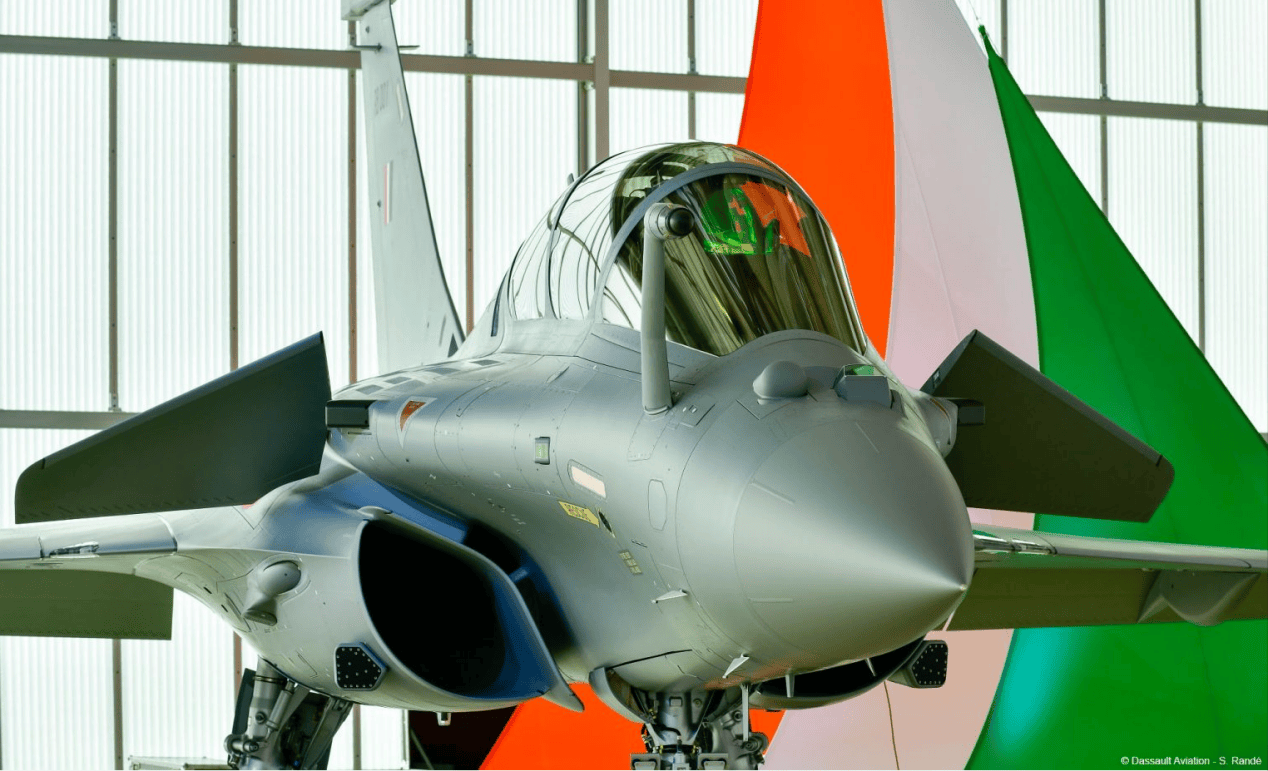
This is not an air battle victory in the ordinary sense. The Rafale fighter is the high-end equipment that India is most proud of in recent years. It has an active phased array radar, beyond-visual-range combat capability, and is also equipped with the Spectra integrated electronic warfare system that is said to be able to resist the lock of the F-22. In the vision of the Western aviation community, it is the "ultimate form" of the fourth-generation and a half fighter, designed specifically for complex electromagnetic environments and theoretically extremely difficult to be locked and shot down.


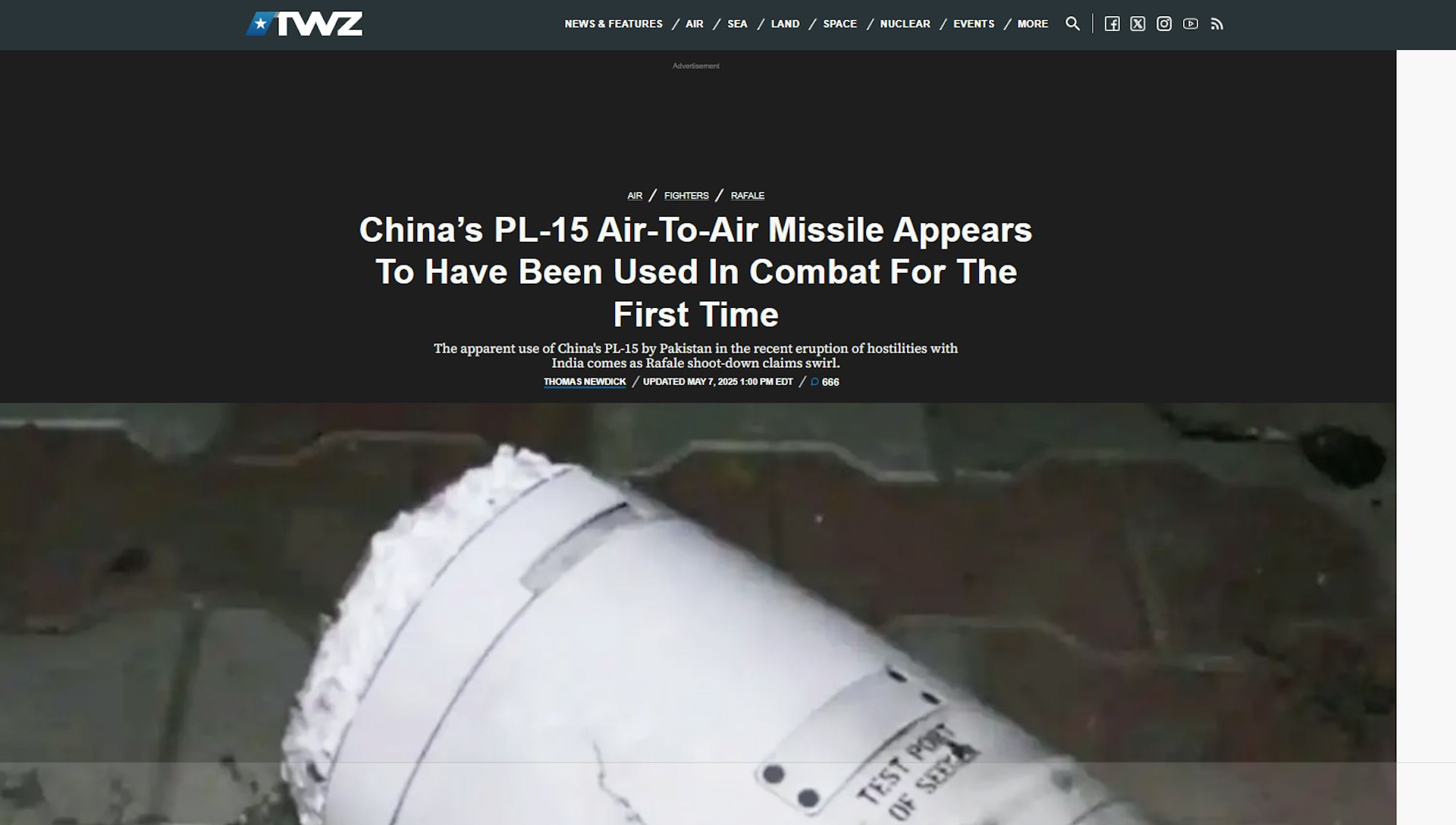
The US military news website The WarZone (TWZ) published an article saying that China's PL-15 air-to-air missile appears to have been used in actual combat for the first time.

The US military news website The WarZone (TWZ) published an article saying that China's PL-15 air-to-air missile appears to have been used in actual combat for the first time.

But this time, it was not only hit, but was hit by the PL-15 missile with almost no evasive action. What exactly happened behind this? For this "silent long-range hunting", we must re-understand the truth of modern air combat from the coordinated changes in battlefield layout, electromagnetic confrontation mechanism and missile technology.

Europe's most advanced air combat self-defense system has failed​

Logically speaking, the Rafale fighter shouldn't be shot down so easily. The Spectra electronic warfare system it carries is hailed by France's Dassault Aviation as "Europe's most advanced air combat self-defense system." This system integrates a radar warning receiver (RWR), an active jammer (DRFM) and a chaff/infrared decoy launcher, which can issue an early warning when the enemy radar is locked, and then automatically release a jamming beam or decoy bomb to avoid missile tracking. In NATO exercises, Spectra has successfully interfered with US military radars, and even F-22 stealth fighters were unable to lock on to it. It is well-known.

So why did it fail to defend against the PL-15?


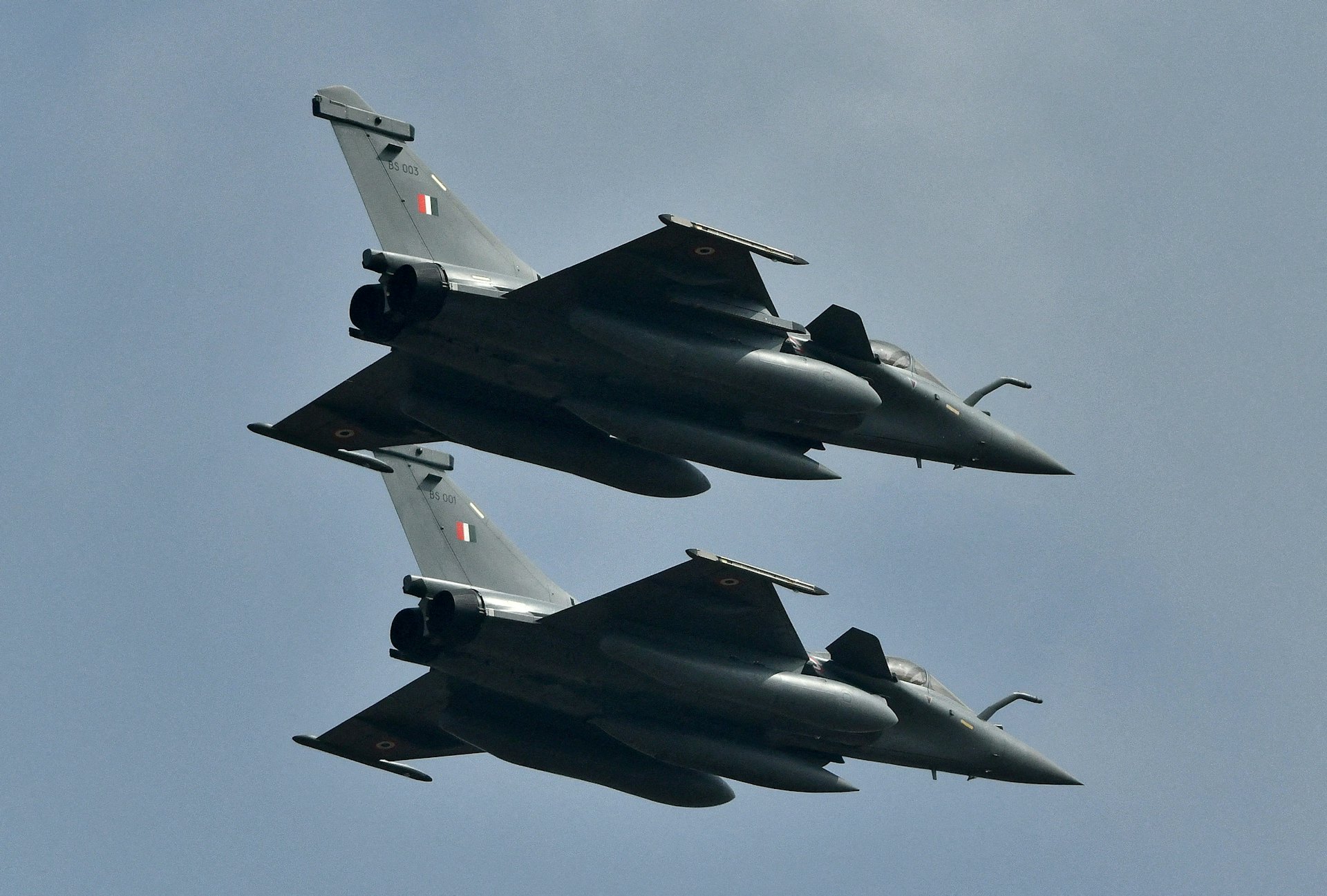
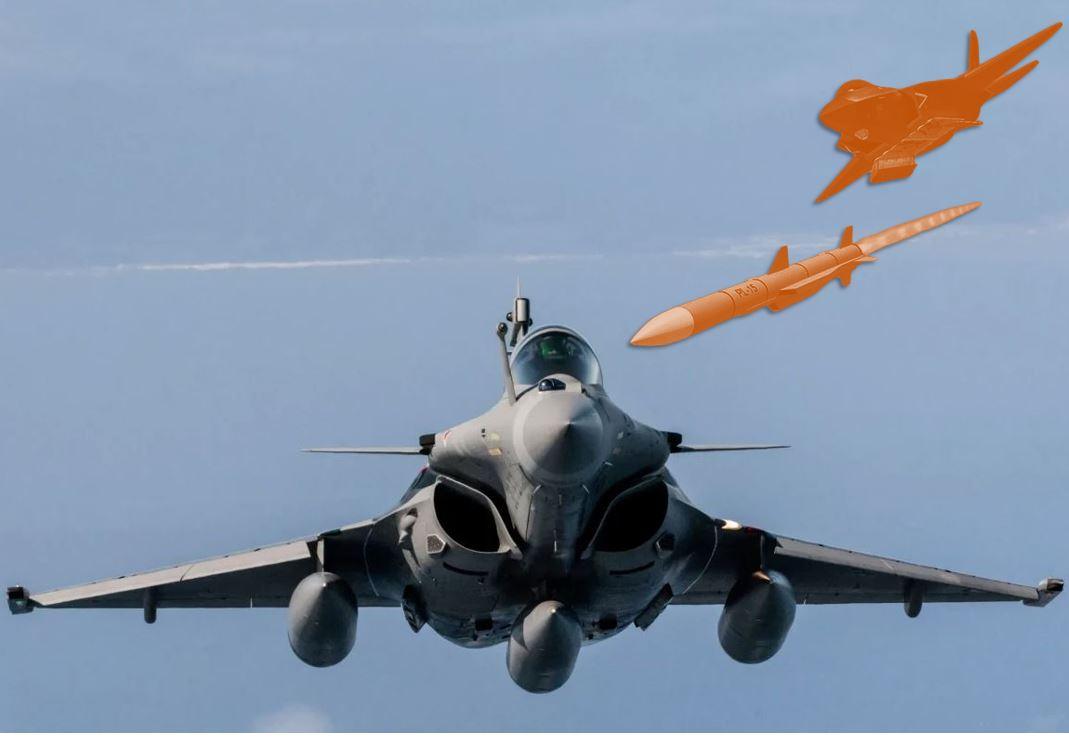
Indian Air Force Rafale fighter jets fly during the Aero India 2021 at Yelahanka air base in Bengaluru, India, February 3, 2021. (Reuters)

Indian Air Force Rafale fighter jets fly during the Aero India 2021 at Yelahanka air base in Bengaluru, India, February 3, 2021. (Reuters)

The key to the problem may not be the technical shortcomings of the Spectra system itself, but the tactics and posture adopted by the Pakistan Air Force, which exceed the response boundaries of Spectra. The Spectra system is a defense system designed to counter the "conventional air combat process": radar detection → threat identification → interference avoidance. However, facing the PL-15, the Spectra system may not have "failed to interfere successfully" but "did not even have time to initiate the interference."

Because the PL-15 is not a lone attack, but is placed in a complete combat network of "early warning + data link + guidance integration". The PL-15 is usually accurately guided by early warning aircraft or ground radar through data link in the mid-flight phase, and active radar guidance is not activated until the final phase. The active radar seeker of PL-15 takes only a short time to start up. Once started, it will enter terminal lock. At this time, the distance to the target may be less than 20 kilometers. The reaction time left for Spectra is measured in seconds, and the interference window is extremely small.


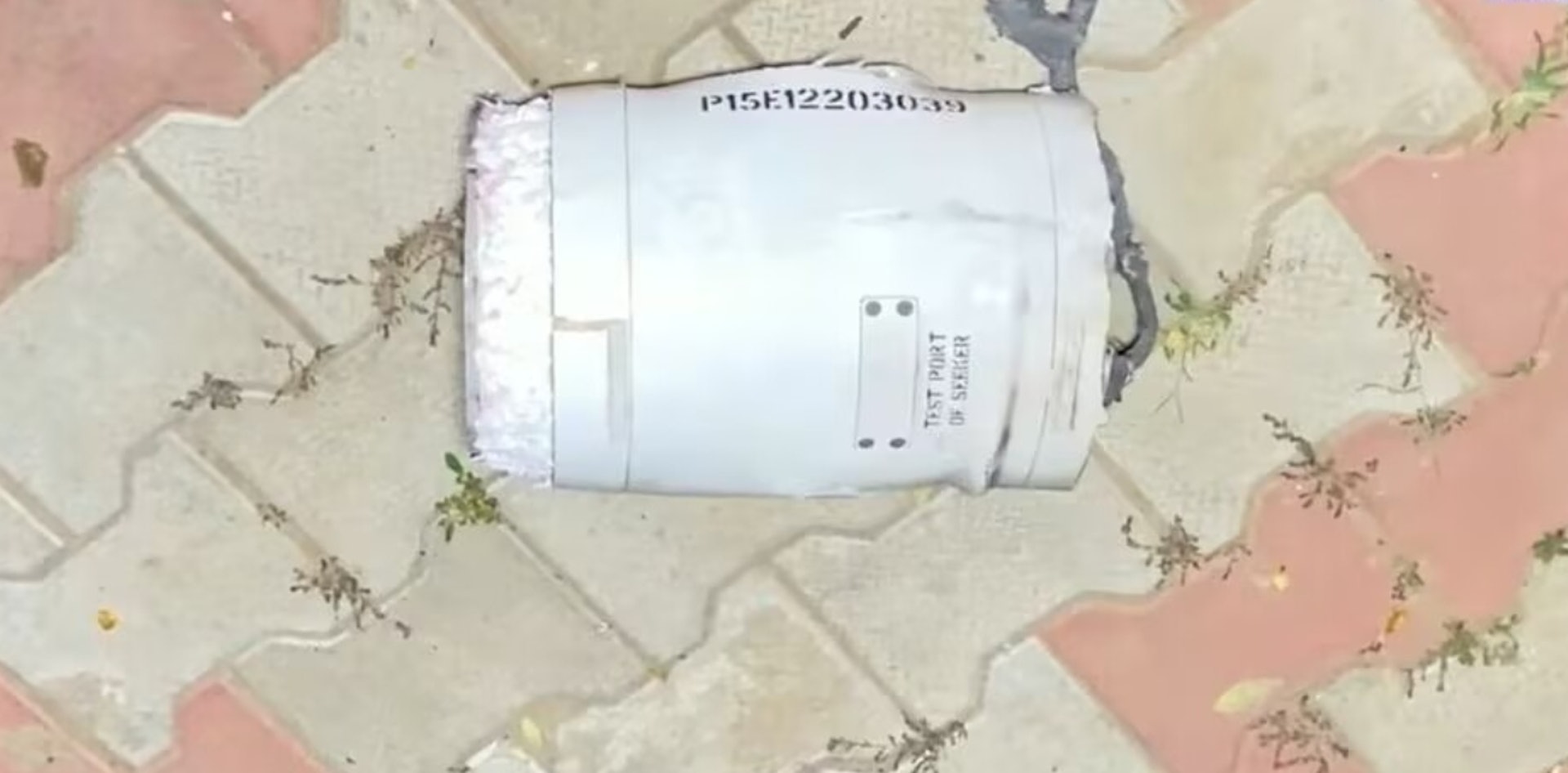
Photos of what appear to be wreckage of the Chinese-made PL-15 air-to-air missile appearing in India have been circulating on social media. (Internet picture)

Photos of what appear to be wreckage of the Chinese-made PL-15 air-to-air missile appearing in India have been circulating on social media. (Internet picture)

In addition, if the PL-15 uses a frequency-agile, low-detectable guidance band (such as the Ka-band), supplemented by a two-way ground and air data link to correct the track, then a system such as Spectra, which focuses on "fighter self-protection", will not be able to provide real protection. In addition, the missile itself has an optimized anti-interference algorithm. Even if Spectra successfully identifies and releases the bait, it may not change the missile's track.

So the Spectra system is not facing a missile, but a dynamically changing aerial ambush link covering hundreds of kilometers. There is another key factor that cannot be ignored: the biggest advantage of the Spectra system is to deploy resources under the premise that the electromagnetic situation is known and the threat direction is clear, and to play an active interference and deception role in the front battlefield. But from the very beginning, this battle was an information asymmetric battle set by Pakistan. The Indian Air Force may not have realized it was surrounded by an electronic fire network until the first Rafale was hit. This is not a failure of Spectra technology, but it was strategically abandoned when facing a Chinese system to suppress the opponent.

Beautiful ambush​

The key victory achieved by PL-15 was not only due to the missile's performance, but also a carefully designed "airspace ambush" by the Pakistan Air Force.


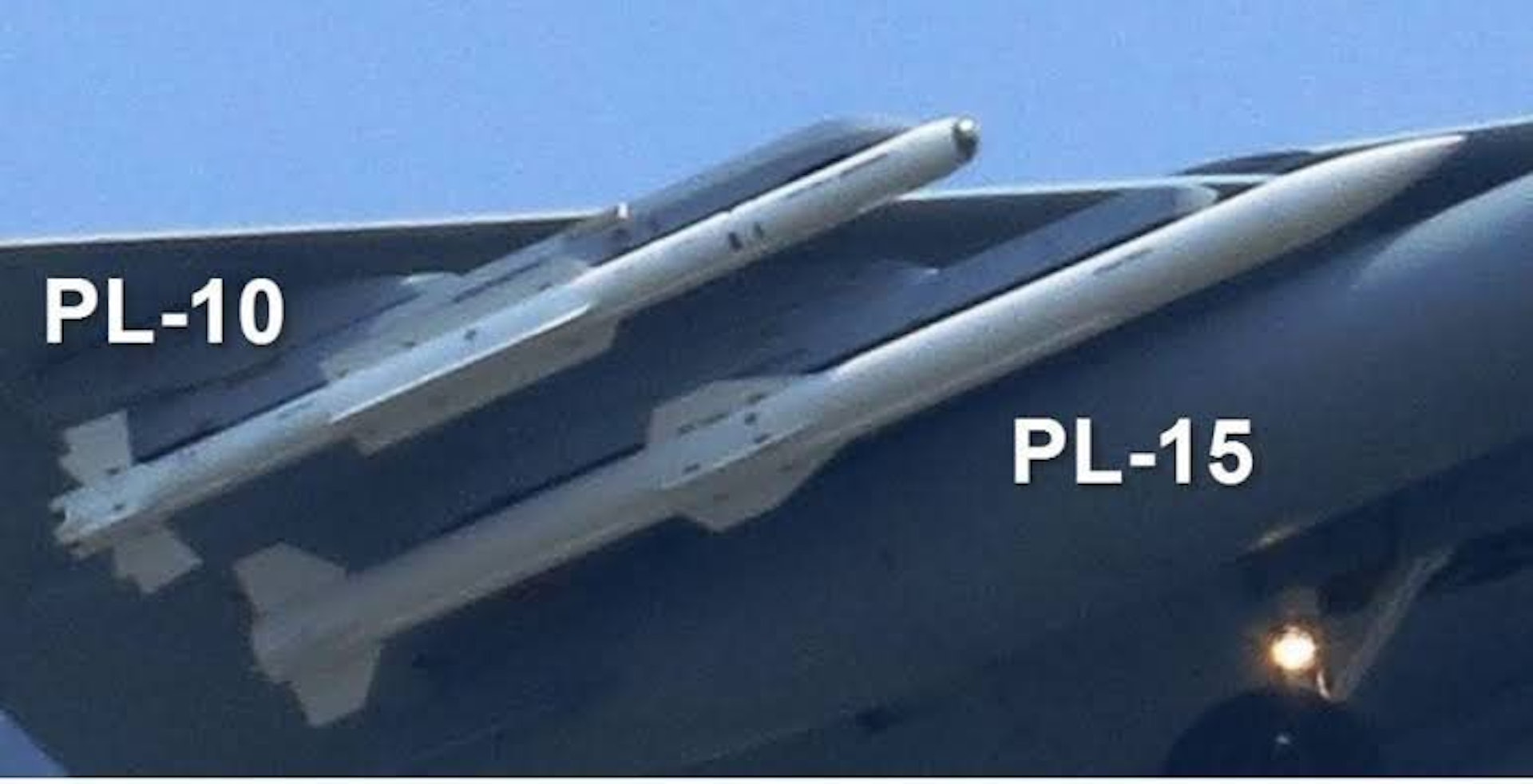
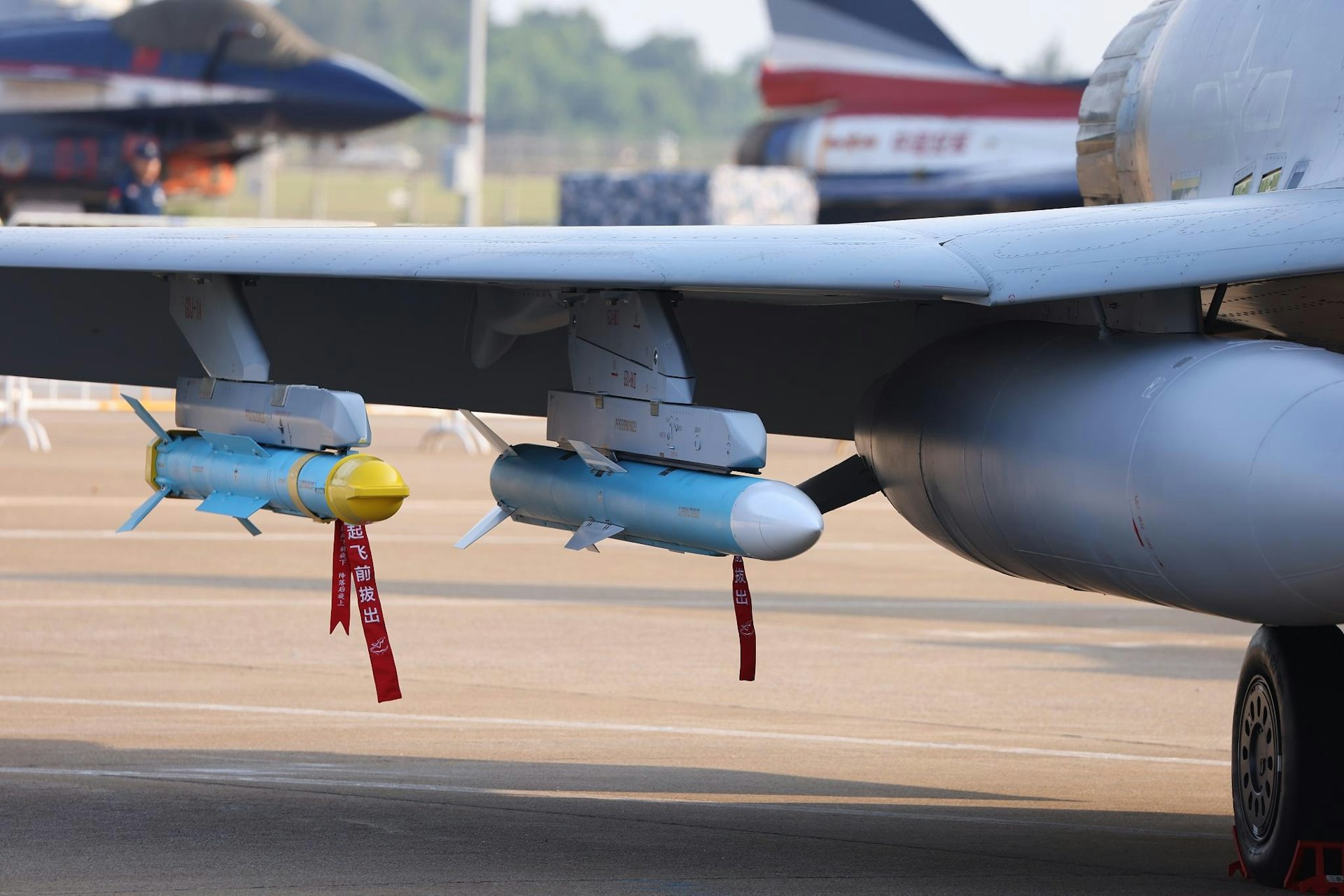
Chinese-made PL-15 air-to-air missile. (Internet picture)

Chinese-made PL-15 air-to-air missile. (Internet picture)

The PL-15 long-range air-to-air missile is mounted on a fighter aircraft. (Visual China)

J-16 (Visual China)


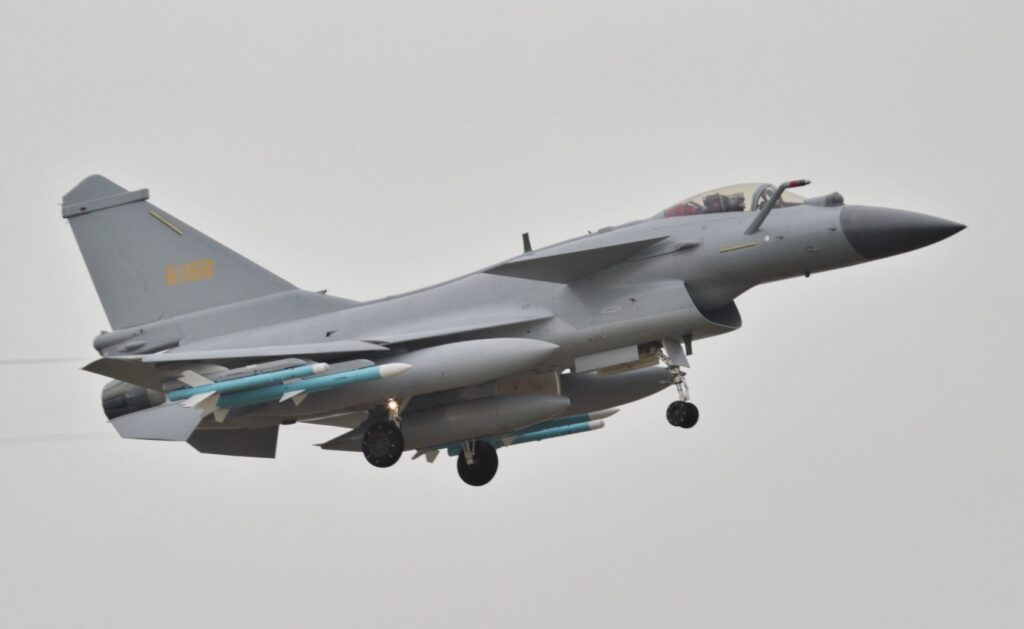
This operation was not a temporary response, but a highly planned systematic strike. According to several Pakistani lawmakers and sources, the Rafale fighter was shot down by a PL-15 missile launched by a J-10C fighter. This means that the J-10C not only undertakes the tasks of search and target guidance, but is also the core firepower platform in the entire strike chain. The active phased array radar and data link system it carries enable it to independently complete the closed-loop capability of "detection-aiming-launch" in complex electromagnetic environments.

At the same time, the JF-17 Block III may have performed auxiliary tasks with greater tactical flexibility: containing Indian airspace, implementing induced disturbances, compressing the Rafale's available operating space, and creating a clean launch window for the J-10C; the F-16 provided tactical backup, the early warning aircraft ZDK-03 maintained battlefield situation awareness, and the ground air defense force formed an integrated blockade network covering the long, medium and short distances.

More importantly, this was not just an air-to-air firefight, but a joint air-to-ground, highly controlled battlefield ambush. HQ-9 and other medium- and long-range air defense missiles are likely to be deployed forward to block the Indian army's support direction and avoidance path, provide in-depth support for the air "strike formation", and put Indian fighter jets into an oppressive situation from the moment they enter the field.

Under such a system attack, the electronic warfare advantages of a single model cannot be exerted at all. The Spectra system did not fail; it simply had no way of responding.


Dare to fight is the hard truth​

Many people may be surprised by the outcome of this battle, but what is really worthy of attention is not the range of the PL-15, nor the defeat of the Rafale, but the combat will and execution capability demonstrated by the Pakistan Air Force.

They did not respond hastily, but chose to take the initiative after careful planning; it was not an "air shootout" where they fired one shot and moved to another location, but an ambush attack under system suppression. This battle, to some extent, reminds people of the action ten years ago when Türkiye shot down a Russian Su-24 fighter-bomber in one fell swoop - either don't fight, or fight hard and catch the opponent off guard.

In contrast, although the Indian Air Force is well equipped, it is always on the passive side. The technology is not backward, and the fighter jets are not unadvanced, but when the command chain is chaotic and system coordination is insufficient, even the best aircraft will become an isolated island of "fighting on its own".


There is no doubt that Pakistan is proving to the outside world that it already has an air force that dares to fight, is capable of fighting and is organized. This is not only a demonstration of the Pakistani Air Force's capabilities, but also a test run of China's "Chinese Offensive Air Force Combat System." The coordination between PL-15, J-10C and early warning system is demonstrating a combat logic that is different from the Western "single-machine performance-dominated" approach. In the future, countries around the world may have to reassess the true strength of the Chinese Air Force in remote air control, information dominance, and system operations.

The PL-15 is finally no longer just a model and information at the air show, but has truly entered the actual combat record book and the psychological shadow of the opponent's pilots.


This article is authorized to be published by Observer.com.


J10 mighty dragon, the rafale slayer. A legend had been created today. People will sing hymms about this moment for a long time.
 

‘Bad News’ For NATO, Top US Military Expert Says After Chinese J-10s Down 3 French Rafales in a Day in Pakistan​

09.05.202519:33

‘Bad News’ For NATO, Top US Military Expert Says After Chinese J-10s Down 3 French Rafales in a Day in Pakistan

Former US Deputy Defense Secretary Stephen Bryen has warned that the downing of three Indian Rafale fighter jets by Pakistan’s Chinese-made Chengdu J-10 fighters on May 7 was very concerning for NATO, as the French aircraft is part of the alliance’s fleet.

Bryen – a leading expert in security strategy and a senior fellow at the Center for Security Policy and at the American Center for Democracy—claimed the negative outcome for the Rafale jets, considered a top fighter in the West, highlighted NATO might be trailing in technology against the Chinese.

The military and security pundit noted the implications of this aerial combat were far-reaching, as the Rafale fighter jets operate as a true multi-role aircraft, carrying out missions from air superiority and defense to close air support, deep strikes, reconnaissance, anti-ship operations, and even nuclear deterrence.

But he says the recent events suggest even such versatility may not be enough when facing modern Chinese missile technology.

Military observers, however, stress that an air force’s effectiveness depends not only on its platforms but also on its personnel — a point underscored in light of India’s continuing human resource challenges compared to Pakistan’s well-prepared defense apparatus.

Wednesday’s Clash: A Wake-Up Call

During a simulated one-hour aerial engagement on Wednesday, Indian Rafale jets were equipped with SCALP cruise missiles — the same type widely used in Ukraine — and MICA air-to-air missiles. The MICA, a reliable missile that has also strengthened the Hellenic Air Force since the early 2000s, unfortunately fell short in this scenario. At least one MICA missile was found near the crash site of a downed Rafale, raising concerns among analysts.

The encounter did not unfold in a close-range dogfight. Instead, it was a beyond-visual-range (BVR) engagement — a domain where the Rafale, despite its strengths, faced a distinct disadvantage.

Pakistani forces operated within their own airspace, launching Chinese-built J-10 fighters armed with PL-15 air-to-air missiles. These missiles are Beijing’s answer to the American AIM-120D AMRAAM: all-weather, BVR weapons capable of hitting targets at ranges of 200 to 300 kilometers. While exact specifications remain classified, the PL-15 reportedly travels at speeds approaching Mach 5 (over 6,000 km/h), far outstripping the French MICA’s range of just 60 to 80 kilometers.

According to defense expert Stephen Bryen, this technological gap likely shaped the outcome. The Chinese PL-15, optimized for long-range engagements, appears to have outperformed the MICA, which is more suited for close-to-mid-range battles.

More troubling still is the suggestion that the PL-15 may even challenge top-tier Western missiles like the AIM-120D AMRAAM — and perhaps even the Meteor, Europe’s most advanced BVR missile. While the Meteor boasts an exceptional “no-escape zone” and ramjet propulsion enabling sustained speed and agility, the recent encounter suggests that the PL-15 might match or even exceed its performance in real-world conditions.

Greece has incorporated 24 French Rafale fighters into its fleet of aircraft and is expecting to add the stealth US-made F-35 lightning.

 
To view this content we will need your consent to set third party cookies.
For more detailed information, see our cookies page.
 

After the Rafale fighter jet was shot down by Pakistan, the US media said that India would not admit defeat and might buy the Russian Su-57 and fight again


2025-05-11 09:38 Source: Fenghuo Viewpoint

Published in: Hainan Province

After a few days of fermentation, although the exact number of losses is still unclear, the Indian Air Force was undoubtedly at a disadvantage in the "Vermilion Operation" on May 7. The French Rafale fighter jets, which cost more than $200 million per unit, were defeated and lost. At least one Rafale was shot down by the Pakistani Air Force's Chinese J-10CE with a PL-15E long-range air-to-air missile, and up to three were shot down. The Rafale was beaten badly this time, which means that if India does not intend to swallow this breath and is still prepared to launch a retaliatory action against Pakistan, it will only have the option of purchasing fifth-generation aircraft from the United States or Russia.


d554df309c394c77a97f8eae453bfef1.png
(This vertical tail alone is enough to prove that the Indian Rafale was shot down)


The American media "Military Watch" focused on this issue and believed that for political reasons, the United States would impose many restrictions on purchase and use conditions. It would be difficult for India to fully accept such requirements, so it is more likely to purchase the Su-57 from Russia. Therefore, it pointed out that this will be a "major new opportunity" for the Su-57.


Why Rafale Failed


Let’s first look at why the Rafale, which is known as the strongest fourth-generation and a half, failed this time. If we exclude the pilot’s personal factors and accidental influences, the most reasonable explanation is the lack of systematic combat capability of the Indian Air Force.


First, the sources of fighter jets are too complicated. The Rafale comes from France, the Su-30MKI and MiG-29 that may have been shot down are from Russia, and the Heron UAV, which can be used for medium and low altitude reconnaissance and battlefield assessment, was purchased from Israel. It is obvious that the degree of integration of the combat systems of these fighters is worrying, and they cannot form an effective joint interference suppression; secondly, the situational awareness capability is insufficient. There are only three "Falcon" early warning aircraft with limited detection coverage, and it is still unknown whether they are compatible with the Rafale; finally, equipment of different shapes also requires pilots to explore different operating logics and try to coordinate, which is a huge test for pilots in normal times, not to mention beyond-visual-range combat under night combat conditions.


61a2e5ee0bfa4763833b8f63c92a0a84.png
(There are also different reports that the Indian Army's Mirage 2000 and Su-30MKI were also shot down)


Under these comprehensive factors, the Indian Army's Rafale actually relies more on the single-machine combat capability and the pilot's personal combat qualities, while the Pakistani Air Force relies on the J-10CE fighter jets, ZDK-03 early warning aircraft and HQ-9P air defense systems to establish an air-to-ground integrated modern air defense joint combat system. It should be said that the Rafale is a bit unfair but not too unfair.


Motivation for introducing the Su-57


It should be said that India's motivation for introducing the Su-57 is first of all a very simple logic: since the fourth-generation and a half aircraft cannot deal with Pakistan's Chinese fighters, it can only buy the fifth-generation aircraft. But what is really worth paying attention to is whether India can take the opportunity of introducing the Su-57 to introduce a more highly integrated modern air combat system. After all, the reason for India's defeat in system confrontation is obvious to others, and the Indian government and military must have a clearer understanding and experience.


73fabf5020f44d048c7bfaee70ae4497.png
(At the Bangalore Air Show in February this year, the joint appearance of fifth-generation aircraft from the United States and Russia caused a sensation)


Compared with the current air combat system of the Pakistan Air Force, the biggest advantage of the Su-57 lies in stealth. Although its stealth capability has been questioned for many years, it is better to have it than not. Secondly, if the introduced Su-57 can be equipped with R-37M ultra-long-range air-to-air missiles, it can also suppress the Pakistan Air Force or form a balance in beyond-visual-range attack capabilities. After all, it is a tough character with a record of long-range shootdowns on the Ukrainian battlefield. In theory, it can be on par with the PL-15.


b53f7f2e6b6045db8a14aa33c5abcb45.png
(The R-37M has achieved several ultra-long-range kills in the Ukrainian battlefield and will definitely be integrated into the Su-57)


However, the challenges faced are also realistic. First, Russia is still in a state of war, and the confrontation with NATO has not eased. The limited production capacity needs to give priority to meeting domestic needs. Second, the Indian Air Force is equipped with equipment from France, the United States, Israel and other countries. If the data link cannot be connected, the coordination between the Su-57 and the early warning aircraft will be a problem. Third, the unit price of the Su-57 is about 150 million US dollars, plus the supporting training, maintenance and ammunition parts, the total price is not less than 10 billion US dollars. The economic pressure is also a heavy burden for India.


Russia’s willingness to deal


There is also a more serious problem, that is, Russia may not agree to this deal, and the reason is very simple, that is, after witnessing the tragedy of the French, it is worried that India will smash its last signboard. At present, the Indian Air Force is still equipped with more than 260 Su-30MKI. Although it is a twin-engine heavy fighter with unparalleled maneuverability and energy advantages in air combat, it is not surprising to be defeated in the modern air combat battlefield that emphasizes super situational awareness and ultra-long-range attacks. The Russian military and aviation industry should also be fully prepared.


79f30adac68a4ea982c2f345bb1da759.png
(The Su-30MKI has already dealt a heavy blow to Sukhoi's reputation)


This psychological preparation is based on the fact that they still have a trump card, the Su-57. However, if the Su-57 sold to India is also defeated, whether for subjective or objective reasons, it will be a fatal blow to Russia, which is unlikely to come up with the next generation of fighter jets in the short term. What is more serious is that after losing its aviation industry and air battlefield advantages, Russia's already shaky status as a great power will be further weakened, directly affecting the country's future and destiny. Therefore, after seeing the poor performance of the Indian Air Force, the Russian government, military and manufacturers may not be so enthusiastic about this deal.


Summarize


This air combat operation can actually be regarded as a retaliation for the "February 27" air combat in 2019. The Indian Air Force bought new aircraft in an attempt to save face after suffering losses, but it just acted like a clown again.


3996ae3bd0344ef4b49471df0b4bd6e2.png
(Russia is unlikely to choose to take risks with the Su-57 again)


The reason for this is that, at the strategic level, the Indian government had unclear positioning and tried to fish in troubled waters but ended up losing itself; at the tactical level, it was a blossoming of the People's Liberation Army's 20 years of research, development, and construction of a modern warfare system, which is only the tip of the iceberg of China's modern military development, a mere speck of dust floating towards the South Asian subcontinent, which has become a huge mountain weighing on India's head.


India-Pakistan conflict | Why can't the Rafale fighter jet that can interfere with the F-22 escape the attack of Chinese missiles


Recently, a sudden air battle broke out in Kashmir, and the Pakistani Air Force launched a carefully planned air strike against India. According to Pakistan's notification and a large amount of supporting information on social media platforms, the Indian Air Force lost 6 military aircraft in a short period of time. The most shocking of these was that the Rafale fighter was destroyed by China's PL-15 missile.

This is not an air battle victory in the ordinary sense. The Rafale fighter is the high-end equipment that India is most proud of in recent years. It has an active phased array radar, beyond-visual-range combat capability, and is also equipped with the Spectra integrated electronic warfare system that is said to be able to resist the lock of the F-22. In the vision of the Western aviation community, it is the "ultimate form" of the fourth-generation and a half fighter, designed specifically for complex electromagnetic environments and theoretically extremely difficult to be locked and shot down.


The US military news website The WarZone (TWZ) published an article saying that China's PL-15 air-to-air missile appears to have been used in actual combat for the first time.'s PL-15 air-to-air missile appears to have been used in actual combat for the first time.

The US military news website The WarZone (TWZ) published an article saying that China's PL-15 air-to-air missile appears to have been used in actual combat for the first time.

But this time, it was not only hit, but was hit by the PL-15 missile with almost no evasive action. What exactly happened behind this? For this "silent long-range hunting", we must re-understand the truth of modern air combat from the coordinated changes in battlefield layout, electromagnetic confrontation mechanism and missile technology.

Europe's most advanced air combat self-defense system has failed​

Logically speaking, the Rafale fighter shouldn't be shot down so easily. The Spectra electronic warfare system it carries is hailed by France's Dassault Aviation as "Europe's most advanced air combat self-defense system." This system integrates a radar warning receiver (RWR), an active jammer (DRFM) and a chaff/infrared decoy launcher, which can issue an early warning when the enemy radar is locked, and then automatically release a jamming beam or decoy bomb to avoid missile tracking. In NATO exercises, Spectra has successfully interfered with US military radars, and even F-22 stealth fighters were unable to lock on to it. It is well-known.

So why did it fail to defend against the PL-15?


Indian Air Force Rafale fighter jets fly during the Aero India 2021 at Yelahanka air base in Bengaluru, India, February 3, 2021. (Reuters)

Indian Air Force Rafale fighter jets fly during the Aero India 2021 at Yelahanka air base in Bengaluru, India, February 3, 2021. (Reuters)

The key to the problem may not be the technical shortcomings of the Spectra system itself, but the tactics and posture adopted by the Pakistan Air Force, which exceed the response boundaries of Spectra. The Spectra system is a defense system designed to counter the "conventional air combat process": radar detection → threat identification → interference avoidance. However, facing the PL-15, the Spectra system may not have "failed to interfere successfully" but "did not even have time to initiate the interference."

Because the PL-15 is not a lone attack, but is placed in a complete combat network of "early warning + data link + guidance integration". The PL-15 is usually accurately guided by early warning aircraft or ground radar through data link in the mid-flight phase, and active radar guidance is not activated until the final phase. The active radar seeker of PL-15 takes only a short time to start up. Once started, it will enter terminal lock. At this time, the distance to the target may be less than 20 kilometers. The reaction time left for Spectra is measured in seconds, and the interference window is extremely small.


Photos of what appear to be wreckage of the Chinese-made PL-15 air-to-air missile appearing in India have been circulating on social media. (Internet picture)

Photos of what appear to be wreckage of the Chinese-made PL-15 air-to-air missile appearing in India have been circulating on social media. (Internet picture)

In addition, if the PL-15 uses a frequency-agile, low-detectable guidance band (such as the Ka-band), supplemented by a two-way ground and air data link to correct the track, then a system such as Spectra, which focuses on "fighter self-protection", will not be able to provide real protection. In addition, the missile itself has an optimized anti-interference algorithm. Even if Spectra successfully identifies and releases the bait, it may not change the missile's track.

So the Spectra system is not facing a missile, but a dynamically changing aerial ambush link covering hundreds of kilometers. There is another key factor that cannot be ignored: the biggest advantage of the Spectra system is to deploy resources under the premise that the electromagnetic situation is known and the threat direction is clear, and to play an active interference and deception role in the front battlefield. But from the very beginning, this battle was an information asymmetric battle set by Pakistan. The Indian Air Force may not have realized it was surrounded by an electronic fire network until the first Rafale was hit. This is not a failure of Spectra technology, but it was strategically abandoned when facing a Chinese system to suppress the opponent.

Beautiful ambush​

The key victory achieved by PL-15 was not only due to the missile's performance, but also a carefully designed "airspace ambush" by the Pakistan Air Force.


Chinese-made PL-15 air-to-air missile. (Internet picture)

Chinese-made PL-15 air-to-air missile. (Internet picture)

The PL-15 long-range air-to-air missile is mounted on a fighter aircraft. (Visual China)

J-16 (Visual China)


This operation was not a temporary response, but a highly planned systematic strike. According to several Pakistani lawmakers and sources, the Rafale fighter was shot down by a PL-15 missile launched by a J-10C fighter. This means that the J-10C not only undertakes the tasks of search and target guidance, but is also the core firepower platform in the entire strike chain. The active phased array radar and data link system it carries enable it to independently complete the closed-loop capability of "detection-aiming-launch" in complex electromagnetic environments.

At the same time, the JF-17 Block III may have performed auxiliary tasks with greater tactical flexibility: containing Indian airspace, implementing induced disturbances, compressing the Rafale's available operating space, and creating a clean launch window for the J-10C; the F-16 provided tactical backup, the early warning aircraft ZDK-03 maintained battlefield situation awareness, and the ground air defense force formed an integrated blockade network covering the long, medium and short distances.

More importantly, this was not just an air-to-air firefight, but a joint air-to-ground, highly controlled battlefield ambush. HQ-9 and other medium- and long-range air defense missiles are likely to be deployed forward to block the Indian army's support direction and avoidance path, provide in-depth support for the air "strike formation", and put Indian fighter jets into an oppressive situation from the moment they enter the field.

Under such a system attack, the electronic warfare advantages of a single model cannot be exerted at all. The Spectra system did not fail; it simply had no way of responding.


Dare to fight is the hard truth​

Many people may be surprised by the outcome of this battle, but what is really worthy of attention is not the range of the PL-15, nor the defeat of the Rafale, but the combat will and execution capability demonstrated by the Pakistan Air Force.

They did not respond hastily, but chose to take the initiative after careful planning; it was not an "air shootout" where they fired one shot and moved to another location, but an ambush attack under system suppression. This battle, to some extent, reminds people of the action ten years ago when Türkiye shot down a Russian Su-24 fighter-bomber in one fell swoop - either don't fight, or fight hard and catch the opponent off guard.

In contrast, although the Indian Air Force is well equipped, it is always on the passive side. The technology is not backward, and the fighter jets are not unadvanced, but when the command chain is chaotic and system coordination is insufficient, even the best aircraft will become an isolated island of "fighting on its own".


There is no doubt that Pakistan is proving to the outside world that it already has an air force that dares to fight, is capable of fighting and is organized. This is not only a demonstration of the Pakistani Air Force's capabilities, but also a test run of China's "Chinese Offensive Air Force Combat System." The coordination between PL-15, J-10C and early warning system is demonstrating a combat logic that is different from the Western "single-machine performance-dominated" approach. In the future, countries around the world may have to reassess the true strength of the Chinese Air Force in remote air control, information dominance, and system operations.

The PL-15 is finally no longer just a model and information at the air show, but has truly entered the actual combat record book and the psychological shadow of the opponent's pilots.


This article is authorized to be published by Observer.com.


This is a very good article, worth reading by all. Even if the node/integrated concept is defeated, ie the datalink is jammed successfully, the jets themselves will revert to their natural capabilities and you still end up with a natural platform on platform combat where the odds of anyone winning are about even for everyone.
 
This is a very good article, worth reading by all. Even if the node/integrated concept is defeated, ie the datalink is jammed successfully, the jets themselves will revert to their natural capabilities and you still end up with a natural platform on platform combat where the odds of anyone winning are about even for everyone.
It is not impossible to area interfered to counter data linking, but it is extremely difficult. The reason is that data link signals are in bursts, encrypted, and frequency agile.

In the early days of data linking, the AWACS essentially transmit target info:

- Altitude
- Speed
- Heading
- Aspect angle

Basically, radar reflections from the target. Then the missile uses its own INS data to adjust its flight towards the target. But today, the AWACS can do extra: error signals.

It means not only does the AWACS transmit target data reflections but also what the AWACS see of the missile itself, then fancy algorithms create an error signal for the missile to correct its flight.

Cannot go any deeper than that.
 

China seen as the ‘winner’ in India-Pakistan conflict​

A J-10B carrying PL-8 and PL-12 air-to-air missiles. (Wikipedia)

A J-10B carrying PL-8 and PL-12 air-to-air missiles. (Wikipedia)

11 May 2025 10:05:52 GMT9
Arab News Japan

TOKYO: As India and Pakistan continue to trade accusations regarding ceasefire violations in Kashmir, China seems to emerge as the winner so far with its J-10 fighter jet reportedly the most superior combat aircraft involved in the conflict.

Nikkei Asia reported that 125 fighter jets from India and Pakistan engaged in an air battle without entering each other’s airspace, according to Japanese security experts. Chinese aircraft used air-to-air missiles against India’s Western-supplied jets, leading to at least two being downed.

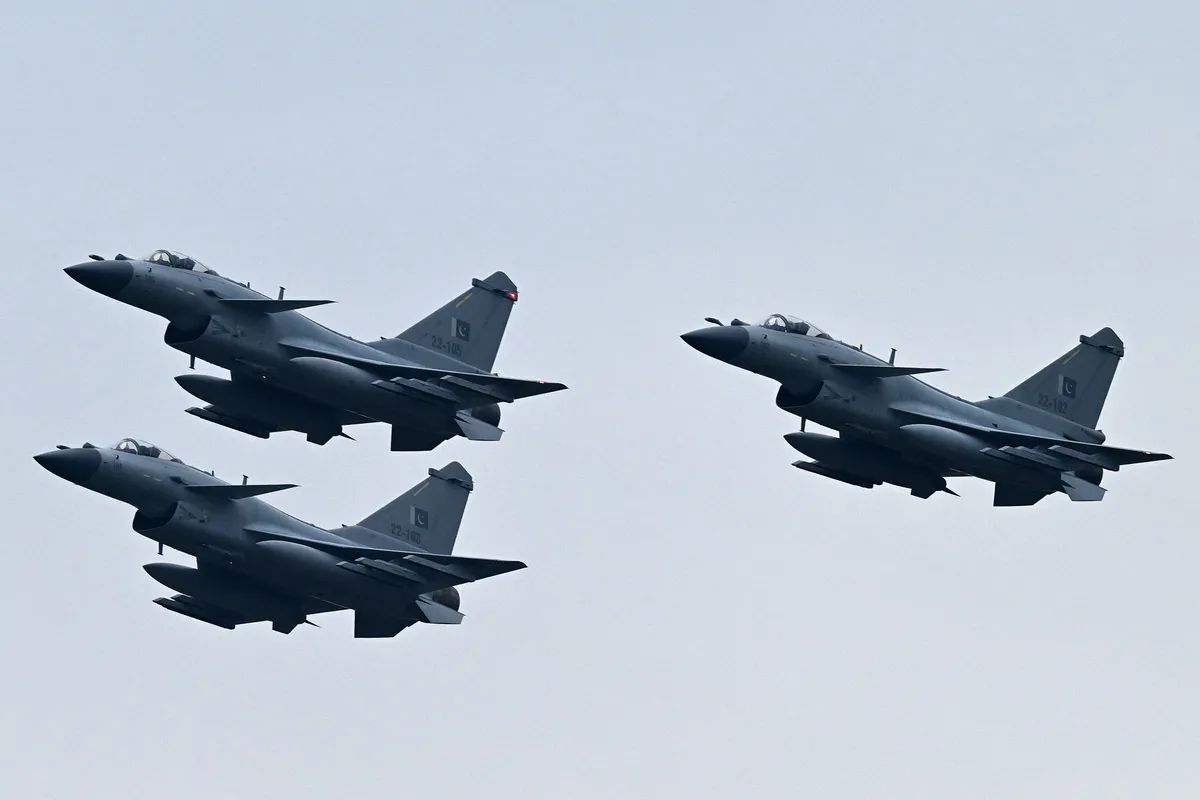
The J-10C, or Chengdu J-10, is a medium-weight, single-engine multi-role combat aircraft produced by Chengdu Aircraft, a subsidiary of AVIC. The Pakistan Air Force introduced the J-10C in 2022 and currently has 20 in service.

Qamar Cheema, executive director of an Islamabad think tank, told Nikkei that the recent battle highlighted the effectiveness of Chinese military equipment. He mentioned that Pakistan sees Chinese technology as superior to European systems, a sentiment reportedly acknowledged by French intelligence regarding the downing of aircraft.

AVIC Chengdu Aircraft’s share price rose 16% on the Shenzhen Stock Exchange, while AVIC Aerospace shares increased by 6% on the Hong Kong Stock Exchange.

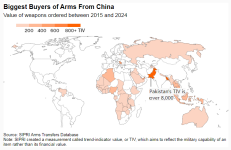
A report from the Stockholm International Peace Research Institute noted that 81% of Pakistan’s imported arms from 2020 to 2024 came from China.

Nikkei suggests that China’s military technology is being tested in real-world conflict scenarios and is boosting the credibility of Chinese equipment, strengthening China’s psychological and strategic standing, and showing its military equipment can match that of the West.


Success of Chinese Jets Against India Raises Alarm in Asia

1200x800.webp

Pakistan Air Force J-10C fighter jets produced by China’s Chengdu Aircraft Company.
Photographer: Aamir Qureshi/AFP/Getty Images

Bloomberg News
May 13, 2025 at 6:00 PM GMT+8

The recent conflict between India and Pakistan is prompting a reassessment of Chinese weapons, challenging long-held perceptions of their inferiority to Western arms and sparking concern in places wary of Beijing.

Pakistan hailed the use of its Chinese J-10Cs to shoot down five Indian fighters, including French-made Rafale aircraft, last week in response to Indian military strikes. Although the reports haven’t been confirmed, and India hasn’t commented, the jet’s maker saw its The recent conflict between India and Pakistan is prompting a reassessment of Chinese weapons, challenging long-held perceptions of their inferiority to Western arms and sparking concern in places wary of Beijing.market capitalization soar by over 55 billion yuan ($7.6 billion), or more than a fourth, by the end of last week.

Hu Xijin, the ex-editor-in-chief of China’s nationalist tabloid Global Times, warned on social media that if Pakistan’s successful strikes were true, Taiwan should feel “even more scared.” Beijing sees the self-ruled democracy as its own, and reserves the right to use military force to bring it under control.

Taiwan closely watched the clash between Pakistan and India, according to Shu Hsiao-Huang, an associate research fellow at the Institute of National Defense and Security Research, a government-funded military think tank based in Taipei.

“We may need to reassess the PLA’s air combat capabilities, which may be approaching — or even surpassing — the level of US air power deployments in East Asia,” Shu said, adding Washington might want to consider selling more advanced systems to Taiwan.

While President Xi Jinping has been trying to modernize the world’s biggest military by the number of active personnel, the People’s Liberation Army has been mired in scandals. That had raised questions about the combat-readiness of its powerful and secretive Rocket Force, which is responsible for conventional missiles and would play a crucial role in any invasion of Taiwan.

The reported success of J-10Cs, which have had few battle tests and are used to patrol the Taiwan Strait, appears to counter those doubts. It’s still uncertain, however, how they would fare against US fighters such as the F-16, which make up the bulk of Taiwan’s jets and have been combat-proven across decades and militaries.

Another Chinese weapon Pakistan uses will also be coming under intense scrutiny by Beijing’s adversaries. Parts of Chinese air-to-air PL-15 missiles found in India after the reported shoot-downs suggest the weapons, deployed on Pakistan’s J-10C aircraft, proved effective in their first known combat use. With a top speed above Mach 5, the PL-15 is a rival to Western air-to-air missiles.

微信图片_20250513185311.png
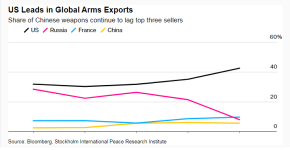
China is the world’s fourth-largest arms exporter but its customers are mostly developing nations like Pakistan that have limited funds. The latest developments could bolster Beijing’s sales pitch as major economies from Europe to Asia heed President Donald Trump’s call to ramp up defense spending.

“There is a good chance the weapons systems China is able to offer will be even more appealing to potential buyers” especially in the Global South, said James Char, assistant professor of the China Program at the S. Rajaratnam School of International Studies, noting the J-10C is not even China’s most advanced jet.

Buying weapons has also become a focus for developing nations, mulling US arms purchases to appease Trump and his demands to reduce American trade imbalances. Several of these countries list China as a top trading partner and could consider hedging bets by acquiring systems from the Asian country, too.

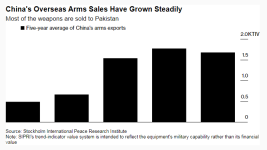
China’s overseas arms sales have been growing, with its five-year average weapons exports more than tripling in 2020-2024 from 2000-2004, according to calculations based on data from Stockholm International Peace Research Institute. Chinese government and state-owned enterprises do not disclose data on arms exports.

Some of the largest state-owned players — also blacklisted by the US — include Norinco Group, which makes armored vehicles and anti-missiles systems; Aviation Industry Corporation of China, whose subsidiary AVIC Chengdu Aircraft Co. manufactured the J-10Cs; as well as China State Shipbuilding Corp., a producer of frigates and submarines.

M. Taylor Fravel, director of the Security Studies Program at the Massachusetts Institute of Technology, cautioned that the Chinese jet was primarily for aerial combat, while the Rafale was designed to conduct many kinds of missions, meaning the J-10 may have held an advantage.

微信图片_20250513185611.png
Chinese weapons exports have been plagued for years by defects, specialists have said, adding that the seemingly inexpensive systems can drain security budgets due to maintenance expenses.

“China attracts customers for its military equipment with cut-rate pricing and financing but there are hidden costs — especially when gear malfunctions,” Cindy Zheng, then a researcher at Rand Corp., wrote in a research paper just before joining the US-China Economic and Security Review Commission in the latter stages of the Biden administration.

In 2022, Myanmar had to reportedly ground its fleet of Chinese fighter jets due to structural cracks and other technical issues. Bangladesh lodged complaints with Beijing about the quality of its military hardware last year. Even the Pakistan Navy has been facing issues with its F-22P frigates, forcing them to operate the vessels with significantly degraded capabilities.

“Questions about combat capabilities and other issues, including concerns about interoperability with non-Chinese platforms, have hampered China’s ability to expand exports beyond a handful of countries,” Bloomberg Intelligence’s senior associate analyst Eric Zhu wrote in a note last week.

China’s Defense Ministry didn’t respond to a request for comment on the past weapon defects and the J-10C’s recent performance. Beijing regularly says that its military helps maintain global stability and that it prefers to resolve the Taiwan issue peacefully.

微信图片_20250513185837.png
Xi has been trying to turn China’s defense industry around by bringing together the military and civilian sectors, in an effort to transform the PLA into a modern force by 2027.

That’s led to breakthroughs such as China’s launch in December of its first next-generation amphibious assault ships, considered the world’s largest of its kind. A video of what is believed to be a test flight of the nations’ sixth-generation fighter jet circXi has been trying to turn China’s defense industry around by bringing together the military and civilian sectors, in an effort to transform the PLA into a modern force by 2027.ulated on social media that year, leading to a rally in defense stocks.

But it’s wrong to call the J-10C’s potential success a “DeepSeek moment” for China’s military, said Fravel, referring to the artificial intelligence chat bot that surprised the world earlier this year, noting that the jet’s design wasn’t new.

“But it doesn’t need to be a DeepSeek moment to be significant,” he added. “A lot is being learned about how Chinese systems perform under combat conditions.”

 
Last edited:
This could be a turning point in history.

First time real-life battle evidence of Chinese weapon-tech beating Western weapon-tech.

It can affect every nation and militairy and change the industrial complex and global politics forever.
 

The next India-Pakistan air war may not happen until 2035! India has to wait for a "big project" to be completed


2025-05-14 11:39
Published in: Beijing

When we talked about the India-Pakistan air war before, we mostly compared it from the perspective of single weapons. Today we will talk about it from the perspective of system combat.


4e8e18df1bab4f04b9966e5e951691a5.jpeg


System warfare does not mean that if you buy a whole set of equipment such as early warning aircraft, fighter jets, air-to-air missiles, electronic warfare aircraft, tankers, etc., the system will be complete. The Indian and Pakistani air forces have all these equipment, but their performance in this air battle is very different. The real system is complete when all these equipment can achieve high-speed information sharing and information transmission is not interfered with, which requires the unification of data links of all platforms. In this regard, Pakistan did better, which is also an important reason why the Pakistani Air Force was able to win this air battle.


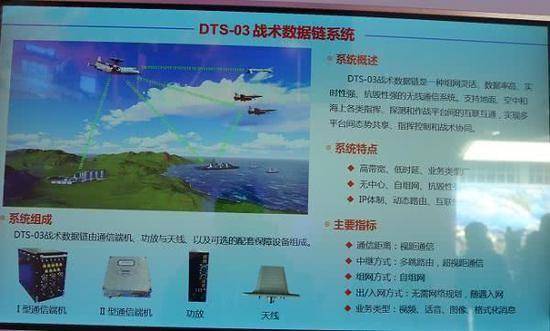
However, the data link of the Pakistani Air Force is not completely unified, but two systems coexist: the Saab 2000 AWACS and F-16 and Mirage 5 use Link 16 for interconnection, and the data link of the ZDK-03 AWACS and J-10CE and Xiaolong(JF-17) use Link 17. As for the two systems, "communication can only rely on shouting". The Saab 2000 AWACS has a detection range of only about 200 kilometers for fighter targets, and it is a "balance beam" configuration with blind spots in front and behind. In addition, because the carrier aircraft is too small, it can only detect and distribute data, and data processing and decision-making still need to be completed by the ground station. In addition, the F-16 is also restricted by the United States, so in this air battle, the Pakistani Air Force's Western system can only play a supporting role.


80cce18a3ac9409b80dbfdd661cb85e3.jpeg


In contrast, the ZDK-03 early warning aircraft has a detection range of up to 370 kilometers for fighter jets, can directly process data and make battlefield management decisions, can not only use Link17 to command the J-10CE and Xiaolong, but can also directly transmit data with the PL-15E in both directions, and is even fully compatible with the JY-27A/YLC-2 air defense radar, HQ-9/HQ-16 surface-to-air missiles and the Pakistani Navy's 054AP frigates on the ground, so Link17 became the "stealth hero" of this air battle. It can be foreseen that in the future, the Pakistani Air Force will further strengthen the Chinese equipment system, while Western equipment will gradually be marginalized.


Compared with Pakistan, the Indian Air Force's data link chaos is unparalleled in the world.


ef177611098a472095e57d77037b7485.png


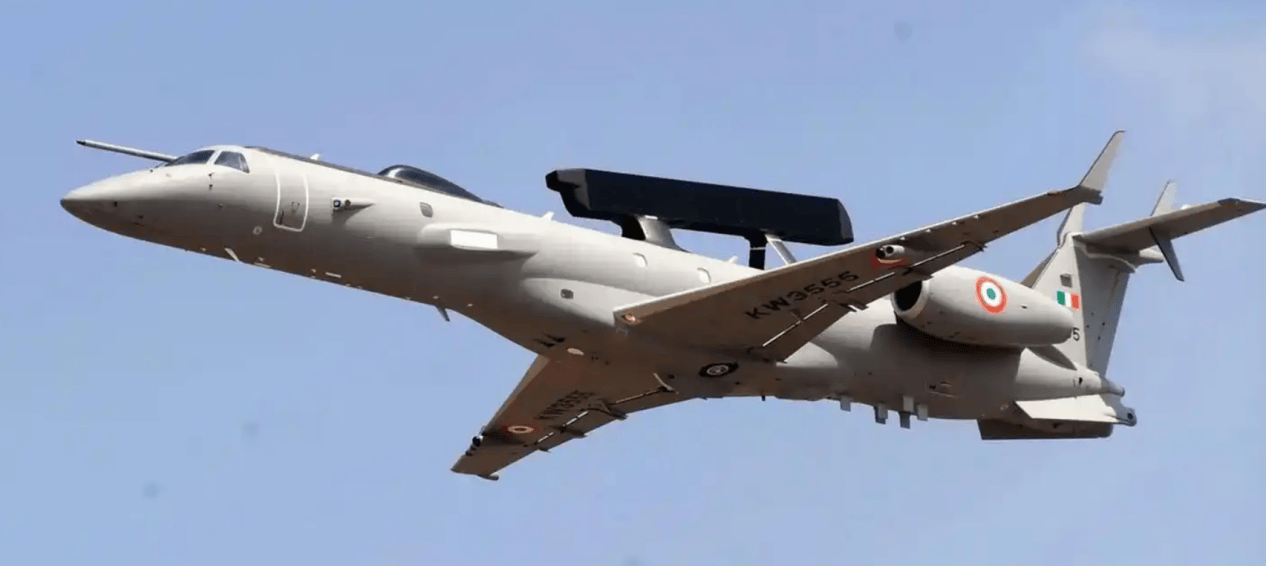
The Indian Air Force's early warning aircraft include three domestically produced "Eyes in the Sky" and three A-50Is. The former is a Brazilian ERJ-145 XR regional airliner with an Israeli radar integrated and equipped with an Indian-made data link. It can only be connected to the domestically produced "Glorious" fighter, and its transmission rate and anti-interference capabilities are a whole generation behind the Pakistani Air Force's Link16 and Link17. The performance of the "Eye in the Sky" is similar to that of Pakistan's Saab 2000. The detection distance for fighter targets is about 250 kilometers. It is also a balance beam and relies on ground command.


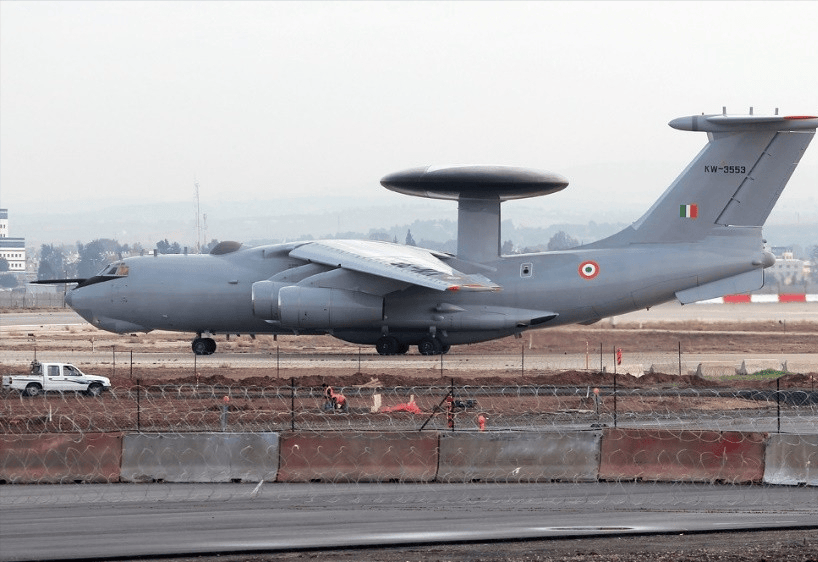
India's A-50EI early warning aircraft uses the Russian-made Il-76 as its airframe and is also equipped with an Israeli radar, but the data link is Russian-made. For this reason, a protocol conversion module is installed on the A-50I. Although the data connection between the two is achieved, it also produces a certain delay, resulting in positioning errors for aerial targets. Only the Su-30MKI and MiG-29 of the Indian Air Force are equipped with Russian-made data links, and the transmission rate of the Russian-made data link is also one generation behind Link16, and the anti-interference ability is far inferior.


24444cb903974031b0b29767a5e3850e.png


In addition, both the Russian-made data link and the Indian-made data link are centered around the AWACS aircraft. Once the AWACS aircraft is interfered with or destroyed, the entire tactical network will immediately disintegrate. In contrast, Link16 and Link17 adopt a distributed design, and the destruction of the AWACS aircraft will not affect the data sharing between fighters.


Although India's domestically produced data link and Russian-made data link are backward, they at least allow early warning aircraft and fighter jets to achieve basic data sharing. In contrast, the Rafale is equipped with the Western Link16 data link and cannot transmit data to any early warning aircraft of the Indian Air Force. It can only accept voice commands. The accuracy, timeliness, anti-interference and interception capabilities of information transmission are very low.


For example, if an Indian AWACS aircraft detects an enemy aircraft, it will take at least 4 or 5 seconds for the commander to say "Godzilla 1, enemy aircraft at 1 o'clock, distance 80, speed 600, altitude 2000". After hearing this, the Rafale pilot will have to imagine the scene in his mind, which will waste several seconds before he can turn the nose of the aircraft to scan the target. If the pilot panics and does not hear the commander's voice clearly, he will be in the dark.


63fb59c8b9f44926a1a8a21080f1299d.png


If it is a fighter compatible with data link, the data of the early warning aircraft is transmitted at the speed of light, and the position, distance, altitude, speed, model and other information of the enemy aircraft are instantly marked on the display screen. The ten or eight seconds saved are enough to complete a kill or avoid a fatal blow in the ever-changing air battle. The reason why three Rafales were shot down in the India-Pakistan air battle and only one Su-30MKI was shot down is probably because the former can only be commanded by voice, while the latter at least has a basic data link.


So what the Indian Air Force needs to do next is to speed up the unification of data links for all platforms. The Indian Air Force chose Israel's BNET-AR data link, and because the Israeli data link is compatible with Western fighters, Western fighters such as the Rafale do not need to make too many changes. However, the Indian Air Force's Russian fighters must undergo major surgery. It is not enough to just replace the data link, but even the radar must be replaced. Because as we said before, there are still compatibility issues between Russian radars and Western data links, and the Russian radars themselves have low performance, so the Indian Air Force simply replaced the radars of all Russian fighters, and the development of the radar was handed over to Israel.


540127dbf83b43e9be60611ce16f42eb.png


For the same reason of data transmission, the Indian Air Force's data link turns to the West, and the airborne weapons will also be fully Westernized. Therefore, although the Indian Air Force's air-to-air missiles have a range disadvantage, it is unlikely to purchase Russian-made R-37M air-to-air missiles for the Su-30MKI, but will cooperate with the West to develop "domestic" air-to-air missiles with a longer range, and purchase more "Meteor" missiles for the Rafale.


Given the efficiency of the Indians, it will probably take at least 10 to 8 years to unify the data links of all air force platforms. Therefore, the next large-scale air battle between India and Pakistan may have to wait until after 2035. I don’t know if this judgment is accurate. By then, the Pakistani Air Force may have entered the stealth era and equipped with the next generation of data links with better performance, and the Indian Air Force’s chances of winning will be even slimmer.


The next India-Pakistan air war may not happen until 2035! India has to wait for a "big project" to be completed


2025-05-14 11:39
Published in: Beijing

When we talked about the India-Pakistan air war before, we mostly compared it from the perspective of single weapons. Today we will talk about it from the perspective of system combat.


4e8e18df1bab4f04b9966e5e951691a5.jpeg


System warfare does not mean that if you buy a whole set of equipment such as early warning aircraft, fighter jets, air-to-air missiles, electronic warfare aircraft, tankers, etc., the system will be complete. The Indian and Pakistani air forces have all these equipment, but their performance in this air battle is very different. The real system is complete when all these equipment can achieve high-speed information sharing and information transmission is not interfered with, which requires the unification of data links of all platforms. In this regard, Pakistan did better, which is also an important reason why the Pakistani Air Force was able to win this air battle.


However, the data link of the Pakistani Air Force is not completely unified, but two systems coexist: the Saab 2000 AWACS and F-16 and Mirage 5 use Link 16 for interconnection, and the data link of the ZDK-03 AWACS and J-10CE and Xiaolong(JF-17) use Link 17. As for the two systems, "communication can only rely on shouting". The Saab 2000 AWACS has a detection range of only about 200 kilometers for fighter targets, and it is a "balance beam" configuration with blind spots in front and behind. In addition, because the carrier aircraft is too small, it can only detect and distribute data, and data processing and decision-making still need to be completed by the ground station. In addition, the F-16 is also restricted by the United States, so in this air battle, the Pakistani Air Force's Western system can only play a supporting role.


80cce18a3ac9409b80dbfdd661cb85e3.jpeg


In contrast, the ZDK-03 early warning aircraft has a detection range of up to 370 kilometers for fighter jets, can directly process data and make battlefield management decisions, can not only use Link17 to command the J-10CE and Xiaolong, but can also directly transmit data with the PL-15E in both directions, and is even fully compatible with the JY-27A/YLC-2 air defense radar, HQ-9/HQ-16 surface-to-air missiles and the Pakistani Navy's 054AP frigates on the ground, so Link17 became the "stealth hero" of this air battle. It can be foreseen that in the future, the Pakistani Air Force will further strengthen the Chinese equipment system, while Western equipment will gradually be marginalized.


Compared with Pakistan, the Indian Air Force's data link chaos is unparalleled in the world.


ef177611098a472095e57d77037b7485.png


The Indian Air Force's early warning aircraft include three domestically produced "Eyes in the Sky" and three A-50Is. The former is a Brazilian ERJ-145 XR regional airliner with an Israeli radar integrated and equipped with an Indian-made data link. It can only be connected to the domestically produced "Glorious" fighter, and its transmission rate and anti-interference capabilities are a whole generation behind the Pakistani Air Force's Link16 and Link17. The performance of the "Eye in the Sky" is similar to that of Pakistan's Saab 2000. The detection distance for fighter targets is about 250 kilometers. It is also a balance beam and relies on ground command.


India's A-50EI early warning aircraft uses the Russian-made Il-76 as its airframe and is also equipped with an Israeli radar, but the data link is Russian-made. For this reason, a protocol conversion module is installed on the A-50I. Although the data connection between the two is achieved, it also produces a certain delay, resulting in positioning errors for aerial targets. Only the Su-30MKI and MiG-29 of the Indian Air Force are equipped with Russian-made data links, and the transmission rate of the Russian-made data link is also one generation behind Link16, and the anti-interference ability is far inferior.


24444cb903974031b0b29767a5e3850e.png


In addition, both the Russian-made data link and the Indian-made data link are centered around the AWACS aircraft. Once the AWACS aircraft is interfered with or destroyed, the entire tactical network will immediately disintegrate. In contrast, Link16 and Link17 adopt a distributed design, and the destruction of the AWACS aircraft will not affect the data sharing between fighters.


Although India's domestically produced data link and Russian-made data link are backward, they at least allow early warning aircraft and fighter jets to achieve basic data sharing. In contrast, the Rafale is equipped with the Western Link16 data link and cannot transmit data to any early warning aircraft of the Indian Air Force. It can only accept voice commands. The accuracy, timeliness, anti-interference and interception capabilities of information transmission are very low.


For example, if an Indian AWACS aircraft detects an enemy aircraft, it will take at least 4 or 5 seconds for the commander to say "Godzilla 1, enemy aircraft at 1 o'clock, distance 80, speed 600, altitude 2000". After hearing this, the Rafale pilot will have to imagine the scene in his mind, which will waste several seconds before he can turn the nose of the aircraft to scan the target. If the pilot panics and does not hear the commander's voice clearly, he will be in the dark.


63fb59c8b9f44926a1a8a21080f1299d.png


If it is a fighter compatible with data link, the data of the early warning aircraft is transmitted at the speed of light, and the position, distance, altitude, speed, model and other information of the enemy aircraft are instantly marked on the display screen. The ten or eight seconds saved are enough to complete a kill or avoid a fatal blow in the ever-changing air battle. The reason why three Rafales were shot down in the India-Pakistan air battle and only one Su-30MKI was shot down is probably because the former can only be commanded by voice, while the latter at least has a basic data link.


So what the Indian Air Force needs to do next is to speed up the unification of data links for all platforms. The Indian Air Force chose Israel's BNET-AR data link, and because the Israeli data link is compatible with Western fighters, Western fighters such as the Rafale do not need to make too many changes. However, the Indian Air Force's Russian fighters must undergo major surgery. It is not enough to just replace the data link, but even the radar must be replaced. Because as we said before, there are still compatibility issues between Russian radars and Western data links, and the Russian radars themselves have low performance, so the Indian Air Force simply replaced the radars of all Russian fighters, and the development of the radar was handed over to Israel.


540127dbf83b43e9be60611ce16f42eb.png


For the same reason of data transmission, the Indian Air Force's data link turns to the West, and the airborne weapons will also be fully Westernized. Therefore, although the Indian Air Force's air-to-air missiles have a range disadvantage, it is unlikely to purchase Russian-made R-37M air-to-air missiles for the Su-30MKI, but will cooperate with the West to develop "domestic" air-to-air missiles with a longer range, and purchase more "Meteor" missiles for the Rafale.


Given the efficiency of the Indians, it will probably take at least 10 to 8 years to unify the data links of all air force platforms. Therefore, the next large-scale air battle between India and Pakistan may have to wait until after 2035. I don’t know if this judgment is accurate. By then, the Pakistani Air Force may have entered the stealth era and equipped with the next generation of data links with better performance, and the Indian Air Force’s chances of winning will be even slimmer.


I prefer reading domestic articles, but the preparation time in India may be shorter
 
Guys, please give credit to the Pak Pilots too. They maximized the capability of J-10/PL-15. We didn't even give them the domestic PL-15 >300km version, yet they managed to have such superb performance.
We are fortunate to have excellent PAF pilots who conducted our first live fighter demonstration for us. Thank you Pakistan.

And report sympathetic consolation to Dassault on France.
 

Users who are viewing this thread

Pakistan Defence Latest

Country Watch Latest

Back
Top