India-Pakistan conflict | Why can't the Rafale fighter jet that can interfere with the F-22 escape the attack of Chinese missiles
Recently, a sudden air battle broke out in Kashmir, and the Pakistani Air Force launched a carefully planned air strike against India. According to Pakistan's notification and a large amount of supporting information on social media platforms, the Indian Air Force lost 6 military aircraft in a short period of time. The most shocking of these was that the Rafale fighter was destroyed by China's PL-15 missile.
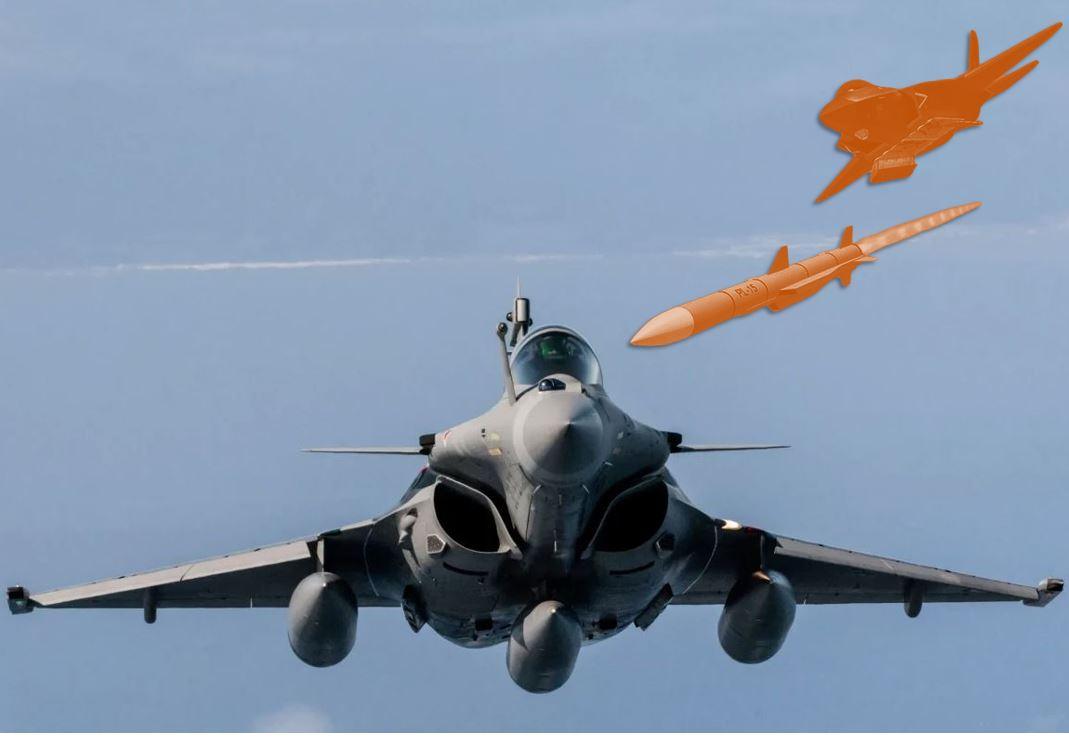
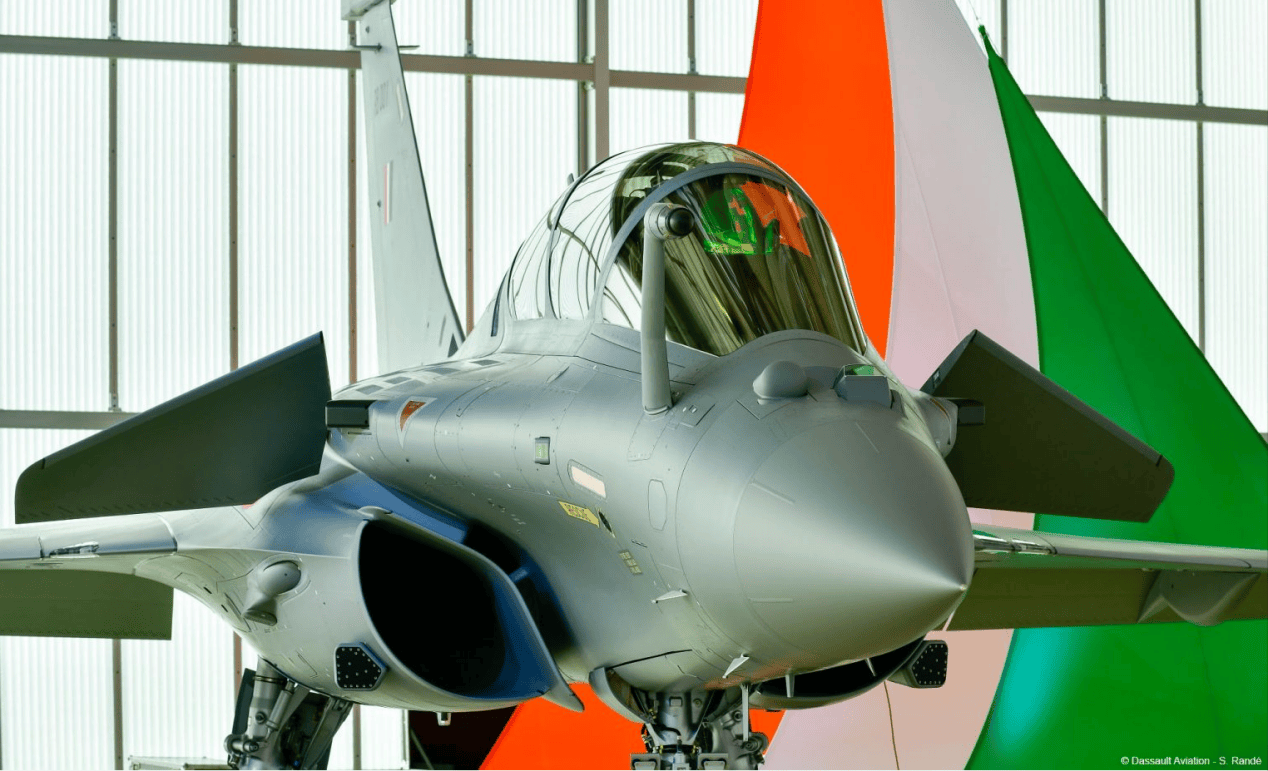
This is not an air battle victory in the ordinary sense. The Rafale fighter is the high-end equipment that India is most proud of in recent years. It has an active phased array radar, beyond-visual-range combat capability, and is also equipped with the Spectra integrated electronic warfare system that is said to be able to resist the lock of the F-22. In the vision of the Western aviation community, it is the "ultimate form" of the fourth-generation and a half fighter, designed specifically for complex electromagnetic environments and theoretically extremely difficult to be locked and shot down.
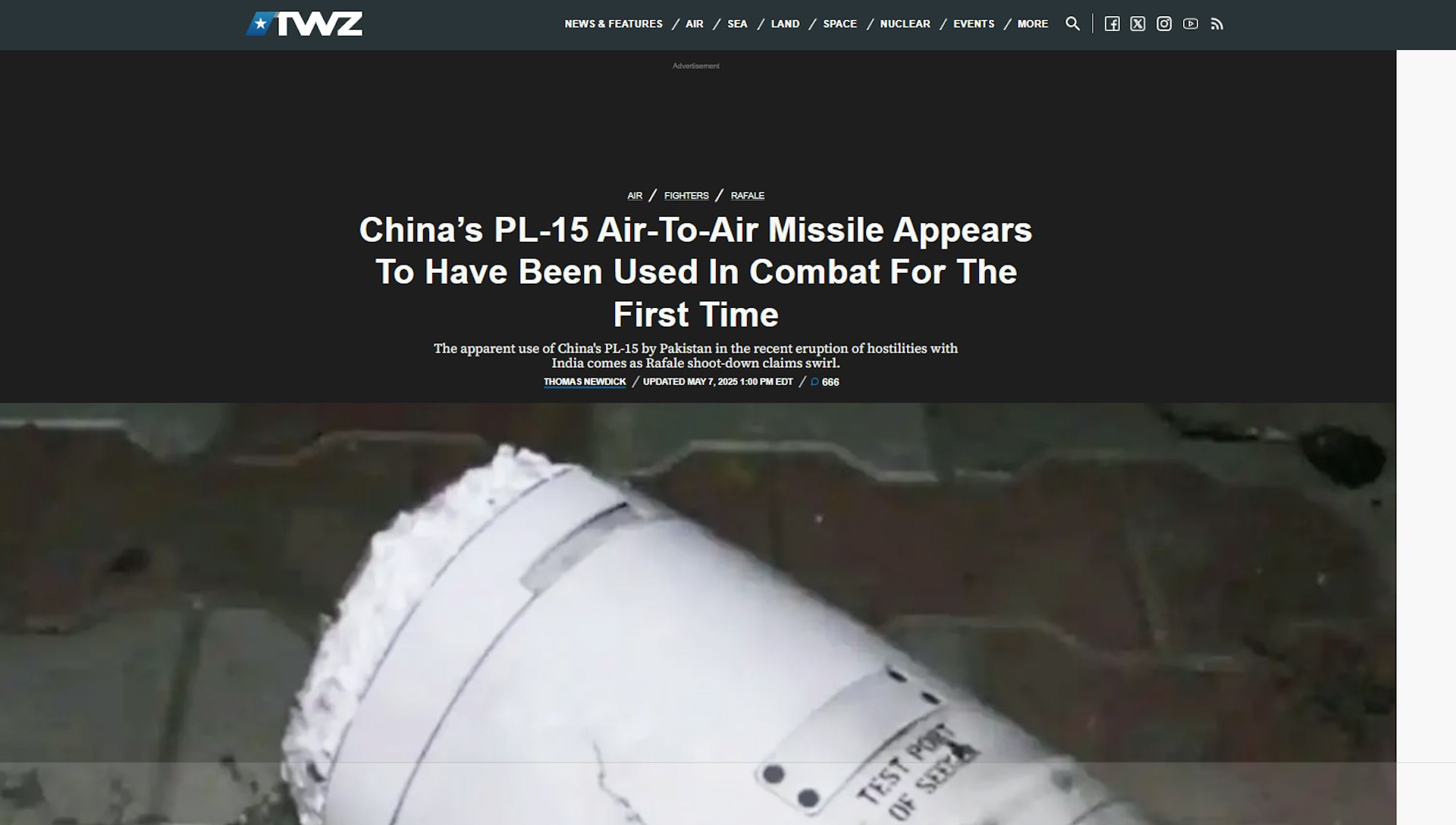
The US military news website The WarZone (TWZ) published an article saying that China's PL-15 air-to-air missile appears to have been used in actual combat for the first time.
But this time, it was not only hit, but was hit by the PL-15 missile with almost no evasive action. What exactly happened behind this? For this "silent long-range hunting", we must re-understand the truth of modern air combat from the coordinated changes in battlefield layout, electromagnetic confrontation mechanism and missile technology.
Europe's most advanced air combat self-defense system has failed
Logically speaking, the Rafale fighter shouldn't be shot down so easily. The Spectra electronic warfare system it carries is hailed by France's Dassault Aviation as "Europe's most advanced air combat self-defense system." This system integrates a radar warning receiver (RWR), an active jammer (DRFM) and a chaff/infrared decoy launcher, which can issue an early warning when the enemy radar is locked, and then automatically release a jamming beam or decoy bomb to avoid missile tracking. In NATO exercises, Spectra has successfully interfered with US military radars, and even F-22 stealth fighters were unable to lock on to it. It is well-known.
So why did it fail to defend against the PL-15?
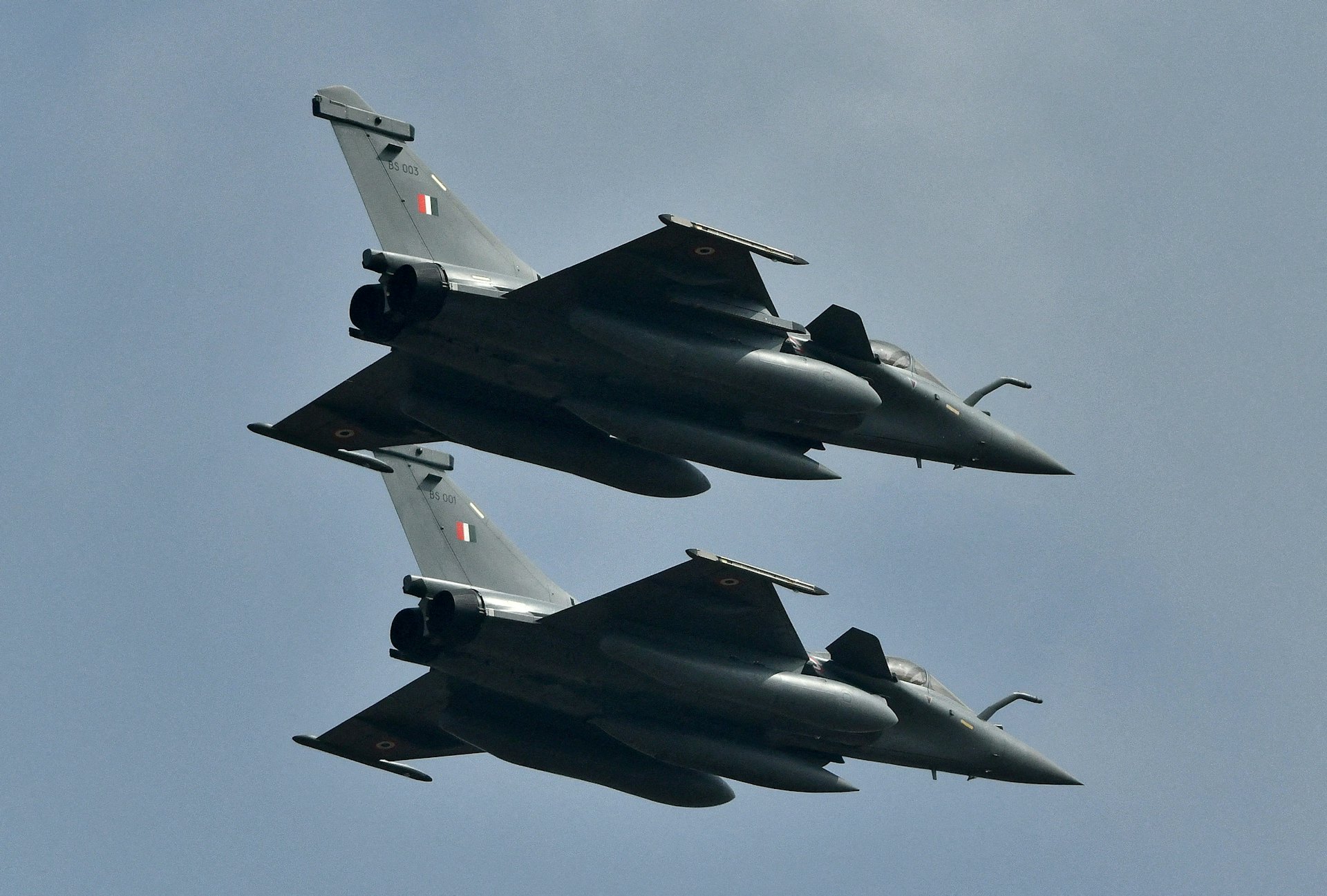
Indian Air Force Rafale fighter jets fly during the Aero India 2021 at Yelahanka air base in Bengaluru, India, February 3, 2021. (Reuters)
The key to the problem may not be the technical shortcomings of the Spectra system itself, but the tactics and posture adopted by the Pakistan Air Force, which exceed the response boundaries of Spectra. The Spectra system is a defense system designed to counter the "conventional air combat process": radar detection → threat identification → interference avoidance. However, facing the PL-15, the Spectra system may not have "failed to interfere successfully" but "did not even have time to initiate the interference."
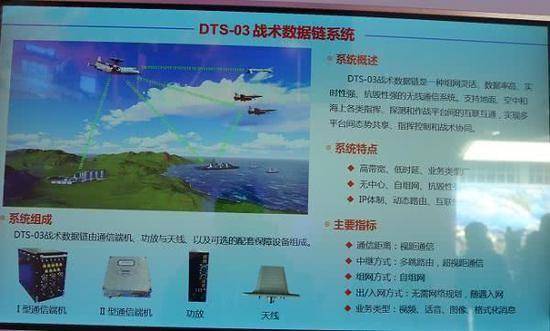
Because the PL-15 is not a lone attack, but is placed in a complete combat network of "early warning + data link + guidance integration". The PL-15 is usually accurately guided by early warning aircraft or ground radar through data link in the mid-flight phase, and active radar guidance is not activated until the final phase. The active radar seeker of PL-15 takes only a short time to start up. Once started, it will enter terminal lock. At this time, the distance to the target may be less than 20 kilometers. The reaction time left for Spectra is measured in seconds, and the interference window is extremely small.
Photos of what appear to be wreckage of the Chinese-made PL-15 air-to-air missile appearing in India have been circulating on social media. (Internet picture)
In addition, if the PL-15 uses a frequency-agile, low-detectable guidance band (such as the Ka-band), supplemented by a two-way ground and air data link to correct the track, then a system such as Spectra, which focuses on "fighter self-protection", will not be able to provide real protection. In addition, the missile itself has an optimized anti-interference algorithm. Even if Spectra successfully identifies and releases the bait, it may not change the missile's track.
So the Spectra system is not facing a missile, but a dynamically changing aerial ambush link covering hundreds of kilometers. There is another key factor that cannot be ignored: the biggest advantage of the Spectra system is to deploy resources under the premise that the electromagnetic situation is known and the threat direction is clear, and to play an active interference and deception role in the front battlefield. But from the very beginning, this battle was an information asymmetric battle set by Pakistan. The Indian Air Force may not have realized it was surrounded by an electronic fire network until the first Rafale was hit. This is not a failure of Spectra technology, but it was strategically abandoned when facing a Chinese system to suppress the opponent.
Beautiful ambush
The key victory achieved by PL-15 was not only due to the missile's performance, but also a carefully designed "airspace ambush" by the Pakistan Air Force.
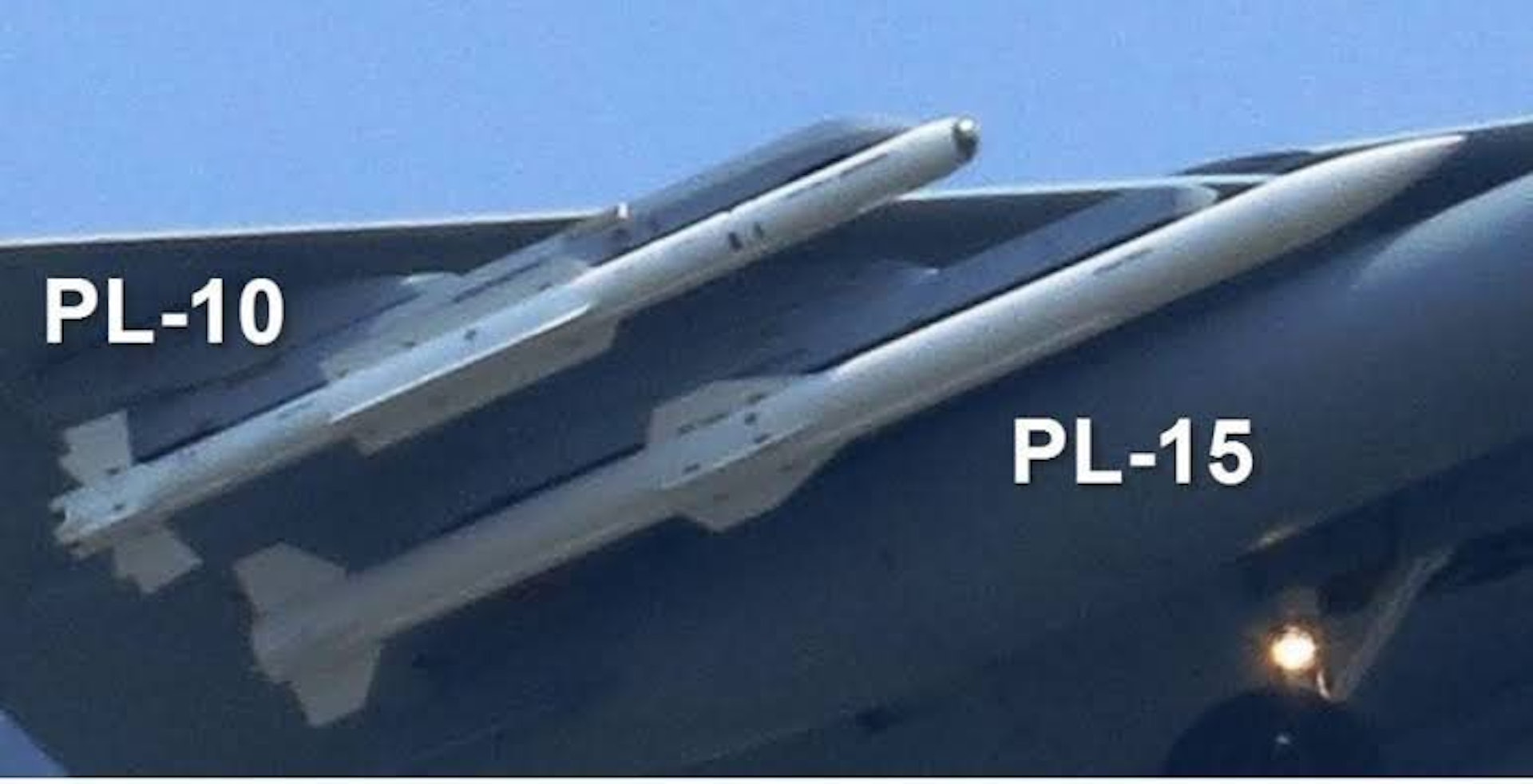
Chinese-made PL-15 air-to-air missile. (Internet picture)
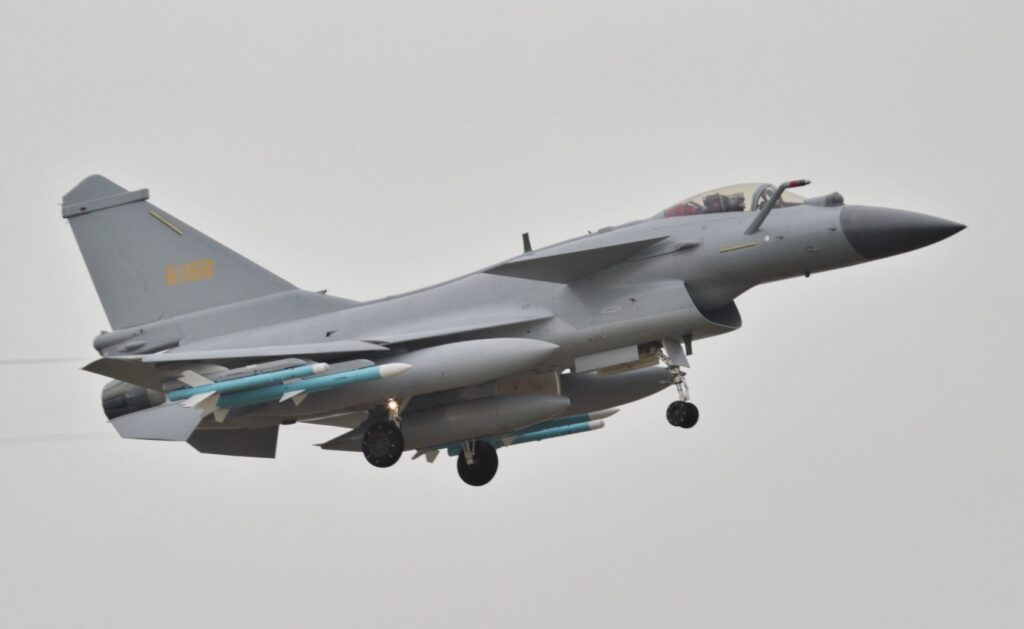
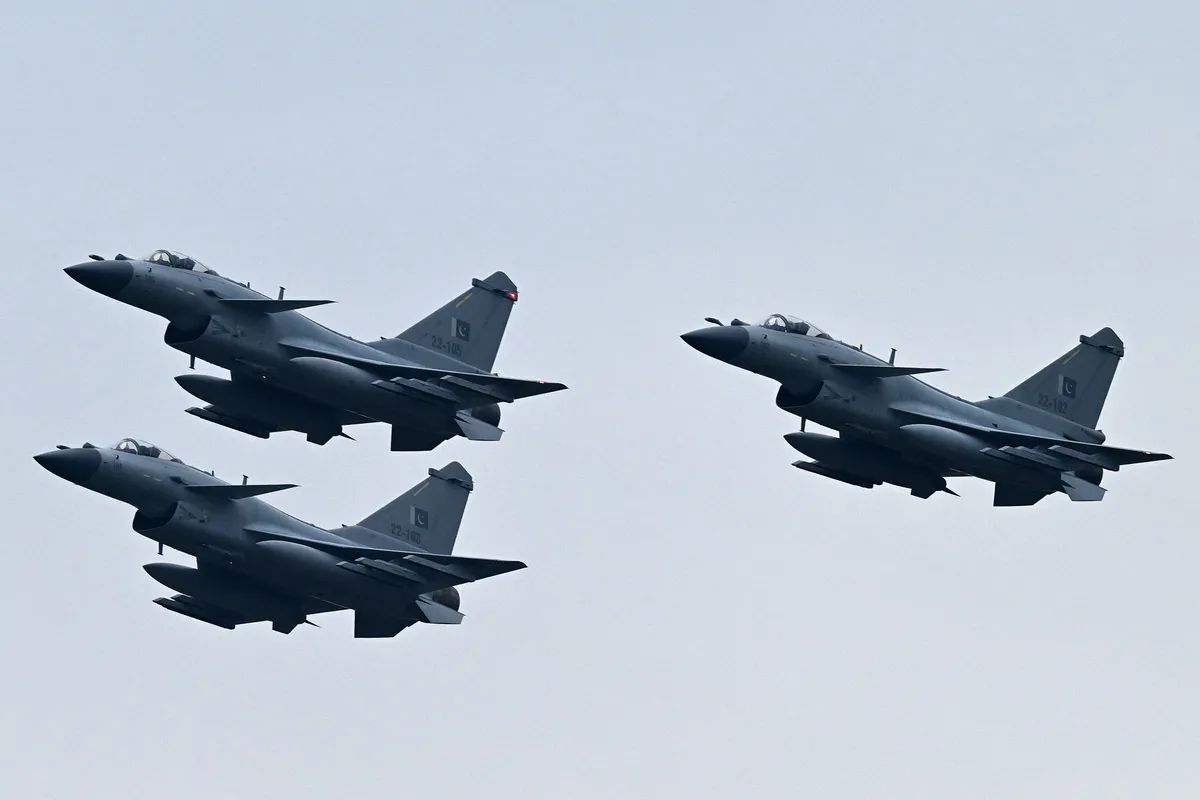
This operation was not a temporary response, but a highly planned systematic strike. According to several Pakistani lawmakers and sources, the Rafale fighter was shot down by a PL-15 missile launched by a J-10C fighter. This means that the J-10C not only undertakes the tasks of search and target guidance, but is also the core firepower platform in the entire strike chain. The active phased array radar and data link system it carries enable it to independently complete the closed-loop capability of "detection-aiming-launch" in complex electromagnetic environments.
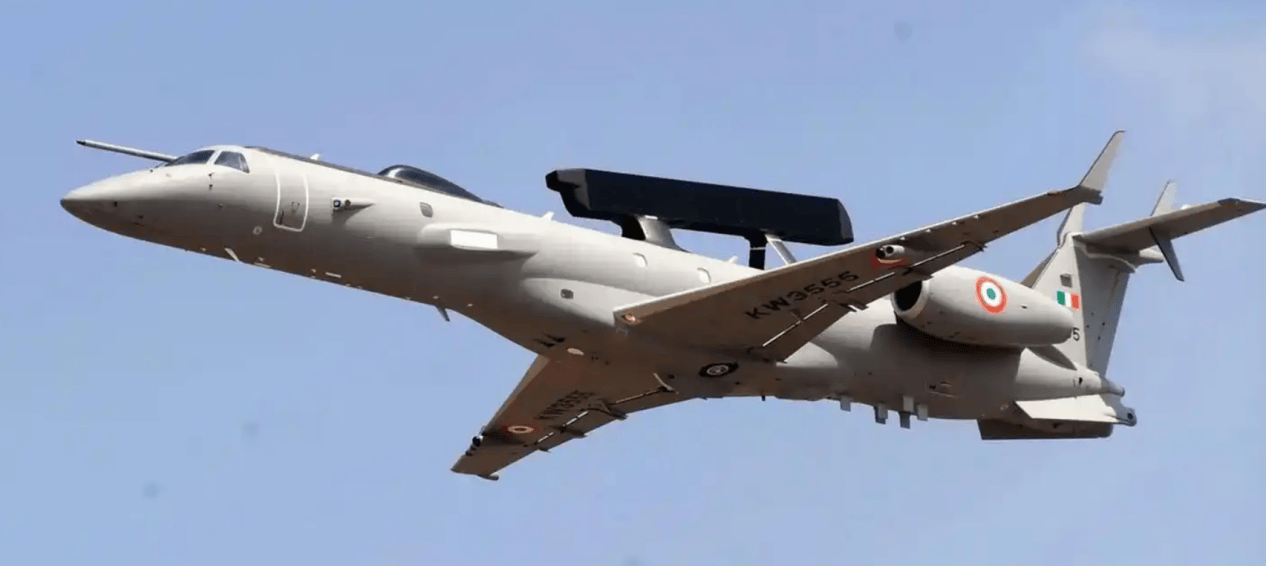
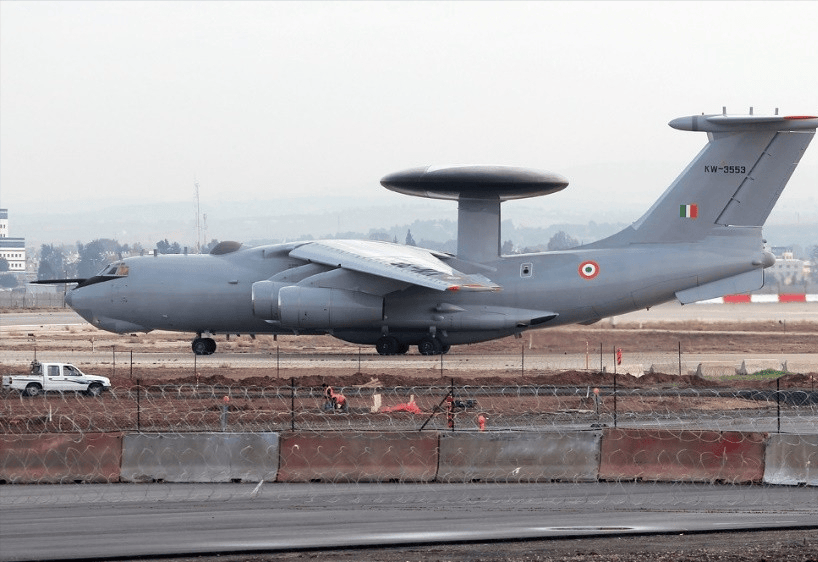
At the same time, the JF-17 Block III may have performed auxiliary tasks with greater tactical flexibility: containing Indian airspace, implementing induced disturbances, compressing the Rafale's available operating space, and creating a clean launch window for the J-10C; the F-16 provided tactical backup, the early warning aircraft ZDK-03 maintained battlefield situation awareness, and the ground air defense force formed an integrated blockade network covering the long, medium and short distances.
More importantly, this was not just an air-to-air firefight, but a joint air-to-ground, highly controlled battlefield ambush. HQ-9 and other medium- and long-range air defense missiles are likely to be deployed forward to block the Indian army's support direction and avoidance path, provide in-depth support for the air "strike formation", and put Indian fighter jets into an oppressive situation from the moment they enter the field.
Under such a system attack, the electronic warfare advantages of a single model cannot be exerted at all. The Spectra system did not fail; it simply had no way of responding.
Dare to fight is the hard truth
Many people may be surprised by the outcome of this battle, but what is really worthy of attention is not the range of the PL-15, nor the defeat of the Rafale, but the combat will and execution capability demonstrated by the Pakistan Air Force.
They did not respond hastily, but chose to take the initiative after careful planning; it was not an "air shootout" where they fired one shot and moved to another location, but an ambush attack under system suppression. This battle, to some extent, reminds people of the action ten years ago when Türkiye shot down a Russian Su-24 fighter-bomber in one fell swoop - either don't fight, or fight hard and catch the opponent off guard.
In contrast, although the Indian Air Force is well equipped, it is always on the passive side. The technology is not backward, and the fighter jets are not unadvanced, but when the command chain is chaotic and system coordination is insufficient, even the best aircraft will become an isolated island of "fighting on its own".
There is no doubt that Pakistan is proving to the outside world that it already has an air force that dares to fight, is capable of fighting and is organized. This is not only a demonstration of the Pakistani Air Force's capabilities, but also a test run of China's "Chinese Offensive Air Force Combat System." The coordination between PL-15, J-10C and early warning system is demonstrating a combat logic that is different from the Western "single-machine performance-dominated" approach. In the future, countries around the world may have to reassess the true strength of the Chinese Air Force in remote air control, information dominance, and system operations.
The PL-15 is finally no longer just a model and information at the air show, but has truly entered the actual combat record book and the psychological shadow of the opponent's pilots.
This article is authorized to be published by Observer.com.
近日,一場突如其來的空戰在喀什米爾爆發,巴基斯坦空軍對印度展開了精密籌劃的空中打擊。根據巴方通報與社交平台大量佐證資料,印度空軍在短時間內

www-hk01-com.translate.goog