ghazi52
THINK TANK: CONSULTANT


- Thread starter
- #391
.
Karachi
[/td]
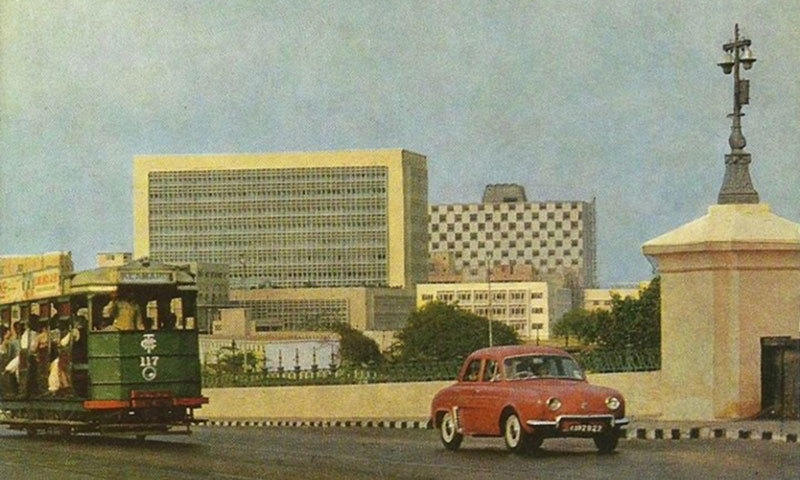
Karachi 1961: Brand new buildings and roads in the city began to emerge in the 1960s. The government of Field Martial Ayub Khan that came into power through a military coup in 1958 unfolded aggressive industrialisation and business-friendly policies, and Karachi became a natural city for the government to solidify its economic policies.

The II Chundgrigar Road in 1962: It was in the 1960s that this area began to develop into becoming Karachi’s main business hub. It began being called ‘Pakistan’s Wall Street.’

1963: Construction underway of the Habib Bank Plaza on Karachi’s II Chundrigarh Road. The building would rise to become the country’s tallest till the 2000s when two more buildings (also in Karachi) outgrew it.

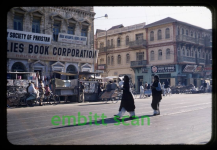
Saddar area in 1965: Trendy shops, cinemas, bars and nightclubs began to emerge here in the 1960s and it became one of the most popular areas of Karachi. With Karachi’s regeneration as an economic hub, its traditional business and pleasure ethics too returned that consisted of uninterrupted economic activity by the day and an unabashed indulgence in leisure activities in the evenings.

A Pakhtun rickshaw driver at Karachi’s Clifton Beach in 1962. Though the Ayub regime moved the capital to the newly built city of Islamabad, the economic regeneration enjoyed by Karachi during the Ayub regime’s first six years attracted a wave of inner-country migration to the city.
A large number of Punjabis from the Punjab province and Pakhtuns from the former NWFP (present-day Khyber Pakhtunkhwa) began to arrive looking for work from the early 1960s onwards.
Karachi
[/td]
Karachi 1961: Brand new buildings and roads in the city began to emerge in the 1960s. The government of Field Martial Ayub Khan that came into power through a military coup in 1958 unfolded aggressive industrialisation and business-friendly policies, and Karachi became a natural city for the government to solidify its economic policies.
The II Chundgrigar Road in 1962: It was in the 1960s that this area began to develop into becoming Karachi’s main business hub. It began being called ‘Pakistan’s Wall Street.’
1963: Construction underway of the Habib Bank Plaza on Karachi’s II Chundrigarh Road. The building would rise to become the country’s tallest till the 2000s when two more buildings (also in Karachi) outgrew it.
Saddar area in 1965: Trendy shops, cinemas, bars and nightclubs began to emerge here in the 1960s and it became one of the most popular areas of Karachi. With Karachi’s regeneration as an economic hub, its traditional business and pleasure ethics too returned that consisted of uninterrupted economic activity by the day and an unabashed indulgence in leisure activities in the evenings.
A Pakhtun rickshaw driver at Karachi’s Clifton Beach in 1962. Though the Ayub regime moved the capital to the newly built city of Islamabad, the economic regeneration enjoyed by Karachi during the Ayub regime’s first six years attracted a wave of inner-country migration to the city.
A large number of Punjabis from the Punjab province and Pakhtuns from the former NWFP (present-day Khyber Pakhtunkhwa) began to arrive looking for work from the early 1960s onwards.