Navigation
Install the app
How to install the app on iOS
Follow along with the video below to see how to install our site as a web app on your home screen.
Note: This feature may not be available in some browsers.
More options
Style variation
You are using an out of date browser. It may not display this or other websites correctly.
You should upgrade or use an alternative browser.
You should upgrade or use an alternative browser.
Pakistan-India Conflict 2025: News Updates and Discussion
- Thread starter Ali_Baba
- Start date
More options
Who Replied?

Yasser76
Elite Member

is it https://ptv.com.pk/ptvworld/newsdetail/6027 nonsense too. ?
Anyways, you are a bit harsh on my sharing ...look at your words ...shows plenty about you too....
You have been peddling Indian talking points and propoganda here for last 2 weeks. Sit the f**k down
Yasser76
Elite Member
The Biggest News from India-Pakistan Air Battle: the Kill Chain
The most important element of an air-to-air engagement in the recent India-Pakistan conflict may be how Pakistan integrated its Chinese-origin weapons and air defenses to shoot down at least one Indian Rafale fighter, an expert on the Chinese military said.
The effectiveness of the kill chain may have been more important than the capabilities of the specific fighters, said Michael Dahm, a senior fellow at AFA’s Mitchell Institute for Aerospace Studies, who is an expert on Chinese military affairs.
Pakistan can “integrate ground radars with fighter jets and airborne early warning aircraft,” said Dahm. “The Pakistani Air Force deployed …’ A’ launched by ‘B’ and guided by ‘C’” and hit the target, he added, citing a May 12 report from China Space News, a Chinese defense industry magazine.
Speaking on a recent podcast, Dahm said the chain may have started with a Pakistani ground radar—“maybe a surface-to-air missile system, or some other type of radar system”—which “illuminated the Indian target.” Then, a Pakistani J-10C fighter “launched its missiles, probably at range, and finally, an airborne early warning and control aircraft used a midcourse datalink to update and guide the missile to the Indian fighter.”
It was a “long-range shot, beyond visual range,” likely using the export version of China’s PL-15 air-to-air missile, which Dahm said has an 80 nautical mile range.
The kill chain is the same kind the U.S. is attempting to create within and between its services through the Combined Joint All Domain Command and Control (CJADC2) concept.
“When, and if, we do find out more about the details of the engagement, this may tell a story, more about systems integration and how well Pakistan has done systems integration, versus how well India has done systems integration,” Dahm said.
No details are available about where the Rafale was when it was hit, although Pakistani news agencies showed wreckage that may or may not have been the remains of an Indian Rafale on Pakistani territory. Pakistan claimed after the engagement that it had shot down five Indian aircraft—four fighters and a drone—which conducted an airstrike in Pakistan.
Pakistan seems to have very recently converted several Chinese airborne early warning and control aircraft into electronic warfare aircraft, Dahm said, but it’s unknown whether those aircraft were manipulating the electromagnetic environment. Pakistan’s radar systems and the J-10 are also Chinese in origin.
“What does this say about Chinese technology versus Western technology? Probably not a whole lot, but it probably says a lot more about systems of systems, about training, about tactics … about all of those difficult-to-quantify things,” rather than the relative capabilities of the J-10 versus the Rafale, Dahm said.
He also noted that while India’s air force is bigger than Pakistan’s, it includes “a hodgepodge” of Western, Israeli, Russian, and Indian-produced technology, which makes systems integration much more difficult.
Dahm said that while many news outlets are playing up the angle of the fourth-generation J-10C shooting down a fourth-and-a-half generation Rafale, the comparison of aircraft “probably tells us absolutely nothing.” It’s not known whether the Rafale was departing the target area or whether it had fired any missiles at the Pakistani aircraft, he said.
The Rafale was sold to India with the Meteor missile, which Dahm described as “a beast”—a solid-fueled ramjet missile with a top speed of Mach 4 and a range of 108 nautical miles—with a “wicked … no-escape zone.”
But “from the very, very limited reporting we have, there are no indications the Rafale was shot down with a Meteor missile still intact. They found the wreckage. There was a shorter-range [infrared] missile found in the wreckage, but there was no indication that the Meteor was there. Now, maybe the Rafale had a Meteor and it fired it. Maybe it wasn’t carrying one at all. But I don’t think this really tells us anything about how good the J-10 is compared to the Rafale, or how good the Chinese technology is compared to the Western tech.”
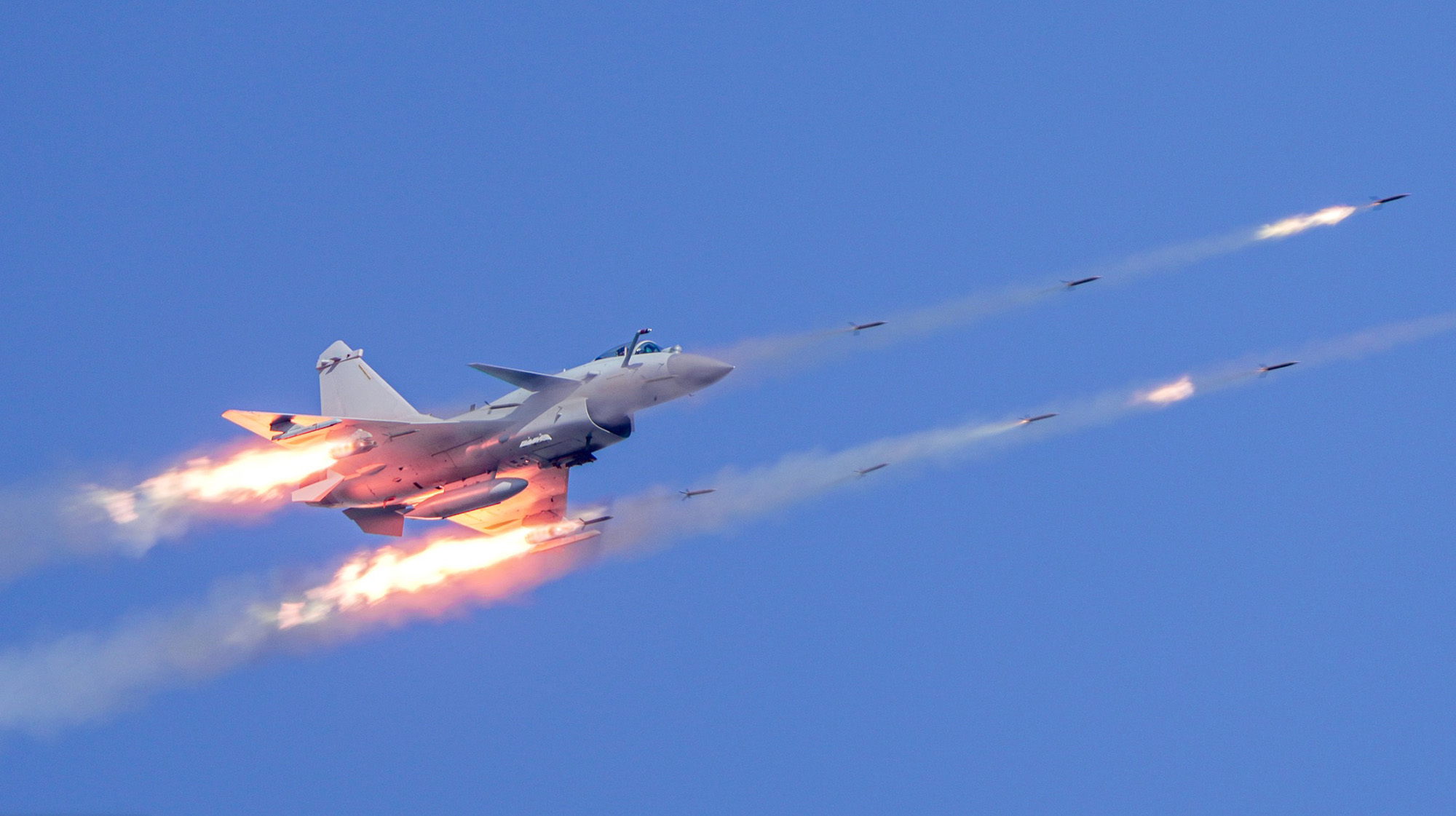
The Biggest News from India-Pakistan Air Battle: the Kill Chain
Pakistan's kill chain was likely a bigger factor in shooting down an Indian fighter than the jets' relative strengths, an expert said.
 www.airandspaceforces.com

Maarkhoor
Snake Eater
He died during corona his real name was Amit Gupta a small grocery owner from Delhi.There used to be a guy Guru Dutt who had defeated entire Pakistani armed forces, where is he now?
There were two guys with the names of milspec and hellfire, where are these two specimen?
Vapnope
Trusted Member
Sorry to hear about his death.He died during corona his real name was Amit Gupta a small grocery owner from Delhi.
NA71
Trusted Member
Bro....I mostly posted memes taken from social media ..... Mod can verify that ....You have been peddling Indian talking points and propoganda here for last 2 weeks. Sit the f**k down

Samlee
Trusted Member
Delusion of members here is mind boggling..... There country proper get bombed along with 11 front line air bases successfully & all the looser have is social media Photoshop bravado. The cope here is insane.....Operation Bunyan-um Marsoos turned out to be a failure of epic proportions, a dud Lmao!...... Pure Center of gravity of Pakistan military at display
Why being so modest bro India has conquered Lahore Port set fire to Karachi port has General Asim Munir arrested and PM hiding in a bunker ROFL
r3alist
Elite Member
The Biggest News from India-Pakistan Air Battle: the Kill Chain
The most important element of an air-to-air engagement in the recent India-Pakistan conflict may be how Pakistan integrated its Chinese-origin weapons and air defenses to shoot down at least one Indian Rafale fighter, an expert on the Chinese military said.
The effectiveness of the kill chain may have been more important than the capabilities of the specific fighters, said Michael Dahm, a senior fellow at AFA’s Mitchell Institute for Aerospace Studies, who is an expert on Chinese military affairs.
Pakistan can “integrate ground radars with fighter jets and airborne early warning aircraft,” said Dahm. “The Pakistani Air Force deployed …’ A’ launched by ‘B’ and guided by ‘C’” and hit the target, he added, citing a May 12 report from China Space News, a Chinese defense industry magazine.
Speaking on a recent podcast, Dahm said the chain may have started with a Pakistani ground radar—“maybe a surface-to-air missile system, or some other type of radar system”—which “illuminated the Indian target.” Then, a Pakistani J-10C fighter “launched its missiles, probably at range, and finally, an airborne early warning and control aircraft used a midcourse datalink to update and guide the missile to the Indian fighter.”
It was a “long-range shot, beyond visual range,” likely using the export version of China’s PL-15 air-to-air missile, which Dahm said has an 80 nautical mile range.
The kill chain is the same kind the U.S. is attempting to create within and between its services through the Combined Joint All Domain Command and Control (CJADC2) concept.
“When, and if, we do find out more about the details of the engagement, this may tell a story, more about systems integration and how well Pakistan has done systems integration, versus how well India has done systems integration,” Dahm said.
No details are available about where the Rafale was when it was hit, although Pakistani news agencies showed wreckage that may or may not have been the remains of an Indian Rafale on Pakistani territory. Pakistan claimed after the engagement that it had shot down five Indian aircraft—four fighters and a drone—which conducted an airstrike in Pakistan.
Pakistan seems to have very recently converted several Chinese airborne early warning and control aircraft into electronic warfare aircraft, Dahm said, but it’s unknown whether those aircraft were manipulating the electromagnetic environment. Pakistan’s radar systems and the J-10 are also Chinese in origin.
“What does this say about Chinese technology versus Western technology? Probably not a whole lot, but it probably says a lot more about systems of systems, about training, about tactics … about all of those difficult-to-quantify things,” rather than the relative capabilities of the J-10 versus the Rafale, Dahm said.
He also noted that while India’s air force is bigger than Pakistan’s, it includes “a hodgepodge” of Western, Israeli, Russian, and Indian-produced technology, which makes systems integration much more difficult.
Dahm said that while many news outlets are playing up the angle of the fourth-generation J-10C shooting down a fourth-and-a-half generation Rafale, the comparison of aircraft “probably tells us absolutely nothing.” It’s not known whether the Rafale was departing the target area or whether it had fired any missiles at the Pakistani aircraft, he said.
The Rafale was sold to India with the Meteor missile, which Dahm described as “a beast”—a solid-fueled ramjet missile with a top speed of Mach 4 and a range of 108 nautical miles—with a “wicked … no-escape zone.”
But “from the very, very limited reporting we have, there are no indications the Rafale was shot down with a Meteor missile still intact. They found the wreckage. There was a shorter-range [infrared] missile found in the wreckage, but there was no indication that the Meteor was there. Now, maybe the Rafale had a Meteor and it fired it. Maybe it wasn’t carrying one at all. But I don’t think this really tells us anything about how good the J-10 is compared to the Rafale, or how good the Chinese technology is compared to the Western tech.”
The Biggest News from India-Pakistan Air Battle: the Kill Chain
Pakistan's kill chain was likely a bigger factor in shooting down an Indian fighter than the jets' relative strengths, an expert said.
Is that reasonable to say, the article is implying that the US is trying to adopt this now, I thought it was already built in to the f 35 infrastructure
mythbuster
Trusted Member
Our dear neighbour still ha a potent weapon in her arsenal.... it's called "
"
RescueRanger
Meme Lord
Bro,Where is the proof of this?
There is going to be some internal strike. Inside Pakistan inside Balochistan or KP. That is the threat..

Sharma Ji
Elite Member
o bhai, Guru is alive and well.Our dear neighbour still ha a potent weapon in her arsenal.... it's called "
why you spreading such morbid afwahs ?

Corax
Trusted Member
The real failure of the Pak state is the failure of the intelligence services to stop these attacks and target those involved, although they have had some success, there's far too many attacks in my view. Yes, I know it's difficult given the ground conditions, but given the history of our intelligence services, we should be very adept at it by now.Bro,
There is going to be some internal strike. Inside Pakistan inside Balochistan or KP. That is the threat..
Corax
Trusted Member
A bit of side humour... currently on my way to work in London on the train, you can spot an Indian a mile away, they'll be wearing a winter coat in warm summer weather, and they'll have a backpack on both shoulders slung really low so that it's hitting the back of their legs...they have a unique look lol 
RescueRanger
Meme Lord
Well we have swatted 13 of them in the past week alone and over 88 of them before then in April and early May. Pakistan security forces conduct upto 150 IBOs every day.The real failure of the Pak state is the failure of the intelligence services to stop these attacks and target those involved, although they have had some success, there's far too many attacks in my view. Yes, I know it's difficult given the ground conditions, but given the history of our intelligence services, we should be very adept at it by now.
We just need to get the communtiy involved to become the eyes and ears of the security forces.
Pakistan Defence Latest


Country Watch Latest
-
 Iran - Israel/US War: Israel-US declare war on Iran, Iran responds (205 Viewers)
- Latest: Oldenwisdom...قول بزرگ
-

-
-

-
Latest Posts
-

-
-
Iran - Israel/US War: Israel-US declare war on Iran, Iran responds (205 Viewers)
- Latest: Oldenwisdom...قول بزرگ
-

-
 Makkah Defence Alliance: Turkey, Saudi Arabia, and Pakistan, news & updates (83 Viewers)
- Latest: maxpane