What Oman's potential JF-17 fighter jet deal means for China and Pakistan

K2RULEZ

Elite Member
Joined
Mar 16, 2012
Messages
40,535
Reaction score
69,425
Reputation
14,348.3
Country of Origin
Country of Residence
Muscat’s reported interest in the JF-17 tests whether diversifying defense suppliers can deliver additional capability without disproportionate costs or ally opposition.

On Oct. 21, Army Recognition reported that the Royal Air Force of Oman was in talks with Beijing and Islamabad over a possible purchase of their jointly produced JF-17 fighter jets. Although no purchase has been announced and financial terms remain undisclosed, the potential sale raises questions about what such aircraft would offer an air force already equipped with US F-16s and European Typhoons.

For Pakistan, a purchase agreement for the JF-17s would secure a customer in a Gulf market long dominated by Western combat aircraft. For China, the jointly produced platform could provide another route for its aerospace industry into the region, although the scale of that opening would depend on the equipment and support arrangements sought by Muscat.

Meanwhile, Oman’s reported interest in the Chinese-Pakistani planes presents it with a familiar procurement dilemma: Do the benefits of diversifying suppliers outweigh the costs of operating different military systems?

Potential benefits to Oman

The reported discussions follow Muscat's broader diplomatic engagement with Islamabad. Omani Foreign Minister Badr Albusaidi visited Pakistan on Oct. 13–14 to attend the eighth bilateral Joint Ministerial Commission for talks on security and defense, as well as trade, energy and maritime cooperation, according to the published agenda. However, the agreements publicly listed by Oman make no reference to a fighter jet purchase.

According to the Army Recognition report, Oman operates 17 F-16C/D Block 50 fighters, 12 Typhoon Tranche 3A jets and 10 Hawk 200 light attack aircraft. For a force that size, the number of jets matters as much as the choice of supplier. A small batch of JF-17s would add a third fighter type — with its own pilots, technicians, weapons and spare parts — but offer limited additional operational capacity. A larger order could pave the way for eventually retiring older aircraft, but Muscat has signaled no such plans.

Oman has long operated within the defense orbits of Washington and London, Giorgio Cafiero, CEO of Gulf State Analytics, told Al-Monitor, but today, with US policy, particularly the war on Iran, fueling instability that threatens Oman and its Gulf neighbors, Muscat “seeks to diversify its external partnerships more actively than ever before.” To this end, Cafiero expects Oman to look increasingly to Pakistan and China as part of an effort to “enhance Muscat’s autonomy and reduce its dependence on Washington.”

Oman has closer ties with Islamabad than most Gulf states do. Gwadar, Pakistan, now the flagship port of the China-Pakistan Economic Corridor, was an Omani possession until 1958, and Baluch recruits have long served in the sultanate’s armed forces.
Geography adds another layer. Oman’s air force must cover a territory stretching more than 1,000 kilometers, from the Musandam Peninsula, on the Strait of Hormuz, to Dhofar, on the Yemeni border, making range, aerial refueling and aircraft availability as important as radars or missiles.

The Pakistan Aeronautical Complex (PAC) and China’s Chengdu Aircraft Corporation (CAC) jointly developed the JF-17, which entered operational service in 2010. PAC builds 58% of the airframe; the radar, avionics and weapons are Chinese; and the engine is Russian. Final assembly takes place in Kamra, Pakistan. The latest Block III variant adds an active electronically scanned array radar, a helmet-mounted sight and the PL-15E long-range air-to-air missile. Details of the version, number of aircraft, weapons and support package Oman is considering have not been disclosed.

Pakistani label, Chinese content
Ahmed Aboudouh, associate fellow with the Chatham House Middle East and North Africa Programme, told Al-Monitor that Washington would not allow its Gulf partners to buy Chinese fighters outright, such as the J-10. The JF-17, however, would carry a lower risk of a US backlash by providing access to Chinese technology through Pakistan.

That said, contracting with Islamabad would not fully remove Beijing from the equation. Buying the JF-17, according to Aboudouh, is “like [Pakistan] writing the headline of a long piece,” while the paragraphs and subheads come from China. CAC, which also builds the J-10, would benefit directly, as would the Chinese makers of the radar, missiles and electronic warfare systems.
Countries are not buying the JF-17 solely for the aircraft itself, Aboudouh noted, but are also interested in the systems that come with it — above all the PL-15E missile. In May 2025, during a clash with India, Pakistan fired the missile from its J-10s, and Indian planners misjudged its range. As Reuters reported on Aug. 2, 2025, Indian pilots thought that they were outside the roughly 150-kilometer (93-mile) range of the export version, but Pakistani officials said the missile had been launched from about 200 kilometers (124 miles).

The missile's performance also depends on the network around it, with a long-range surveillance aircraft feeding targeting data to the Pakistani pilots. Long-range missiles, including the PL-15E, Aboudouh said, “have to come with complementary technology that allows you to maximize their use.”

For Muscat, that would mean linking new JF-17s with its F-16s, Typhoons and ground-based command systems, each from a different supplier. “The main problem,” said Aboudouh, “is not cost but availability — whether suppliers are actually willing to provide this technology.”

When Western suppliers are unwilling to provide certain long-range weapons or the technology needed to operate them, Chinese systems can become an alternative. Operating them would still, however, be expensive. Alongside the jets, Oman would need weapons stocks, simulators, spare parts and trained technicians, with fixed costs spread across a small fleet. Past export deals indicate that package prices vary widely, from about $61 million per aircraft for Nigeria to $115 million for Azerbaijan.

China's foothold

An Omani acquisition would further China's already established, though selective, defense presence in the Gulf. Chinese armed drones, including the Wing Loong family and CH-4, have featured in UAE and Saudi military activity in Yemen; the UAE has also used them in Libya. In addition, an Oct. 23 analysis by the Foreign Policy Research Institute linked expanding production at Saudi Arabia’s al-Duwadimi missile site to past Chinese assistance and to the DF-15A, a Chinese ballistic missile that debris in Yemen suggests Riyadh has used.

Military cooperation has also expanded through recurring exercises. As Al-Monitor reported in August, the UAE and China were preparing for their fourth Falcon Shield air exercise in four years that month, deepening a training relationship that extends beyond equipment sales. The Saudi-Chinese Blue Sword naval exercises are another example of sustained military exchanges that take place despite the kingdom's established partnerships with Western countries.

These examples of Chinese military cooperation with Gulf states and other Arab countries, including Egypt, show that Beijing's involvement need not suggest or require a shift in alignment. A fighter purchase, however, would represent a deeper commitment than exercises or a drone fleet, tying Muscat to Chinese-origin support for decades.

Such a long-term tie is what would most concern Oman’s Western partners. Aboudouh pointed to the competition it would present for US and European manufacturers, the risk of sensitive information about Western platforms falling into China's hands and the prospect of maintenance, spare parts and technical support “institutionalizing” a longer-term relationship.

No Western response to the JF-17 talks has been reported. Oman's Foreign Ministry and the Omani and Chinese embassies in Washington had not responded to Al-Monitor's requests for comment at the time of publication.

Cafiero does not expect Pakistan or China to replace the United States or Britain as Oman’s principal security partners. Rather, he said, Islamabad and Beijing could help Muscat “diversify and rebalance its international partnerships” while retaining flexibility to engage with longstanding partners.

The Omani leadership, Cafiero reiterated, “does not seek to choose one partner at the expense of another.”
 
Old News. Already posted.

However this is great news that Oman is interested. Shows JF-17 is a success story.
 
This article is not old news.

View attachment 221795

Oman examines JF-17 fighter jet purchase with Pakistan and China while operating F-16s and Eurofighters​


Oman is negotiating with Pakistan and China regarding the potential procurement of CAC/PAC JF-17 Thunder multirole fighter aircraft for the Royal Air Force of Oman. The discussions follow an October 2026 visit to Islamabad by Omani Foreign Minister Sayyid Badr Albusaidi for the eighth Pakistan-Oman Joint Ministerial Commission. If confirmed, the acquisition would logically allow Oman to either supplement its existing inventory of 17 F-16C/D fighters, 12 Eurofighter Typhoons, and 10 Hawk 200 attack aircraft, or initiate a long-term replacement strategy for legacy platforms.
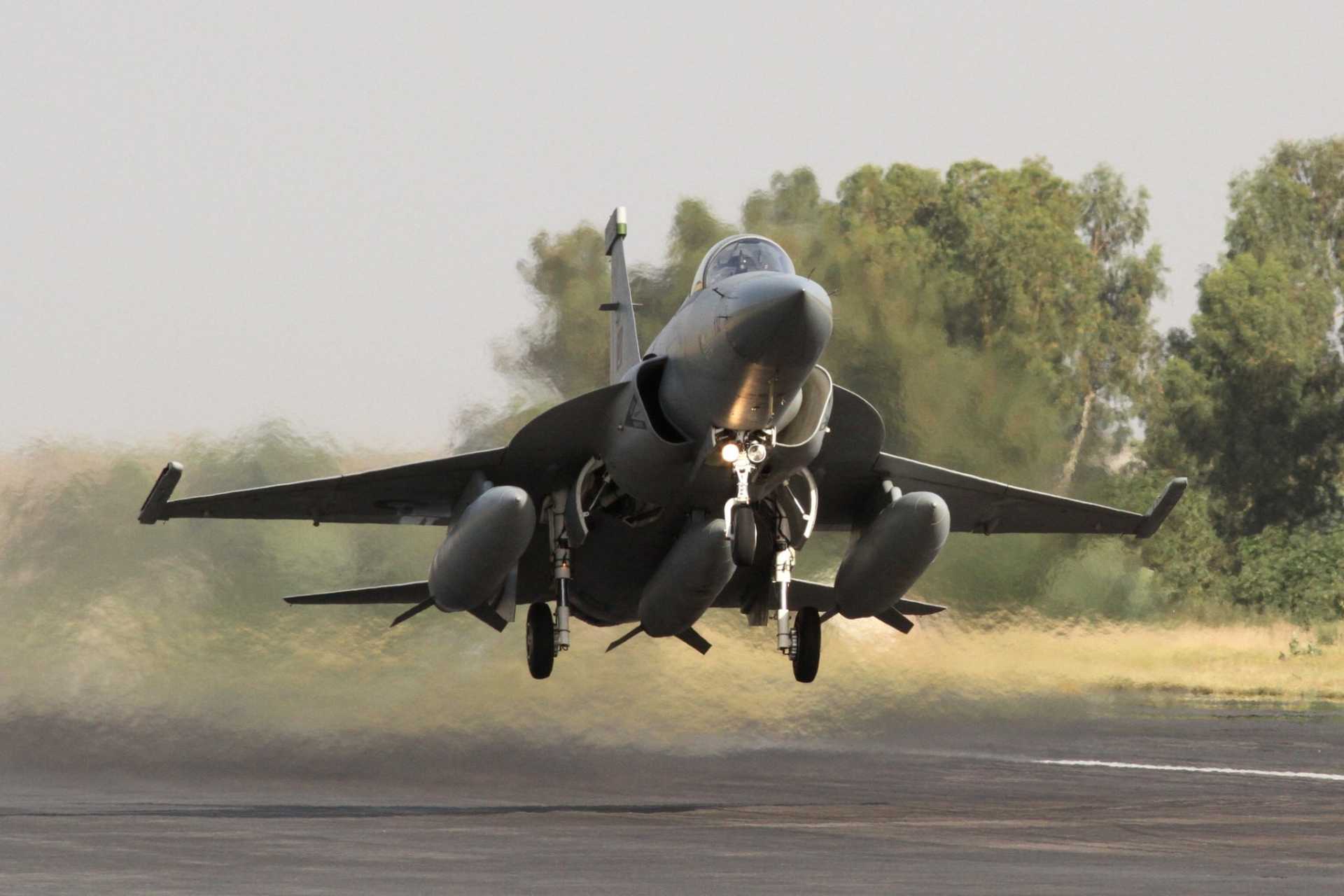
Oman opens talks with Pakistan and China about the purchase of JF-17 Thunder fighter jets despite already operating American F-16s and European Eurofighter Typhoons, although no acquisition agreement has been confirmed. (Picture source: Pakistan Air Force)

Oman opens talks with Pakistan and China about the purchase of JF-17 Thunder fighter jets despite already operating American F-16s and European Eurofighter Typhoons, although no acquisition agreement has been confirmed. (Picture source: Pakistan Air Force)


Intelligence Online learned on October 21, 2026, that Oman is negotiating with Pakistan and China over a potential purchase of JF-17 Thunder fighter jets for the Royal Air Force of Oman (RAFO), which operates 12 Eurofighter Typhoons, 17 F-16C/D fighters, and 10 Hawk 200 light attack aircraft, meaning that this acquisition could either supplement existing fighter squadrons or support the eventual replacement of older aircraft. The disclosure follows the October 13-14, 2026, visit to Islamabad by Omani Foreign Minister Sayyid Badr Albusaidi, who met Pakistani Deputy Prime Minister and Foreign Minister Mohammad Ishaq Dar during the eighth Pakistan-Oman Joint Ministerial Commission, which included defense and security cooperation among its priorities.

Jointly developed by Pakistan Aeronautical Complex (PAC) and China's Chengdu Aircraft Corporation (CAC), the JF-17 is available in three principal production standards, with Block III incorporating an AESA radar, helmet-mounted targeting, and PL-15E long-range missile compatibility. Oman joins Bangladesh, Indonesia, Iraq, Morocco, Saudi Arabia, Sudan, and Somalia among countries negotiating or examining JF-17 acquisitions since January 2026, although no Omani order has been confirmed. The JF-17 Thunder originated from a June 1999 Pakistani-Chinese agreement to replace Pakistan's aging Chengdu F-7P/PG interceptors, Nanchang A-5C attack aircraft, and Dassault Mirage III and Mirage 5 fighters.
Related topic: Somalia seeks 24 JF-17 Block III fighter jets from Pakistan in $900 million deal


Prototype PT-01 first flew on August 25, 2003; two initial production fighters arrived in March 2007; PAC delivered its first locally assembled aircraft on November 23, 2009; and No. 26 Squadron entered service with 14 JF-17s on February 18, 2010. The fighter measures 14.33 m long, 9.44 m wide, and 4.57 m high, with a 24.43 m² wing area and a Block III empty weight of 7,965 kg. Its cropped-delta wings, diverterless supersonic inlets, and digital fly-by-wire controls support a maximum speed of Mach 1.6 (1,910 km/h). The original airframe has a design life of 4,000 flight hours or 25 years, with an initial overhaul after 1,200 hours. Block I production ended in December 2013 after 50 units, Block II manufacturing began that month, and Block III progressed from its December 15, 2019, first flight to operational service in March 2023.

Historical prices ranged from $15 million for Block I to $25 million for Block II, but Azerbaijan's June 2025 agreement reached $4.6 billion, or $115 million per aircraft including the complete procurement package. Block I and Block II jets use a single Russian Klimov RD-93 afterburning turbofan derived from the MiG-29's RD-33, while the JF-17 Block III development has been associated with the uprated RD-93MA and China's WS-13 as an alternative. The thrust-to-weight ratio reaches 0.99 with full internal fuel and no external payload, decreasing as weapons and external tanks increase aircraft weight. Internal fuel capacity is 2,330 kg, supplemented by an 800-liter centerline tank and two underwing tanks holding either 800 or 1,110 liters each, providing up to 3,020 additional liters. The original seven weapon stations comprise two wingtip, four underwing, and one centerline hardpoint, with an early published external load of 1,500 kg.


Carrying three external tanks occupies three stations, reducing those available for weapons. Block II introduced aerial refueling, improved tactical data links, electronic warfare equipment, and increased load-carrying capacity, while Block III added a chin-mounted station. These characteristics matter for Oman because the RAFO must cover the Musandam Peninsula near the Strait of Hormuz, the Gulf of Oman, and Dhofar, potentially making fuel endurance and tanker compatibility important procurement considerations. The original JF-17 uses the Chinese KLJ-7 pulse-Doppler radar, capable of detecting a 5 m² radar-cross-section target at least 105 km in look-up conditions and 85 km in look-down conditions. Its track-while-scan function follows ten targets and supports simultaneous engagements against two. Block III introduces the KLJ-7A AESA radar, increasing tracking capacity to 15 targets and simultaneous engagements to four, representing improvements of 50% and 100%, respectively.

Electronic beam steering allows radar surveillance sectors to change without mechanically repositioning the antenna. Block III also adds helmet-mounted targeting for off-boresight missiles, a larger holographic head-up display, upgraded cockpit screens, radar warning equipment, missile approach sensors, electronic countermeasures, and chaff and flare dispensers. However, tracking capacity does not establish detection range against low-observable aircraft or missile effectiveness under electronic interference. For Oman, compatibility with existing F-16 and Typhoon communications, identification systems, and tactical data links would logically require separate integration arrangements. The JF-17 carries Chinese PL-5E and PL-9C infrared missiles and SD-10/PL-12 radar-guided missiles, while Block III adds the PL-15E, with a claimed export engagement range of 145 km, and the PL-10E high-off-boresight missile integrated in April 2021.

Ground-attack armament includes a 23 mm GSh-23-2 cannon, Mk 82 and Mk 83 bombs, GBU-12 laser-guided bombs, rocket pods, satellite-guided weapons, and compatible anti-ship and anti-radiation missiles. Pakistani JF-17s have also been associated with the CM-400AKG supersonic air-to-surface missile. JF-17s conducted counterinsurgency strikes in North Waziristan and participated in Pakistan's February 2019 attacks against Indian targets using Mk 83 bombs with range-extension kits. During the May 2025 India-Pakistan conflict, Pakistan employed JF-17s in air-to-air and strike missions and claimed an attack against the 96L6E radar associated with an Indian S-400 air defense system at Adampur, but India rejected claims that its S-400 had been destroyed, leaving the attack's outcome disputed. PAC manufactures 58% of the JF-17 airframe, including the forward fuselage, wings, and vertical stabilizer, while Chinese industry produces the remaining 42%, with final assembly at Kamra.


Pakistani component manufacturing began in 2005, subassembly production in January 2008, and final assembly in June 2009. PAC completed 16 fighters in 2015, while subsequent annual capacity reached 20 to 25 aircraft. At this rate, manufacturing 40 fighters would require 19.2 to 24 months if the entire production line were dedicated to one customer such as Azerbaijan, excluding delivery preparations and interruptions. The dual-seat JF-17B first flew on April 27, 2017, and 26 Block II examples were completed by December 2020, including four at Chengdu and 22 at Kamra. However, Russian RD-93 engines, Chinese avionics and weapons, and British Martin-Baker ejection seats create separate supply dependencies, while Pakistani domestic orders and Azerbaijan's 40-aircraft contract compete for manufacturing capacity. To date, more than 200 JF-17s have been manufactured since 2006-2007, primarily for Pakistan, with Myanmar, Nigeria, and Azerbaijan becoming export customers.

Myanmar ordered 16 JF-17 Block II fighters for $560 million in July 2015, receiving its first aircraft in December 2018, but subsequently encountered structural cracking, KLJ-7 radar problems, and limited availability requiring Pakistani technical assistance in 2022-2023. Nigeria acquired three Block IIs under a $184.3 million arrangement, inducted them on May 21, 2021, and confirmed counterinsurgency employment in January 2023. Azerbaijan's initial $1.6 billion agreement in February 2024 expanded to 40 Block III fighters worth $4.6 billion in June 2025; deliveries began that October, and its 408th Squadron conducted exercises with the aircraft by July 2026. Pakistan also reportedly reached a $4 billion to $4.6 billion agreement with the Libyan National Army in December 2025, including 16 JF-17s, while Somalia negotiated for 24 Block III fighters in February 2026.

Bangladesh entered Block III discussions in January 2026, Indonesia examined a package involving 40 fighters and armed drones, Iraq expressed interest on January 10, and Saudi Arabia considered converting $2 billion in loans into aircraft deliveries. Morocco renewed engagement with Pakistan, while Egypt, Jordan, Kuwait, Qatar, South Africa, Peru, Uruguay, and Venezuela have also shown interest. The JF-17's principal commercial advantage is the availability of new-production supersonic fighters in several configurations, with historical airframe prices below those of many Western alternatives. However, export contract averages differ considerably: Myanmar paid $35 million per aircraft at package level, Nigeria $61.4 million, and Azerbaijan $115 million, reflecting different fleet sizes, equipment standards, weapons, training, and support requirements.


Ezoic

Block II provides aerial refueling and improved avionics, while Block III adds AESA radar and longer-range missile compatibility; the JF-17B supports conversion training without introducing another aircraft family. PAC's 20-25-aircraft annual capacity provides an established production source, but Russian engine supply, Chinese components, and Pakistani maintenance assistance remain critical dependencies, as Myanmar's serviceability problems illustrate. Oman would also need to integrate Chinese-origin weapons, mission planning, maintenance, and training into an air force already operating American F-16s and European Typhoons, none of which can be assumed compatible with the JF-17. The procurement decision therefore involves not only fighter acquisition costs but also the expense of establishing another logistics chain, training technicians and pilots, acquiring separate weapons inventories, and maintaining sufficient aircraft availability throughout the fleet's service life.
Explore More Defense News


Written by Jérôme Brahy

Jérôme Brahy is a defense analyst and documentalist at Army Recognition. He specializes in naval modernization, aviation, drones, armored vehicles, and artillery, with a focus on strategic developments in the United States, China, Ukraine, Russia, South Korea, Türkiye, and Belgium. His analyses go beyond the facts, providing context, identifying key actors, and explaining why defense news matters on a global scale.


Anyways great you reposted this news anyways.

This is a different article about the same subject.
 
This is a different article about the same subject.
Correct, Sir. I am just saying the same subject was posted weeks ago.

Its okay, its not a big deal. Its good to revisit certain topics like this one.

Great Oman is interested and Insh'Allah they will purchase it.

JF-17 is a great fighter plane in it's class.
 
While i like their interest in the plane, but i feel they’re a little too late already. The region is already under grave threat of war in next few days…

For now they will have to use whatever they already have against Iranian/israeli attacks
 
I always thought the JF-17 would get a flurry of sales when the MiG 21s and 29s start retiring but looks like now world militaries are not as interested in maintaining a small fleet of 12-18 fighters anymore, but more into FPV and suicide drones that can actually be sustained by most militaries which have shitty budgets.

The changing trend may end up making a lot of potential JF customers decide they'd rather not buy a platform that they can never utilise fully unlike PAF

On the contrary, the amount of interest and sales that the JF-17 has attracted speaks for itself. The JF-17 with its current export figures is already a success story. Remember how many countries ridiculed the JF-17 including India? Where are they today?
 

Users who are viewing this thread

Back
Top