Iran - Israel/US War: Israel-US declare war on Iran, Iran responds

Guess who admitted to the West that Iran had worked on plutonium reprocessing?

I'll give you a hint: you won't like to find out the answer.
As I said in the nuclear archive there is videos that show working on an explosive device
 
It's not my "theory". You are a very naive person, but I will teach you: Russia is not proposing a deal that in 6 months will enact the snapback with its support... that is what the Zionist media wants you to believe (just another one of their narratives to hide the fact that the snapback coming from the E3 is illegal).

What RUSSIA is proposing is that the expiration date in Oct/2025 be extended for another 6 months (and in 6 months it will ask for another +6 months...). This is a negotiation strategy where Russia is trying to show the rest of the world that the E3 is being externally pressured, is acting in bad faith, and its sole aim is to harm Iran.

Russia's opinion has already been issued by the Russian representative(Mikhail Ulyanov) in Vienna :

"The above-mentioned European states are themselves in violation of res.2231 and the #JCPOA. Therefore, legally speaking, they as violators don’t have the right to launch SnapBack." [Complete text below in twitter]


Your argument is invalid because when you buy a car, the document won't state that you have to pay for it without receiving it; the law is greater than the agreement between the seller and the client. In international law, it works the same way: Every treaty must comply with INTERNATIONAL LAW, otherwise IT IS INVALID.

The JCPOA states:
” Article 28 JCPOA (EU Sanctions): 'The European Union shall promulgate legislation to remove all nuclear-related sanctions of the EU... simultaneously with the start of Iran's implementation of its key nuclear commitments.”

The European Union did not remove the sanctions in their entirety; on the contrary, it reimposed them and even increased them, VIOLATING THE TREATY. Iran paid and did not receive the car... so, the agreement is INVALID, as stated by the Russian diplomat on Twitter above. The E3 could only activate the SNAPBACK if it were complying with the treaty.

npooRLR.png

you don't know what you are talking about. if your nonsense theory (which is not supported in the text of the JCPOA) was right, that the Europeans cannot invoke snapback because they are in violation of their obligations themselves, Russia would not need to try to extend the snapback deadline in the first place.

Russia also adopts Iran's argument that Europe cannot invoke snapback since they are in breach, but they contradict themselves by proposing extension of their supposedly non-existent right to invoke snapback.

The reality will be as I described yesterday. Snapback will be invoked and all sanctions will in fact be re-applied to Iran and the UNSC resolutions will apply in full again. But this time Russia and China might dispute the legitimacy of the resolutions and use this to justify not complying with them. But they can also use the UNSC resolutions as an excuse to cease any type of trade with Iran (as they did before), so Iran is entirely at their mercy.


Europeans wil trigger snapback today

Let's see if they also notify the UNSC and start the 30 day clock or not. if not, they still want to leave some time for an alternative agreement to avoid snapback (for now).
 
As I said in the nuclear archive there is videos that show working on an explosive device
The issue of possible military dimensions (PMD) to Iran's nuclear program happened in 2003 during the presidency of Khatami.

Rohani negotiated with E3, admitting that Iran had worked on plutonium reprocessing.
That was the basis that Iran's nuclear case was referred to the UN Security Council from the IAEA and eventually we reached this point.
 
It was about 30% in Tehran, if I'm not mistaken. However, even some officials claimed that the real turnout was lower.

Anyway, the hottest news now is that a member of the Council of Experts has claimed that it was Russia that leaked confidential information about our air defenses to Israel. And he isn't a reformist. He's close to Khamenei and his circle.
First it was more than 34% in tehran seconds since when tehran votes decide legitimacy? what about fars , semnan, khorasan , qom , markazi and isfahan with more than 50 % turnout or bushehr , hormozegan , hanadan , kerman , khuzestan, mazandaran, qazvin and yazd and chaharmahal and bakhtiary with more than 40% turnout ?


the culmination of 20+ years of strategic indecision and naivety

if this means they have formally notified the President of the UNSC, the 30 day deadline begins today

if so, full snapback of all UNSC resolutions and sanctions against Iran will occur in 30 days

The Europeans seem to think they can halt the process if there is a deal before the 30 days are up. But even if there is a deal to extend the deadline, the US can now veto any attempt to pass a resolution to continue sanctions relief, so by the letter of the JCPOA, they cannot extend the deadline without the USA's approval.
 
The Iraq model playing out . What is the point? American demands which is Israeli’s demands . No enrichment

“The Europeans are also pressing Iran to rejoin nuclear talks with Washington; however, the Iranians have made clear that the US can no longer be trusted - as it bombed the Islamic Republic in June at the very moment the sides were engaged in talks.”

 
He and his delegation should have been visiting China for the past year instead of Azerbaijan. After all, they have to protect their investments in English banks
 
First it was more than 34% in tehran seconds since when tehran votes decide legitimacy? what about fars , semnan, khorasan , qom , markazi and isfahan with more than 50 % turnout or bushehr , hormozegan , hanadan , kerman , khuzestan, mazandaran, qazvin and yazd and chaharmahal and bakhtiary with more than 40% turnout ?
It was 33.2% for both rounds in Tehran. For the first round, it was under 30% in Tehran.
In your own province, Khuzestan, only 29.6% participated.

And this is the only time that both reformists and conservatives agree that even these numbers could be higher than the real figures lol
 

Iran Update, August 27, 2025​

Aug 27, 2025 - ISW Press

Ben Rezaei, Ria Reddy, Nidal Morrison, Avery Borens, Adham Fattah, Ben Schmida, Kelly Campa, Henry Jenks, and Annika Ganzeveld

Information Cutoff: 2:00 PM ET

The E3 (the United Kingdom, Germany, and France) will reportedly initiate the Joint Comprehensive Plan of Action (JCPOA) snapback process as soon as August 28, according to three European diplomats and one Western diplomat.[1] The JCPOA snapback mechanism allows JCPOA signatories to reimpose UN Security Council (UNSC) sanctions on Iran in the event of “significant non-performance” of JCPOA commitments.[2] The snapback mechanism is currently set to expire on October 18, 2025. The E3 imposed a deadline of August 31 on Iran to make meaningful progress toward a nuclear deal, such as by renewing cooperation with the International Atomic Energy Agency (IAEA) and resuming negotiations with the United States.[3] The E3 offered to postpone the expiration of the snapback mechanism to allow Iran more time to negotiate with the United States.[4] Iran reportedly failed to make “sufficiently tangible commitments” during the most recent Iran-E3 meeting in Geneva on August 26.[5] Another source stated that Iran offered “very little to work with” to secure an extension.[6]

It is unclear if the E3 will initiate the dispute resolution process outlined in the JCPOA or directly refer Iran's non-compliance to the UNSC. The dispute resolution process can take up to 35 days and involves a series of steps that aim to resolve non-compliance issues.[7] The E3 can choose to engage in the dispute resolution process and then refer the issue to the UNSC if it believes that Iran continues to show "significant non-performance." The E3 can, conversely, bypass the dispute resolution process and directly refer the non-compliance issue to the UNSC. The E3 would be required to include a description of "the good-faith efforts the [E3] made to exhaust the dispute resolution process" when they refer Iran’s non-compliance to the UNSC.[8] The JCPOA gives the UNSC 30 days to pass a resolution to extend sanctions relief for Iran, but UNSC permanent members (the United States, the United Kingdom, France, China, and Russia) can veto such a resolution. The E3 is reportedly hopeful that Iran will make unspecified commitments regarding its nuclear program within 30 days that will allow the E3 to avoid reimposing UNSC sanctions on Iran.[9] The snapback mechanism would reimpose six UNSC resolutions on Iran, including bans on the transfer of conventional arms to and from Iran, international support for Iran's missile program, enrichment-related activities, and the testing and development of nuclear-capable missiles.[10]


Hardline Iranian parliamentarians criticized the return of International Atomic Energy Agency (IAEA) inspectors to Iran and argued that their return undermines a recent law that parliament passed to restrict cooperation with the agency.[11] These criticisms arose after IAEA Director General Rafael Grossi announced on August 26 that IAEA inspectors would soon resume inspections in Iran.[12] Atomic Energy Organization of Iran (AEOI) Spokesperson Behrouz Kamalvandi stated on August 27 that IAEA inspectors will supervise the fuel replacement at the Bushehr Nuclear Power Plant (BNPP) to ensure that electricity is produced in a timely manner.[13] The Iranian parliament passed a bill on June 25 to suspend all cooperation with the IAEA.[14]

The Iranian Parliamentary National Security and Foreign Policy Commission warned on August 26 that the AEOI and Foreign Affairs Ministry must fully comply with the law suspending cooperation with the IAEA.[15] Hardline parliamentarians separately accused the Supreme National Security Council (SNSC) on August 27 of concealing decisions from parliament and the public.[16] Hardliners warned that continued government cooperation with the IAEA would justify legal action against senior SNSC officials for undermining parliament’s authority.[17] Foreign Affairs Minister Abbas Araghchi stated on August 20 that Iran cannot completely end all cooperation with the IAEA since the upcoming fuel replacement at the BNPP requires inspectors to be present. Araghchi emphasized that the return of IAEA inspectors to Iran would take place within the framework of the law that parliament passed on July 25.[18] The IAEA inspectors currently in Iran are reportedly only permitted to oversee the fuel replacement at the BNPP and cannot access or inspect damaged nuclear sites such as Natanz and Fordow.[19] These sites remain largely inaccessible to any party.
 
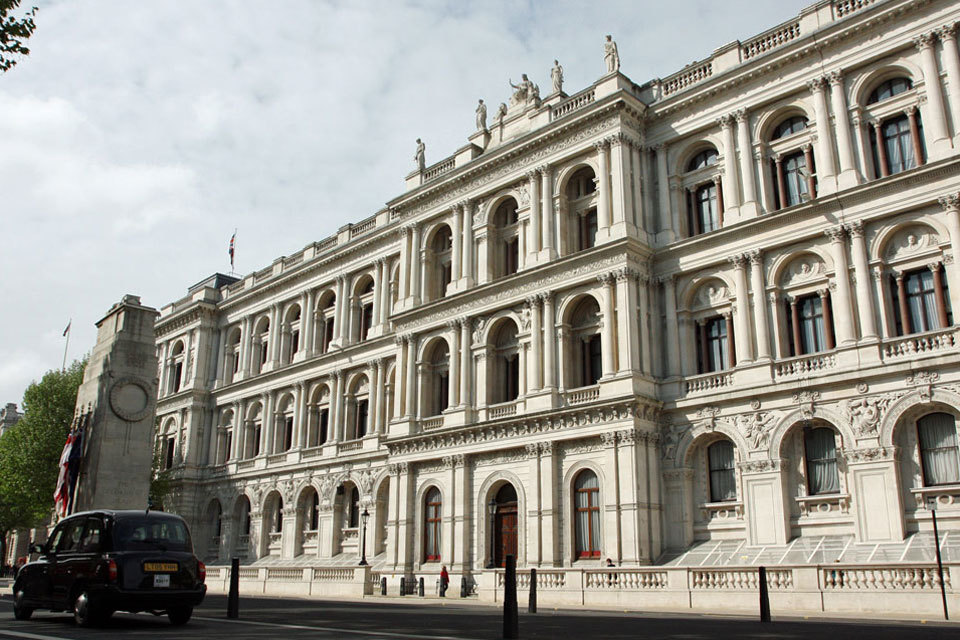
Foreign, Commonwealth & Development Office and The Rt Hon David Lammy MPPublished28 August 2025

s300_fcdo-main-building.jpg

We, the Foreign Ministers of France, Germany and the United Kingdom, share the fundamental objective that Iran shall never seek, acquire or develop a nuclear weapon. We negotiated the Joint Comprehensive Plan of Action (JCPoA) with the conviction that it would decisively contribute to ensuring the exclusively peaceful nature of Iran’s nuclear programme. The United Nations Security Council unanimously endorsed the JCPoA in resolution 2231 of 20th July 2015. It was a major achievement for non-proliferation, as such strengthening international peace and security.

Following the United States’ withdrawal from the JCPoA on 8th May 2018, and in spite of Iran ceasing the implementation of its commitments under the JCPoA beginning in May 2019, France, Germany and the United Kingdom (the “E3”) remained committed participants to the deal.

Since 2019, Iran has exceeded JCPoA limits on enriched uranium, heavy water, and centrifuges, restricted the IAEA’s ability to conduct JCPoA verification and monitoring activities, and has abandoned the implementation and the ratification process of the Additional Protocol to its Comprehensive Safeguards Agreement. These actions contravene Iran’s commitments set out in the JCPoA and have serious implications on the capacity of Iran to progress toward developing a nuclear weapon.

This was more than five years ago. Since then, we have made all possible efforts to resolve the impasse. We consistently undertook intensive diplomatic efforts to deescalate tensions and to bring Iran and the United States to the negotiating table for a comprehensive negotiated solution. We acted in good faith to preserve the JCPoA, in the sincere hope of finding a way to resolve the impasse through constructive diplomatic dialogue, while preserving the agreement and remaining within its framework.

This included the use of the JCPoA’s Dispute Resolution Mechanism, initiated on 14 January 2020 and confirmed by the JCPoA Coordinator, pursuant to paragraph 36 of the JCPoA. The E3 also engaged in good faith in negotiations conducted from 6th April 2021 until 28th February 2022 to re-establish Iran’s full compliance with the JCPoA and allow for a return of the United States to the deal. The JCPoA Coordinator tabled viable proposals in March and again in August 2022. Iran refused both packages while continuing to raise unacceptable demands beyond the scope of the JCPoA. Despite this, we have continued to engage Iran as part of our efforts to find a peaceful resolution of this issue through diplomacy, as set out in our letter to the United Nations Secretary General of 8th August 2025.

In July 2025, the E3 have put on the table an offer for the extension of resolution 2231 and its snapback mechanism. The requirements set by the E3 in exchange for this extension – including the resumption of negotiations, Iran’s compliance with its IAEA obligations, and steps to address our concerns regarding the high enriched uranium stockpile - have not yet been satisfactorily met by Iran. The combination of such Iranian steps and a time-limited extension would have provided a credible path towards reaching a political agreement to replace the JCPoA and address our longstanding concerns regarding Iran’s nuclear programme.

Today, Iran’s non-compliance with the JCPoA is clear and deliberate, and sites of major proliferation concern in Iran are outside of IAEA monitoring. Iran has no civilian justification for its high enriched uranium stockpile - now over 9 Significant Quantities - which is also unaccounted for by the IAEA. Its nuclear programme therefore remains a clear threat to international peace and security.

As a result of Iran’s actions, and in accordance with paragraph 11 of United Nations Security Council Resolution 2231 (2015), France, Germany and the United Kingdom have today decided to notify the Security Council that we believe Iran is in significant non-performance of its commitments under the JCPoA, thereby engaging the “snapback” mechanism.

This notification initiates the snapback process defined in Resolution 2231. It opens a 30-day period before the possible reestablishment of previously terminated United Nations Security Council resolutions. We underline that these resolutions and the measures they contain – sanctions and other restrictive measures – are not new. On the contrary, these resolutions were previously agreed by the Security Council and lifted in light of Iran’s commitments under the JCPoA. However, Iran has chosen not to abide by those commitments. In accordance with Resolution 2231, we will continue to strive to diplomatically resolve the issue of Iran’s significant non-performance. We will use the 30-day period to continue to engage with Iran on our extension offer, or on any serious diplomatic efforts to restore Iran’s compliance with its commitments.

We recall that if the UNSC does not adopt within 30 days a resolution to continue the lifting of UNSC resolutions on Iran, six Security Council resolutions, including on sanctions, will be restored.
 

Users who are viewing this thread

Pakistan Defence Latest

Country Watch Latest

Back
Top