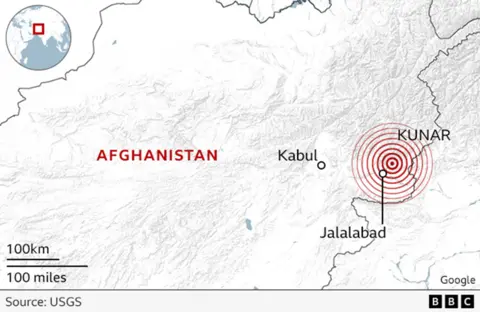
The earthquake came in the wake of flash flooding over the weekend which left at least five dead, according to local media. The flood, which caused landslides and damaged infrastructure, also temporarily disrupted traffic between Pakistan and Afghanistan.
Why news is taking time to emerge
As we have reported, the nature of the terrain means it is difficult to access and there are limited communications - meaning it will take longer to get updates on the situation. There is also likely to be damage to infrastructure, making it even harder to reach affected areas.
During previous major earthquakes, the death toll jumped up steeply once access to the affected areas was established.
However, there are other factors that hamper both our ability to get accurate information about the situation and in getting aid into the affected areas.
Since August 2021 the country has been under the control of the Taliban, whose government most of the world does not recognise.
The return of the hardline Islamist group to power sparked an exodus of international journalists, with organisations like the BBC pulling many of their staff from the country.
Several aid agencies and NGOs also suspended their work in Afghanistan as a result - meaning there are fewer ways to verify what is happening there.
However, there are no restrictions on allowing in international aid.
Can Afghanistan cope?
Afghanistan was pushed into economic collapse when the Taliban took over and more than 23 million Afghans are now in need of humanitarian assistance, according to the International Rescue Committee.
Most foreign donations to Afghanistan have been suspended and international sanctions, which date back to when the Taliban were first in power in the 1990s, are still in place - although exemptions have been made for humanitarian relief.
Prior to the Taliban takeover, about 80% of Afghanistan's budget came from foreign donors. This funded nearly all public healthcare, which has since collapsed.
Jalalabad's main hospital - the biggest medical facility close to the epicentre - has been overwhelmed. It is right at the centre of the crossing point for the tens of thousands of Afghans being deported from neighbouring Pakistan.
Afghanistan's financial assets abroad (mainly held in the US) have also been frozen, while the abrupt freeze on US Agency for International Development (USAID) earlier this year has significantly affected aid delivery