India plans ‘Cold Start’ exercises next month

Hindustan needs one more slap in the face before it understands that Akhand Bharat is a lost cause.
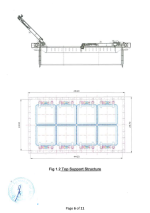
Whilst these constant attention grabbing public displays are jarring. It should be noted that india has been been spending big, I did mention this when I managed to download some extensive tender information from the Indian defence tender documentation before the website was locked to Indian only IPs.

see below:
1758699880631.png1758699887921.png
----
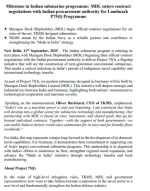
Looking at other open source information from the indenting documentation from India - P75(I) Project is well within the third phase with TKMS noted as a frontrunner
1758699991055.png
----
Project 77 Class (Nuclear) Tenders for these nuclear attack submarines were cleared by the Cabinet Committee on Security (CCS) in October 2024.

Interestingly
1758700529731.png
1758700598828.png
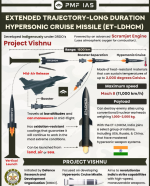
In July 2025 - the Indians conducted a test launch of their latest Extended Trajectory Long Duration Hypersonic Cruise Missile or (ET-LDHCM) a missile capable of reaching Mach 8.
1758700775646.png
 
NEW DELHI: India’s Army, Navy and the Air Force will conduct a joint exercise named ‘Cold Start’ in the first week of October to test drones and counter-drone systems that officials dubbed as the biggest such drill to be conducted since Operation Sindoor, The Hindu said on Tuesday.

It said the exercise was likely to be held in Madhya Pradesh.

The drill aimed at assessing the effectiveness and shortcomings of the current air defence capabilities. Confirming the development, a senior official was quoted as saying the exercise would focus on evaluating operational readiness against evolving aerial threats.

The Cold Start doctrine was developed by the Indian armed forces involving rapid, integrated offensive operations by combined arms units. It would thus bypass traditional slow troop mobilisation to achieve conventional objectives within a limited timeframe.

The doctrine was developed after Operation Parakram exposed India’s slow response to the 2001 Parliament attack, the doctrine aims to provide a swift, decisive, and limited military response to terrorism without triggering a full-scale war. Analysts, however, say it carries a significant risk of escalating conflict to the nuclear level given Pakistan’s possession of tactical nuclear weapons.

Industry partners, research and development agencies, academia, and other stakeholders, too, will participate in the ‘Cold Start’ exercise.

Speaking at a conference on “Counter UAVs & Air Defence Systems — The Future of Modern Warfare” in Delhi, India’s Chief of Integrated Defence Staff Air Marshal Ashutosh Dixit making a pointed reference to Pakistan said, “They too are working to ‘become like India’, so we must always stay a step ahead.

“Our counter-drone and GPS jamming systems performed effectively during Operation Sindoor, ensuring no damage from adversary drones. But the adversary has also learned our capabilities. Next time, we have to be ahead and much better,” The Hindu quoted him as saying.

He said the vision for the future involves an integrated defence system, inspired by the Sudarshan Chakra concept, to counter drones, UAVs, hypersonic weapons, and other threats. There is a need for systems usable in both peace and wartime, taking into consideration anti-social elements acquiring drone technology, necessitating widespread counter-drone capabilities.

You launch hot or cold, you'll meet with your friend PL-15. Always hot! writing your destiny to crash-land inside your own airspace and then ground all assets abandoning air superiority across 200 KM of your own airspace and then running for a ceasefire knowing such a massive area is out of your own air cover, open for Pakistani attacks.
 
Whilst these constant attention grabbing public displays are jarring. It should be noted that india has been been spending big, I did mention this when I managed to download some extensive tender information from the Indian defence tender documentation before the website was locked to Indian only IPs.

see below:
View attachment 149052View attachment 149053
----
Looking at other open source information from the indenting documentation from India - P75(I) Project is well within the third phase with TKMS noted as a frontrunner
View attachment 149054
----
Project 77 Class (Nuclear) Tenders for these nuclear attack submarines were cleared by the Cabinet Committee on Security (CCS) in October 2024.

Interestingly
View attachment 149055
View attachment 149056
In July 2025 - the Indians conducted a test launch of their latest Extended Trajectory Long Duration Hypersonic Cruise Missile or (ET-LDHCM) a missile capable of reaching Mach 8.
View attachment 149057

They are spending big on 3 different projects and you've highlighted the same also:
1) Nuke attack submarines (that I've outlined for months now that Pakistan also has a major need for a second strike capability).
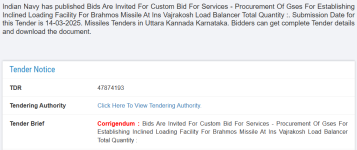
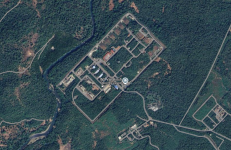
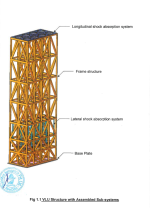
2) Missile silo apparatus for both ocean and land and for land based silo's the special structures are put in place that's earth quake proof or blast proof.
3) Furthering of Brahmos technology into Hypersonic weapons.
 
cold start is the concept of indian general Sunderji written in 1986-87 if I am not a wrong.
He tested the concept in 1987 with Operation Brasstacks a East to West exercise with the target to cut Pakistan in half by attacking along the Rahim Yar Khan desert area.
Pakistan got wind of this plan and general Zia moved Pakistan strike corps from multan towards Indian Punjab.
Surprised by this move the exercise lost its momentum.
For better understanding read Ravi Rikhye book "The fourth war - the war that wasn't ".
 
NEW DELHI: India’s Army, Navy and the Air Force will conduct a joint exercise named ‘Cold Start’ in the first week of October to test drones and counter-drone systems that officials dubbed as the biggest such drill to be conducted since Operation Sindoor, The Hindu said on Tuesday.

It said the exercise was likely to be held in Madhya Pradesh.

The drill aimed at assessing the effectiveness and shortcomings of the current air defence capabilities. Confirming the development, a senior official was quoted as saying the exercise would focus on evaluating operational readiness against evolving aerial threats.

The Cold Start doctrine was developed by the Indian armed forces involving rapid, integrated offensive operations by combined arms units. It would thus bypass traditional slow troop mobilisation to achieve conventional objectives within a limited timeframe.

The doctrine was developed after Operation Parakram exposed India’s slow response to the 2001 Parliament attack, the doctrine aims to provide a swift, decisive, and limited military response to terrorism without triggering a full-scale war. Analysts, however, say it carries a significant risk of escalating conflict to the nuclear level given Pakistan’s possession of tactical nuclear weapons.

Industry partners, research and development agencies, academia, and other stakeholders, too, will participate in the ‘Cold Start’ exercise.

Speaking at a conference on “Counter UAVs & Air Defence Systems — The Future of Modern Warfare” in Delhi, India’s Chief of Integrated Defence Staff Air Marshal Ashutosh Dixit making a pointed reference to Pakistan said, “They too are working to ‘become like India’, so we must always stay a step ahead.

“Our counter-drone and GPS jamming systems performed effectively during Operation Sindoor, ensuring no damage from adversary drones. But the adversary has also learned our capabilities. Next time, we have to be ahead and much better,” The Hindu quoted him as saying.

He said the vision for the future involves an integrated defence system, inspired by the Sudarshan Chakra concept, to counter drones, UAVs, hypersonic weapons, and other threats. There is a need for systems usable in both peace and wartime, taking into consideration anti-social elements acquiring drone technology, necessitating widespread counter-drone capabilities.
aan dey

images
 
He tested the concept in 1987 with Operation Brasstacks a East to West exercise with the target to cut Pakistan in half by attacking along the Rahim Yar Khan desert area.
Pakistan got wind of this plan and general Zia moved Pakistan strike corps from multan towards Indian Punjab.
Surprised by this move the exercise lost its momentum.
For better understanding read Ravi Rikhye book "The fourth war - the war that wasn't ".
Zia then went to India to watch a cricket match between India and Pakistan as if nothing has happened 😑
 
Operation Brasstacks was based on this doctrine. We avoided war but the likely plan was for Pakistan to perceive the huge build-up as a threat and launch a pre-emptive attack. I've read that Gandhi wanted a defensive posture, but the Chief of Army Staff back then wanted Pakistan to attack so Indian army could launch deep incursions inside Pakistan and lay waste to the nuclear sites. This plan never came to fruition.

There's a lot of interesting material on this operation. A lot of foreign diplomats oversaw this whole operation.

What we did have was Operation Parakram where the mass mobilisation ended up in failure.

This doctrine is due for a major revamp given the modern way of warfare.

And from all the wars so far it is evident that Indian armed forces work in a defensive-offensive manner. Whenever Pakistan has attacked, the initial response was slow but the counterattacks massive. In a conventional war Pakistan won't be able to win.

PAF tactics based on Americans is commendable though, Pakistan focuses on individual pilot tactics and dog fighting, India focuses on Soviet era massed tactics. It's a policy thing. India will always have the numbers advantage so historically the actual performance on both sides has varied a lot.
 
Last edited:
cold start is the concept of indian general Sunderji written in 1986-87 if I am not a wrong.
Really ? I thought Cold Start was a much newer doctrine than that , from the early 2000s and based on surprise and Salami slicing. Sunderji was old school and wanted India to prepare and make an armored thrust into Pakistan via Thar desert, splitting country into two and removing Karachi from the equation.
 
Really ? I thought Cold Start was a much newer doctrine than that , from the early 2000s and based on surprise and Salami slicing. Sunderji was old school and wanted India to prepare and make an armored thrust into Pakistan via Thar desert, splitting country into two and removing Karachi from the equation.

1986. This was the inception of the doctrine.
 
Looks like the Hindutva have pulled their most favourite doctrine out of cold storage. This is an indication of things to come. How should Pakistan react?
When the Soviets did :something similar; aka “7 days to the river Rhine”, it was countered with the third offset strategy.

Pakistan needs an offset strategy.

To view this content we will need your consent to set third party cookies.
For more detailed information, see our cookies page.
 
Last edited:

1986. This was the inception of the doctrine.

Prior to the missile and air power domination world, this was, on paper, a very effective plan. Without intel and sat coverage, would have been hard to predict the armoured thrust. Pak's response of repost was I guess the only way to counter it rather then try and take it head on
 

Users who are viewing this thread

Back
Top