China starts building Type 004 nuclear aircraft carrier to rival U.S. Navy’s Ford-class
China starts building the nuclear-powered Type 004 aircraft carrier to rival the U.S. Ford-class, escalating the race for Indo-Pacific naval dominance.

armyrecognition.com
China started building its fourth aircraft carrier, the nuclear-powered Type 004, analysts confirmed on September 29, 2025. Built to rival the U.S. Navy’s Ford-class, the warship could shift the balance of power in the Indo-Pacific.
Chinese military analysts confirmed on September 29, 2025, that Beijing has begun construction on its fourth aircraft carrier, the nuclear-powered Type 004. The vessel will feature electromagnetic catapults and an advanced carrier air wing, designed to rival the U.S. Navy’s Ford-class. The move is significant because it signals a direct challenge to American naval dominance and raises new security concerns in the Indo-Pacific.
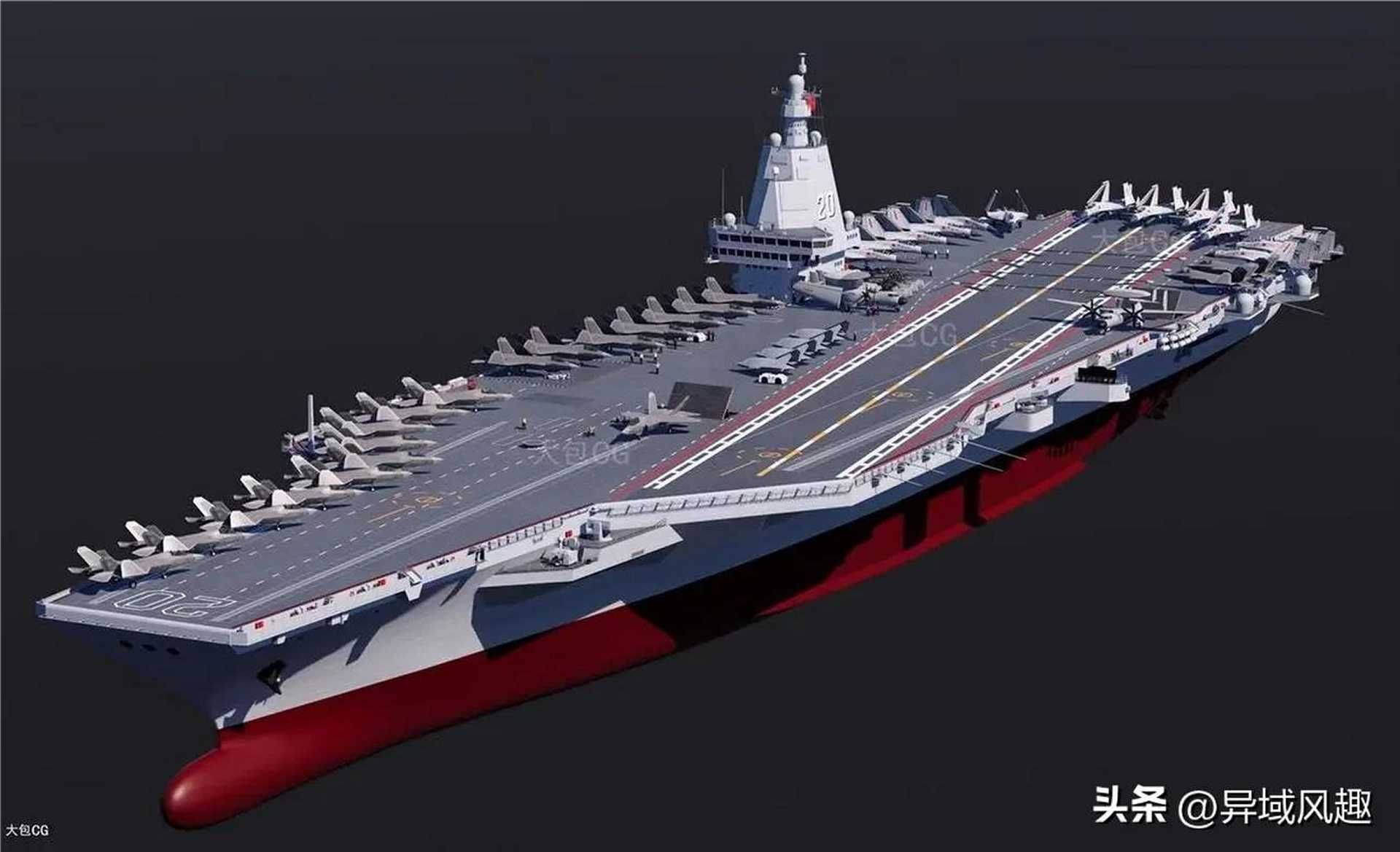
Artist rendering of China's next-generation aircraft carrier Type 004, featuring a full-length CATOBAR flight deck, electromagnetic catapults, and an expanded island superstructure. The nuclear-powered supercarrier is designed to operate over 90 fixed-wing aircraft, including J-15T strike fighters and stealth J-35 jets, marking a dramatic leap in the PLA Navy's blue-water power projection capabilities. (Picture source: China social network)
The Chinese Type 004 and the U.S. Navy Gerald R. Ford-class share key next-generation features, yet they diverge significantly in terms of technological maturity and mission integration. Both vessels exceed 100,000 tons in displacement and adopt electromagnetic catapult systems, with EMALS on the Ford and a domestically developed equivalent aboard the Type 004. Each carrier is powered by nuclear propulsion, with the Ford-class using two A1B reactors that generate over 700 megawatts of power. In contrast, Chinese defense sources suggest that the Type 004 will feature twin pressurized water reactors, estimated to produce around 450 to 500 megawatts combined. The Ford-class supports an air wing of approximately 75 aircraft, including F-35C stealth fighters, E-2D Advanced Hawkeye AEW&C aircraft, and EA-18G Growlers for electronic warfare.
In contrast, the Chinese Type 004 is expected to carry over 90 aircraft, favoring numerical strength with a mix of J-15T heavy strike fighters, fifth-generation J-35 stealth jets, KJ-600 AEW platforms, and future unmanned systems. The Ford-class benefits from advanced arresting gear, highly automated weapons elevators, and a next-generation flight deck designed to support up to 160 sorties per day in surge conditions. While the Type 004 may aim to match these performance benchmarks, its actual operational effectiveness will depend on the PLAN’s ability to master complex deck operations, logistical sustainment at sea, and integrated joint force command, areas where the U.S. Navy maintains a decisive institutional advantage.
Early assessments from Chinese defense sources suggest the new carrier will displace between 110,000 and 120,000 tons, placing it firmly in the category of a full-scale supercarrier. Construction has reportedly commenced at the Dalian Shipyard, where satellite imagery and insider leaks reveal modular assembly of hull sections and specialized catapult launch infrastructure. Once operational, the Type 004 will carry more than 90 fixed-wing aircraft, including an expected mix of 24 to 30 J-15T catapult-launched heavy fighters and over 20 stealthy J-35 multirole combat aircraft, specifically designed for carrier-based operations and low-observable strike missions.
The warship’s nuclear propulsion system, a first for any Chinese surface combatant, is believed to be based on a navalized derivative of China’s Longwei pressurized-water reactor series, offering nearly unlimited operational range. This will enable PLAN carrier strike groups to sustain operations far beyond China's littoral zones, extending Beijing’s maritime reach across the Pacific and potentially into the Indian Ocean and beyond. With a full CATOBAR flight deck and high-tempo sortie generation capabilities, the Type 004 is being engineered for extended power projection, fleet air defense, and contested sea control, key attributes in any future conflict scenario with a peer adversary.
The implications for the United States Navy are immediate and serious. For decades, American supercarriers have maintained uncontested dominance across the world’s oceans, backed by a sophisticated network of logistics, carrier air wings, and integrated escort formations. The emergence of a Chinese nuclear-powered carrier with a comparable displacement and aviation capacity suggests the beginning of a true blue-water competition. While the U.S. Navy still maintains an edge in operational experience and advanced technologies such as the F-35C and E-2D Advanced Hawkeye, the rapid pace of Chinese carrier development threatens to narrow that gap.






 Iran - Israel/US War: Israel-US declare war on Iran, Iran responds (169 Viewers)

