Chinese PLA Army News

China’s new Type 100 tank marks shift towards ‘information-driven and uncrewed’ warfare​

Military mouthpiece says the next-generation tanks and their support vehicles will ‘totally revolutionise future land battles’​


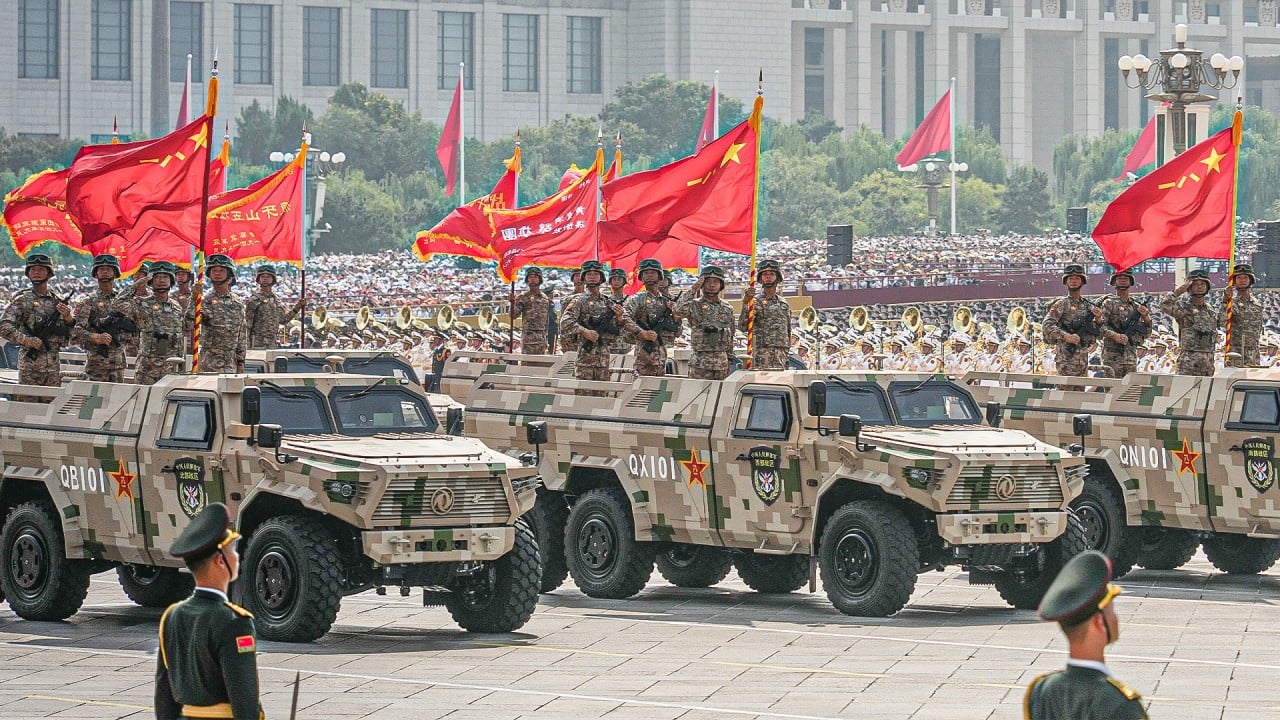
A ground assault formation at a military parade in Beijing on September 3 to commemorate the 80th anniversary of the end of World War II. The lightweight Type 100 tank made its debut at the event. Photo: Xinhua

Liu Zhen
Published: 10:00pm, 9 Sep 2025

The Chinese military’s new Type 100 tank – unveiled at last week’s Victory Day parade in Beijing – marks a fundamental shift towards “intelligent, information-driven and unmanned” warfare, according to state media.

The lightweight tank is a departure from traditional armoured vehicle design that emphasises the race between thicker armour and stronger penetration. Instead, the People’s Liberation Army has reportedly prioritised the integration of intelligent systems in response to developments in armoured warfare in recent years, as seen in the war in Ukraine, where tanks have been targeted by drones.

By combining crewed and uncrewed systems, and integrating weapons platforms, information networks, reconnaissance and situational awareness, the Type 100 tanks and their combat support vehicles will “totally revolutionise future land battles”, military mouthpiece PLA Daily said on Thursday.

5496c1b1-1c64-4e59-88d5-6dd3de76dac3_3d2fa0d3.jpg


The new tank is smaller and lighter than the Type 99 main battle tanks that entered service in 2001. The Type 100 is driven by a diesel-electric hybrid power system that has improved mobility, all-terrain manoeuvrability and reduced noise.

“[They] are capable of approaching the enemy in silence in specific environments,” Wang Qun, a crew member of one of the new tanks in the parade, told state broadcaster CCTV after the event last Wednesday.

The Type 100 tank is equipped with a 105mm main gun rather than the more common 125mm guns. Despite its smaller calibre, the tank’s unmanned turret with advanced fire control system and diverse ammunition options still delivers significant firepower, and can be operated safely from inside the vehicle.

There were more substantial design changes to the tank’s protection. The Type 100 does not rely on thick armour but a mix of passive and active protection. Its turret has an irregular, multi-faceted design that makes it harder to achieve a critical hit with incoming shells. And its radars, infrared and laser warning systems can instantly detect incoming threats and deploy interceptor rockets, jammer grenades or laser beams to counter them.

But the biggest change is the high degree of informationisation, which allows for better situational awareness and networked firepower coordination.


To view this content we will need your consent to set third party cookies.
For more detailed information, see our cookies page.
 

China turns tanks into combat systems

Oct 3, 2025

Captures via Weibo
Captures via Weibo

At Defence Blog, we asked armored vehicle expert and lead analyst Serhiy Berezutskiy, an analyst at the Ukrainian Strategic Initiative Center, to share his view on China’s newest tank concept and the future of armored warfare.

The Russian-Ukrainian war has convincingly shown that the classical tank paradigm, which has dominated military thought since the Second World War, is coming to an end. We are now witnessing attempts by several countries to develop a new concept of the tank of the future. German projects such as the EMBT (Enhanced Main Battle Tank), KF51U Panther Evo Upgrade, Leopard-2 A-RC 3.0, the British Challenger 3 (CR3) and MODIFIER (Mobile Direct Fire Equipment Requirement), as well as the American M10 Booker and Abrams M-1A3 — all of them, to varying degrees of innovation, are attempts to break out of the rigid framework of traditional tank design.

China is not standing aside either — at a grand parade in Beijing, it unveiled a tank designated Type 100 (ZTZ-100). It should be noted that in terms of innovation, the Chinese design is far ahead of its Western counterparts.

Type 100 differs radically from its predecessors, which evolved iteratively from the Type 59 medium tank (a copy of the Soviet T-55) to the Type 99 main battle tank (MBT). The first thing that stands out is its weight and size. One of the latest Chinese MBTs — the Type 99A2 — depending on configuration, has a combat weight of 54 to 58 tons. The Type 100, depending on the level of modular protection, weighs between 35 and 40 tons, thus returning to the medium tank weight class.

The most likely reason for this transformation is a shift in China’s expected main adversary — and thus the theater of operations where this new combat vehicle is intended to be used. All previous Chinese tanks were designed to counter the Soviet Union, meaning they were built for operations in the steppes of Mongolia and Transbaikal. Today, the USSR’s successor — Russia — is not only rapidly losing the capability to confront China militarily but is becoming increasingly dependent on Beijing. Chinese strategic planning is characterized by a long horizon, so regaining the territories seized by Russia under the Treaty of Aigun and the Peking Conventions may eventually be achieved without the use of military force (and without tanks). China only needs to patiently wait for Russia’s eventual decline.

Thus, India is now emerging as China’s main strategic adversary. The only land section of the China–India border is located in the high-altitude Ladakh region. Consequently, a tank concept originally designed for extensive operations on plains is not particularly suited to mountainous terrain.

The Chinese carefully studied the experience of tank warfare in Afghanistan. The T-62 tank could not be effectively used in the mountains because bridges and narrow mountain roads often collapsed under its weight, and once disabled, it typically blocked the entire passage. Lighter T-55 tanks and even the antiquated T-34 performed much better in mountainous environments, while the T-62 was mostly used in the deserts of eastern and southern Afghanistan.

Let us take a closer look at the Chinese concept. The Type 100 is envisioned as part of a combined combat system, which also includes the ZBD-100 fire support vehicle. The reasoning behind this symbiosis is the belief that the level of situational awareness and firepower provided by a single vehicle is no longer sufficient on the modern battlefield. Combining two combat vehicles into a single system ensures not only constant data exchange but also mutual fire support. Both vehicles are built on a common chassis, which reduces cost and simplifies crew training, maintenance, and logistics.

The design of these vehicles is strikingly different from previous generations. The Type 100 features an unmanned turret. Russian media rushed to label this solution as the “Armata syndrome,” conveniently forgetting (or, more likely, never knowing) that the creators of the Russian “Armata” borrowed the idea from the Kharkiv Object 477 tank, which was under development in the mid-1980s.

A major step forward is the reduction of the crew to two people. The front of the hull houses two crew hatches, while the turret has no crew hatches — only small technical access panels. The crew consists of a driver and a commander, while the gunner’s functions are almost entirely delegated to artificial intelligence. The tank’s onboard AI, integrated into a combat information and control system, is itself subordinated to a higher-level AI that performs some of the functions of the unit’s command post.

The crew uses augmented reality goggles based on the “transparent armor” principle: a composite image stitched from multiple external cameras allows them to observe the environment as if the armor were not there. Due to the network-centric architecture of the observation system, the goggles can display not only their own targeting imagery but also feeds from other vehicles in the unit, reconnaissance drones, and any graphic data from command — including satellite imagery.

These solutions are expected to improve the speed of combat operations: occupying positions, detecting targets, prioritizing their destruction, selecting weapons, and solving ballistic calculations. However, this will only work if the complex hardware and software systems function correctly.

The unmanned turret also provides some protection for the crew, reducing the likelihood of casualties from top-attack munitions. Crew survivability could be further increased by isolating the ammunition compartment from the crew space, although it is currently unknown whether this has been implemented.

The chassis incorporates components from the serial-production Type 15 (ZTQ-15) tank.

There are two levels of main armament: heavy — with 125 mm or 105 mm guns, and light — with 90 mm or 76 mm guns, each with its own autoloader. Using the aforementioned modular “Lego-like” design principle, the tank’s armament can be adapted to the specifics of a given mission. This modularity likely simplifies the process of replacing guns, improving maintainability and enabling quicker repairs of damaged systems.

Additional armament includes a 12.7 mm remotely controlled weapon station.

The much lower weight compared to previous models reduces basic armor protection, but the use of several levels of modular add-on armor maintains a necessary balance between weight and protection depending on the mission. Passive armor is complemented by explosive reactive armor (ERA) modules on the front and slat armor at the rear — explosive ERA near the engine compartment could otherwise damage key systems such as the air intake.

The Type 100 is the first tank to field the new GL-6 active protection system (APS). Compared to its predecessor, the GL-5 Raptor, it includes a fifth radar antenna pointing upward to detect drones and top-attack munitions. In addition to radar, an electro-optical sensor is used to detect the IR signatures of incoming threats. Two rotating launchers with mortar tubes mounted on the rear of the turret are used to neutralize these threats.

Another layer of defense is the JD-4 electro-optical countermeasure system (EOCM), designed to disrupt the guidance of ATGMs and drones using a high-powered LSDW laser. When a missile or UAV is detected, the laser blinds its seeker head or camera. The system can also deploy a multispectral smoke screen that is opaque in both visible and infrared bands using a bank of 12 smoke grenade launchers mounted on the turret. The tank is also equipped with a laser warning receiver and a radar warning detector.

The powertrain is a hybrid system with a 1,500 hp diesel engine, a generator, a battery pack, and electric drive motors. The added complexity increases survivability: if the diesel engine fails or is damaged, the tank can still complete its mission or retreat using battery power. Another reason for switching to an electromechanical transmission is the sharply increased power consumption of onboard systems — APS, EOCM, weapon stabilization, communications, etc. — which makes an auxiliary power unit unnecessary. Supplying them directly from the electric transmission branch is simpler and cheaper.

The second element of the system, the ZBD-100 armored support vehicle, is designed to detect and neutralize anti-tank threats (including drones), enhance situational awareness through continuous data sharing with the main vehicle, and allocate targets based on priority and weapon effectiveness.

Some Western sources view the ZBD-100 as a flawed concept — a “castrated IFV” — because it carries only three dismounts. However, its primary role is not that of a standard infantry squad. The dismount team’s main purpose is to provide fire support for both vehicles, a feature particularly valuable in close-combat environments: urban areas, mountains (again, think Ladakh), jungles, and similar terrain. For illustration, combat experience in the jungles of Vietnam showed that firefights often began at ranges of just 10–30 meters.

The ZBD-100 weighs about 40 tons. The Type 100 chassis is converted into a front-engine layout, with an unmanned turret housing a 30 mm automatic cannon and a combat module unified with that of the tank. A vertical-launch loitering munition system is also likely part of its arsenal. The fire control suite includes a panoramic sight, electro-optical sensors, radar, a reconnaissance quadcopter, and augmented reality helmets. Targeting is performed via a helmet-mounted system using the same “transparent armor” interface.

In conclusion, China has shifted from the “tank-as-combat-unit” concept to a “tank-as-part-of-a-combat-system” concept. This evolution is logical: the range of threats a tank must now counter no longer allows all countermeasures to be placed on a single chassis. The downside is complexity, which — combined with typical Chinese manufacturing quality — could result in cascading equipment failures. Some users of modern Chinese combat vehicles have compared them to Chinese plastic toys: visually appealing and feature-rich but fragile and difficult to repair.

China’s defense industry largely relies on mass production, which assumes that damaged vehicles will be quickly replaced with new ones. Economically, this approach is not viable for countries with smaller economies, but it is worth noting that this flaw concerns implementation rather than concept.
 
i for one, am quite happy for every progress made by our Chinese brethren in all fields. I am sure everything will be a net plus benefit for Pakistan and the overall security and strategic protection for both countries!
Everyday is a added benefit to the protection of the region and our borders!
 
"cascading equipment failures"? It's highly unlikely China would develop systems its military will use that breaks down easily... Typical Racist Ukrainian writer as usual.
 

Chinese new tank pushes warfare beyond line of sight

NewsArmy
ByDaisuke Sato
Oct 17, 2025

A Chinese Type 100 main battle tank is seen on parade. Captures via WeiboA Chinese Type 100 main battle tank is seen on parade. Captures via Weibo
Key Points
  • China's PLA Ground Force is shifting to beyond-visual-range combat using its new Type 100 main battle tank.
  • The Type 100 operates as part of a networked system, integrating sensors, long-range fire support, and joint operations.
The Chinese People’s Liberation Army (PLA) Ground Force is moving away from traditional close-quarters tank engagements, instead focusing on long-range networked warfare, according to a frontpage report by PLA Daily on Monday.

The change is being driven by the deployment of the new-generation Type 100 main battle tank, described as a platform capable of linking air, ground, and electronic assets across domains.

In the article, titled Ground force fast tracks battlefield transformation, reshapes combat dimensions with technologies, the PLA Daily quoted tank commander Sun Yongming of an unnamed PLA brigade as saying the new tanks are reshaping how armored forces operate. “With the commissioning of the new-generation main battle tanks, armored operations have evolved from close-quarters brawls to beyond-visual-range engagements,” Sun said following a combined-arms battalion-level tactical drill.

He added that modern battlefield awareness has expanded into what he called “a higher-dimensional domain that integrates air, land, cyberspace and electromagnetic space.”

“I never would have imagined that we, the armored forces, would one day be able to utilize optical, infrared and radar sensors to perceive the battlefield from long range and with full-circle awareness,” Sun told the military outlet.

The Type 100 main battle tank and its accompanying support vehicle made their public debut during China’s Victory Day parade on September 3, 2025. According to official commentary provided at the event, the new platform combines high mobility, networked targeting, and coordinated operations. It is designed for rapid position seizure and penetration of layered defenses.

In its coverage, the PLA Daily also highlighted the integration of army aviation helicopters, electronic warfare units, new rocket artillery, and unmanned aerial systems, suggesting that the tank is no longer viewed as an isolated combat asset, but a core node within a broader, joint operational architecture.

Armored vehicle expert and lead analyst Serhiy Berezutskiy, an analyst at the Ukrainian Strategic Initiative Center, said that: “Type 100 differs radically from its predecessors, which evolved iteratively from the Type 59 medium tank (a copy of the Soviet T-55) to the Type 99 main battle tank (MBT). The first thing that stands out is its weight and size.”

The PLA Daily also cited a recent exercise where a battalion commander—identified only by the surname Yuan—was able to direct not only his own forces, but also summon support from other services and branches in real time. Yuan said this demonstrated that the PLA’s current operational paradigm has moved beyond traditional ground-centric warfare into a joint, multi-domain structure.

Such beyond-visual-range capability was previously reserved for naval and air platforms, Wang noted, as ground units historically lacked the power and technology to support advanced targeting and sensor systems. “China has become a leading country in the world with technology breakthroughs,” he said.

The Type 100’s ability to act as both a sensor and shooter inside an integrated network reflects the PLA’s push toward a digitized, information-driven battlefield.


China holds mass tank readiness drill in Tibet

By Daisuke Sato
Oct 17, 2025

A large formation of Chinese Type 15 light tanks in Tibet. Captures via X / @jesusfroman
Key Points
  • China’s PLA displayed dozens of Type 15 light tanks during a seasonal maintenance event in Tibet at over 4,500 meters elevation.
  • The tanks are part of the 54th Heavy Combined Arms Brigade under the Tibet Military Region.
The Chinese People’s Liberation Army Ground Force (PLAGF) has conducted a large-scale maintenance drill featuring dozens of Type 15 light tanks, captured in recent imagery from the 54th Heavy Combined Arms Brigade, operating under the Tibet Military Region.

The footages—originally shared by defense observer Jesus Roman and other open-source analysts—show rows of Type 15 light tanks lined up on an open plateau at elevations above 4,500 meters, with snow-covered mountains in the background.

The exercise was held as part of an autumn equipment service session to inspect and maintain armored units deployed in extreme cold and high-altitude environments.

Also visible in the background are Type 04A infantry fighting vehicles and support trucks, suggesting the presence of additional combined-arms assets undergoing similar procedures. The footage and images are consistent with prior PLA logistics routines in Tibet, where high-altitude units require seasonal checks to ensure engine, fuel, sensor, and drivetrain performance under low-oxygen conditions.

A large formation of Chinese Type 15 light tanks from the People’s Liberation Army Ground Force is shown lined up in the open during a high-altitude maintenance session in Tibet.A large formation of Chinese Type 15 light tanks from the People’s Liberation Army Ground Force is shown lined up in the open during a high-altitude maintenance session in Tibet.

The Type 15, manufactured by Norinco, is a lightweight tank optimized for mountainous and plateau operations. It is armed with a 105mm rifled gun and features modular armor, advanced fire control systems, and reduced weight for improved mobility in areas where heavier main battle tanks would be constrained.

Chinese military analysts have described the platform as a solution to terrain-specific challenges in the Western Theater Command, including rapid deployment and operations near the India-China border.

As noted in past reporting by Chinese state outlets, the 54th Brigade has been a frontline unit stationed across key sectors of Tibet, including near sensitive areas of the Line of Actual Control (LAC).
 
this is called "season change maintenance"

cleaning, changing oil etc before winter
 
Have not done any reading on the Type 15. What defines it as a "light" tank by Chinese standards?
 
Have not done any reading on the Type 15. What defines it as a "light" tank by Chinese standards?

Well it is certainly "light" at 35 tons combat weight compared to 50 to 70 tons which is the norm for modern MBTs.

I suppose your real question is what differentiate it from say a infantry support gun platform like the M10 booker? If so then the answer is doctrine.

PLA aim to use it as a tank, a mobile unit that is capable of fighting other AFV and provide direct fire support to infantry, hence it is defined as "light tank" or light MBT.
 
To view this content we will need your consent to set third party cookies.
For more detailed information, see our cookies page.


To view this content we will need your consent to set third party cookies.
For more detailed information, see our cookies page.


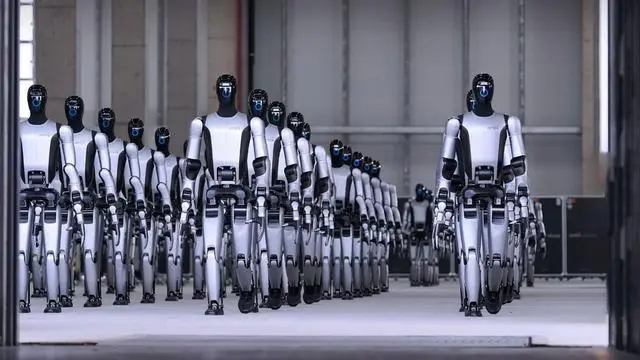
Indian media reports that Chinese robots are already patrolling the border, leaving the Indian army worried about people freezing to death in the winter.


Military Sub-Dimension
December 4, 2025, 11:55:00 AM , from Beijing


[Military Sub-Dimension] Author: --All-Domain Mobility★Unmanned Intelligence--

28EF35A866845D2F8F6947D745079B5CFFB500C4_size56_w640_h493.jpg


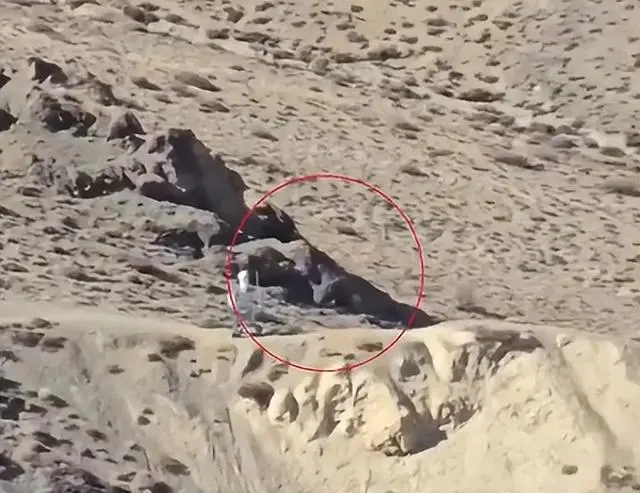
A video from the China-India border recently sparked heated discussion on Indian social media. In the video, several Indian border soldiers filmed a silver-gray metallic figure standing silently among the rocks and wasteland on the Chinese side.

The Indians weren't so naive; they quickly recognized it as a fixed-position patrol robot deployed by China along the border, carrying out its routine patrol duties. The person filming the video even laughed, seemingly finding the use of robots for guard duty quite novel.

However, Indian netizens and media quickly stopped laughing, which meant that China's advanced robotics technology had been widely applied, and perhaps in the near future, they would be facing a Chinese robot army.

86E95F92522F261B2FD140CC335CF58E9AA77B30_size27_w640_h286.jpg


▲Indian media calls it a spy robot

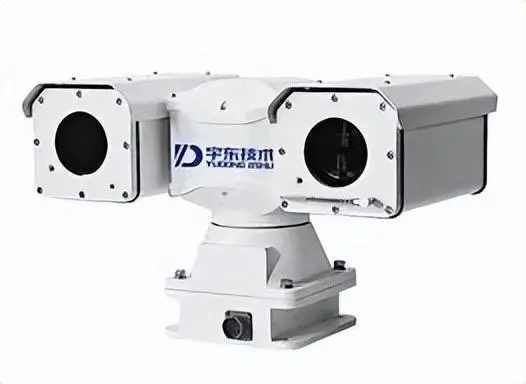
This robot is quite well-equipped. According to analysis (or perhaps just speculation) by overseas military experts, this border patrol robot is equipped with a dual-spectrum camera with 40x optical zoom, capable of infrared thermal imaging monitoring within a 1500-meter range, and can operate around the clock. As for its other features, including whether it has offensive capabilities, that remains unclear.

1D15A8F49CAC16C55B9FE19A6756A860498BB7FD_size17_w526_h384.jpg


At altitudes of four to five thousand meters, human soldiers need to take turns resting every few hours, while robots can maintain a 24-hour watch. More importantly, these intelligent devices are immune to altitude sickness, sub-zero temperatures, and logistical support. Combined with fixed high-definition intelligent cameras, multi-functional fusion telescopes, and other equipment, Chinese border troops can manage this intelligent control system from the comfort of their barracks.

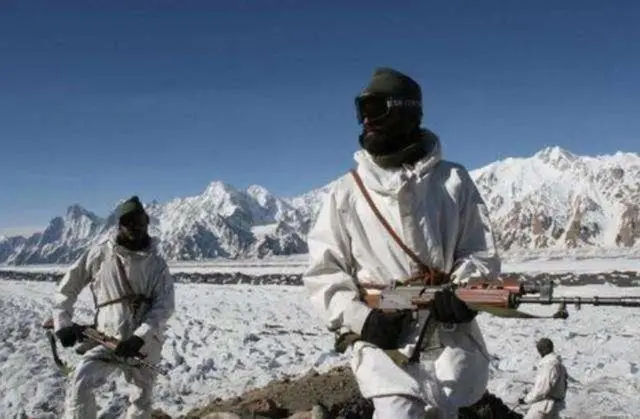
The difference is stark when compared to the situation in India. Indian troops in Ladakh face non-combat casualties every winter. In this high-altitude region, where altitudes generally exceed 4,000 meters, winter temperatures can drop to -30 to -50 degrees Celsius, causing frostbite that has a burn-like effect.

856FF22ACD77AB1E6114506B0C872572A05730F3_size39_w640_h419.jpg


▲Indian mountain troops, holding INSAS rifles

Indian media have repeatedly reported on soldiers freezing to death or suffering from frostbite on the border. Some soldiers got lost during night patrols and ended up suffering frostbite, requiring treatment by the People's Liberation Army. On the Siachen Glacier—the world's highest-altitude battlefield—countless Indian soldiers die each year from frostbite, avalanches, or falling into crevasses; it is known as a death trap.

The Indian military has invested considerable resources in this effort. According to estimates by Indian military logistics experts, at least 80 types of supplies are needed to survive the winter in the Ladakh region, including special three-layer snow jackets, thick trousers, cold-weather boots, snow goggles, face masks, and other equipment, as well as large quantities of fuel such as kerosene, diesel, and gasoline. The total supply required for the entire winter is as high as 500,000 tons.

Following the border standoff in 2020, India urgently purchased a large quantity of winter clothing adapted to high altitudes from the United States and also set up imported Arctic tents for 3 to 5 soldiers. However, what it received were mostly second-hand items that the US military did not want, and some of the clothes had not been washed since the last time the US soldiers took them off 20 years ago.


Even so, the Indian Army's logistical support capabilities remain severely compromised. With a population of only 260,000, the Ladakh region cannot realistically support tens of thousands of troops using local resources alone; all supplies must be transported from elsewhere, making the supply lines long and vulnerable.

On the Chinese side, not only are the frontline camps beautifully constructed, but they are also fully equipped with living facilities and even hyperbaric oxygen chambers. In border patrols and other missions, the focus has shifted to leveraging technology. In addition to stationary border defense robots, the PLA has also deployed various unmanned systems along the high-altitude border. Drones can perform reconnaissance and patrol missions in extreme weather conditions, while quadrupedal robotic dogs can transport supplies and coordinate combat operations.

F510453259A055E24B8E7674BCA71E61AEDF2538_size46_w640_h412.jpg


▲Xinhua News Agency report

At the Chagola outpost at an altitude of 5,318 meters, soldiers are equipped with a variety of unmanned and intelligent reconnaissance and observation devices. These intelligent sentries can be on duty 24 hours a day, greatly reducing the pressure of manual patrols. With this equipment, border guards can observe the area under their jurisdiction through a remote monitoring system from their warm barracks, without having to be exposed to the frigid environment for long periods of time as before.

While Chinese border troops are already exploring an integrated air-ground multi-domain control model, the Indian army is still struggling to keep its soldiers alive during the winter. People often ask why the Indians seem to reduce their activity on the border in winter, attempting to project a friendly image. The reason is simple: they can't withstand the pressure and lack the capacity to cause trouble.

26C3A5E08D55C72ECAC5073A919B941CC353181C_size42_w640_h360.jpg


▲A few days ago, a company's robots were shipped in batches.

The unveiling of the unmanned sentry robot is merely a microcosm of the equipment and system gap between China and India. Border guards are equipped with drones, robots, and robotic dogs; frontline camps have advanced land warfare equipment including Type 15 light tanks; and hundreds of kilometers further back, air force bases house J-20 and J-16 fighter jets… These are beyond India's capabilities to counter. No matter what posture they adopt, ultimate victory will belong to us. Whether they are overwhelmed by a robot army or combined arms operations, these are not their concerns now; after all, people are freezing to death and have no time for such things.


Last edited:
An air group comprising Russian Tu-95MS strategic bombers and Chinese Hong-6K bombers conducted a patrol over the Sea of Japan, the East China Sea, and the western Pacific Ocean. Fighter cover was provided along the entire flight route by Russian Su-30SM and Su-35S aircraft, as well as J-16 and J-11BS aircraft. The air group was also supported by a Chinese KJ-500A airborne early warning and control aircraft, providing reconnaissance and command support for the mission. South Korean F-35As were also spotted. The patrol lasted approximately eight hours.

To view this content we will need your consent to set third party cookies.
For more detailed information, see our cookies page.
 
CCTV.

Footage of the Type 99B main battle tank undergoing testing.
1765459271837.png


The video commentary specifically emphasized that the Type 99B main battle tank possesses the capability to command a cluster of unmanned systems.
This means it can simultaneously command a large number of unmanned combat vehicles, robotic dogs/wolves, small UAVs, and other unmanned equipment to coordinate in combat operations.
 
To view this content we will need your consent to set third party cookies.
For more detailed information, see our cookies page.
 
To view this content we will need your consent to set third party cookies.
For more detailed information, see our cookies page.
 

Users who are viewing this thread

Country Watch Latest

Back
Top