Chinese PLA Army News

Man-Machine Collaboration, Superior Combat Capability.
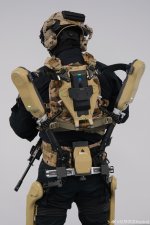
The Red Wing Forward Super Soldier System consists of the "Mars" Augmented Reality System and the "Hercules" Tactical Exoskeleton. It works in synergy with unmanned platforms such as combat robotic wolves to build a trinity intelligent squad ecosystem of "human, machine, and network," empowering special operations troops and enhancing their combat effectiveness.

The "Mars" Augmented Reality System (MARS): Combining augmented reality and artificial intelligence technologies, it integrates infrared, low-light, and fused images, along with friendly and enemy positions, map annotations, and command and control of unmanned platforms, displaying them uniformly on optical waveguide goggles to improve battlefield awareness and collaborative capabilities.

The "Hercules" Tactical Exoskeleton (EXO): Integrating upper and lower limb powered exoskeletons, it enhances soldiers' physical capabilities, reduces their physical exertion, and assists in improving strike effectiveness. It can also be equipped with bulletproof armor to comprehensively enhance individual soldier protection.

0071SbYFgy1i91zabb6ocj337k4tcb2j.jpg
from: 红隼防务 kestrel
0071SbYFgy1i91zalpmcyj337k4tc7wl.jpg
 
The Chinese army has released footage of its troops training in anticipation of the emergence of drones on the battlefield. Drones have changed the course of combat. While air defense and electronic warfare systems are currently unable to fully counter drones, training is especially important. Troops are moving, exploiting terrain and any obstacles to reduce the threat of drone strikes.

To view this content we will need your consent to set third party cookies.
For more detailed information, see our cookies page.
 
To view this content we will need your consent to set third party cookies.
For more detailed information, see our cookies page.
 
  • Like
Reactions: ety
To view this content we will need your consent to set third party cookies.
For more detailed information, see our cookies page.
 
To view this content we will need your consent to set third party cookies.
For more detailed information, see our cookies page.


DF-61 should be number 1 now.
 
Last edited:
China unveiled the ATLAS strike system, which launches a swarm of drones. The ATLAS system uses ATLUSS-A140 drones from China Electronics Technology Corporation. The drones are launched from a SWARM II launcher at 5-second intervals and automatically locate their targets. It's worth noting that no air defense system in the world can currently counter a drone swarm. A single launcher can launch up to 48 drones of various types. Drones fly at speeds of up to 100 km/h and have a flight time of up to 60 minutes. Drone swarms represent a new stage in the development of drones as a new type of weapon.

To view this content we will need your consent to set third party cookies.
For more detailed information, see our cookies page.
 
To view this content we will need your consent to set third party cookies.
For more detailed information, see our cookies page.
 
Group Operations of China's L30 Maritime Drones. China demonstrated the first live training exercise involving a group of L30 maritime drones. The video was filmed in waters adjacent to Zhuhai in Guangdong Province. The maritime drones participated in patrolling, identifying, and intercepting intruders.
The unmanned L30 boat reaches speeds of up to 65 km/h and has a range of approximately 550 km.
The maritime drones operate as a unified unit thanks to their "collective intelligence"; if an intruder is detected, they are blocked. The system will eventually be scaled up, and the unmanned boats will operate alongside UAVs and underwater drones, forming a unified maritime surveillance network.

To view this content we will need your consent to set third party cookies.
For more detailed information, see our cookies page.
 
China unveils next-generation electromagnetic gun with enhanced power and precision; design compact, minimizes shell cases, flash and noise: Chinese expert

By Sun Langchen and Liang Rui
Published: Apr 04, 2026 02:27 PM
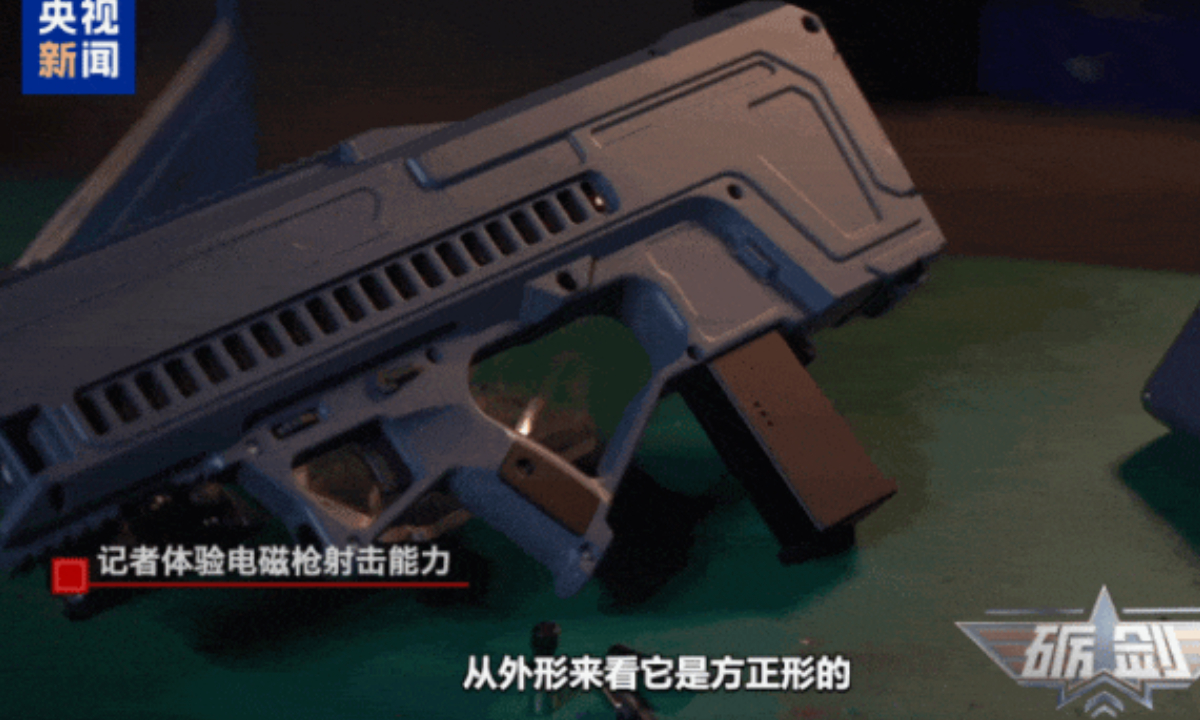
China’s latest generation electromagnetic gun Photo: CCTV News

China’s latest generation electromagnetic gun Photo: CCTV News

China’s latest-generation domestically developed electromagnetic gun has completed testing, with its performance now meeting operational requirements, according to a report on a test video released by CCTV News on Saturday.

The report added that compared with the previous generation, the new model features a slightly longer barrel, enabling higher projectile speed and more precise power regulation. More importantly, the size and weight of the projectile have been increased, indicating greater kinetic energy and enhanced destructive capability.

Unlike conventional firearms that rely on explosive propellants, the electromagnetic launcher uses battery-stored energy as its power source. It generates electromagnetic force through multi-stage coils to accelerate and launch projectiles. To increase projectile speed requires either extending the electromagnetic track or boosting electromagnetic force, both of which require higher electric current, the report said.

Visually, the new-generation launcher has a compact, boxy design with a clean exterior and modular structure. The barrel measures about 30 centimeters in length, and the weapon is light enough for one-handed operation. Its grip is positioned at the center, with the magazine located at the rear. An electronic display provides real-time information during firing, including battery level, remaining ammunition, and firing mode.

“The new-generation electromagnetic launcher represents the miniaturization, lightweight design, and individual deployment of electromagnetic weapons,” Song Zhongping, a Chinese military affairs expert, told the Global Times on Saturday.
“Despite its compact size, it can generate significant destructive force through high kinetic energy, potentially surpassing conventional firearms, while also offering lower ammunition costs. This reflects an important trend in the individualization of high-energy weapons,” Song said.

Song added that China has accumulated extensive experience in electromagnetic technologies, including electromagnetic catapult systems and ongoing research into railguns. “The move toward portability and miniaturization demonstrates continuous improvements in manufacturing capabilities and the evolution of individual weapon systems,” he said. The launcher is capable of higher firing speeds, longer range, and greater power than conventional firearms, making it suitable for targeting specific point objectives.

Military commentator Zhang Xuefeng told CCTV that the electromagnetic gun can precisely control projectile speed by adjusting electric current according to target distance and battlefield conditions. This allows it to better control impact force on the target, reducing the likelihood of over-penetration and potentially lowering lethality while still effectively neutralizing targets.

Zhang also highlighted its stealth advantages: the absence of gunpowder can minimize muzzle flash, smoke, loud gunfire, and shell ejection, enhancing concealment during operation.

“With further improvements in power and precision, such weapons could be deployed in military operations and may replace conventional firearms in certain scenarios. As advancements in high energy-density battery technologies continue, electromagnetic weapons are expected to play an increasingly important role in future warfare,” Zhang said.

 
To view this content we will need your consent to set third party cookies.
For more detailed information, see our cookies page.
 
The Video is in English Audio on Youtube
DF-61, H-20, Type 096

To view this content we will need your consent to set third party cookies.
For more detailed information, see our cookies page.
 

Users who are viewing this thread

Back
Top