Safety and Preparedness

When Disaster Strikes​


Introduction

Disaster risk reduction and management have become key concepts in present-day development practices across the world. Globally and regionally, we are experiencing a constant increase in socioeconomic losses due to disasters.

Geological, ecological and climatic changes are persistently mounting disaster threats for the world community in general and developing nations in particular. With Little or no warning, disasters and emergencies can happen. The local government’s ability to respond to these incidents can be quickly overwhelmed.

What is Disaster?

A disaster happens when a hazard impacts upon a vulnerable population and causes damage, casualties and disruption. An earthquake in an uninhabited desert cannot be considered a disaster, no matter how strong the intensity may be.

What is a Hazard?

A dangerous phenomenon, substance, human activity or condition that may cause loss of life, injury or other health impacts, property damage, loss of livelihoods and services, social and economic disruption, or environmental damage.

Classification of Hazards
Hazards are classified into the following major categories:
1.Natural hazards i.e: earthquakes
2.Hydro-metrological hazards
3.Geological hazards
4.Human induced or socio-nature hazards
5.Technological hazards
6.Biological hazards

2. Natural hazards: Natural process or phenomenon that may cause loss of life, injury or other health impacts, property damage, loss of livelihoods and services, social and economic disruption, or environmental damage. Natural hazards are a sub-set of all hazards. The term is used to describe actual hazard events as well as the latent hazard conditions that may give rise to future events. Natural hazard events can be characterized by their magnitude or intensity, speed of onset, duration and areas of extent.

For example, earthquakes have short duration and usually affect a relatively small region, whereas, droughts are slow to develop and often affect larger regions. In some cases, one hazard may be triggered by another hazard, such as the flood caused by a hurricane or the tsunami that is created by an earthquake.

2.Hydro-metrological hazards: Hydro-meteorological hazards include tropical cyclones (also known as typhoons and hurricanes), thunderstorms, hailstorms, tornados, blizzards, and avalanches, floods including flash floods, heat waves and cold spells. Hydro-meteorological conditions can also be contributing factor in other hazards such as landslides, wild fires, locust plagues, epidemics, dispersal of toxic substances and volcanic eruption.

3.Geological hazards: Geological process or phenomenon that may cause loss of life, injury or other health impacts, property damage, loss of livelihoods and services, social and economic disruption, or environmental damage, such as, earthquake, volcanic eruption, land movement, rock fall, glacial surge, etc.

4.Human induced or socio-natural hazards: The phenomenon of increased occurrence of certain geo-physical and hydro-meteorological hazardous events, such as landslides, floods, land subsidence and drought that arise from the interaction of natural hazards with over exploited or degraded land and environmental resources.
This term is used to describe the circumstances where human activity is increasing the occurrence of certain hazards beyond their natural probabilities. Socio-natural hazards can be reduced and avoided through wise management of land and environmental resources.

5.Technological hazards: A hazard originating from technological or industrial conditions, including scientific accidents, dangerous procedures, infrastructure failures or specific human activities that may cause loss of life, injury, illness or other health impacts, property damage, loss of livelihoods and services, social and economic disruption, or environmental damage.

Examples of technological hazards include industrial pollution, nuclear radiation, toxic waste, dam failure, transport accident, factory explosion and chemical spill. Technological hazards may also arise directly as a result of the impacts of a natural hazard.

6.Biological hazard: Process or phenomenon of organic origin which is conveyed by biological vectors, including exposure to pathogenic microorganisms, toxins and bioactive substances that may cause loss of life, injury, illness or other health impacts, property damage, loss of livelihoods and services, social and economic disruption, or environmental damage. Examples of biological hazards include outbreaks of epidemic disease, plant or animal contagion, insect plagues and infestations.

What do we mean my Vulnerability?
The characteristics and circumstances of a community, system or asset that make it susceptible to the damaging effects of a hazard. Anderson and Woodrow (1990) categorized vulnerabilities into three areas:

1.Physical and material vulnerability: For example, poor people who have few physical and material resources usually suffer more from disasters than rich people. People who are poor often live on marginal lands, they don’t have any savings or insurance and they are in poor health. These factors make them more vulnerable to disasters which means that they have harder time surviving and recovering from a calamity than people who are better off economically.

2.Social and organizational vulnerability: People who have been marginalized in social, economic or political terms are vulnerable to suffer more from disasters whereas groups, which are well organized and have higher commitment towards their members, suffer comparatively less during disasters.

Weakness in social and organizational areas may also cause disasters. For example, deep divisions can lead to conflict and war. Conflict over resources due to poverty can also lead to violence. A second area of vulnerability then is the social and organizational aspect of a community.

3.Attitudinal and motivational vulnerability: People who have low confidence in their ability to affect change or who have “lost heart” and feel defeated by events they cannot control are harder hit by disasters than those who have a sense of their ability to bring the change they desire. Thus, the third area of vulnerability is the attitudinal and motivational aspect.

What is capacity?
The combination of all the strengths, attributes and resources available within a community, society or organization that can be used to achieve agreed goals.

What is Disaster Risk?
Disaster risk is the chance of likelihood of suffering harm and loss as a result of a hazardous event. It closely depends upon the exposure of something to a hazard. This can be expressed as:
Risk = Chance (C) x Loss (L)
The output of risk analysis is usually an estimation of the risk scenarios.

Table: History of Disasters in Pakistan: 1935 to 2015
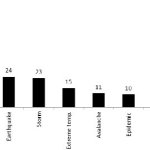
1703632201210.jpeg

Source: National Disaster Management Authority – Pakistan

What is Disaster risk reduction?


Disaster risk reduction is the concept and practice of reducing disaster risks through systematic efforts to analyze and manage the causal factors of disasters through reduced exposure to hazards, lessened vulnerability of people and property, wise management of land and the environment and improved preparedness for adverse events.

What is Disaster Management?

Disaster management is a collective term encompassing all aspects of planning for and responding to disasters, including both pre and post disaster activities. It refers to the management of both the risks and the consequences of disasters.

Preparedness – activities prior to a disaster. Examples: Preparedness plans, emergency exercises, disaster preparedness training and warning systems.

Response – activities during a disaster. Examples: Public warning systems, emergency operations, search and rescue.

Recovery – activities following a disaster. Examples: Temporary housing, claims processing and grants, long-term medical care and counselling.

Mitigation – activities that reduce the effects of disasters. Examples: Building codes and zoning, vulnerability analysis and public education.

What is mitigation?

The efforts for lessening or limitation of the adverse impacts of hazards and related disasters in pre, during and post disaster scenarios.

What is Disaster Preparedness?

The knowledge and capacities developed by governments, professional response and recovery organizations, communities and individuals to effectively anticipate, respond to, and recover from, the impacts of likely, imminent or current hazard events or conditions.

What is Resilience?

The ability of a system, community or society exposed to hazards to resist, absorb, accommodate to and recover from the effects of a hazard in a timely and efficient manner, through the preservation and restoration of its essential basic structures and functions.

Resilience means the ability to “resile from” or “spring back from” a shock. The resilience of a community, with respect to potential hazard events, is determined by the degree to which the community has the necessary resources and is capable of organizing itself both prior to and during times of need.

Why community based disaster preparedness is important:

The flash flooding in September 2014 have again exposed the chink in Pakistan’s Disaster Management system, historically the country has seen devastating floods as recent as 2010 and 2011 which wreaked havoc leading to 1,985 deaths, an estimated 800,000 people homeless and over US$ 10.9bn in post disaster reconstruction and rehabilitation costs.[1]

A briefing paper published by the think tank German Watch, lists Pakistan as among the top ten countries that are the most vulnerable to climate change effects, in addition to natural hazards such as earthquakes; man-made hazards such as fire are a leading cause of loss of life and property with an estimated 16,500 deaths, 164,000 injuries and insurance claims estimated at around Rs.400 Billion.[2]


Whilst the government emergency service and disaster management apparatus has improved leaps and bounds since the catastrophic events of 2005, the approach towards community based disaster risk reduction continues to be reactive at best.[3]

Interventions from humanitarian agencies and non-governmental organizations to strengthen disaster resilience have in many cases duplicated efforts.

These well-meaning efforts are a welcome breath of fresh air considering Pakistan is prone to a wide variety of natural and manmade hazards, the general approach has always been to initiate programs through what is referred to as an implementation partner, this approach has sound logic and merit as it offers transparency, accountability and most importantly sustainability.

It can be argued however that this system is self-limiting based on the funds and remit of the program and the reach of the implementation partner.

What happens when the funds dry out? Or the program comes to an end? And then comes the reality that whenever a disaster or emergency occurs, more often than not; it is the ordinary members of that community or the bystanders that are the first on scene.

However as we have all too often witnessed, so many precious lives are lost at road traffic accidents because someone didn’t know basic first aid, or people die due to inadequate fire safety or personal safety education at home or in the workplace.

Therefore now more than ever community based disaster risk reduction and safety education is vital, Rescue 1122 CADRE program[4] is a step in the right direction, however as the Latin phrase goes: non omnia possumus omnes “We all can’t do everything” it is important for ordinary citizens to think “Disaster Preparedness”.

Over the years, Pakistanis have developed a strong sense of security culture, we wouldn’t walk down a dark alley alone at night, or leave our car unlocked with the keys inside in the forecourt of a petrol station; we take these countermeasures to protect our valuable assets, yet why do we neglect our most valuable assets, our lives and the lives of our loved ones?

In his book “Facing the Humanitarian Challenge: Towards a Culture of Prevention” the Nobel Peace Prize winner Kofi Annan stated “More effective prevention strategies would not only save tens of billions of dollars, but save tens of thousands of lives.” And this opinion is backed by a UNDP publication which reported that $1 spent on disaster prevention can save $7 spent on disaster relief.[5]
1-dollar-for-seven-new.jpg


Because affected civilians will be the “first responders”, the process of organizing local residents must take place before, during, and after such catastrophic events occur. When a disaster strikes experts state that members of the community may be without help for anywhere up to 72 hours or even longer.[6] Hence, community based response is the first entity on scene that can save lives of those around them and survive a disaster.

Community preparedness doesn’t have to be complex, it can be as simple as a family getting together and making an emergency plan; which will let you know what to do and where to go for help if there’s a warning issued or a hazard observed.

You can learn first aid, how to extinguish a fire and create an emergency kit in case you need to evacuate your home.


References:

United Nations OCHA: http://www.unocha.org/

Sven Harmeling, Global Climate Risk Index 2012: http://germanwatch.org/klima/cri.pdf

Ikram Junaidi, Sep 12, 2014 Disaster Management ‘not a priority’: http://www.dawn.com/news/1131474

A step forward: Rescue 1122 volunteers to be trained on disaster management:http://tribune.com.pk/story/769971/...unteers-to-be-trained-on-disaster-management/

UNDP: Act Now, Save Later: http://www.undp.org/content/undp/en/home/ourwork/get_involved/ActNow/

http://www.masc.sc/programs/solutio...Culture-of-preparedness-The-72-hour-rule.aspx

Useful websites:
www.ndma.gov.pk
www.Rescue.gov.pk
www.Dpart.org
www.Unisdr.org
 

There is no health without mental health​


1659024583076.png

About mental health
We all see friends and loved ones going through rough times, but sometimes what we’re witnessing is a developing mental health problem, or a mental health crisis. In preparation for these times, we can learn to provide what’s known as ‘mental health first aid’.

What is mental health first aid?
Mental health first aid is the help you give to someone developing a mental health problem, experiencing a worsening of a mental health problem or in a mental health crisis.

You can give this first aid until the person has received appropriate professional treatment or the crisis is resolved.

Mental health first aid can help people experiencing:
  • depression
  • anxiety problems
  • psychosis
  • substance use problems
  • eating disorders
  • gambling problems.
It can also help if a person is experiencing a mental health crisis, such as:
  • suicidal thoughts and behaviours
  • non-suicidal self-injury (sometimes called deliberate self-harm)
  • panic attacks
  • traumatic events
  • severe psychotic states
  • severe effects from alcohol or other drug use
  • aggressive behaviours.
More than 20 million Pakistanis (10% of the country’s population) suffer from some form of mental health condition. That means every person is likely to know someone who is experiencing a mental health problem, whether it is a family member, a friend or colleague.[1]

Know the signs:
1659023906101.png


The first step in providing mental health first aid is understanding the signs and symptoms of an emerging or worsening mental health problem. Only a trained professional can diagnose someone with a mental illness, but you can be aware of changes in a person’s mood, behaviour, energy, habits, or personality. These changes may be the sign of a mental health problem.

Some symptoms that may indicate a serious problem include:
  • bizarre or unusual thinking
  • hallucinations, such as hearing or seeing things that aren’t there
  • extreme mood changes
  • restless, agitated and disorganised behaviour
  • marked decrease in activity
  • difficulty concentrating
  • significant drop in performance at work or school
  • significant withdrawal from friends and family
  • neglecting self-care (such as neglecting personal appearance and hygiene, and eating poorly)
  • suicidal thoughts or behaviours
  • non-suicidal self-injury (deliberate self-harm)
  • destructive or high-risk behaviour
  • confusion and disorientation
  • emotional outbursts
  • sleep problems
  • weight or appetite changes
  • being quiet or withdrawn
  • substance use problems
  • feelings of guilt or worthlessness
  • changes in behaviour or feelings that have lasted for longer than 2 weeks.
Having one or 2 of these symptoms usually doesn’t indicate a mental illness, but if a person is exhibiting several symptoms, they may need professional help (particularly if the symptoms have lasted for some weeks or they’re impacting their usual activities, such as work, school or relationships). Don’t ignore signs or symptoms that you notice in others, and don’t assume they will go away. And remember not everyone will show the same signs and symptoms.

Approach the person
  • Give the person a chance to talk to you. If they don’t open up to you themselves, and you are concerned about them, initiate the conversation. Be open and honest about your concerns about their mental health.
  • Make sure you approach the person in a comfortable space and at a time when you won’t be interrupted.
  • Speak from your own perspective. Use ‘I’ statements, such as ‘I have noticed…’ and ‘I feel concerned about…’ rather than ‘you’ statements, such as ‘You seem to be withdrawn…’ or ‘You’re not eating and sleeping…’.
  • Say you’re concerned and you’re here to help.
  • Respect the person’s own interpretation of their symptoms.
  • If the person doesn’t want to talk to you, encourage them to talk to someone else they trust.
Be supportive
  • Use phrases that will help the person feel listened to, understood and hopeful. Some examples are ‘I’m here for you’, ‘I can see this is a really hard time for you’, and ‘What can I do to help? Just tell me how’.
  • Show the person dignity and respect.
  • Don’t blame.
  • Be consistent in your emotional support and understanding.
  • Encourage the person to talk to you or someone else.
  • Listen well.
  • Give the person hope for their recovery.
  • Find accurate and appropriate resources for more information if the person wants it.
Know what’s not helpful
Sometimes even with the best intentions, we can make matters worse. When reaching out to someone you suspect might have a mental health problem, avoid:
  • telling them to ‘snap out of it’ or ‘get over it’
  • being hostile or sarcastic
  • getting over-involved or over-protective
  • nagging
  • trivializing their experience (for example, don’t tell them to smile or get their act together)
  • belittling or dismissing their feelings
  • being patronizing
  • trying to cure them or solve their problems.
Encourage someone to seek help for a mental health problem
Ask the person if they need help to manage how they’re feeling. If they want help, a good place to start is a visit to their GP. You can also chat to them about their options, particularly local and online services. Encourage them to act on their options.

If the person doesn’t want help, try to find out why. They may have some mistaken beliefs about getting help or their options. Try to help them feel better about seeking help.

If the person still resists help, tell them they can contact you if they change their mind. Respect their right not to seek help unless you believe they are at risk of harming themselves or others.

Mental health first aid for someone who is suicidal
Suicide can be prevented. According to WHO estimates, there are around 130k to 270k cases of attempted suicide in Pakistan each year.

Always take suicidal thoughts and behaviors seriously.

Take these actions when helping a person who is suicidal:
  • If you think someone may be suicidal, ask them directly.
  • If they say yes, do not leave them alone.
  • Link the person with professional help. Services such as Umang Pakistan offer free of cost counseling services, Umang can be accessed by dialling: Umang Hotline 03117786264 to speak to a counselor free of cost 24/7. Rozan is another NGO that offers free of cost confidential counseling services which can be accessed by dialing 03355000407.
  • In an emergency, call 911 or 15.

If you would like to learn more:


References:
[1]Nisar M, Mohammad RM, Fatima S, Shaikh PR, Rehman M. Perceptions Pertaining to Clinical Depression in Karachi, Pakistan. Cureus. 2019 Jul 7;11(7):e5094. doi: 10.7759/cureus.5094. PMID: 31523527; PMCID: PMC6728784.
 
Flinch, Fight, Flight or Freeze

Following on from our article on personal safety today, I will examine and hope to explain the psychology and physiology of the natural response to stress stimuli. The first thing to note here is no amount of skill or experience will help you if you are not aware of your surroundings, so please take this time to read up on my post about situational awareness.

Now coming back to the meat of the subject, it's not as easy as to ask someone "what would you do" your fight or flight reflex is centuries of genetic coding it's not something you can do away with.

For instance lest start with the startle response that every animal has.

Startle response exists in all animals and anyone with any martial arts training or military background will tell you that having a startle response is a good thing. In a survival situation the animal part of your brain "the amygdala" takes over and the startle is actually because of a sudden flood of adrenaline in your body, this flood can cause the fight, flight or freeze response.

During this time your nose will flare to allow more oxygen to enter the body and supply your muscles the burst needed, your heart will pump faster in order to get all that oxygen rich blood to the muscle groups that need them, your eyes will tunnel vision, your hearing becomes acute and in certain scenarios you may lose control of your bowls as your body sheds excess fluids and "weight" in order to become faster in case you need to retreat!

Examples of stimuli:
Auditory:

To view this content we will need your consent to set third party cookies.
For more detailed information, see our cookies page.


Visual / tactile: Stimuli:
To view this content we will need your consent to set third party cookies.
For more detailed information, see our cookies page.

You will see that in both videos there are extreme response and delayed responses depending on the persons "Situational Awareness" at the time. In extreme responses the person will flinch backwards, close their eyes, their nostrils will flare to allow more air to enter the body, their hands will automatically retract to the chest ready to protect the vital parts of the body and in micro seconds their eyes will track the perceived threat, this all happens in seconds!

In animals:
To view this content we will need your consent to set third party cookies.
For more detailed information, see our cookies page.


Another example for lack of situational awareness, lack of stimuli lack of startle flinch mechanism:
1703791848617.jpeg

Here you can see people who had "situational awareness" at the time, saw the bat coming and their bodies took action to avoid the threat, this ranges from ducking 0.5 seconds to 2 seconds, primal flinch "hands covering head/face" 0.3 to 0.5 seconds and no response, bat to the face.

Another example of ZERO situational awareness vs. someone with awareness of his or her surroundings!
09BatMan_xp-master768.jpg


Martial Artist Tony Blaur did a fascinating study on startle response and create a tactical response program for Law Enforcement called SPEAR: Spontaneous Protection Enabling Accelerated Response. He talks about his findings in this video:
To view this content we will need your consent to set third party cookies.
For more detailed information, see our cookies page.


Too much stimuli and adrenaline can actually be toxic and open up calcium receptors in the hearts muscle tissues which in turn stop the heart from contracting correctly which leads to Ventricular Fibrillation in which the heart stops contracting and just dances around your body like jelly on a plate: See video for example

To view this content we will need your consent to set third party cookies.
For more detailed information, see our cookies page.


Now lets come on to the subject of personal safety:

This is one subject I am very passionate about so I would like to add my two cents if I may! Personal safety and security is down to common sense. It's all down to situational awareness, to begin with, followed by impact factors and your capacity and ability to respond to the threat.

Unfortunately, there are not a lot of areas left in our world where you are immune to threats to your personal safety. With increases in crime such as theft, rape, terrorism and assault, it is in our best interest to pay attention.

This post is not covering the entire subject of self-defence, it may give you some food for thought. It is also important to mention that whilst however no one is totally immune from possibly becoming a victim of a crime, learning how to be more alert and aware of your surroundings and keeping an eye out for signs of trouble is a good start.

As any good self-defence trainer will tell you, the best self-defence is to avoid the situation entirely. So let's get started, first, we are going to look at how the mind of criminal works and then compare this to the thought process of the victim:

The mental process of a criminal are broken into three simple steps:

crime-triangle-final-simple.gif


1. First, a target is selected

2. A plan is made

3. The crime is committed


A victim is at a disadvantage because they have to go through a four step process:

1. They have to be aware of their surroundings 2. They have to evaluate the situation 3. They have to think of a counter plan 4. Finally, take action on the plan.

As a potential victim goes through these four steps, they are running through the phases of the “personal safety spectrum”.

This system is a simplified version of the “Cooper Colour Code” which is named after the person who developed it, Colonel Jeff Cooper of the United States Marine Corps, the colour code was designed to teach US Marines about maintaining mental readiness and how to respond to threats based on severity and exposure.

The personal safety spectrum, which is what I am going to be talking about is a more simplified version designed for personal safety awareness:

Here is the list of the conditions “phases” of the personal safety spectrum:

1. Condition Grey: In a safe place such as your home, and are not concerned with your surroundings.

2. Condition Yellow: When you are outside driving or walking down the street, you should be in Yellow condition. You should be taking in information, assessing risks. The reason you upgrade from condition grey to yellow is because you have left the comfort of a controlled environment, such as your “home” and as such have a greater need to pay attention to the environment around you.

For example:

You are proceeding down a sidewalk, a person approaches and asks “what time is it”? At this point, most people will look at their watch, this is actually a common distraction technique used to cause inattention to your surroundings.

3. Condition Red: In this condition you should be ALERT, look at the person/threat and decide what you will do and your decision, the act upon that decision. Once you are ready to act, you upgrade to Condition Green.

4. Condition Green: When you see an individual approaching you and decide you don’t wish contact, change your direction by moving away from the individual.

5. Condition White: This is a state of panic and you don’t know what to do.

So you can see, that it pays to be alert and aware of your surroundings as you may never know what may be around the corner. For example, if somebody approaches you, there are four things you need to be thinking about:

1. Hands: Where are their hands and what are they doing with their hands. 55% of our communication is through body language, for example: if someone makes a fist, chances are they are going to hit someone with it. But if they don’t have anything in their hands, then you should start looking for the second thing which is weapons.

2. Weapons: Guns, Knives or anything within that person's reach that can be used against you. Also known as a weapon of opportunity.

3. Friends and Associates: Is the person alone or is he in a group? Remember that many crimes are committed in pairs.

4. Escape: Finally consider your options to escape, where are you going to run to, are you boxed in, are you blocking the exit of the suspect? Remember that cornered criminals are more likely to use violence, so keep this in mind when considering an escape route.

Non verbal pre-attack indicators:

Humans like animals give out non verbal unconscious signals to display intent and emotions such as compassion, love, anger, hostility. These signals, leaked out of the unconscious facet of the criminal mind and displayed via body language.

This video shows a few pre attack indicators to watch out for:

Guard your personal space, When approached by someone whom you do not trust always try to keep him/her outside of what is referred to as your “Intimate space”, simply put, keep strangers who approach you and you don’t trust at an arms length. There are three kinds of Spaces you need to be concerned with when it comes to personal safety:


68cfbf_71957d4bc7cb4c3582fe796397e8b918~mv2.webp


1. Intimate Space: 0-1.5 Feet (The only people you should allow into your intimate space are people you trust such as your friends and family)


2. Personal Space: 1.5 Feet – 4 Feet (This is the ideal range to deal with strangers, it makes it difficult for someone to try and grab your clothing, or throw a punch. You should always try to maintain a distance out of “arms reach” when dealing with strangers you may feel are a threat. This space should allow you enough of a gap to quickly run through the four steps to be able to protect yourself.

3. Social Space and public space: 4 Feet – 12 Feet ( This is the distance you should aim to keep from people in public, remember that even at 4 Feet, you are still maintaining the “Arms length” distance from a potential threat.

Observation: This is a very important skill to learn and develop, not only will help keep you safe, it can also help when completing a FIR and if you notice anything out of the ordinary during your day to day activities such as a suspicious car or package, or even an unusual smell coming from something unexpected you can report it to the authorities.

https://www.samaa.tv/video/2017/02/cctv-footage-of-gun-attack-on-police-van/

Three simple rules:
  1. Stay Alert: Referred to as Situational Awareness
  2. Avoid Risky Situations: No need to be a Hero
  3. Trust Your Instincts: If it does not feel right…avoid it
Responding to an Attack or Robbery:

Robbery: First, decide if you are being robbed or attacked

If you are being robbed…do not resist

Give the robber what he or she wants

Remember…your goal is to avoid injury

Do not carry anything of value that you are not willing to lose

Second, if you are being attacked…decide NOW how you are going to respond: Safety in these situations is a personal choice, because only you can decide how to respond

Points to Consider if Being Attacked

  1. What is the intent of the suspect?
  2. Determine if a weapon is involved
  3. Is there one suspect or two?
  4. How do you normally respond to threats?
  5. What is your physical ability?
  6. Where is the suspect trying to take you?
  7. Do you really want to go(fight)?

If you don't know any real self-defence and have never had any martial arts training I would strongly recommend looking into Tony Blauer's SPEAR system. It is a very good bridge skill and is taught to police all over the world:


Other good self defence martial arts include Karate, Brazilian jiu-jitsu & Krav Maga, although I cannot vouch for the quality of trainers in Pakistan.

JUST REMEMBER WHATEVER YOU DO, YOUR GOAL HERE IS SURVIVAL

After an Attack or Robbery:
  • Do not feel guilty or embarrassed
  • Go to a safe place to report the crime
  • Preserve all physical evidence
  • Call the police IMMEDIATELY
  • Remember…you can do everything right and still become the victim of a crime
In Summary: Remember that there are five colour codes of mental awareness/response in the personal safety spectrum. It is very important that you keep in mind that awareness and avoidance are the best self-defence strategies. If you can avoid the risk, it is better than mitigating or managing the impact later on.

Maintain an awareness of your surroundings, “if it doesn't feel right” trust your instincts and do not hesitate. If you cannot avoid the situation, then mentally prepare, have a plan and execute with full conviction and purpose. Practice these skills on a day to day basis when traveling to and from work or going shopping, ultimately, the more aware you are, the more likely you will prevent an attack.

(c) Rescueranger 2020 - All Rights Reserved
 
Wildfire Safety:
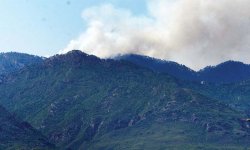
May to Jul are known as wildfire season for Islamabad. Every year due to carelessness and criminal negligence countless acres of the National Park are damaged due to fires which are difficult to control once started.

1703901377008.jpeg

I have written previously describing in detail the amazing biodiversity found in this haven of wildlife in the capital, you can read more here: https://defencepk.com/forums/threads/biodiversity-of-margalla-hills.543/

One of the reasons why fires spread so rapidly in the Margalla Hills is due to the Chir Pine Tree and its needles which are highly flammable:
1703902137712.jpeg

The video below will show the scale of devastation fires cause to this natural beauty spot every year, it places at risk the local wildlife and the wildlife rangers and firefighters who have to respond to put the fire out:

To view this content we will need your consent to set third party cookies.
For more detailed information, see our cookies page.


Some simple advice:
If you are planning on a barbeque in the Hills firstly think is it wise, if you wish to do so anyway always plan your fire pile with three things in mind:

Firstly clear your area of any debris, excess detritus and vegetation on the ground immediately around your fire pit.

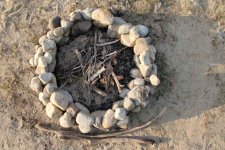
1. Make a fire pit by placing stones around your pile of fuel/wood
1703901757842.jpeg
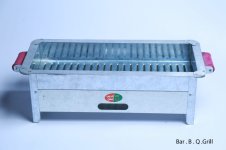
Or Use an Inghiti/Grill
1703901977015.jpeg

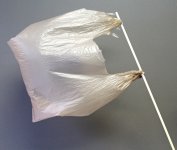
2. Check wind direction: This is easy you can wet your finger and point it in an open space, however a far more effective method is to take a plastic shopping bag and attach it to a stick and erect this in the air, the bag will turn towards the direction of the wind. Always aim to have your fire away from the wind to avoid any hot embers flying away into vegetation.
1703902390916.jpeg
2. Factor in the wind, consider which way the wind is blowing, as discussed the chir pine is excellent fuel and catches fire easily, once the fire starts it spreads rapidly and is extremely difficult to control.

3. Have a means to put out the fire, this can be a bottle of water or you can always use the soil that is available in abundance, soil smothers the fire and puts the fire out quickly.

4. NEVER leave a fire unattended: When you are done cooking or are going to leave, make sure to put out the fire. Make sure the fire is completely out before you leave the area.

5. If you are a smoker, please don't smoke when walking through wooded areas in during wildfire season. Ashes you leave behind can create a trail of heat sources that may ignite nearby vegetation. Please do not through your cigarette/cigar ends into vegetation.

6. It is a crime to deliberately cause harm to the flora and fauna of Margalla Hills punishable by 6 years in imprisonment.

7. If you see a fire Immediately dial the national emergency number 911 give the operator as much detail as possible, what trail are you on, the size of the fire, roads leading up to can fire engines easily attend the scene, are there any injuries or other risks.

Please help protect our nation's wildlife.
 

Opinion: Helping Children Cope with a Disaster​


16th December 2014, a date which will live in infamy, following on from the horrific incident at the Army Public School in Peshawar, I consulted with our resident NLP practitioner and medical doctor for their professional opinion on the impact of such severe traumatic incidents on children and wanted to come up with a brief guide for parents, carers and teachers to be able to use to guide children through what is undeniably a very traumatic event, one which will cause them to carry these mental scars for the rest of their lives.

This simple guide whilst not exhaustive will be a good start for parents, carers and teachers to start understanding the importance of psycho-social first aid, especially in relations to children and how to identify and respond to potential signs and symptoms of post traumatic stress.

It is important to remember that children and teens may be frightened by the disaster itself or be upset by disruptions that a disaster might cause in their daily routines or their relationships with parents, teachers, and friends. It is not unusual for children to show changes in behaviors that may be signs or symptoms of distress or discomfort following a disaster.

Young children may be especially affected during these times because of their sense of vulnerability, their lack of understanding, and their difficulty in communicating how they feel. Older children may be affected as well, and like their younger siblings might find it difficult to express their feelings.

Following a disaster, some children may:

  • Have difficulty with separation or be afraid to be left alone. Children may not want to be out of parents’ sight and may refuse to go to school or their childcare provider.
  • Be afraid to sleep alone. Children may want to sleep with a parent or another person. They may have sleep disturbances, including nightmares, screaming during sleep, and bed wetting, that persist more than several days after the event.
  • Experience loss of concentration and irritability.
  • Be startled easily, jumpy. They may become more active and restless.
  • Display behavior problems; for example, misbehaving in school or at home in ways that are not typical for the child.
  • Be upset at the loss of a favorite toy, blanket, or teddy bear.
  • Have physical complaints (stomachaches, headaches, dizziness) for which a physical cause cannot be found. They may run a fever or not want to eat.
  • Display withdrawal from family and friends, sadness, listlessness, decreased activity, and preoccupation with the events of the disaster.
  • Be afraid of the disaster recurring, or become anxious when there are rain, storms, sirens, or other reminders of the disaster. They may ask many times, “Will it come again?”
  • Become easily upset or cry more frequently.
  • Get angry, act out, or get into trouble. They may hit, throw, and/or kick to show their anger.
  • Behave as they did when younger. They may start sucking their thumb, wetting the bed, asking for a bottle, or clinging and wanting to be held. They may become upset easily, crying and whining frequently.
  • Be quiet and withdrawn, or not want to talk about the experience.
  • Feel guilty that they caused the disaster because of some previous behavior.
  • Feel neglected by parents who are busy trying to clean up and rebuild their lives and homes.
These changes in behaviors are common in children who have been through a disaster. They are natural responses to stress. Some of these symptoms may last for weeks or months, but they should diminish over time.

Except for extreme circumstances (when a family member is killed or severely injured or the child is hurt or traumatized), most children do not develop serious or permanent psychological problems.

Some children may never show distress because they do not feel upset. Other children may not show evidence of being upset until several weeks or months later.

What parents can do to help children cope:

  • Keeping children informed, supporting them emotionally, and getting them involved in the family’s efforts to prepare for or recover from a disaster will keep the family together.
  • Speak simply and honestly about the situation. Explain to your children what is happening to your family using simple words they can understand. Be honest, and keep children informed of a problem that will directly affect them.
  • Help young children understand the disaster. Explain how disasters are unusual but natural patterns of weather. Children should know that disasters are not some kind of punishment for something they did.
  • Reassure children about the family safety. Say, “We are together. We care about you. We will take care of you.”
  • Listen to what your child says and how your child says it. Is there fear, anxiety, or insecurity?
  • Observe your child at play. Listen to what is said and how the child plays. Children frequently express feelings of fear or anger while playing with dolls, trucks, or friends after a disaster.
  • Make time to comfort and reassure your children. You many need to repeat information and reassurances many times. Do not stop responding just because you already told the child once or even 10 times.
  • Hold your child. Provide comfort. Touching is important for children during this period. Close contact helps assure children that you are there and will not abandon them.
  • Maintain some routine activities during disruptive times to provide children with a sense of stability and control. This might include dinnertime at the kitchen table or a bedtime story.
  • Spend extra time putting your child to bed. Talk and offer assurance. Leave a night light on if that makes the child feel more secure.
  • Talk with children about how you feel. The way children see and understand your responses to a disaster is very important. You should admit your concerns but also stress your family’s abilities to cope with the situation.
  • Give children something productive to do appropriate for their age. Making them a part of the family’s disaster efforts can give them a sense of control and contribution.
  • Show children models of courage, determination, coping, and support. Draw children’s attention to those within and outside of the family who face the adversity or who provide support.

This article was written with input from Dr. S Ahmed ( Pediatric Specialist, NLP trainer with a special interest in Psycho-Social Care).

Further reading and resources:

Save the Children Psychological First Aid Training Manual for Child Practitioners | Save the Children’s Resource Centre

Help Your Child Manage Traumatic Events | Anxiety and Depression Association of America, ADAA

Welcome to Rozan | Rozan

Sahil | Har Bacha Mehfooz – Safe Secure and Protected

Child Protection in Emergencies (Urdu) : Child protection in emergencies | Sahil
 

How to use Location Codes in case of Emergency​


Did you know you can now use Google Plus Codes to help Rescue 1122 location you and get to you quicker?

Plus Codes are like street addresses for people or places that don’t have one. Instead of addresses with street names and numbers, Plus Codes are based on latitude and longitude, and displayed as numbers and letters. With a Plus Code, people can receive deliveries, access emergency and social services, or just help other people find them.

Here is a quick informational video for members knowledge and assistance, if you find it helpful, please share it with others. And please remember to pass the message that abusing the emergency number is a crime. Thank you.

To view this content we will need your consent to set third party cookies.
For more detailed information, see our cookies page.
 

Security guards, some simple advice.​


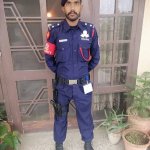
1704375340760.jpeg
You’ve decided to get yourself a “Security Guard” but now what to do? Where do you find a guard? What do you know about him? What about the company? Do you need to feed him? What happens if he goes on leave? So many questions very few easy answers. Yeah, suddenly you aren’t as convinced as before about getting a guard. Fret not.

Here are some of the things you have to keep in mind:

Where do I Hire?
Strongly recommended to consult with neighbors, friends who already have guards or acquaintances in the security field.

Big companies will not be interested in your business if you’re taking under 20 guards from them.

Use smaller firms for requirements under 20 guards.

How do I know the company or the guard is reliable?

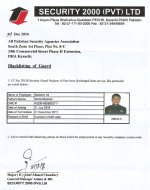
Good companies will have proper files on their guards going back to the day they were hired.
1704375467868.jpeg

Absence of such a file is a strong indicator of service levels being poor.

The file, at a minimum, should contain a copy of the
:

  • ID of the guard
  • Police Clearance
  • Background check
  • Training (This has to be a certificate issued by either APPSA, National Police Foundation, Askari Guards, Elite Police Training School Lahore or Islamabad Police.)
  • Certification and/or license
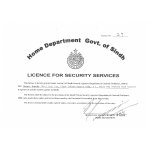
Reputable security companies should be able to produce their licenses upon request from a client:
1704375570136.jpeg


How much does a guard cost?

The cost of a guard depends on the service you need. It is best to provide the company your requirement and get a rate. Rates will always be higher for 1 or 2 guards compared to 5 or 10 etc.


What type of guard should I get?

This all depends on your need.

For residential security:
  • Preferably be between 40 – 50 years (Younger guards in homes with females present alone can be a risk)
  • Be living at a close distance to your residence or then have company provided transport.
  • Be of views similar to yours or not rigidly opposed to them. (Your Religion, Dress, Mannerisms, Food & Drink, Pets must not provoke them)


Escort Guard:
In addition to the above an escort guard must:
  • Be Hygienic (he sits in your car)
  • Have Experience of 5 years in a similar role with specialist training
  • Should have training with Pistols or rifle's (Again only Police/Askari issued certificates are acceptable)
  • Have a functional cell phone at all times
  • Know how to drive a vehicle

Corporate Security:
  • Get a needs assessment survey done by the company and a professional auditor.
  • Have a proper Post Order written up and agreed to.


So now that I have the guard what do I need to do?
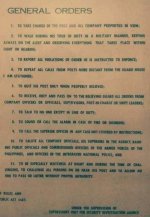
Written orders are to be provided to the guard in a language he understands. The company should have already agreed these with you. Example of standing orders provided below:
1704375811207.jpeg


The guard when on duty at any location escort, home, business is there for guarding ONLY.

The guard must not be tasked to Open the car door, the gate, the office door etc.

The Guard is a human being and needs personal breaks. Have a toilet at your place for his use. (Incidents often occur because the guard has left his post to go to the washroom in a nearby Mosque, restaurant or open area)

Make sure he is paid a fair wage. (The company must prove to you the salary he actually receives, you may be paying a higher sum to them but the company gives him only a fraction)

Sponsor his meals or allow him to bring his own and heat them at your place. (Incidents often occur because the guard has left his post to go eat at the neighborhood restaurant which is never close by)

Tea, Water should be given by the site owner in appropriate quantities. (A water cooler can be provided, tea be made by other domestic staff or then a small stove given to the guard for the purpose)

Know his name and greet him appropriately and with respect. (Your life is in his hands and he has gun)

If he’s uncomfortable around a pet dog then keep it away from him and his space.

Do not permit him to do any work other than his guarding duties. (He may be willing to do so for an extra buck but it distracts him from his core duty)

Ensure that he works no more than 12 hours a day and gets one PAID leave a week and 2 PAID weeks a year. (Companies discourage this by giving the guard extra money for those days. However the effectiveness of a guard is lost and it’s as good as not having one)

 
*Dear All: Pls note this as very important for all shared by a doctor. - for those who get up at night from sleep to urinate or early morning*
*Each individual must take note of the 3 x 1/2 minutes.*
*Why is it important? 3 x 1/2 minutes will greatly reduce the number of sudden deaths.*
*Often this occurs, a person who still look healthy, has died in the night.*
*Often we hear stories of people, yesterday I was chatting with him, why did he suddenly die?*
*The reason is that when you wake up at night to go to the bathroom is often done in a rush.*
*Immediately we stand, the brain lacks blood flow.*
*Why "3 x 1/2 minute" very important?*
*In the middle of the night when you are awakened by the urge to urinate for example, ECG pattern can change.*
*Because getting up suddenly, the brain will be anaemic and causes heart failure due to lack of blood.*
*Advised to practice "3 1/2 minutes," which are:*
*1. When waking from sleep, lie in bed for the 1st 1/2 minute;*
*2. Sit in bed for the next 1/2 minute;*
*3. Lower your legs, sitting on the edge of the bed for the last half-minute.*
*After 3 x 1/2 minutes, you will not have anaemic brain and heart will not fail, reducing the possibility of a fall and sudden death.*
*Share with family, friends & loved ones.*
*It can occur regardless of age; young or old.*
*Sharing is Caring. If you already know, regard this as refresher."*
 

Users who are viewing this thread

Pakistan Defence Latest

Country Watch Latest

Latest Posts

Back
Top