ghazi52
THINK TANK: CONSULTANT


- Thread starter
- #196
The restrictions have transformed the face of Herat, once known as Afghanistan’s cultural capital where female university students outnumbered men before the Taliban government returned.
Taliban authorities have vowed to boost economic self-sufficiency and move off a reliance on foreign aid, which once formed the backbone of the previous US-backed government’s finances.
But economists say that is only possible if Afghanistan, recovering from decades of war, develops its private sector.
The country is in the grips of a humanitarian crisis, exacerbated by the slashing of foreign assistance and the need to integrate millions of Afghans pushed back from neighboring Iran and Pakistan.
The UN estimated shortly after Taliban authorities took power that policies excluding women could cost the economy $1 billion annually.
– ‘No woman, no bazaar’ –
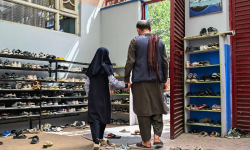
Women in Herat told AFP that they no longer go out unless absolutely necessary, fearing they could be stopped by the Taliban’s Ministry for the Propagation of Virtue and the Prevention of Vice (PVPV) officers over alleged dress-code violations.
A 27-year-old woman said she used to take private transport to attend language classes every weekday. Since June, she has barely left the house.
“I’ve been gripped by fear and terror. I truly gave up everything out of fear,” she told AFP.
Her daily transport costs were around $0.78, a small but significant injection into the local economy in a country where most of the population live beneath the poverty line.
Farshid Karimi, a 21-year-old autorickshaw driver, said his profits used to hit around $9 a day, but in the last few weeks he is lucky if he earns $4.
“Before, the women could freely take the rickshaw to go around. Now, as the restrictions have been imposed, they do not go out so there is no work for us,” Karimi said.
A 31-year-old woman told AFP she used to spend more than $20 at a time on clothes, but that she had stopped her shopping trips.
That has reverberated through the economy to those like the tailor, Ghafoori.
“The bazaar (market) revolves around women,” he said. “If there is no woman, there is no bazaar.”
Taliban authorities have vowed to boost economic self-sufficiency and move off a reliance on foreign aid, which once formed the backbone of the previous US-backed government’s finances.
But economists say that is only possible if Afghanistan, recovering from decades of war, develops its private sector.
The country is in the grips of a humanitarian crisis, exacerbated by the slashing of foreign assistance and the need to integrate millions of Afghans pushed back from neighboring Iran and Pakistan.
The UN estimated shortly after Taliban authorities took power that policies excluding women could cost the economy $1 billion annually.
– ‘No woman, no bazaar’ –
Women in Herat told AFP that they no longer go out unless absolutely necessary, fearing they could be stopped by the Taliban’s Ministry for the Propagation of Virtue and the Prevention of Vice (PVPV) officers over alleged dress-code violations.
A 27-year-old woman said she used to take private transport to attend language classes every weekday. Since June, she has barely left the house.
“I’ve been gripped by fear and terror. I truly gave up everything out of fear,” she told AFP.
Her daily transport costs were around $0.78, a small but significant injection into the local economy in a country where most of the population live beneath the poverty line.
Farshid Karimi, a 21-year-old autorickshaw driver, said his profits used to hit around $9 a day, but in the last few weeks he is lucky if he earns $4.
“Before, the women could freely take the rickshaw to go around. Now, as the restrictions have been imposed, they do not go out so there is no work for us,” Karimi said.
A 31-year-old woman told AFP she used to spend more than $20 at a time on clothes, but that she had stopped her shopping trips.
That has reverberated through the economy to those like the tailor, Ghafoori.
“The bazaar (market) revolves around women,” he said. “If there is no woman, there is no bazaar.”