Navigation
Install the app
How to install the app on iOS
Follow along with the video below to see how to install our site as a web app on your home screen.
Note: This feature may not be available in some browsers.
More options
Style variation
You are using an out of date browser. It may not display this or other websites correctly.
You should upgrade or use an alternative browser.
You should upgrade or use an alternative browser.
Afghanistan: General News and Discussion
- Thread starter ghazi52
- Start date
More options
Who Replied?


ghazi52
THINK TANK: CONSULTANT
- Thread starter
- #395
Government launches coal sale at reduced price in Kabul
by The Frontier Post

KABUL (Pajhwok): The Islamic Emirate has officially launched the sale of coal at a discounted price in Kabul and several other provinces, officials said on Tuesday.
At a ceremony marking the beginning of the initiative, Mawlawi Ahmad Jan Bilal, head of the Emirate’s state-owned companies, said the coal distribution process had formally started for residents of Kabul and a number of cold provinces.
He explained that 120,000 tons of coal have been prepared in the first phase, and more will be supplied to citizens if needed.
According to him, the Shamal State Company is responsible for the transportation and overall management of the process.
Bilal said that in all districts of Kabul, one ton of coal will be sold for 6,800 afghanis, while in distant provinces—where transportation costs are higher—it will be sold for 7,200 afghanis per ton.
Qayum Ahmadzai, head of sales and marketing at Shamal State Company, said the coal has been transported to Deh Sabz district, from where it will be distributed to all districts of Kabul.
Ghulam Sakhi, a resident of the 8th district, who had come to purchase coal, told Pajhwok that he was happy the government was providing coal at a low price.
He said: “I cannot afford to buy coal at the market price, but today I was able to purchase one ton here for 6,800 afghanis.”
The government had also brought coal to Kabul last winter and sold it to the public at a reduced price.
ghazi52
THINK TANK: CONSULTANT
- Thread starter
- #396
Afghanistan economic recovery buckles as nine in 10 families go hungry or into debt, UNDP says
by The Frontier Post

KABUL (Reuters): Afghanistan’s economic recovery is buckling as nine in 10 households are forced to skip meals, sell belongings or take on debt to survive, the United Nations said on Wednesday, warning that mass returns are exacerbating the country’s worst crisis since the Taliban returned to power.
A United Nations Development Programme report said nearly one in 10 overseas Afghans has been forced back home, with more than 4.5 million returnees since 2023, mainly from Iran and Pakistan, swelling the population by 10 percent. On top of that, earthquakes, floods and drought have destroyed 8,000 homes and strained public services “beyond their limits.”
Quakes, floods and hunger
A survey of more than 48,000 households found that more than half of Afghanistan’s returnees have skipped medical care to buy food and 45 percent rely on open springs or unprotected wells for water.
Nearly 90 percent of returning Afghan families are in debt, owing $373 to $900, up to five times the average monthly income of $100 and nearly half of annual per-capita gross domestic product, the UNDP said.
ghazi52
THINK TANK: CONSULTANT
- Thread starter
- #397
Iran, Russia FMs call for ‘continued dialogue’ between Pakistan, Afghanistan
News Desk
November 13, 2025
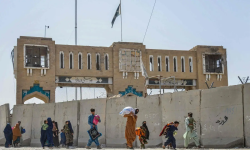
Afghan refugees deported from Pakistan arrive with their belongings at the zero point border crossing between Afghanistan and Pakistan in Spin Boldak district of Kandahar, Afghanistan, on Oct 19, 2025. — AFP/File
The foreign ministers of Iran and Russia have called for continued dialogue between Pakistan and Afghanistan to resolve their ongoing disputes on cross-border terrorism.
Last week, a third round of talks between Islamabad and Kabul, which were taking place in Istanbul in the presence of mediators, broke down without any agreement, as negotiators failed to bridge deep differences over how to prevent cross-border terrorism. The talks had followed deadly border clashes between the two neighbours in October.
Russia’s Foreign Minister Sergey Lavrov and his Iranian counterpart Abbas Araghchi spoke on the telephone on Wednesday, during which the two sides exchanged views on the latest bilateral and regional developments.
ghazi52
THINK TANK: CONSULTANT
- Thread starter
- #398
Baradar gives medicine importers 3 months to end trade with Pakistan
by The Frontier Post

KABUL: During a meeting with industrialists and traders, Mullah Abdul Ghani Baradar, the Deputy Prime Minister for Economic Affairs, made several key recommendations regarding the protection and sustainability of national trade.
He emphasized that traders and industrialists should seek alternative routes for trade instead of relying on Pakistan.
“All Afghan traders and industrialists should turn to alternative trade routes instead of Pakistan. These routes have not only harmed our traders but have also caused difficulties for markets and the general public. I strongly urge all traders to implement alternative options for imports and exports as soon as possible,” he said.
Baradar warned that after this notice, if anyone continues to trade with Pakistan, the Islamic Emirate will not cooperate with or listen to such traders.
He criticized the poor quality of medicines imported from Pakistan and announced that medicine importers have three months to close their accounts and end business dealings there.
“Our health sector’s main problem is the import of low-quality medicines from Pakistan. I strongly urge all medicine importers to immediately find alternative supply routes. Those who have contracts or purchases in Pakistan are given three months to settle their accounts and wind up their work,” Baradar said.
ghazi52
THINK TANK: CONSULTANT
- Thread starter
- #399
Return of 2.3m Afghans intensifies Afghanistan’s economic challenges: UNDP
by The Frontier Post

KABUL (Pajhwok): The United Nations Development Programme (UNDP) states that decades of war, economic stagnation and climate-related challenges have eroded local resilience in Afghanistan, leaving most families in need of assistance.
The report states that more than three-quarters of Afghan families face livelihood insecurity and require support to access food, shelter and healthcare. In 2024, nearly 95 percent of the population experienced severe economic hardship.
ghazi52
THINK TANK: CONSULTANT
- Thread starter
- #400
Australia to end the diplomatic status of Afghan Envoy
by The Frontier Post

KABUL (TOLONews): Australian media have reported that the country will not extend the diplomatic credentials of the Afghan ambassador in Canberra, the capital of Australia.
According to these reports, the Australian federal government informed Wahidullah Waissi, the ambassador appointed by the former Afghan government, in a letter in late September of this year that he will no longer hold diplomatic status in the country as of February 2026.
An excerpt from Australian media: “Wahidullah Waissi, the ambassador appointed by Afghanistan’s former government in August 2021, received a letter in late September effectively warning him that as of February he will no longer have diplomatic status.”
Fazlmanullah Mumtaz, a political analyst, commented: “Consular and diplomatic relations are established out of necessity. When those needs no longer exist, maintaining consulates without providing services becomes pointless.”
Meanwhile, Ahmad Javed Mujadidi, Afghanistan’s ambassador to Saudi Arabia, has also announced the end of his mission in the kingdom.
Some political analysts consider the Islamic Emirate’s relations with Saudi Arabia to be good and believe that the embassy in Riyadh is likely to be handed over to a representative of the Islamic Emirate. However, they express a different view regarding the embassy in Australia.
Enayatullah Hemam, a political affairs expert, stated: “The Saudis and Australians may choose to elevate existing relationships, currently defined through informal or official contacts and transfer their embassies to the Islamic Emirate, as some other countries have done.”
Wahid Faqiri, an international relations expert, said: “If Australia wishes to maintain any kind of relations with Afghanistan official or semi-official, it will be compelled to engage with the Taliban. This also indicates that Australia recognizes the former Afghan government as part of history.”
These developments come at a time when ambassadors appointed by the former Afghan government are concluding their missions. Recently, the Ministry of Foreign Affairs of the Islamic Emirate of Afghanistan declared several Afghan diplomatic missions, including the embassy in Australia, as invalid due to their refusal to cooperate with the Islamic Emirate’s foreign ministry.

Khorasan Black Flags
Trusted Member

Retired CIA agent :
Afghanistan used to be a net food exporter and as soon as the US takes over
They're producing 93% of the world's herion !!!!!
Afghanistan used to be a net food exporter and as soon as the US takes over
They're producing 93% of the world's herion !!!!!

K2RULEZ
Elite Member

Tajiks accuse deportees of bad behavior, many held legal status.
A 53-year-old Afghan refugee in Vahdat, Tajikistan, says he has barely let his teenage sons out of the family’s apartment in months. Not since Tajik authorities appeared in the yard of his cousin’s apartment building across town, arrested his cousin and quickly deported him back to Afghanistan, the refugee recently recounted to Eurasianet.
The cousin, whom the Taliban know worked for the republican government, has been in hiding at a relative’s house in Afghanistan since he was deported, the man said.
This past July Tajik authorities carried out mass deportations of Afghan refugees. The pace of deportations has since eased, but they’ve left some in the refugee community, especially newer arrivals, profoundly shaken in a country that once seemed a haven for those fleeing the Taliban.
“We were living in fear, but it’s been two months that it’s stopped, and we hope it continues like this,” the 53-year-old man, who declined to provide his name due to safety concerns, said in Dari through an interpreter.
The UN refugee agency UNHCR is aware of at least 1,288 Afghans who were deported from Tajikistan to Afghanistan this summer, including 1,152 refugees and asylum seekers, Dumitru Lipcanu, acting UNHCR representative to Central Asia, told Eurasianet in a statement earlier in November.
Most of the deportees held valid passports and visas or government-issued refugee or asylum-seeker documentation, he said. “UNHCR urges the Government of Tajikistan to uphold its commitments to refugee protection, and ensure any returns to Afghanistan are voluntary, safe and dignified,” Lipcanu said.
The deportations affected a significant slice of the Afghan refugee community in Tajikistan, which numbers between 10,000 and 13,000 and is concentrated in the towns of Vahdat, 20 kilometers east of Dushanbe, and Rudaki, 10 miles south of the capital.
In a July 9 statement, the border guard service of the Committee for State Security confirmed they were deporting “foreign citizens” whom they accused of drug trafficking, possessing extremist propaganda and false documents, and violating migration laws. The border guard service did not respond to questions from Eurasianet.
“Even though they were living in Tajikistan legally, when you break the law, it becomes illegal. Is it not so?” Tajik Interior Minister Ramazona Rakhimzoda said at an August 7 press conference where he confirmed the deportations of Afghans, the Asia Plus newspaper reported.
The 53-year-old refugee, who arrived in Tajikistan from Pakistan with his family one-and-a-half years ago, showed Eurasianet his own documents and said his cousin also had all the proper documents. He added that his cousin was not violating any laws before he was deported, which Eurasianet could not independently confirm.
“They lost track of the count of refugees, which led to the sweeps,” a 24-year-old Afghan refugee, who also requested anonymity, told Eurasianet in Vahdat. Many deportees were among Afghans who arrived in the last one or two years and were working without permits or did not understand how to interact with Tajik authorities, according to the young refugee, who arrived shortly before Kabul fell in 2021.
There are a host of unwritten rules Afghan refugees must follow to stay in the authorities’ good graces, like keeping their beards tightly trimmed and not drinking alcohol or flirting with Tajik women, the 24-year-old refugee said. One particular hang up for the Tajiks is the trend among younger Afghan men of cuffing their pant legs so their ankles show, he said.
However, the young refugee praised Tajik authorities as respectful, especially compared to the treatment Afghan refugees receive in Iran and Pakistan. The refugee also described life in Tajikistan as “in one word, freedom,” in contrast to the repressive Taliban regime.
Tajikistan is the only country bordering Afghanistan that “treats refugees fairly and without bias or bad intentions,” and it was the “recklessness and irresponsible behavior of some of our compatriots” that led to the deportations, Abdul Musawir Bahadori, an Afghan migrant and head of the Ariana Organization, which provides services to Tajikistan’s Afghan refugees, told Eurasianet in a message.
Under international and Tajik law, refugees who violate local laws must be given due process and cannot be returned to a country where their life could be under threat, UNHCR’s Lipcanu said.
“UNHCR reaffirms that the situation in Afghanistan continues to put certain groups of Afghans at risk of persecution, for whom the need for international refugee protection remains,” he said.
Tajik President Emomali Rahmon has long been a fierce critic of the Taliban, and, unlike the other Central Asian states, Dushanbe has yet to seriously engage with Kabul, though there have been signs of a slight thaw in the past two years. In the summer of 2021, a Tajik official said the country could potentially accept 100,000 Afghan refugees, but after allowing an initial influx of them, Dushanbe hardened its stance.
Tajikistan previously conducted а smaller, collective deportation of 41 Afghans in December 2024, according to UNHCR.
Russian President Vladimir Putin, a close Rahmon ally, has opposed Afghan refugee resettlement in Central Asia since the day Kabul fell, and Moscow’s recent recognition of the Taliban government may have played a role in the deportations, the British charity Open Doors said in a statement this summer. Open Doors works with Afghan Christian refugees in Tajikistan, some of whom were deported this summer despite the significant risks they face in their homeland, the charity said.
In October, Tajikistan’s national ombudsman released a report covering the year 2024 that criticized the government’s treatment of Afghan refugees, particularly the difficulty of obtaining refugee status, residency permits and work authorization.
A 53-year-old Afghan refugee in Vahdat, Tajikistan, says he has barely let his teenage sons out of the family’s apartment in months. Not since Tajik authorities appeared in the yard of his cousin’s apartment building across town, arrested his cousin and quickly deported him back to Afghanistan, the refugee recently recounted to Eurasianet.
The cousin, whom the Taliban know worked for the republican government, has been in hiding at a relative’s house in Afghanistan since he was deported, the man said.
This past July Tajik authorities carried out mass deportations of Afghan refugees. The pace of deportations has since eased, but they’ve left some in the refugee community, especially newer arrivals, profoundly shaken in a country that once seemed a haven for those fleeing the Taliban.
“We were living in fear, but it’s been two months that it’s stopped, and we hope it continues like this,” the 53-year-old man, who declined to provide his name due to safety concerns, said in Dari through an interpreter.
The UN refugee agency UNHCR is aware of at least 1,288 Afghans who were deported from Tajikistan to Afghanistan this summer, including 1,152 refugees and asylum seekers, Dumitru Lipcanu, acting UNHCR representative to Central Asia, told Eurasianet in a statement earlier in November.
Most of the deportees held valid passports and visas or government-issued refugee or asylum-seeker documentation, he said. “UNHCR urges the Government of Tajikistan to uphold its commitments to refugee protection, and ensure any returns to Afghanistan are voluntary, safe and dignified,” Lipcanu said.
The deportations affected a significant slice of the Afghan refugee community in Tajikistan, which numbers between 10,000 and 13,000 and is concentrated in the towns of Vahdat, 20 kilometers east of Dushanbe, and Rudaki, 10 miles south of the capital.
In a July 9 statement, the border guard service of the Committee for State Security confirmed they were deporting “foreign citizens” whom they accused of drug trafficking, possessing extremist propaganda and false documents, and violating migration laws. The border guard service did not respond to questions from Eurasianet.
“Even though they were living in Tajikistan legally, when you break the law, it becomes illegal. Is it not so?” Tajik Interior Minister Ramazona Rakhimzoda said at an August 7 press conference where he confirmed the deportations of Afghans, the Asia Plus newspaper reported.
The 53-year-old refugee, who arrived in Tajikistan from Pakistan with his family one-and-a-half years ago, showed Eurasianet his own documents and said his cousin also had all the proper documents. He added that his cousin was not violating any laws before he was deported, which Eurasianet could not independently confirm.
“They lost track of the count of refugees, which led to the sweeps,” a 24-year-old Afghan refugee, who also requested anonymity, told Eurasianet in Vahdat. Many deportees were among Afghans who arrived in the last one or two years and were working without permits or did not understand how to interact with Tajik authorities, according to the young refugee, who arrived shortly before Kabul fell in 2021.
There are a host of unwritten rules Afghan refugees must follow to stay in the authorities’ good graces, like keeping their beards tightly trimmed and not drinking alcohol or flirting with Tajik women, the 24-year-old refugee said. One particular hang up for the Tajiks is the trend among younger Afghan men of cuffing their pant legs so their ankles show, he said.
However, the young refugee praised Tajik authorities as respectful, especially compared to the treatment Afghan refugees receive in Iran and Pakistan. The refugee also described life in Tajikistan as “in one word, freedom,” in contrast to the repressive Taliban regime.
Tajikistan is the only country bordering Afghanistan that “treats refugees fairly and without bias or bad intentions,” and it was the “recklessness and irresponsible behavior of some of our compatriots” that led to the deportations, Abdul Musawir Bahadori, an Afghan migrant and head of the Ariana Organization, which provides services to Tajikistan’s Afghan refugees, told Eurasianet in a message.
Under international and Tajik law, refugees who violate local laws must be given due process and cannot be returned to a country where their life could be under threat, UNHCR’s Lipcanu said.
“UNHCR reaffirms that the situation in Afghanistan continues to put certain groups of Afghans at risk of persecution, for whom the need for international refugee protection remains,” he said.
Tajik President Emomali Rahmon has long been a fierce critic of the Taliban, and, unlike the other Central Asian states, Dushanbe has yet to seriously engage with Kabul, though there have been signs of a slight thaw in the past two years. In the summer of 2021, a Tajik official said the country could potentially accept 100,000 Afghan refugees, but after allowing an initial influx of them, Dushanbe hardened its stance.
Tajikistan previously conducted а smaller, collective deportation of 41 Afghans in December 2024, according to UNHCR.
Russian President Vladimir Putin, a close Rahmon ally, has opposed Afghan refugee resettlement in Central Asia since the day Kabul fell, and Moscow’s recent recognition of the Taliban government may have played a role in the deportations, the British charity Open Doors said in a statement this summer. Open Doors works with Afghan Christian refugees in Tajikistan, some of whom were deported this summer despite the significant risks they face in their homeland, the charity said.
In October, Tajikistan’s national ombudsman released a report covering the year 2024 that criticized the government’s treatment of Afghan refugees, particularly the difficulty of obtaining refugee status, residency permits and work authorization.

K2RULEZ
Elite Member
The forced return of Afghan migrants from Europe to Turkey has begun under a new agreement between the European Union and Ankara, with expectations that these migrants will ultimately be deported to Afghanistan.
According to Turkish media reports, the Turkish government has signed a ‘readmission agreement’ with the EU, agreeing to accept back so-called “illegal” migrants in exchange for €3 billion in funding. The deal primarily involves member states such as Germany and Sweden, which had already initiated the deportation process for Afghan migrants.
Reports have also emerged of an Afghan prisoner being transferred from Switzerland to Turkey, signaling what appears to be a preliminary step toward the eventual repatriation of this group to Afghanistan over the coming months and years. In parallel, Turkey has launched a large-scale operation aimed at preventing the entry of new migrants, particularly starting in early 2025. Media claims suggest thousands of Afghan asylum seekers have been detained during these operations, though Turkish officials have not confirmed exact figures.
Separately, internal EU documents indicate that Germany, relying on the ‘solidarity mechanism,’ has been exempted from accepting additional asylum seekers until the end of 2026. Instead, it is expected to provide financial assistance. Germany argues that it has already taken in a large number of migrants who should have initially been registered in other member states.
Meanwhile, the United Nations High Commissioner for Refugees (UNHCR) says more than 1.7 million Afghans have returned from Pakistan to their home country between September 2023 and November 2025. Since April 2025 alone, over 869,000 migrants have returned, around 13 percent of whom were forcibly deported.
Pakistan’s deportation campaign began two years ago to identify undocumented migrants but intensified following increased border tensions between the Pakistani military and Taliban forces. This has once again highlighted the precarious situation of Afghan migrants in the region.
The growing external pressures and lack of sustained domestic support have made life increasingly difficult for Afghan migrants, particularly in a context where the Taliban administration has been unresponsive and has failed to provide adequate support for returning citizens.
According to Turkish media reports, the Turkish government has signed a ‘readmission agreement’ with the EU, agreeing to accept back so-called “illegal” migrants in exchange for €3 billion in funding. The deal primarily involves member states such as Germany and Sweden, which had already initiated the deportation process for Afghan migrants.
Reports have also emerged of an Afghan prisoner being transferred from Switzerland to Turkey, signaling what appears to be a preliminary step toward the eventual repatriation of this group to Afghanistan over the coming months and years. In parallel, Turkey has launched a large-scale operation aimed at preventing the entry of new migrants, particularly starting in early 2025. Media claims suggest thousands of Afghan asylum seekers have been detained during these operations, though Turkish officials have not confirmed exact figures.
Separately, internal EU documents indicate that Germany, relying on the ‘solidarity mechanism,’ has been exempted from accepting additional asylum seekers until the end of 2026. Instead, it is expected to provide financial assistance. Germany argues that it has already taken in a large number of migrants who should have initially been registered in other member states.
Meanwhile, the United Nations High Commissioner for Refugees (UNHCR) says more than 1.7 million Afghans have returned from Pakistan to their home country between September 2023 and November 2025. Since April 2025 alone, over 869,000 migrants have returned, around 13 percent of whom were forcibly deported.
Pakistan’s deportation campaign began two years ago to identify undocumented migrants but intensified following increased border tensions between the Pakistani military and Taliban forces. This has once again highlighted the precarious situation of Afghan migrants in the region.
The growing external pressures and lack of sustained domestic support have made life increasingly difficult for Afghan migrants, particularly in a context where the Taliban administration has been unresponsive and has failed to provide adequate support for returning citizens.
Users who are viewing this thread
Total: 3 (members: 0, guests: 3)
Pakistan Defence Latest
-

-
-
 Federal cabinet gives nod to imposition of emergency in KP; summary sent to president (31 Viewers)
- Latest: hussain0216
-

-

Country Watch Latest
-
Iran - Israel/US War: Israel-US declare war on Iran, Iran responds (217 Viewers)
- Latest: BananaRepublic
-
-

-
-
Latest Posts
-
-

-
-
Federal cabinet gives nod to imposition of emergency in KP; summary sent to president (31 Viewers)
- Latest: hussain0216
-
