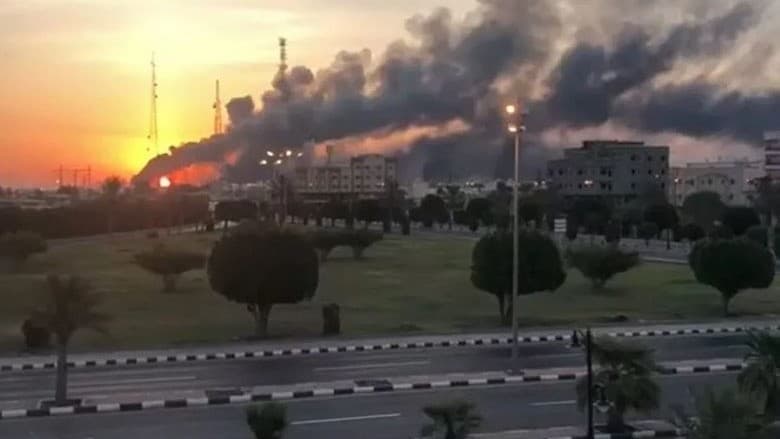
Aftermath of the Iran-US war and its effects on proximities

you have to store nukes somewhere they cant be on the move 24/7


also does any one know how we move our nuclear materials and weapons (@safriz )
To view this content we will need your consent to set third party cookies.
For more detailed information, see our cookies page.

like for ex. US does this ,is our as visible or do we just hide it in plain sight .

I guess that would be Kala chitta and Koh Sulaiman areas .
For Nuclear weapons

Between 20 and 30 x launch vehicles are always on the ready . This was from SIPRI , but more than a decade ago.
No idea about the current situation.
 
Maybe in a perfect world we could park some jets in Bagram airbase father away from Indian missile attacks.
The hangar is reinforced using Ultra-High Performance Concrete (UHPC) with a composite sandwich structure. When the hangar roof is 2-3 meters thick (depending on the UHPC material selection), it can effectively withstand a direct attack from a BrahMos missile.

However, UHPC is very expensive and requires highly advanced construction techniques.
 
To view this content we will need your consent to set third party cookies.
For more detailed information, see our cookies page.
 
I'm not sure why but sadly one of the mods (can't see who) moved two threads I opened clearly intended for the Pakistan Strategic Forces section (one was about military lessons learned from the Iran war, and the other related to defence infrastructure & rocket force command) and instead merged it into this random thread in the multi-media section.

That is quite annoying and makes no sense, what connection did my threads have to "general multi-media" and do they not deserve their distinct thread given their importance??

@RescueRanger
 
I'm not sure why but sadly one of the mods (can't see who) moved two threads I opened clearly intended for the Pakistan Strategic Forces section (one was about military lessons learned from the Iran war, and the other related to defence infrastructure & rocket force command) and instead merged it into this random thread in the multi-media section.

That is quite annoying and makes no sense, what connection did my threads have to "general multi-media" and do they not deserve their distinct thread given their importance??

@RescueRanger
Let me see if I can find the threads in question
 
@Rational Philosopher can't find the threads in question. If they have been merged with existing thread by a mod then there is no way to retrieve the old thread.
That's sad, I don't know if it's worth re-opening if they'll be removed again. Thank you for checking.

Genuinely don't see how discussion on defence infrastructure, the rocket force command, or the military lessons from Iran war have to do with "General Photos and Multi-media", plus they are important enough to have their own thread.
 
That's sad, I don't know if it's worth re-opening if they'll be removed again. Thank you for checking.

Genuinely don't see how discussion on defence infrastructure, the rocket force command, or the military lessons from Iran war have to do with "General Photos and Multi-media", plus they are important enough to have their own thread.
Create a new one tag me I will make sure it's in the right section. Just don't make too many Iran threads in Pak strat affairs, because we already have a few running side by side.
 
There was too much propaganda from certain quarters that fooled many people. War in Venezuela showed how much difference Air Power can make and the ongoing war in Iran is also showing how much difference Air Power can make.

Iran’s Underground ‘Missile Cities’ Have Become One of Its Biggest Vulnerabilities

They have significantly degraded Iranian military capability in just 10 days.

To view this content we will need your consent to set third party cookies.
For more detailed information, see our cookies page.


The 3rd carrier strike group have not even reached the Middle East yet.

Commercial ships continue to pass through the Strait of Hormuz:


Oil prices are relatively calm:


Oil prices will remain jittery for a while but Iran will not be able to call the shots in the Strait of Hormuz for long.
 
Last edited:
Iran is clearly under heavy attack and has taken significant damage; that much is visible to everyone. However, what many people overlook is that Iran is still responding and retaliating. This was expected, and it now appears that Iran had prepared for this scenario well in advance. Despite the pressure, its missile and drone capabilities are allowing it to continue the fight.


From Pakistan’s perspective, every conflict around the world provides lessons. The Pakistan Air Force is undoubtedly one of the strongest in South Asia, but military planning must constantly evolve by studying ongoing wars. Just as Pakistan learned lessons from its conflict with India in May 2025, it should also study the Ukraine–Russia war and the current Iran–Israel–US confrontation.


One major lesson is the growing importance of conventional missile forces and drones. Modern conflicts increasingly rely on stand-off weapons rather than traditional cross-border invasions. In the 2025 India–Pakistan confrontation, both sides largely avoided crossing borders, which shows how decisive long-range strike capabilities have become.


Pakistan should therefore invest heavily in supersonic and eventually hypersonic conventional missiles, along with advanced radar systems, air-defense networks, and hardened underground command facilities. If necessary, acquiring systems off-the-shelf from friendly countries such as China in the short term could be considered while building domestic production capability.


Mass production is equally important. Some reports suggest Iran can produce around 100–120 missiles per month. Pakistan should aim to develop a sustainable production capacity as well—perhaps 60–70 missiles per month across different ranges and speeds—so that the country has a credible conventional deterrent.


Another critical area is loitering and kamikaze drones, similar to Iran’s Shahed-type systems. In modern warfare these systems provide cost-effective strike capability and saturation potential. Pakistan should significantly expand domestic drone production and aim to maintain a large inventory.


Historically, Pakistan’s missile program was ahead of India’s in the early 2000s, but progress in conventional missile development slowed afterward. With the creation of Pakistan’s rocket force, there is now an opportunity to rebuild that momentum. The backbone of future deterrence will likely be a combination of missiles, drones, and integrated air defense systems, supported by underground and hardened infrastructure to protect strategic assets.


Pakistan also needs to consider acquiring strategic bomber-type platforms, as the Pakistan Air Force currently lacks a true bomber capability for long-range conventional strike missions.


The good news is that Pakistan is not isolated. It has strong strategic partnerships with countries such as China and Türkiye, which could support technology development and procurement if Pakistan prioritizes these capabilities.


In short, the lesson from the current conflicts is clear: future wars will be decided less by large ground invasions and more by missile forces, drones, and resilient command structures. Pakistan should prioritize these areas immediately if it wants to maintain a credible conventional deterrent in a rapidly changing security environment.


Pakistan Zindabad.
 
I think war in iran has taught us that fortified structures are still incredibly important and if built with planning cannot completely be bypassed. I will admit i always mocked these large scale projects as a waste of time and money but Pakistan should definitely invest in fortified command and control nodes in mountains and to a limited scale emulate iranian missile cities with PARFC to increase detterence. However this all depends on cost and unlike china and iran weak state cant easily afford or coordinate massive infrastructure projects

India is buying the same ALBM from Israel, that Israel used successfully on a number of C&C underground bunkers in Iran. Pakistan needs to build more secure C&C, some of which should be deep in mountain ranges, etc.
 
To some extent we already have it, I believe most CC centers on PAF bases are already underground. I am sure the same is probably true for GHQ

But are they deep enough? Israel successfully took out underground bunkers of Iran using ALBM. The same ones, that India is now buying.
 

Users who are viewing this thread

Country Watch Latest

Back
Top