AMCA vs. KAAN vs. KF-21: India, Turkey & Korea’s Fighter Jets Battle For Air Supremacy—Who Leads The Pack? OP-ED
By
Air Marshal Anil Chopra
-
August 6, 2025
Share
Facebook
Twitter
WhatsApp
ReddIt
Fifth-generation fighter aircraft have been the flavour of all discussions in South Asia. A British Royal Navy F-35 fighter jet was stuck in Thiruvananthapuram, India, for 37 days after a mid-air emergency forced it to land on June 14.
It finally flew back to the UK on July 22.
It put into question the logistics-maintenance capability of the Western world and the top defence manufacturer, Lockheed Martin.
Amidst India’s Op Sindoor, Pakistan released a cat among the pigeons, announcing plans to acquire the Chinese fifth-generation FC-31 aircraft by the end of 2025.
That sent Indian security analysts into a tizzy, suggesting interim options for the Indian Air Force (IAF). Sensing an opportunity, Russia offered its Su-57 “Felon” with full transfer of technology (ToT) and Make-in-India option.
China has inducted fifth-generation J-20 fighters in large numbers and is already flight-testing two sixth-generation fighters.
As President Trump unleashed a tariff war against India, New Delhi realised the uncertainty of the American defense supply connection.
Heat-of-the-moment statements were made by the Indian establishment rejecting the F-35 as a possible choice for the IAF. Meanwhile, informed media leaks indicated South Korea’s domestically developed KF-21 Boramae could emerge as a potential candidate for India’s Multi-Role Fighter Aircraft (MRFA) program, as New Delhi looked to address ongoing gaps in its combat air fleet.
In the past, Japan had invited India to join the sixth-generation Global Combat Air Programme (GCAP), a project to develop a sixth-generation fighter jet.
This trilateral effort, led by Japan, the United Kingdom, and Italy, aims to share the substantial costs and technological challenges of developing this advanced aircraft.
Meanwhile, European partners, France, Germany, and Spain, in the Future Combat Air System (FCAS) sixth-generation fighter aircraft had been squabbling on work share, bringing uncertainty.
As Turkey pushes its TAI Kaan fifth-generation fighter, Pakistani technical teams are working closely on the program in Turkey, with the option of making it a possible joint program.
Turkey’s open support to Pakistan during Op Sindoor still reverberates in the Indian security establishment. It is interesting to compare the three stand-alone middle power programs, the Kaan, KF-21, and AMCA.
TAI TF Kaan
The TAI Kaan, also referred to as the TF “Turkish Fighter,” is a stealth, twin-engine, air superiority fighter designed to replace the Turkish Air Force’s fleet of F-16 Fighting Falcons.
BAE Systems has supported technology development and transfer. By the end of 2022, system functionality review (SFR) and system requirements review (SRR) were completed.
The prototype completed its maiden flight on 21 February 2024. Only one prototype has been produced to date. It was announced by TAI that the second prototype of KAAN is under construction and will fly in the last quarter of 2025.
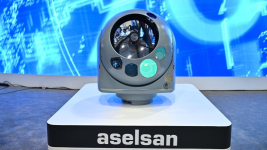
In 2024, it was announced that Turkish corporations TÜBİTAK (aerial weapons and EW systems) and Aselsan (radar and avionics) would support TAI in the development and construction of the aircraft. TAI’s Advanced Carbon Composites fuselage facility, which was commissioned to produce fuselages for Lockheed Martin’s Joint Strike Fighter (F-35) program, has been tasked with developing the fuselage.
Aircraft systems and capabilities include a domestic Integrated Radio Frequency System (IRFS), which includes the MURAD AESA nose radar with GaN-based transistors, electronic warfare capabilities such as wideband spectrum monitoring, directional jamming, and synthetic-aperture radar (SAR) imaging modes, including ISAR, dot-SAR, and strip-SAR.
The system also integrates cognitive operational mechanisms and neural network-based decision support systems.
The Integrated Electro-Optical System (IEOS) includes an Infrared Search and Track (IRST), an Electro-Optical Targeting System (EOTS), and a Distributed Aperture System (DAS) for global day/night imaging and an IR-Missile Warning System (MWS).
There is an Integrated Communication, Navigation and Identification System (ICNI), a Self-Protection Suite, an RF decoy dispensing system (CMDS), and a jamming system based on Digital Radio-Frequency Memory (DRFM). The Autonomous Wingman Operations (OKU) framework enables KAAN to control accompanying platforms, such as ANKA-III and Super-ŞİMŞEK, using encrypted data links.
The aircraft’s computational systems provide capabilities for autonomous mission execution, task assignment to UAVs, and coordination with other platforms in air, land, and naval domains, as well as air defence systems.
The system allows for intelligence, surveillance, target acquisition, and reconnaissance (ISR), targeting, and air superiority tasks through collaborating aircraft and reduces the workload of on-board pilots. The aircraft is planned to have eight internal and six external (3 per wing) hard points.
Turkish Aerospace and Indonesia’s Defense Ministry signed a deal for 48 KAAN 5th-gen fighter jets (Via X)
Rolls-Royce offered technology transfer for the EJ200 engine and joint development of a derivative for the TF-X program. In May 2022, Turkey announced that it was imperative for them that the engine be produced in Turkey with intellectual property rights.
It was thus decided that ten General Electric F110 engines would be delivered to TEI as the first batch according to the agreement between Tusaş Engine Industries (TEI) and GE Aerospace for initial aircraft development.
On 2 July 2022, the Defence Industry Agency published the invitation to tender for the domestic development of the engine. It stated that TRMotor, which is a subsidiary of TAI, had submitted its proposal, and Turkish Air Engine Company (TAEC), a consortium by Kale Group and Rolls-Royce, will submit its offer soon.
On 15 January 2025, Haluk Görgün, President of the Defence Industry Agency, said that after 2030, KAAN will fly with a completely domestic engine. On May 15, 2025, TEI, the Turkish state-backed aerospace engine manufacturer, published the first official image and technical data of the TEI-TF35000.
The next phase involves detailed design and qualifications carried out in the 2022-2029 period. The production of the first aircraft, called Block-0, will be
completed in 2026, and the first flight will be accomplished in 2026-7. Until that date, TAI aims to manufacture three prototypes.
The Block-1 configuration is planned to be developed until 2029. The manufacture of 10 Block-1 fighter jets is planned within the scope of Phase-2, and the aircraft will be delivered to the Turkish Air Force between 2030 and 2033.
In Phase-3, between 2034 and 2040, development and mass production activities of other TF-X blocks are planned with the target of producing two aircraft a month. The aircraft may surpass $100 million per unit.
In July 2023, at the 16th International Defence Industry Fair, a protocol agreement was signed to bring Azerbaijan into the project. On 22 July 2025, Turkey announced Egypt’s participation in the Kaan program, including co-production of the aircraft. This agreement reflects a strategic shift and a focus on practical industrial collaboration between the two nations.
Indonesia signed a purchase contract for 48 KAANs on 26 July 25. The total order is planned to be delivered with domestically produced engines in approximately 10 years. According to reports from Turkish media, the contract is valued at US$10 billion. Turkey will provide cooperation in production engineering and technology transfers.
It has been claimed that Saudi Arabia is considering purchasing 100 KAAN fighter jets, and that the United Arab Emirates is also interested in KAAN. Ukraine’s ambassador to Ankara had openly declared his country’s interest in Kaan.
Turkey has offered Malaysia the opportunity to participate in the Kaan. Turkey and Pakistan are reportedly set to establish and operate a joint factory to produce the Kaan jet. The collaboration could be mutually beneficial, with Turkey gaining from lower production costs and Pakistan gaining access to advanced technology.
KAI KF-21 Boramae
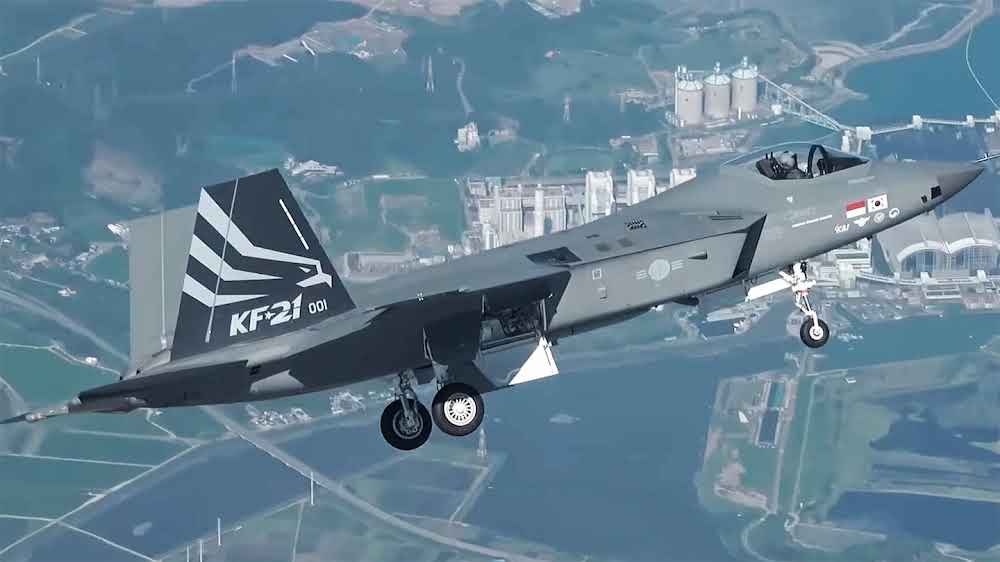
The KAI KF-21 Boramae “Fighting Hawk”, formerly known as KF-X, is a South Korean-led fighter aircraft development program with the initial goal of producing multirole fighters for the Republic of Korea Air Force (ROKAF).
The airframe uses stealth technology but carries weapons externally, and features such as internal bays will be introduced later with the KF-21EX program. It is South Korea’s second domestic fighter jet development program, following the FA-50.
The program is led by the South Korean government, which holds 60 percent of the program’s shares. Indonesia took a 20 percent stake in the program in 2010 and has participated in the program through Indonesian Aerospace since the start of KF-21 development in 2011.
The remaining 20 percent is held by private partners, including the manufacturer Korea Aerospace Industries (KAI). In August 2024, Indonesia’s stake was reduced to 7.5 percent at the Indonesian government’s request.
In April 2021, the prototype was rolled out. The first test flight was on 19 July 2022, with manufacturing scheduled to begin in 2026. The six prototypes (including two two-seat) will be tested for performance verification.
At least 40 aircraft are planned to be delivered by 2028, with South Korea expecting to deploy 120 of the aircraft by 2032. It will also be available for export. The ROKAF will begin replacing its F-4D/E Phantom II and F-5E/F Tiger II jets with KF-21s. Later, F-16 Fighting Falcons and F-15EX Eagle IIs will also be replaced.
File Image: KF-21
The initial goal for the program was to develop a single-seat twin-engine multirole fighter with stealth capabilities exceeding both the Dassault Rafale and Eurofighter Typhoon but less than those of the Lockheed Martin F-35 Lightning II.
Target is to be superior to the F-16 Fighting Falcon, with 50 percent greater combat range, 34 percent longer airframe lifespan, better avionics, active electronically scanned array (AESA) radar, more-effective electronic warfare, and data link capabilities.
In May 2016, the U.S. government and Lockheed Martin tentatively agreed to transfer 21 technologies to KAI under the terms of offset trade, which is part of a contract for South Korea to introduce the F-35A.
Later, the US government blocked the transfer of four vital technologies: AESA radar, IRST, electro-optical targeting pod (EO TGP), and radio frequency jammer (RF jammer) technology. South Korea was required to develop these technologies domestically.
While KAI was the primary builder, numerous other domestic and foreign companies were contracted to provide aircraft components or support.
Several of these firms had worked with KAI on the T-50. For certain sensitive technologies, such as AESA radar, EO TGP, IRST, and RF jammer, foreign companies were only consulted for testing support and technical advice to avoid arms-trading restrictions.
Hanwha Aerospace signed an agreement with General Electric to manufacture General Electric F414 engines for the KF-X aircraft.
According to the contract, Hanwha is to manufacture key parts, assemble the engines locally, and oversee the installation of the engines on the aircraft. AESA radar was co-developed with Hanwha Systems under the leadership of Korea’s Agency for Defence Development (ADD).
Elta Systems helped to test the demonstrative prototype hardware of the AESA radar. Saab provided technical advice to LIG Nex1, which develops Multi-Function Radar (MFR) software for AESA radars.
IRST is based on the processor unit (PU) designed by Hanwha Systems and a Leonardo sensor head unit (SHU) called the SkyWard-K with a modified back-end and Korean software that replaces the original program. US aerospace contractor Texstars was selected by KAI to develop canopy and windshield transparencies for KF-X.
Triumph Group was selected by KAI to provide airframe-mounted accessory drives (AMADs) for the KF-X. Cobham received contracts to provide missile ejection launchers, communications antennae, external fuel tanks, and oxygen systems. MBDA was contracted to integrate the Meteor beyond-visual-range air-to-air missile (BVRAAM) onto the aircraft.
Elbit Systems was contracted by Hanwha Systems to provide terrain-following/terrain avoidance (TF/TA) systems for the aircraft. There are many other technology vendors.
All six prototypes are already being used for flight testing. The aircraft has completed most of the basic flight testing, including supersonic flight, night refuelling, and all-weather and long-range operational capabilities.
KF-21 Block I will have air-superiority capabilities with limited air-to-ground functions and will have service entry in 2026. KF-21 Block II will be a swing-role fighter, incorporating attack and reconnaissance capabilities and scheduled for deployment in 2028.
Blocks I and II are designed to function as advanced 4.5+ generation fighters, offering greater survivability through reduced radar cross-section (RCS), more sophisticated avionics, and relatively cost-effective performance compared to alternative platforms in their class.
KF-21 Block III will be developed as a 5.5+ generation fighter jet, featuring internal weapons bays, enhanced stealth through radar-absorbent materials, and upgraded AESA radar with next-gen avionics. It will support unmanned teaming, network-centric warfare, and improved situational awareness.
A domestically developed Korean engine is also planned to replace the current F414-GE-400, reducing foreign dependence. The aircraft can carry 7,700 kg external payload on 10 hard points. Weapons are mostly of Western origin.
The two-seat KF-21EA will serve as an electronic warfare aircraft comparable to the EA-18G Growler. The KF-21EX is a planned advanced variant of the KF-21 Boramae that aims to significantly enhance the jet’s strike capability, survivability, and operational effectiveness, particularly within a manned-unmanned teaming (MUM-T) construct.
It will have an internal weapons bay. The aircraft will also receive several stealth-focused upgrades, including a reprofiled canopy, low-RCS radome, and new conformal antennas, to improve its survivability against radar threats. KF-21N will be a carrier-based version of the fighter.
40 KF-21 Block I has been ordered, and deliveries are expected to be completed by 2028. 80 KF-21 Block II are planned to be ordered and delivered by 2032.
Indonesia’s planned purchase of 48 aircraft is on track despite some hiccups. South Korea has been wooing India for the project. The Royal Malaysian Air Force (RMAF) is reportedly considering Russia’s Sukhoi Su-57 and the KF-21 for its Multi-Role Combat Aircraft (MRCA) program.
KAI signed a Memorandum of Understanding (MoU) with the Peruvian Air Force Maintenance Service (SEMAN) to manufacture KF-21 fighter jet components in Peru. In 2024, the Philippines announced its interest in purchasing 40 jet fighters.
The KF-21 is currently being offered to the Polish Air Force, which has expressed interest in acquiring an additional 32 multirole fighters to strengthen its combat capabilities.
Potential Saudi involvement in the KF-21 fighter jet project has also been under discussion. In April 2025, the United Arab Emirates signed a letter of intent to further the cooperation on the program.
India’s AMCA Status
The AMCA (Advanced Medium Combat Aircraft) program in India is considered urgent due to the country’s declining fighter squadron strength, the modernization of rival air forces, and the need to maintain a technological edge in air combat.
The program aims to replace aging aircraft and introduce a fifth-generation fighter, addressing both operational and strategic requirements.
The IAF is down to 29 fighter squadrons vis-à-vis the sanctioned strength of 42, and several more are scheduled for retirement in the coming years. IAF was forced to stretch the MiG-21 aircraft fleet, and the last of these squadrons will wind down mid-September 2025.
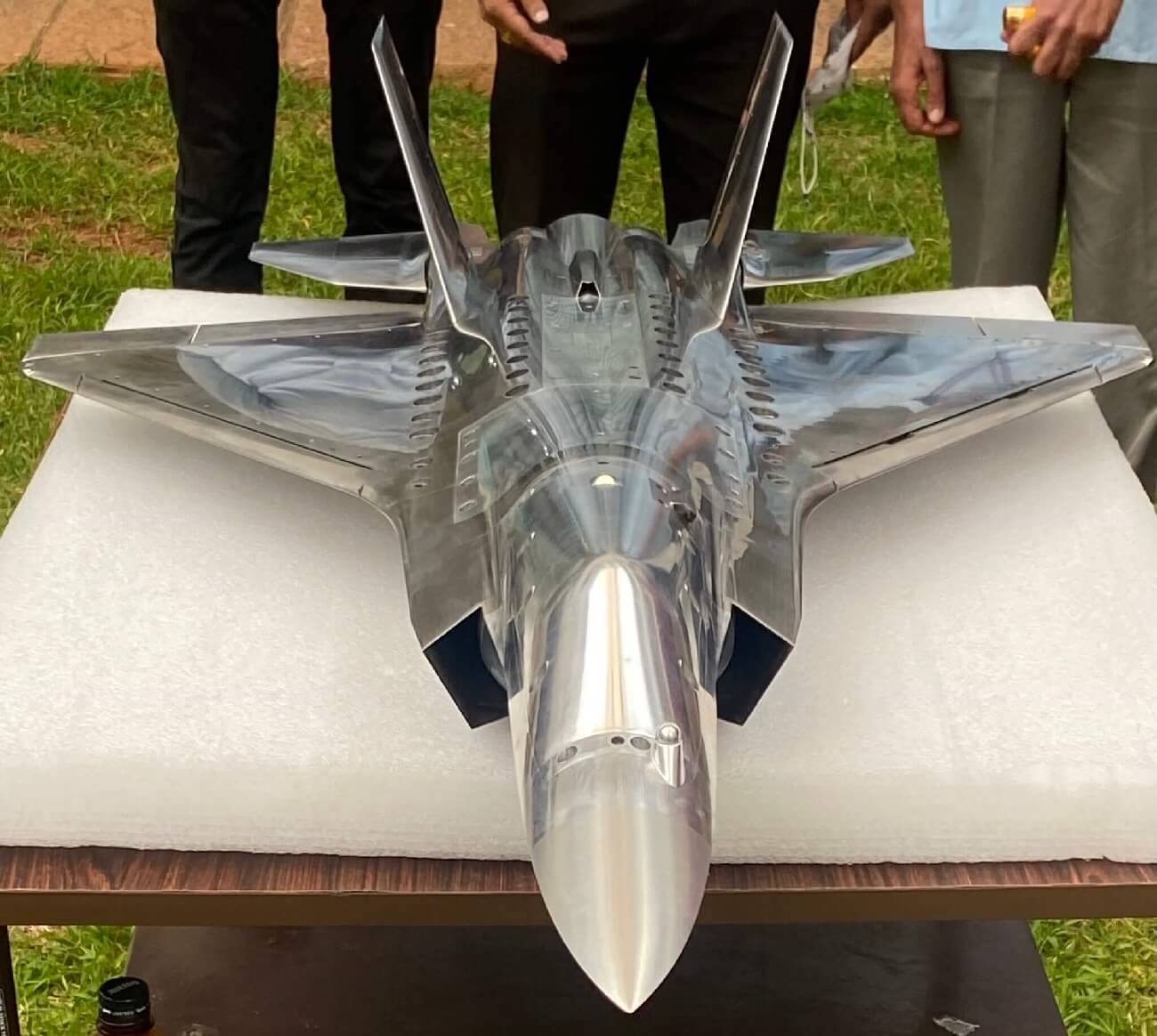
The Integrated Wind Tunnel (IWT) model of the Advanced Medium Combat Aircraft (AMCA)
The IAF plans to induct a total of 120 AMCA. This includes 40 AMCA Mk 1 (partially stealth) and 80 AMCA Mk 2 variants.
The single-seat, twin-engine, fifth-generation stealth, multirole AMCA is being designed by the Aeronautical Development Agency (ADA), an aircraft design agency under the Ministry of Defence (MoD).
The AMCA is intended to perform a multitude of missions, including air supremacy, ground-strike, Suppression of Enemy Air defenses (SEAD), and electronic warfare (EW) missions. It is intended to supplant the Sukhoi Su-30MKI air superiority fighter, which forms the backbone of the IAF fighter fleet.
The AMCA design is optimized for low radar cross-section and super-cruise capability.
As of July 2025, the prototype development phase is underway after the completion of the feasibility study, preliminary design stage, and detailed design phase. The AMCA programme, originally launched in 2010 as a 20-tonne class fighter, is now a 25-tonne class fighter.
The design work was completed in 2023, and approval for the ₹15,000 crore (US$1.8 billion) project for prototype development was received from CCS in March 2024. A total of 5 prototypes are to be built. The first three prototypes will carry out developmental flight trials, whereas the next two will focus on weapon trials. The prototype will be rolled out every 8-9 months.
The initial plan was to form a Special Purpose Vehicle (SPV) consisting of ADA, Hindustan Aeronautics Limited (HAL), and a private company for the development and production of AMCA.
At the Aero India 2025, a full-scale engineering model of the AMCA was publicly demonstrated for the first time. As revealed during the event, ADA had laid out a 10-year development roadmap from the phase that began in April 2024.
The prototype rollout is planned for late 2028 or early 2029, followed by the first flight in 2028, certification by 2032, and induction in 2034. Each prototype will cost ₹1,000 crore (US$120 million).
Proposal for AMCA Industry Partnership Model
The government is yet to decide the production partner for the aircraft since ADA has proposed to hand over the responsibility to private sector companies rather than HAL, given the company’s “not-so-great delivery track record”.
Multiple meetings had been held, and HAL pushed for an additional assembly line dedicated to AMCA if required. Meanwhile, the government has shifted to an “industry partnership model” instead of the initial plans for SPV.
ADA’s push for changing the production partner is to avoid any further delays following setbacks from development funding and a lack of clearance from the US government for license production of engines. The private sector partner would be responsible for development, production, and lifetime maintenance of the jet and the aero-engine.
The MoD formed a panel to examine increasing the role of private sector companies in the development of the AMCA. A top-level committee has evaluated a “clear-cut strategy and production-cum-business model” to accelerate the development of AMCA.
The committee is tasked with devising a plan to “shrink timelines” to get AMCA from drawing board to air, as well as the high-thrust indigenous engine development. On 27 May 2025, the MoD cleared the “Advanced Medium Combat Aircraft (AMCA) Programme Execution Model”.
Under the model, the ADA will release an Expression of Interest (EOI) to develop AMCA through industry partnership. Both private and public sector companies can bid either as an independent entity or as a consortium or joint venture to get the contract.
As of now, the prototype rollout is expected by 2028-29, first flight by 2029, service introduction by 2034, and series production by 2035.
The HAL is reportedly set to evaluate responses from 24 companies to select a partner firm for the formation of a consortium. This consortium, structured under the public-private partnership (PPP) model, will subsequently bid to become the designated AMCA development consortium.
On 18 June 2025, the EOI was released by ADA, which is meant to shortlist Indian companies for prototype development, flight testing, and certification of the AMCA.
The document calls for “reputed” Indian companies that are compliant with Indian laws and are experienced in the aerospace and defence sector. The bidder has to establish dedicated facilities for the series production of the aircraft.
The bidder has to complete the development, prototyping, flight test, and certification of the AMCA within eight years of signing the contract. While the deadline of responding to the EOI is 16 August, before which a pre-EOI meeting is scheduled.
AMCA Success Strategic Imperative
Both Kaan and KF-21 have flown, but the programs have their limitations. The timelines are not very favourable. They are very heavily dependent on Western technology and systems.
The French Air Force does not currently operate any fifth-generation fighter aircraft. The Dassault Rafale is a highly advanced, 4.5-generation fighter with some stealth features. This could be India’s interim model by acquiring more F-4/5 variant Rafale.
AMCA’s early success is a strategic imperative for India, enhancing its air combat capabilities and reducing reliance on foreign platforms.
The AMCA is meant to provide a technological advantage over adversaries and enable India to compete in modern air warfare. The program aims to reduce reliance on foreign technology and boost indigenous aerospace capabilities.
India must quickly decide on a major private player to be the lead integrator. The integrator must then form a consortium of private industries, as has been done in most programs around the world.
Meeting the projected induction timeline of the AMCA is crucial to address the operational gaps and maintain a credible deterrent.
In essence, the AMCA is not just a fighter jet project; it’s a national security priority that requires swift and decisive action to maintain India’s aerial dominance and strategic posture.
In the race for fifth-generation fighter supremacy, India’s Advanced Medium Combat Aircraft (AMCA) stands out against Turkey’s TAI Kaan and South Korea’s KAI KF-21 due to its strategic emphasis on indigenous technology.
While all three programs reflect ambitious middle-power aspirations, the AMCA’s focus on self-reliance offers unique advantages in a geopolitically volatile world.