Navigation
Install the app
How to install the app on iOS
Follow along with the video below to see how to install our site as a web app on your home screen.
Note: This feature may not be available in some browsers.
More options
Style variation
You are using an out of date browser. It may not display this or other websites correctly.
You should upgrade or use an alternative browser.
You should upgrade or use an alternative browser.
Balochistan Updates
- Thread starter ghazi52
- Start date
More options
Who Replied?


ghazi52
THINK TANK: CONSULTANT
- Thread starter
- #17
New Gwadar International Airport, epitome of innovative craftsmanship
By Yasir Habib Khan | Gwadar ProDec 9, 2024
GWADAR - New Gwadar International Airport (NGIA) is a symbol of bewitching splendour that features bird-shaped building structure, high-tech interior & exterior, awesome arrival & departure areas, eye-catchy lounges, airy and lit-up refreshment areas, boarding spaces and seating arrangements.

New Gwadar International Airport (NGIA). [Photo/Yasir Habib Khan]
Clean and shiny flooring set the mood cheerful prompting to fill eyes with state-of-the-art beauty that testifies craftsmanship of designers and engineers.
As seeing is believing, NGIA’s construction craftsmanship gave a serendipitous experience prioritized by mindfulness, diversity and inclusion, and convenience.
Airport spaces were up to include the highly directional flow of visitors (the drive to the gates or the exit), the cyclic nature of the occupancy peaks, the heterogeneity of the user group (business travel, vacation travel, family groups, diverse ethnic and demographic groups).
“The major stressors at airports are typically the inability to control ones’ environment or understand what’s expected at the airport, the stress of meeting the time, and the generic stress of the crowds and noise. NGIA design can ameliorate all these issues,” CAA official told Gwadar Pro.
“Inclusivity, respect for cultures and specific seating environment appear catered well at the airport considering the 24 hours operating schedule,” he added.
“Hopefully we see bustling lounges, lively bars, restful nooks, interesting shopping, active play areas and comfortable areas to gather soon,” another official said.

New Gwadar International Airport (NGIA). [Photo/Yasir Habib Khan]

New Gwadar International Airport (NGIA). [Photo/Yasir Habib Khan]
The system inside the airport allows travelers to navigate with convenience using clear signage, sight lines, wayfinding systems, and intuitive layouts to simplify the travel experience.
Incorporated with technology throughout, the airport will improve the user experience, such as interactive kiosks for check-in, digital signage, and automated baggage handling systems.
“The ceiling design, as well as the skylights and vertical openings, guarantee natural light access during the day, which creates an interesting effect in terms of spatiality,” Chinese official told Gwadar Pro.
Situated 26 kilometres east of Gwadar City, the airport is linked to the city and the national highway network by the East Bay Expressway, a six-lane, 19-km roadway funded by China. This connectivity is vital for seamless logistics and trade facilitation.
Spanning 4,300 acres, the airport site includes a runway capable of accommodating large aircraft, alongside a modern terminal building covering 14,000 square meters. NGIA symbolises a significant milestone in Pakistan’s aviation sector, underscoring the enduring partnership between China and Pakistan in driving regional development.
One of the most notable features setting Gwadar International Airport apart is its state-of-the-art landing system, representing a pinnacle of modern aviation technology. Engineered to accommodate large aircraft like the Airbus A320 and Boeing 737, this advanced system ensures the smooth and secure landing of flights, reinforcing Gwadar’s position as a hub of innovation and progress in the aviation realm.
“China-aided New Gwadar International Airport (NGIA) is going to serve a dynamic precursor for spin-off effects on development horizons of Gwadar as well as Balochistan,” Khalid Ahmed Baloch, local trader doing hotel business in Gwadar told Gwadar pro.

New Gwadar International Airport (NGIA). [Photo/Yasir Habib Khan]
Owing to its geostrategic and geo-economic position, NGIA is also set to furnish a positive role in boosting international trade. It will create a crucial link between businesses and various global markets, greatly expanding their potential customer base.
Meanwhile, the economic impact of NGIA also goes beyond its immediate boundary. Local businesses like hotels, restaurants, vehicle rental agencies, and taxi services will benefit significantly from NGIA’s presence resulting in more job opportunities and higher wages in these sectors.
ghazi52
THINK TANK: CONSULTANT
- Thread starter
- #18
Govt mulls bulk imports via Gwadar port
Mubarak Zeb KhanDecember 18, 2024
ISLAMABAD: The government is exploring the feasibility and strategy for routing 60 per cent of public sector imports, including wheat, fertiliser and sugar, through Gwadar Port.
ghazi52
THINK TANK: CONSULTANT
- Thread starter
- #19
It was also proposed that leveraging low-hanging fruits like public sector imports through the Trading Corporation of Pakistan (TCP). The potential for containerised vessel imports and exports via Gwadar was reviewed during the meeting.
Members of the committee stressed identifying private sector commodities and providing necessary incentives to encourage trade through Gwadar. A proposal to establish a dedicated working group for private-sector engagement was discussed.
During the meeting, the viability of Gwadar Port for transhipment and transit to Afghanistan and Central Asian Republics (CARs) was explored. The committee acknowledged the progress in transhipment initiatives and noted China’s interest in leveraging Gwadar under the One Belt, One Road (OBOR) framework.
Published in Dawn, December 18th, 2024
Members of the committee stressed identifying private sector commodities and providing necessary incentives to encourage trade through Gwadar. A proposal to establish a dedicated working group for private-sector engagement was discussed.
During the meeting, the viability of Gwadar Port for transhipment and transit to Afghanistan and Central Asian Republics (CARs) was explored. The committee acknowledged the progress in transhipment initiatives and noted China’s interest in leveraging Gwadar under the One Belt, One Road (OBOR) framework.
Published in Dawn, December 18th, 2024
ghazi52
THINK TANK: CONSULTANT
- Thread starter
- #20
ECC green-lights new EPZ in Balochistan
Approves key economic measures worth Rs48b including Rs14b for tubewell solarisation, Rs523.1m for SIFCShahbaz Rana
December 19, 2024
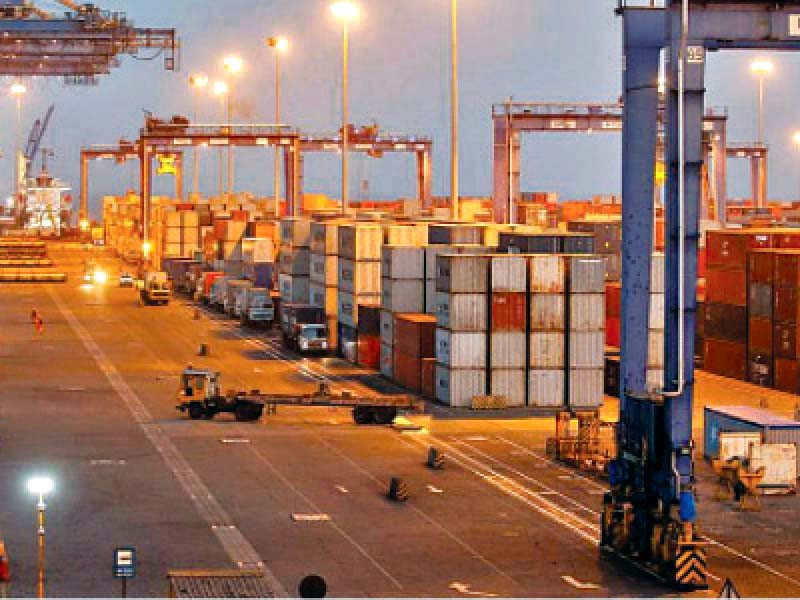
Pakistan on Wednesday approved the establishment of a new Export Processing Zone (EPZ) in Balochistan with 80% Chinese ownership, a move authorities claim has the endorsement of the International Monetary Fund (IMF).
The Economic Coordination Committee (ECC) of the Cabinet, chaired by Finance Minister Muhammad Aurangzeb, greenlit the establishment of the Siah Dik Copper Project in District Chagai, Balochistan. The committee declared three mineral leases, spanning 4,208 acres near Saindak, as a Private Export Processing Zone.
The KoheSultan Mining Company Limited will own the zone, with an 80% stake held by the China Metallurgical Group Corporation and the remaining 20% by Siakoh Mineral Development Corporation, a local firm. The decision will facilitate the development and export potential of the region's mineral sector.
ghazi52
THINK TANK: CONSULTANT
- Thread starter
- #25
Key water and road projects in Balochistan okayed
The Newspaper's Staff Correspondent
November 26, 2025
QUETTA: The Executive Committee of the National Economic Council (Ecnec) on Tuesday approved the Balochistan Water Resources Development Sector Project, along with several other province-related schemes.
The projects were accorded approval during a meeting chaired by Deputy Prime Minister Ishaq Dar via video link.
Officials said the approved projects include revised plans for the Ziarat Mor–Kach–Harnai (109.882 km) road and the Harnai–Sanjavi (55.834 km) road, as well as a 110-kilometre road from the Chedegai (Iran) border to Panjgur.
The meeting underlined that improved road infrastructure and a strengthened communication network in Balochistan would not only boost regional trade—particularly with neighbouring countries—but also provide better travel facilities to the public.
Ecnec further stressed timely completion of all approved projects and adherence to the highest standards of quality.
Provincial Irrigation Minister Mir Muhammad Sadiq Umrani, Additional Chief Secretary (Development) Zahid Saleem, Chief Engineer Design (C&W) Dr. Sajjad Baloch, Chief of Section (P&D) Inamullah Khan, Project Director BWRDSP Sufyan Durrani and Chief Foreign Aid (P&D) Batool Asadi attended the meeting.
ghazi52
THINK TANK: CONSULTANT
- Thread starter
- #26
Pakistan accelerates strategic highways: N-25 Expressway, Gwadar linkages strengthen CPEC transport network
By Shafqat Ali | Gwadar Pro
Dec 6, 2025
ISLAMABAD)-Pakistan has initiated full-scale development on the 800-kilometre N-25 Pakistan Expressway, an essential corridor linking Karachi, Quetta, and Chaman, and a strategic extension of the transport routes supporting the China-Pakistan Economic Corridor (CPEC).
Federal Minister for Communications Abdul Aleem Khan announced the development while chairing a high-level meeting of the National Highway Authority (NHA) on Thursday afternoon.
He described the N-25 as a “breakthrough for Balochistan’s future,” emphasizing its role in improving mobility, trade access, and cross-border connectivity. By strengthening Pakistan’s internal routes, the project also supports broader CPEC logistics, especially through its linkages with western and central corridors feeding into Gwadar Port.
The minister also reviewed progress on the M-8 Motorway, a critical component of Pakistan’s East-West connectivity and a key lifeline for CPEC’s port operations. Updates were shared regarding engineering challenges, security arrangements, and completion timelines for ongoing segments.
ghazi52
THINK TANK: CONSULTANT
- Thread starter
- #27
The minister emphasized strict monitoring, directing the NHA Chairman to visit sites personally. He added that Prime Minister Shehbaz Sharif and Sindh Chief Minister Murad Ali Shah would be invited to inaugurate the upgraded Lyari Expressway.
The N-25 and M-8 developments are central to Pakistan’s long-term ambition of becoming a logistics hub, as they feed directly into regional supply chains tied to CPEC and Gwadar. These corridors are expected to enhance trade flows, reduce freight times, and support economic activity across Pakistan’s most underserved provinces.
The N-25 and M-8 developments are central to Pakistan’s long-term ambition of becoming a logistics hub, as they feed directly into regional supply chains tied to CPEC and Gwadar. These corridors are expected to enhance trade flows, reduce freight times, and support economic activity across Pakistan’s most underserved provinces.
ghazi52
THINK TANK: CONSULTANT
- Thread starter
- #28
Good times coming for fishing communities as Balochistan eyes sustainable growth, Chinese investment
By Tahir Ali | Gwadar Pro
Dec 29, 2025
Optimism is slowly emerging among fishing families along Pakistan’s southwest coastline, as reforms, aquaculture investment and tighter regulation begin to shape expectations for a more stable future in Balochistan’s fisheries sector.
Officials say the provincial government, the Balochistan Fisheries Department, the federal government and growing Chinese investment are together signaling renewed hope for coastal communities that have faced years of economic uncertainty
ghazi52
THINK TANK: CONSULTANT
- Thread starter
- #29
Balochistan Chief Minister Mir Sarfraz Ahmed Bugti has fulfilled yet another promise; the province's first air ambulance has arrived. Now, in remote areas, accident victims or those in emergency situations have new hope for timely rescue and treatment to save precious lives.
ghazi52
THINK TANK: CONSULTANT
- Thread starter
- #30
For the first time in Balochistan’s history, people living in remote and underserved areas may soon have access to emergency medical evacuation by air, as the provincial government prepares to launch the “Peoples Air Ambulance” service.
The project, described by officials as a breakthrough in emergency healthcare, is expected to provide rapid medical transportation for patients suffering from serious injuries, road accidents, or critical health conditions, particularly in districts where long distances and poor road connectivity often delay treatment.
Balochistan Chief Minister Mir Sarfraz Bugti said the air ambulance was now fully ready for service and would soon be formally launched for the public. He said the initiative was designed to ensure that patients from far-flung areas could be shifted quickly to major hospitals in Quetta and other cities during emergencies.
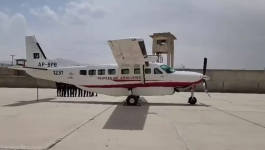
The project, described by officials as a breakthrough in emergency healthcare, is expected to provide rapid medical transportation for patients suffering from serious injuries, road accidents, or critical health conditions, particularly in districts where long distances and poor road connectivity often delay treatment.
Balochistan Chief Minister Mir Sarfraz Bugti said the air ambulance was now fully ready for service and would soon be formally launched for the public. He said the initiative was designed to ensure that patients from far-flung areas could be shifted quickly to major hospitals in Quetta and other cities during emergencies.
Last edited:
Users who are viewing this thread
Total: 1 (members: 0, guests: 1)
Pakistan Defence Latest


Country Watch Latest
-
 Iran - Israel/US War: Israel-US declare war on Iran, Iran responds (411 Viewers)
- Latest: AZ_HighCountry
-
-

-

-
 Taliban Wants To Build Afghanistan’s Air Defenses With Russia’s Help (2 Viewers)
- Latest: Distant_Observer
Latest Posts
-
Iran - Israel/US War: Israel-US declare war on Iran, Iran responds (412 Viewers)
- Latest: AZ_HighCountry
-

-

-

-