Bangladesh Economy

1742800438816.png

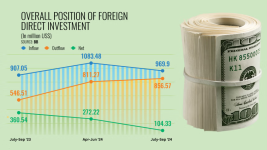
The Bangladesh Investment Summit 2025 will be hosted at a critical juncture this year against the backdrop of foreign direct investment (FDI) inflows hitting a six-year low, raising concerns about the investment climate.


Scheduled to take place from April 7 to April 10 at the InterContinental Dhaka, the event aims to attract global investors and highlight Bangladesh's evolving economic landscape.

Amid political uncertainty, stray incidents of labour unrest and economic challenges, the summit presents a crucial opportunity to restore investor confidence, showcase economic reforms, and position Bangladesh as a competitive investment destination.

FDI inflows dropped by 71 percent year-on-year, falling to $104.33 million in the July-September quarter of FY25, the lowest in six years, according to Bangladesh Bank.
1742800515057.png

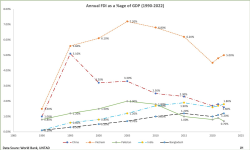
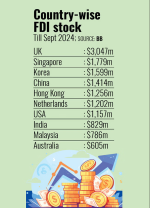
The country's total FDI stock stood at $17.68 billion as of September 2024, with the United Kingdom, Singapore, and South Korea emerging as the top three investors.

The UK remains the leading investor, with $3.05 billion, primarily in banking, power, and pharmaceuticals. Singapore follows with $1.78 billion, while South Korea ranks third with $1.6 billion, driven by investments in manufacturing and telecommunications.


A recent survey by the Japan External Trade Organization (Jetro) 2024 highlighted policy inconsistency and bureaucratic hurdles as significant barriers, discouraging reinvestment and leading to capital outflows.


Japanese investors frequently cite complex approval processes, tax inconsistencies, and sudden policy shifts as challenges to long-term commitments.

While Bangladesh has made progress in infrastructure, logistical inefficiencies and slow project execution also continue to impact business operations.

Additionally, currency depreciation, inflationary pressures, and the rising cost of doing business have made the country less competitive compared to regional peers.

The Bangladesh Investment Summit 2025 presents an opportunity to reverse the downward trajectory of FDI inflows by presenting new investment opportunities and showcasing economic reforms and policy incentives.

More than 550 investors from 50 countries have registered to attend, alongside 2,500 local investors.

Chief Adviser Prof Muhammad Yunus is expected to inaugurate the summit on April 9, alongside top executives from multinational corporations.

Speaking at a press conference at the Foreign Service Academy in Dhaka, Ashik Chowdhury, executive chairman of the Bangladesh Investment Development Authority, emphasised the government's commitment to investment-friendly policies and economic stability.

He assured investors that Bangladesh would not make false promises but would instead present an accurate and realistic picture of investment potential.

While acknowledging challenges, Chowdhury highlighted Bangladesh's strong economic growth, expanding industrial capabilities, and reform measures aimed at improving the ease of doing business.

Despite the current slowdown in FDI, Bangladesh remains a promising investment destination, offering a growing domestic market, competitive labour costs, and strategic geographic positioning, he said.

However, he acknowledged that sustaining long-term investor interest will require policy consistency, infrastructure improvements, and regulatory streamlining.

The Investment Summit 2025 is expected to serve as a catalyst for renewed investor interest, allowing global businesses to explore Bangladesh's opportunities while giving policymakers a platform to address investor concerns, he added.

 
In another article:

"The Bangladesh Investment Summit was scheduled to take place from April 7 to April 10 at Hotel InterContinental Dhaka, with the event already drawing considerable attention. According to BIDA, over 550 foreign investors from 50 countries had registered to attend, along with more than 2,300 Bangladeshi investors."

550 foreign investors from 50 countries, sounds good!


From same article:

'BIDA stated that several prominent business leaders were set to attend, including Óscar García Maceiras, CEO of Zara Group; Sultan Ahmed Bin Sulayem, Chairman of DP World; Rosy Winterton, Baroness and UK trade representative; Kyeongsu Lee, Vice President of Samsung C&T; JunSeok Han, CEO of Giordano; Steven Kobos, CEO of Excelerate Energy; Mike Orgill, Head of Public Policy for Uber Asia Pacific; and Sarim Aziz, Director of Public Policy at Meta. Leading venture capital firms like B Capital, Gobi, Conjunction, Marubeni and GFR were also expected to participate, focusing on startup investments and expanding the digital economy.'
1742801183455.png
 
View attachment 109615

The Bangladesh Investment Summit 2025 will be hosted at a critical juncture this year against the backdrop of foreign direct investment (FDI) inflows hitting a six-year low, raising concerns about the investment climate.


Scheduled to take place from April 7 to April 10 at the InterContinental Dhaka, the event aims to attract global investors and highlight Bangladesh's evolving economic landscape.

Amid political uncertainty, stray incidents of labour unrest and economic challenges, the summit presents a crucial opportunity to restore investor confidence, showcase economic reforms, and position Bangladesh as a competitive investment destination.

FDI inflows dropped by 71 percent year-on-year, falling to $104.33 million in the July-September quarter of FY25, the lowest in six years, according to Bangladesh Bank.

View attachment 109616

The country's total FDI stock stood at $17.68 billion as of September 2024, with the United Kingdom, Singapore, and South Korea emerging as the top three investors.

The UK remains the leading investor, with $3.05 billion, primarily in banking, power, and pharmaceuticals. Singapore follows with $1.78 billion, while South Korea ranks third with $1.6 billion, driven by investments in manufacturing and telecommunications.


A recent survey by the Japan External Trade Organization (Jetro) 2024 highlighted policy inconsistency and bureaucratic hurdles as significant barriers, discouraging reinvestment and leading to capital outflows.


Japanese investors frequently cite complex approval processes, tax inconsistencies, and sudden policy shifts as challenges to long-term commitments.

While Bangladesh has made progress in infrastructure, logistical inefficiencies and slow project execution also continue to impact business operations.

Additionally, currency depreciation, inflationary pressures, and the rising cost of doing business have made the country less competitive compared to regional peers.

The Bangladesh Investment Summit 2025 presents an opportunity to reverse the downward trajectory of FDI inflows by presenting new investment opportunities and showcasing economic reforms and policy incentives.

More than 550 investors from 50 countries have registered to attend, alongside 2,500 local investors.

Chief Adviser Prof Muhammad Yunus is expected to inaugurate the summit on April 9, alongside top executives from multinational corporations.

Speaking at a press conference at the Foreign Service Academy in Dhaka, Ashik Chowdhury, executive chairman of the Bangladesh Investment Development Authority, emphasised the government's commitment to investment-friendly policies and economic stability.

He assured investors that Bangladesh would not make false promises but would instead present an accurate and realistic picture of investment potential.

While acknowledging challenges, Chowdhury highlighted Bangladesh's strong economic growth, expanding industrial capabilities, and reform measures aimed at improving the ease of doing business.

Despite the current slowdown in FDI, Bangladesh remains a promising investment destination, offering a growing domestic market, competitive labour costs, and strategic geographic positioning, he said.

However, he acknowledged that sustaining long-term investor interest will require policy consistency, infrastructure improvements, and regulatory streamlining.

The Investment Summit 2025 is expected to serve as a catalyst for renewed investor interest, allowing global businesses to explore Bangladesh's opportunities while giving policymakers a platform to address investor concerns, he added.

Law and order situation needs to improve - otherwise foreign investors will continue to shun BD.

Thugs are roaming free - having been freed from jails arbitrarily!
 
Law and order and political stability will be crucial for FDI.

Regards
 

Bangladesh secures commitment of $2.1 billion in investments, loans and grants from China​


Nearly 30 Chinese companies have pledged to invest one billion dollars in the exclusive Chinese Industrial Economic Zone after the CA urged private enterprises to invest in the manufacturing sector in Bangladesh.​

Chief Adviser Professor Muhammad Yunus joined a High-Level Roundtable on Social Business, Youth Entrepreneurship and The World of Three ZEROs at the Presidential hotel in Beijing on Friday.
Chief Adviser Professor Muhammad Yunus joined a High-Level Roundtable on Social Business, Youth Entrepreneurship and The World of Three ZEROs at the Presidential hotel in Beijing on Friday. Photo: Facebook handle of the Chief Adviser

Chief Adviser Professor Muhammad Yunus joined a High-Level Roundtable on Social Business, Youth Entrepreneurship and The World of Three ZEROs at the Presidential hotel in Beijing on Friday. Photo: Facebook handle of the Chief Adviser

Bangladesh has secured a commitment of $2.1 billion in Chinese investments, loans and grants from the Chinese government and its companies during the "milestone" visit of Chief Adviser Professor Muhammad Yunus to China, officials said.


Bangladeshi officials and the Chinese ambassador in Dhaka, Yao Wen, said nearly 30 Chinese companies have pledged to invest one billion dollars in the exclusive Chinese Industrial Economic Zone after the chief adviser urged private enterprises to invest in the manufacturing sector in Bangladesh.

China has also planned to lend some $400 million in the Mongla port modernisation project, some $350 million in the development of the China Industrial Economic Zone and another $150 million as technical assistance. The rest of the amount would come as grants and other forms of lending.

 
Last week......in New Delhi

Bangladesh High Commission hosts meeting with Indian investors in Delhi​

Prothom Alo English Desk
New Delhi
Updated: 21 Mar 2025, 04: 07


1743176166569.png

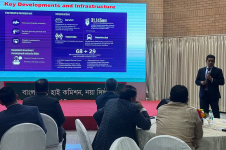
The Bangladesh High Commission in New Delhi on Thursday night hosted an event for investors and business leaders from India at its premises

The Bangladesh High Commission in New Delhi on Thursday night hosted an event for investors and business leaders from India at its premises in the diplomatic enclave of the Indian capital.

Representatives from a range of medium and big enterprises participated in the event to explore potential investment opportunities in Bangladesh ahead of the Bangladesh Investment Summit, set to take place from 7-10 April in Dhaka.

During the event, acting Bangladesh High Commissioner Md Nurul Islam stressed that Bangladesh is now led by new leadership with a renewed vision, and the country is progressing rapidly, offering a favourable environment for investment.


"With abundant energy resources and a competitive workforce, it’s hard to find a better destination for foreign investment that promises significant returns," stated the acting high commissioner.

Iftekhar Uddin Shamin, counsellor (commerce) and Johirul Islam, counsellor (economy) addressed questions from Indian investors and businesspeople during the Q&A session.

The event was attended by representatives from major corporations, including Ashok Leyland and Larsen & Toubro.

 
Last week......in New Delhi

Bangladesh High Commission hosts meeting with Indian investors in Delhi​

Prothom Alo English Desk
New Delhi
Updated: 21 Mar 2025, 04: 07


View attachment 110249

The Bangladesh High Commission in New Delhi on Thursday night hosted an event for investors and business leaders from India at its premises

The Bangladesh High Commission in New Delhi on Thursday night hosted an event for investors and business leaders from India at its premises in the diplomatic enclave of the Indian capital.

Representatives from a range of medium and big enterprises participated in the event to explore potential investment opportunities in Bangladesh ahead of the Bangladesh Investment Summit, set to take place from 7-10 April in Dhaka.

During the event, acting Bangladesh High Commissioner Md Nurul Islam stressed that Bangladesh is now led by new leadership with a renewed vision, and the country is progressing rapidly, offering a favourable environment for investment.


"With abundant energy resources and a competitive workforce, it’s hard to find a better destination for foreign investment that promises significant returns," stated the acting high commissioner.

Iftekhar Uddin Shamin, counsellor (commerce) and Johirul Islam, counsellor (economy) addressed questions from Indian investors and businesspeople during the Q&A session.

The event was attended by representatives from major corporations, including Ashok Leyland and Larsen & Toubro.


India will never get anywhere near Chinese investment. They just don’t have the money.

Hence India is on a tier-2 relationship.

China, Japan, US and EU(U.K.) are more important due to technical know how, investment and export.

India’s only purpose is to supply BD with raw materials at competitive prices - in return for transit facilities.

Gulfies are important due to manpower export.

Nepal and Bhutan can be important if they can supply hydro power.

All other countries, especially South Asian, have very limited role in BD.

And Bangladesh should not expand goodwill on them if it annoys the above countries.
 

Chinese investment in Bangladesh’s RMG sector soars with Bepza EZ deals​

by Apparel Resources News-Desk 29-March-2025 | 3 mins read

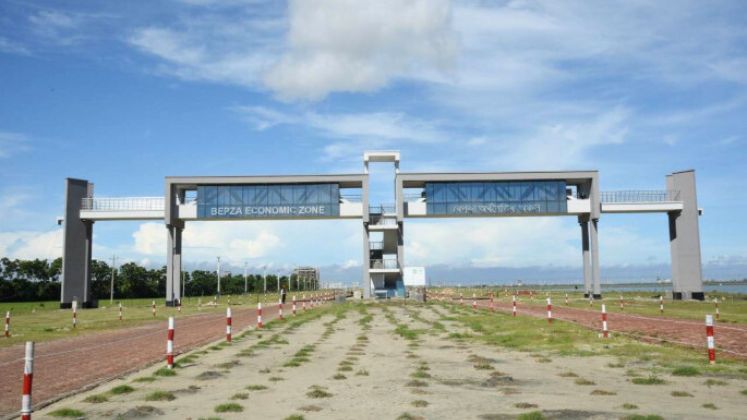
Chinese investment in Bangladesh's RMG sector soars with Bepza EZ deals | RMG Sector News Image Courtesy: https://www.bepza.gov.bd/
Recent agreements inked in the Bepza Economic Zone (EZ) in Mirsharai, Chittagong, demonstrate the sharp increase in Chinese investment in Bangladesh’s ready-made garment (RMG) industry. 24 Chinese companies have signed leasing agreements to invest in the zone, totalling US $ 614.58 million, according to the Bangladesh Export Processing Zones Authority (Bepza).

Among the key players in this investment boom are YiXin Bangladesh Co Ltd, which plans to establish a manufacturing unit for shoe accessories, and Home Joy Socks Bangladesh Co Ltd, which has pledged a substantial US $ 50 million for a socks and garments factory. The overall proposed investment in the Bepza EZ, including contributions from all foreign investors, stands at US $ 867.22 million.

In addition to the agreements already in place, Bepza has identified a robust pipeline of potential investments from Chinese companies. Between August 2024 and March 2025, 34 proposals from Chinese firms have been received, with eight agreements signed since July 2024. These companies aim to diversify their production, focusing on solar accessories, bags, luggage, and other related products, alongside traditional RMG manufacturing.

The rising costs of production in China and potential increases in US tariffs on Chinese goods are motivating companies to relocate their operations. Bepza Executive Chairman Maj Gen Abul Kalam Mohammad Ziaur Rahman emphasized that the competitive labor market in Bangladesh is also a significant attraction for these investors, positioning the country as a preferred choice over others like Vietnam and Cambodia.

Despite the optimism surrounding investment, challenges remain. Water scarcity in the Bepza EZ has led to the rejection of proposals from water-intensive industries, including a US $ 135 million investment for a textile factory. However, ongoing efforts to manage water resources, such as the construction of a 45-acre rainwater storage lake, aim to mitigate these issues.

Looking ahead, Bepza expects to see further diversification of Chinese investments beyond the RMG sector, potentially expanding into renewable energy and raw materials for solar panel production. The upcoming Bangladesh Investment Summit-2025, scheduled for 7th-10th April, is anticipated to attract even more interest from Chinese investors.

As Bangladesh continues to strengthen its position as a hub for international trade, the growing influx of Chinese investment in the RMG sector is poised to create significant economic opportunities, generating jobs and enhancing the country’s export capabilities.


Chinese investment in Bangladesh’s RMG sector soars with Bepza EZ deals​

by Apparel Resources News-Desk 29-March-2025 | 3 mins read

Chinese investment in Bangladesh's RMG sector soars with Bepza EZ deals | RMG Sector News 's RMG sector soars with Bepza EZ deals | RMG Sector News Image Courtesy: https://www.bepza.gov.bd/
Recent agreements inked in the Bepza Economic Zone (EZ) in Mirsharai, Chittagong, demonstrate the sharp increase in Chinese investment in Bangladesh’s ready-made garment (RMG) industry. 24 Chinese companies have signed leasing agreements to invest in the zone, totalling US $ 614.58 million, according to the Bangladesh Export Processing Zones Authority (Bepza).

Among the key players in this investment boom are YiXin Bangladesh Co Ltd, which plans to establish a manufacturing unit for shoe accessories, and Home Joy Socks Bangladesh Co Ltd, which has pledged a substantial US $ 50 million for a socks and garments factory. The overall proposed investment in the Bepza EZ, including contributions from all foreign investors, stands at US $ 867.22 million.

In addition to the agreements already in place, Bepza has identified a robust pipeline of potential investments from Chinese companies. Between August 2024 and March 2025, 34 proposals from Chinese firms have been received, with eight agreements signed since July 2024. These companies aim to diversify their production, focusing on solar accessories, bags, luggage, and other related products, alongside traditional RMG manufacturing.

The rising costs of production in China and potential increases in US tariffs on Chinese goods are motivating companies to relocate their operations. Bepza Executive Chairman Maj Gen Abul Kalam Mohammad Ziaur Rahman emphasized that the competitive labor market in Bangladesh is also a significant attraction for these investors, positioning the country as a preferred choice over others like Vietnam and Cambodia.

Despite the optimism surrounding investment, challenges remain. Water scarcity in the Bepza EZ has led to the rejection of proposals from water-intensive industries, including a US $ 135 million investment for a textile factory. However, ongoing efforts to manage water resources, such as the construction of a 45-acre rainwater storage lake, aim to mitigate these issues.

Looking ahead, Bepza expects to see further diversification of Chinese investments beyond the RMG sector, potentially expanding into renewable energy and raw materials for solar panel production. The upcoming Bangladesh Investment Summit-2025, scheduled for 7th-10th April, is anticipated to attract even more interest from Chinese investors.

As Bangladesh continues to strengthen its position as a hub for international trade, the growing influx of Chinese investment in the RMG sector is poised to create significant economic opportunities, generating jobs and enhancing the country’s export capabilities.


Trump is good for BD.

His geopolitical stance has neutered the Islamists backed by Biden.

His tariff policy will benefit BD because even Trump doesn’t think US should manufacture undies and T-shirts.
 

What a massive potential the partnership between Turkey and Bangladesh.

Cannot see much in terms of BD exports. Turkey will not let in BD garments or processed food.

But Turkey is a good source of military hardware for BD.

Turkey is not capable of even 1/20th of the trade between BD-India.
 

Users who are viewing this thread

  • Country Watch Latest

    Back
    Top