ety
Trusted Member

Lol, Mandarin is the official and national language of China, it is spoken by gov officials of China since the Ming dynasty more than 600 years ago hence the name, most Chinese today in China including younger minorities can communicate in Mandarin. Cantonese is of course a Chinese dialect or sublanguage of Chinese.Extract from https://www.thedaobums.com/topic/39685-the-idiotic-taoist-way-of-getting-into-chinese/
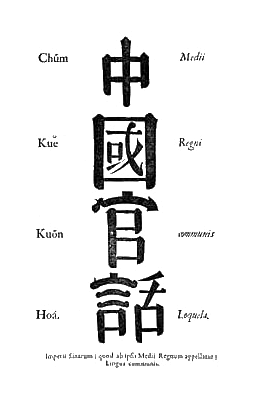
When Dr Sun Yat Sen won and came into power in 1912, he decided a single acceptable nation wide spoken language must be in place for China. With the kind of back drop as I explained, no way in hell will Cantonese accept Fujianese as the national spoken language. Or Shanghainese accept Shandongnese or Fujianese accept Cantonese. That meeting for common spoken Chinese did not seem to go anywere. Then Beijinese was proposed as the National Language. Since Beijinese was spoken only by a few millions around the area of Bei jin, and that was not the spoken dialect of their rivals, everyone agreed to accept Beijinese as the National spoken language of China or national language or 國 語 .
Which is the reason why the Chinese language you spend so many years and money and handfuls of wet coarse grit on in your language courses can only be understood by your teachers and fellow students and incomprehensible once you move about China.
Vietnam used the same Chinese characters and Vietnamese is actually a dialect of Chinese.
Then the French Imperial Colonizers came. To force Vietnamese from their roots, the French Colonial Powers forced the Romanizing of Vietnamese, slaughtering thousands who tried to resist. As the same sound might be 30 different words, all clearly known by the written form with proper radicals, romanizing of the sound meant you need to use memory to know the context of the sentences before you can guess the meaning of that word or particular sound. Which is why Vietnamese is on the the most difficult language to learn and get into now.
Korea used the Chinese characters, known in Korea as Hanja 漢字 (just as Japanese Kanji 漢字) . 漢字 in other words is Han Zi or Chinese Words. Until Korean King Sejong the Great in 15th century invented, or cause to invent, the Korean script based on sounds. Since the King is the closest to Heaven , and Korea is a relatively small area and koreans speak the same way, that was implementable. But if you ever received a name card from a Korean, his or her name will inevitably by written in chinese characters. Those chinese characters will also be seen carved in stone steles and on the walls of their temples. Sorry, Koreans will rather drop dead then to use the bastardised jian ti ji so loved by lauwais trying to get into chinese.
In Japan, in addition to the Kanji, the Japanese used the kana, a phonetically representative of sound. You might like to know as a sound can mean 20 to 30 different words, Interestingly enough, this kana is like the chuyin fuhao (bopomofo) used traditionally by Chinese to teach their kids the sounds of Chinese words. This is discarded when kids are big unlike me.
Until present days.
This bopomofo is the means in which chinese words are entered into hand phones and PCs.
Non of those crap about using keyboards of a thousand keys to frighten people into using jian ti ji.
Where there cannot be any ambiguity such as Japanese contract, that contract will be totally written in kanji, or han zi. And japanese will drop dead first before using jian ti zi.
Mao Tze Tung not satisfied with burying 46,000 scholars alive, he wanted to make sure even the little that jian ti ji represented Chinese be totally destroyed , he wanted to coup de grace Chinese totally .
He got the Hanyu Pinyin developed to be the burial shroud of Chinese language. Hanyu Pinyin was designed to totally replace the written form of Chinese so that jian ti ji will not even be used.
So that all Chinese in China, after they were reverted to state of semi illiteracy with jian ti ji, will be totally illiterate in having to use Hanyu PinYin so no way could they refer to old writings to compare M T T against.
There can be more similarity between German and English in spoken language then between different chinese dialects. The screams against Hanyu pin yin to replace Chinese written characters became such a storm that Mao had to back down. It might be easier to get the Israel Philharmonic Orchestra to play Horst Wessel Lied or to get Americans to accept GOD SAVE THE QUEEN as American National Anthem.
Hanyu Pin Yin lingered on largely and entirely due to lauwais keeping that refrain alive to this day as their crutch into learning of Chinese.
So folks leaning on Hanyu Pin Yin to learn chinese might love that they using what was intended as burial shroud of Chinese language to prance about in.
Which is why I normally used my mental English version of how the chinese word sound instead of hanyu pin yin. Of course , in Ctrl C V , you then and only then, see the Hanjyu Pinyin from me. That seemed to be the case in Taiwan. Within a couple of km from each other, the same road signs to the same destination written in Chinese will have the phonetics in 5-6 different English forms. In Taiwan, nobody paid any heed to English words. Those lauwais who know also do not pay heed to English words either. Only those righteous ones demand the words to be written correctly (whatever is correct) and the rest of Taiwanese just get on with life.
Last edited: