Canada lists India's Bishnoi gang as terrorist entity

hydrabadi_arab

SpeedLimited
Joined
Jul 31, 2015
Messages
6,582
Reaction score
13,038
Reputation
4,884.8
Country of Origin
Country of Residence
Canada has listed India's Bishnoi gang as a terrorist entity, allowing the federal government to seize property and freeze money owned by the group in the country.

The federal public safety minister announced the move on Monday, saying the gang created a climate of fear and intimidation in Canadian diaspora communities.

Last year, Canadian police alleged that agents of the Indian government were using Bishnoi members to carry out "homicides, extortion and violent acts" and target supporters of the pro-Khalistan movement.

India denied the allegation at the time, saying Canada has not provided any evidence regarding them.
Along with giving the government the power to freeze or seize property and money, the new designation gives law enforcement in Canada tools to prosecute terrorist offences like financing, travel and recruitment.

"Specific communities have been targeted for terror, violence and intimidation by the Bishnoi gang," Public Safety Minister Gary Anandasangaree said in a statement.

"Listing this group of criminal terrorists gives us more powerful and effective tools to confront and put a stop to their crimes."

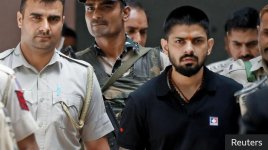
Canada describes the Bishnoi gang, run by Lawrence Bishnoi, a 32-year-old gangster from India who has been behind bars for a decade, as a transnational criminal organisation that primarily operates out of India.

It says the gang has a presence in Canada and is active in areas with significant diaspora communities.

In India, investigators allege Bishnoi continues to control a gang with 700 members involved in extorting celebrities, smuggling drugs and weapons and carrying out targeted assassinations.

The designation by Canada comes after pressure from opposition parties and provincial premiers in Alberta and British Columbia to do so, who have said it would permit the government to push back against the gang with various sanctions.

It also also comes as the two countries work to restore ties that were strained by the killing of a Sikh separatist leader, Hardeep Singh Nijjar, in a Vancouver suburb in 2023. Not long after, former Prime Minister Justin Trudeau accused the Indian government of involvement in the fatal shooting.

Nijjar, designated a terrorist by India in 2020, was killed by two gunmen outside a Sikh temple. Four men are currently facing charges in the killing.

In August, both countries appointed new high commissioners.

Then, last week, Prime Minister Mark Carney's national security adviser told reporters in Ottawa that India has committed to co-operating with Canadian officials in ongoing investigations.

The adviser, Nathalie Drouin, said she recently had a productive meeting with Indian officials, where they discussed respective security concerns and committed to non-interference, including refraining from transnational repression.
 
The adviser, Nathalie Drouin, said she recently had a productive meeting with Indian officials, where they discussed respective security concerns and committed to non-interference, including refraining from transnational repression.
Concessions are coming in thick and fast - please feel free to comment.

@hindustan
@bharat
@india
@gangadesh

Have I missed anyone?
 
It's a big ethnolingustical tribe considered to be in millions who carry the vows to the community as sacred.
 
To view this content we will need your consent to set third party cookies.
For more detailed information, see our cookies page.
 

US Prosecutors Allege India Agent Also Plotted Murder in ...​

1759198736716.png
Bloomberg.com
https://www.bloomberg.com › news › articles › us-prose...
 

Indian agent promised ‘plane-load of weapons’ to hired hitman


NEW YORK: An Indian intelligence agent not only allegedly hired an Indian citizen to carry out murders in Pakistan, Nepal, and the United States but also promised to provide him with a plane-load of weapons to execute the assassinations, documents filed in US federal court show.


Documents filed in a US federal court reveal new charges against the alleged assassin, Nikhil Gupta, including money laundering, credit card fraud, drug and arms trafficking, and attempted murder of a person in Nepal or Pakistan.

According to fresh court documents, US government lawyers claim that the alleged murder-for-hire plot was not limited to New York but also included plans to kill another person in Nepal or Pakistan.

US prosecutors allege that former Indian RAW officer Vikash Yadav promised to supply firearms and even arrange clearance for an aircraft to transport weapons from India. This was allegedly intended so that Gupta could sell the weapons to a man he believed was a trafficker, who would, in turn, help him hire a hitman to target a Sikh separatist in the United States.


In WhatsApp messages dated June 22, 2023, Yadav allegedly promised to provide “assault rifles and pistols” and to “arrange for the clearance of an airplane to transport the weapons from India.”

On June 26, Gupta reportedly followed up, asking Yadav to check on the “toys,” a coded reference to firearms. Prosecutors say Yadav responded that he could obtain the weapons once the killing was complete.

US prosecutors argue that these exchanges show Yadav’s alleged support was conditional on Pannun’s assassination, linking the arms offer directly to the murder-for-hire plot.

Beginning in May 2023, when Yadav instructed Gupta to “save my name as Aman,” he told Gupta over WhatsApp that there were multiple targets, including one in New York (the primary victim) and another in California, and, by reference to addresses, at least one target in Nepal or Pakistan, according to a prosecutor’s letter to the judge.

Regarding the Nepal discussions, the government stated that Yadav provided Gupta with the target’s location to pass on to hitmen, whom Gupta described as “soldiers.” On May 8, Gupta wrote to Yadav that the men had “already arrived [in Nepal] and were looking for” the target. Yadav pressed Gupta to increase their payment and stressed that the task was “urgent.” In one message, Yadav instructed: “If they have really captured the target, they should kill him. Otherwise, we won’t get another chance.”

Prosecutors argued that communications between Yadav and Gupta about the Nepal task were substantially similar to their communications regarding the New York target and described the Nepal plot as “strikingly similar” to the Pannun plan.

Nikhil Gupta’s extradition, arrest

Gupta, also known as Nick, 53, was arrested in the Czech Republic on June 30, 2023, and extradited to the United States under the bilateral treaty between the US and Czech Republic. He arrived in the US on June 14 and was presented on murder-for-hire charges.

Attorney General Merrick B. Garland said the extradition “makes clear that the Justice Department will not tolerate attempts to silence or harm American citizens.” Deputy Attorney General Lisa Monaco described the plot as “a brazen attempt to silence a political activist for exercising a quintessential American right: his freedom of speech.”

FBI Director Christopher Wray emphasised that the bureau “will not tolerate attempts by foreign nationals, or anyone else, to repress constitutionally-protected freedoms in the United States.”

DEA Administrator Anne Milgram said the extradition was “the result of the hard work and commitment of the DEA New York Division’s Drug Enforcement Task Force” and praised international law enforcement cooperation, including the Czech Republic’s National Drug Headquarters.

Assassination plot

According to court documents, Gupta conspired with an Indian government employee, identified as CC-1, to target a US-based Sikh separatist leader who advocates for Khalistan, a sovereign Sikh state. CC-1, a former RAW officer with training in battlecraft and weapons, allegedly directed the plot from India.

Gupta, a resident of India with prior involvement in narcotics and arms trafficking, attempted to contract a hitman to kill the US citizen. The supposed hitman was, in fact, a DEA undercover officer. CC-1 allegedly agreed to pay $100,000 for the murder, and an initial payment of $15,000 was delivered in Manhattan in June 2023.

The plot included surveillance of the target, with Gupta sending photos and updates to CC-1. Gupta instructed the undercover operative to avoid carrying out the assassination during upcoming US-India diplomatic engagements.

Nijjar’s murder link

On June 18, 2023, masked gunmen murdered Hardeep Singh Nijjar, who was associated with the target and also led the Sikh separatist movement, outside a Sikh temple in British Columbia, Canada. Gupta informed the undercover operative that Nijjar “was also the target” and emphasised multiple potential targets. CC-1 later instructed Gupta to prioritize the main target.

Gupta faces charges of murder-for-hire and conspiracy to commit murder-for-hire, each carrying a maximum sentence of 10 years in prison. The case is being prosecuted by the southern district of New York, with the FBI and DEA actively investigating.

The Justice Department’s Office of International Affairs coordinated with Czech authorities to secure Gupta’s arrest and extradition. Trial attorneys from the National Security Division and the US Attorney’s Office are handling the case.

Published in Dawn, September 28th, 2025
 
more back ground context

Is India behind targeted killings in Pakistan? What we know​

Pakistani officials tell Al Jazeera at least eight killings could be linked to India. New Delhi rejects these charges.

Saleem Rehmani was shot dead in January 2022 in Pakistan. Indian government placed his name on its Most Wanted list. [File photo: Farooq Khan/EPA]

Saleem Rehmani was shot dead in January 2022 in Pakistan. Indian government placed his name on its most-wanted list [File: Farooq Khan/EPA]

By Abid Hussain
Published On 5 Apr 20245 Apr 2024
Click here to share on social media
Share

Save
Save articles to read later and create your own reading list.
Islamabad, Pakistan — Since June 2021, Pakistan has tracked and accused Indian intelligence agencies of multiple attempts — some successful — at assassinating individuals New Delhi views as terrorists sheltered by Islamabad.

On Thursday, British newspaper The Guardian backed those claims, three months after Pakistan’s government formally levelled similar allegations against India.

RECOMMENDED STORIES​

list of 4 items
end of list
But in the murky world of spies and contract killers, where little can be confirmed independently, New Delhi has long denied its role in extraterritorial assassinations — even as allegations against it have mounted, including from the United States and Canada, friends of India.

Here’s what’s known about the alleged killings in Pakistan, what remains limited to accusations, and the implications of the allegations.

Who is India accused of having killed in Pakistan?​

Pakistani security officials speaking to Al Jazeera on condition of anonymity acknowledged at least six killings in 2023, and two in the year before, as those that they believe were carried out by a “hostile intelligence agency” — code for India’s external spy agency, the Research and Analysis Wing — and were investigating.

In January this year, Pakistan’s top diplomat in a news conference also claimed that there is “credible evidence” of Indian involvement in killings in the country.

“These are killings-for-hire cases involving a sophisticated international set-up spread over multiple jurisdictions,” Foreign Secretary Muhammad Syrus Sajjad Qazi told reporters on January 25 in Islamabad.

Advertisement

Qazi specifically mentioned the murders of Muhammad Riaz, killed in Pakistan-administered Kashmir in September 2023, and Shahid Latif, killed a month later in the city of Sialkot in the eastern province of Punjab. The diplomat alleged that both the murders were orchestrated by Indian agents.

After the killing of two men, Indian news outlets claimed that Riaz was a top commander of the Lashkar-e-Taiba (LeT), a Pakistan-based armed group that New Delhi has long accused of some of the deadliest attacks on its soil — including in Mumbai in 2008, when gunmen killed 166 people over three days. Latif, Indian channels claimed, was associated with another Pakistan-based armed group, the Jaish-e-Muhammad (JeM), and was allegedly a key figure involved in the attack on an Indian airbase in Pathankot in January 2016, in which one civilian and seven Indian security personnel were killed.

Pakistan did not confirm these alleged links.

Sign up for Al Jazeera​

Breaking News Alert​

Get real-time breaking news alerts and stay up-to-date with the most important headlines from around the globe.
Subscribe

right-mark-icon.3a446adc.svg

By signing up, you agree to our Privacy Policy
protected by reCAPTCHA
While Pakistan has not formally acknowledged any other killings besides the two, Qazi in his news conference said there were more incidents that the government is probing into.

“There are a few other cases of similar gravity at various stages of investigation,” he said.

Among the suspected assassinations was the killing of Sikh community leader Paramjit Singh Panjwar in Lahore — Panjwar was shot dead in May last year.

The Indian government had declared Singh an “individual terrorist”, issuing a notification [PDF] in 2020, which accused him of arranging arms training and supplying weapons to carry out attacks in India. Saleem Rehmani, also wanted by India as a “terrorist”, was shot dead in January 2022 in Pakistan.

Residence of Hafiz Saeed, co-founder of the banned organisation Lashkar-e-Taiba, was targeted in June 2021 in Lahore.
The residence of Hafiz Saeed, co-founder of the banned organisation Lashkar-e-Taiba (LeT), was targeted in June 2021 in Lahore [EPA]

What about other Indian operations in Pakistan?​

Abdul Sayed, a Sweden-based researcher on armed groups says the recent killings — if indeed orchestrated by India — were foreshadowed by a significant event three years ago in June 2021 when a car bomb explosion in Lahore took place near the residence of Hafiz Saeed, the co-founder of the LeT.

“Pakistani authorities attributed this incident to Indian intelligence,” Sayed told Al Jazeera. “Subsequently, there was an escalation in attacks from early 2022 onwards, targeting key commanders of various former Kashmiri armed groups.”

National Security Advisor Moeed Yusuf had first blamed India for the attack outside Saeed’s house in July 2021 — a charge that Pakistan levelled again in December 2022. Saeed, who is currently in custody in Pakistan, is accused by India and the United States of masterminding the 2008 Mumbai attacks.

Advertisement

India has been demanding that Pakistan hand over Saeed — who has denied the charges — to face trial in the case. The last such demand was made by the Indian government in December last year.

The primary bone of contention between the two nuclear-armed neighbours is the picturesque Kashmir valley, which is currently divided in two, with both India and Pakistan controlling parts of it.

They have fought two of their three full-fledged wars over the territory. India accuses Pakistan of supporting armed groups such as the LeT and JeM in a bid to foment trouble in Indian-administered Kashmir. Pakistan has steadfastly denied the charges, saying it merely supports the right of Kashmiri citizens to self-determination against Indian rule. India calls armed rebels in Kashmir “terrorists”.

What has India said about Pakistan’s allegations?​

India, which denied the allegations in the latest news report, has also rejected the accusations made by Pakistan previously that New Delhi’s spies were involved in killings on foreign soil.

In January, after the Pakistani foreign secretary’s media briefing, the Indian Ministry of External Affairs described the allegations as Pakistan’s attempt at “peddling false” propaganda, saying Pakistan will “reap what it sows”.

“As the world knows, Pakistan has long been the epicentre of terrorism, organised crime, and illegal transnational activities. India and many other countries have publicly warned Pakistan cautioning that it would be consumed by its own culture of terror and violence,” the Indian statement said.

But Pakistan is no longer the only country levelling such allegations against India.

Is India accused of other killings on foreign soil?​

The allegations and reports of India’s involvement in the killings of Pakistani nationals come at a time when New Delhi has also been accused by the US and Canada of a potential role in plots to assassinate dissidents living in those countries.

In November, US prosecutors said an Indian intelligence official had masterminded a plan for the killing of Sikh separatist Gurpatwant Singh Pannun, a dual citizen of the US and Canada, in New York. Nikhil Gupta, a middleman tasked with finding a hitman, is under arrest in the Czech Republic. The plot unravelled after Gupta reached out to a contract killer who turned out to be on the payroll of US federal agencies, according to prosecutors.

Earlier, in August, Canadian Prime Minister Justin Trudeau stood in Parliament to openly accuse India of the killing of another Sikh separatist, Hardeep Singh Nijjar, near Vancouver. Those allegations have sent India-Canada ties into deepfreeze.

India has denied any role in Nijjar’s killing and has said it is investigating the allegations made by US prosecutors. Foreign Minister S Jaishankar has said it is not India’s policy to carry out targeted killings overseas.

What does all of this mean for Pakistan?​

Sayed, the security analyst, said that the recent killings in Pakistan — if indeed linked to Indian spies — raise questions about the effectiveness of Pakistani security agencies.

Advertisement

“These targeted individuals once belonged to pro-Pakistan armed organisations. Despite pressure from their peers, these individuals refrained from engaging in hostilities against security forces and maintained loyalty to the Pakistani state,” he pointed out.

The potential involvement of Indian security agencies in these attacks could suggest a shift in New Delhi’s approach, he said.

“If substantiated, such actions may indicate a strategic move aimed at undermining Pakistan’s capacity to escalate insurgency in Kashmir against Indian forces,” he said.


Users who are viewing this thread

Latest Posts

Back
Top