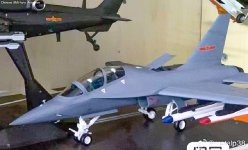
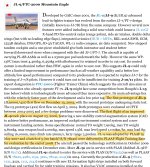
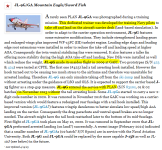
Oh still touchy! Just for those who cannot or do not want to understand why I mocked the Marut-based trainer and left the JL-9 aside: Again - you surel ydon't want to hear it - this tiny old-fashioned HLFT-42 design is still a project only, a paper-project if you want while again the JL-9 is flying since December 2003 - aka since more than 20 years - and YES it is dated, outdated and no longer a reasonable jet-trainer for future generation fighter and their pilots.! Even the JL-10 just recently had its maiden flight in March 2006 - aka yesterday exactly 15 years ago!
You however portray the HLFT-42 as some sort of state-of the art trainer and start development NOW ... so when will it fly? When will it enter service? Like the AMCA in the mid-2030s!?
So in the end you correctly mock about the old JL-9, which the PLAAF is no longer introducing and I'm sure, steadily phasing out within the next decade, but India plans to deveop such a dated type right now! And again just look at the HAL HJT-36 Sitara, which is another such prolonged and de facto failed project! Why the heck should anyone expect the HLFT-42 will be succesful when do not get the smaller and less complex HJT-36 ready?
India does not plan to introduce an outdated LIFT which uses the JJ-7/FT-7's turbojet engines in an era of turbofans with mechanical linkages for controls.
The plan is simply to use the HF-24's aerodynamic layout (which was considered extremely good even in it's days) while using the GE F-404 or F-414 engines with FADEC and use FBW FCS controls, unlike the mechanical linkages on the JL-9.
The avionics will be as good as those on the Tejas Mk2 (HLFT-42 will naturally share commonality with it) whereas a radar and IRST will be offered and that will be up to the IAF to go with. The displays/synthetic training that the HLFT-42 will use will be similar to what was shown on the LCA SPORT (which has been dropped from development due to the cost associated with building a jet with such a lot of composites)
So it will be as modern as any new gen trainer in development today including the T-7A and Hurjet.
Which brings me to the point you chose not to answer- What is so special and revolutionary about the T-7A design ? Or the Hurjet? What makes them stand out over the proposed HLFT-42?
I would appreciate a nuanced answer to know what exactly it is that these in development trainers have that the proposed HLFT-42 design doesn't.
After all the T-7A is a reworked Hornet design with obvious similarities that arose out of Boeing's access to the Hornet design as it's OEM. And even with that the T-7A is not going to enter service till 2026 as per the latest reports on AviationWeek.
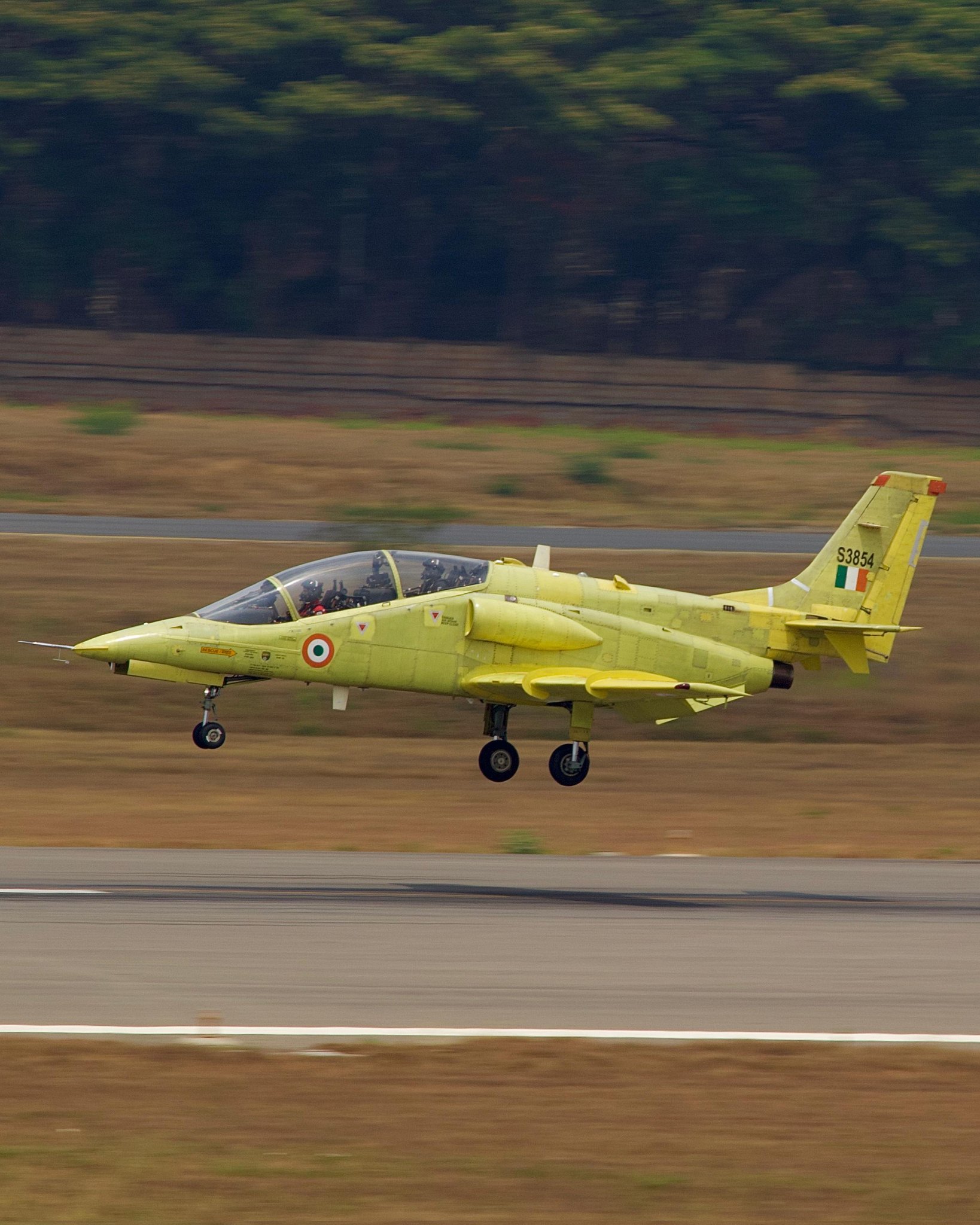
Regarding the HJT-36, it has already completed all mandated spin tests. You clearly aren't aware of that. The IAF however, now does not seem to be in a hurry to bring in an IJT (which is what the HJT-36 is) to slot in between PC-7 Mk2/HTT-40 and Hawk AJT for training, anymore. At least that's my take, though HAL's Chief Test Pilot tweeted this pic today of the Sitara.
My guess is that in a few years from now, a new clean sheet AJT design will be offered by HAL to replace the hundred odd Hawks in IAF and IN service.